Who Controls Your Intelligence Analysis Platform: Assessing the Long-Term Cost of Vendor Dependency Versus Internal Capability

In the rapidly evolving landscape of enterprise data management and national security operations, organizations adopting advanced intelligence analysis platforms face a fundamental architectural and philosophical fork in the road. As digital infrastructures expand to ingest billions of data points, executives and chief technology officers are discovering that the initial deployment method they choose dictates far more than short-term implementation costs. Industry analysis shows that long-term control over data models, analytical workflows, and operational adaptability ultimately hinges on whether a platform is built to foster internal organizational capability or deep-seated vendor dependency.
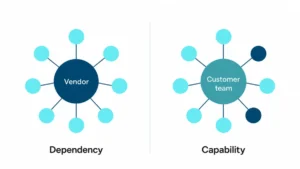
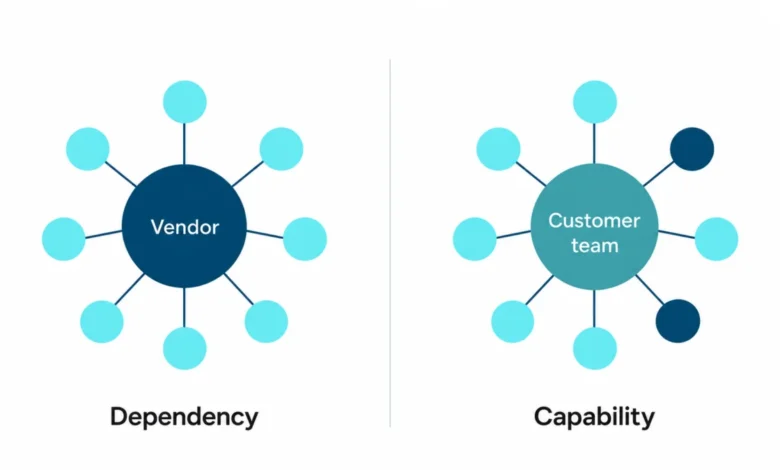
This dichotomy has become increasingly critical as intelligence programs scale. Modern analytics environments must handle exponential increases in active users, disparate data feeds, custom analytics pipelines, and nuanced use cases. According to enterprise software specialists, current market solutions generally cluster around two competing paradigms: the vendor-led model, where technological ownership and operational capacity are centralized within the third-party provider, and the customer-led model, which prioritizes building and retaining these specialized engineering skills directly inside the client organization.
Understanding the Genesis of Enterprise Intelligence Platforms
To comprehend the debate surrounding platform architecture, one must examine the historical trajectory of intelligence analysis tools. Over the past two decades, intelligence agencies, law enforcement bodies, and multinational corporations have shifted from legacy, siloed databases to highly integrated, graph-based analytics ecosystems. These modern platforms are designed to connect complex relationships among entities, transactions, and geographic nodes, offering deep visibility into complex operational threats.
Historically, organizations lacking robust internal data engineering divisions relied heavily on turnkey software solutions. In these vendor-led environments, external providers supplied not only the software licenses but also the consulting teams, customized data pipelines, and proprietary algorithms necessary to operationalize the platform. While this approach effectively bridged immediate skills gaps, it frequently left client organizations dependent on external assistance for routine maintenance and system upgrades.
Conversely, public sector technology veterans and forward-thinking enterprise architects have increasingly championed customer-led deployment frameworks. In these collaborative setups, the vendor acts as an enabler and technical guide, while internal IT, data engineering, and analytical teams participate directly in the initial configuration. By embedding themselves in the foundational stages of data ingestion and model tuning, internal teams acquire an intimate understanding of how disparate data streams interact within the broader analytical environment.
Evaluating the Operational Realities: Day One Versus Year Three
The friction between these two philosophies typically manifests during the procurement and implementation phases. When an organization attempts to launch a complex, high-stakes intelligence initiative, the immediate priority is speed and risk mitigation. At this stage, a vendor promising to shoulder the entire burden of architecture, integration, and deployment offers immense psychological and operational relief.
However, industry analysts emphasize a vital distinction: implementation is merely the prologue in a platform’s lifecycle. Successful intelligence analysis environments rarely remain static. As analysts discover novel investigative patterns and organizational priorities shift, the platform must ingest new data sources, accommodate unanticipated query types, and scale to support entirely new departments.
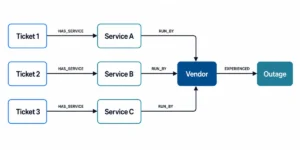
This growth phase creates a stark divergence in operational efficiency depending on the initial model chosen. In a vendor-led framework, expansion typically translates into a growing queue of support tickets and change-request invoices. When a time-sensitive lead requires a rapid schema modification or the integration of a newly discovered communication channel, waiting for external vendor approval can introduce detrimental latency. In high-stakes environments—such as financial fraud prevention or active threat investigations—such delays can cause critical leads to go cold or investigative trails to vanish entirely.
Conversely, organizations utilizing a customer-led framework experience an compounding return on operational knowledge. Every subsequent data source integrated or custom workflow deployed strengthens the internal team’s technical fluency. Consequently, modifications that required external consultation during year one become routine, in-house procedures by year three.
The Mechanics of Vendor Lock-In
Beyond operational latency, the debate over platform architecture touches upon a deeper economic and strategic vulnerability: vendor lock-in. Over years of continuous operation, an intelligence platform accumulates vastly more than raw historical data. It absorbs an organization’s bespoke data ontology, specialized integration scripts, analytical logic, and thousands of nuanced operational decisions codified into the system’s architecture.
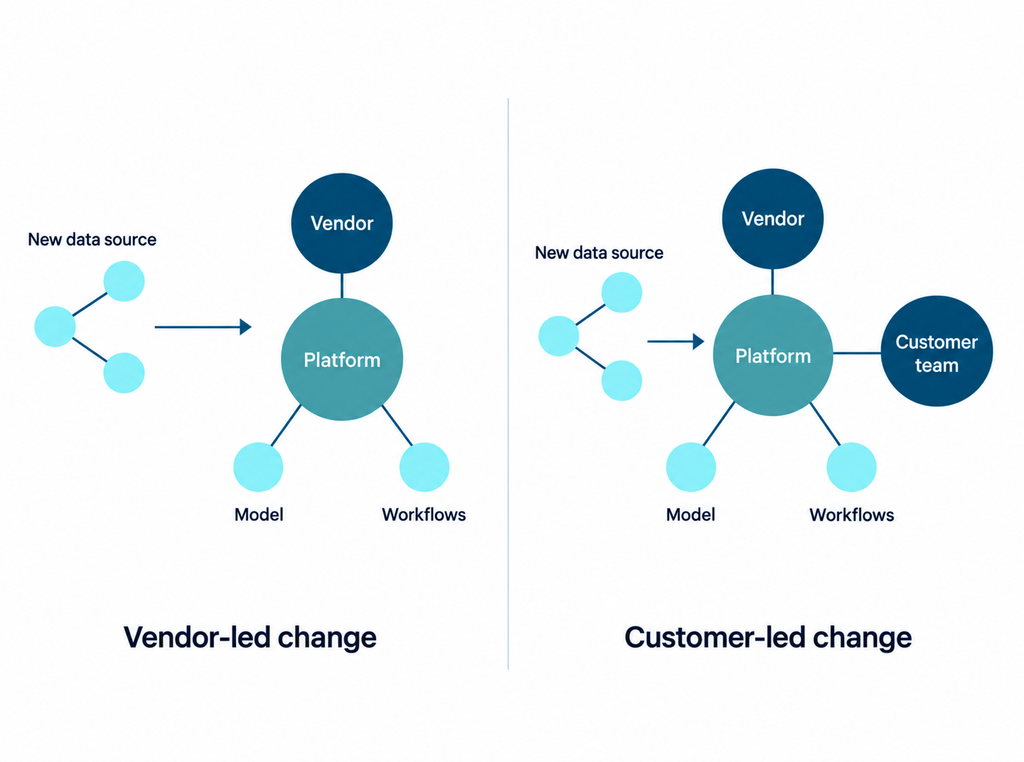
Data migration standards allow organizations to extract their foundational structured and unstructured records relatively easily. Yet, the capability surrounding that data—the connective tissue that translates raw information into actionable intelligence—often remains trapped within proprietary vendor frameworks. If an organization finds itself legally, financially, or strategically compelled to transition away from a vendor-led platform, it discovers that leaving no longer means merely swapping out a software application. Instead, it requires the massive undertaking of reconstructing years of accumulated analytical capability from scratch.
Three Critical Diagnostic Questions for Technology Leaders
To help enterprise leaders evaluate their current standing or prospective software investments, technology governance experts recommend subjecting existing intelligence platforms to three rigorous diagnostic inquiries.
Could your team independently change the platform to meet a new operational mandate? If a secondary business unit or regional office requests access to the analytics environment with entirely new data parameters and custom workflows, would internal engineers know where to begin? Or would the initiative immediately trigger a commercial scoping meeting and a financial quote from the vendor? True operational agility requires that internal teams possess the architectural blueprints and functional competence to adapt the environment autonomously.
Could your organization fully comprehend the system if current external support vanished? There is a profound operational gulf between knowing how to operate a user interface and understanding the underlying structural mechanics of an intelligence capability. If the original implementation engineers were to depart tomorrow, would internal staff be capable of maintaining the data models and pipelines, or would they be forced to interact with a functional black box?
What intellectual property and operational capability could actually be relocated? When evaluating multi-year technology contracts, decision-makers must look beyond data portability. If strategic imperatives change and an organization decides to terminate a vendor relationship, what assets survive the transition? Retaining raw database files while losing the contextual models, automated integrations, and analytical workflows represents a catastrophic loss of institutional capability.
The Strategic Pivot Toward Open, Modular Architectures
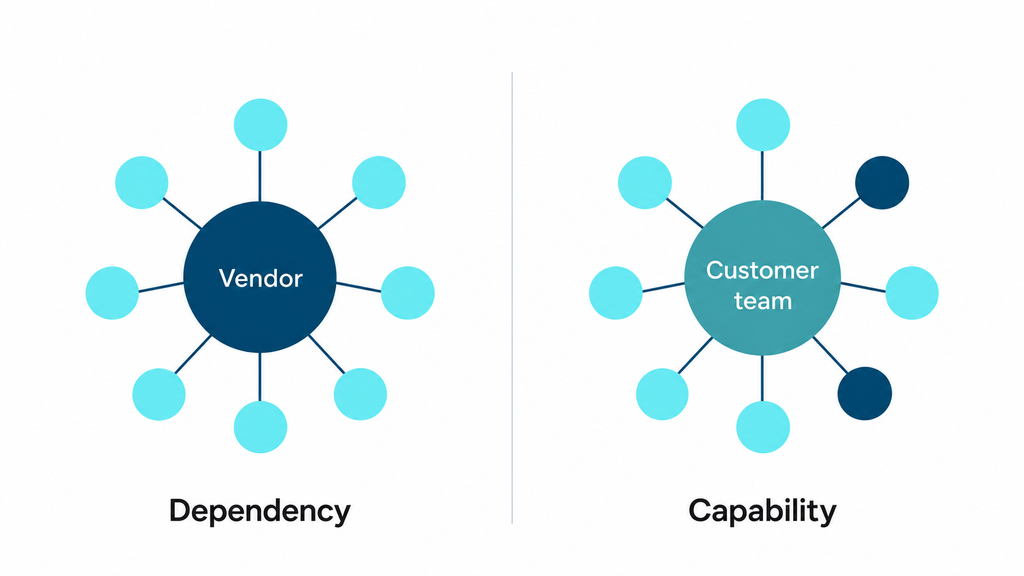
Recognizing the long-term liabilities of closed ecosystems, a segment of the enterprise software market has begun championing open, modular architectures designed explicitly to prioritize client ownership. A prominent example within the graph data integration space is GraphAware Hume, an advanced investigation environment engineered for Neo4j solutions.
Platforms engineered around this philosophy seek to decouple rapid initial deployment from permanent vendor dependency. By utilizing modular components and open standards, these systems allow client organizations to retain absolute ownership of their data models, integration pipelines, and analytical workflows from day one. While specialized vendors and implementation partners provide crucial acceleration during the initial deployment phase—frequently enabling functional proofs-of-value within a matter of days—the structural knowledge required to operate, modify, and extend the platform remains firmly anchored within the customer’s internal team.
Industry Implications and Future Outlook
As artificial intelligence, automated machine learning, and advanced graph analytics become baseline requirements for security and intelligence operations, the debate over platform governance will only intensify. Organizations are increasingly recognizing that technology is not a neutral utility; it actively shapes the institutional competencies of the workforce that wields it.
Opting for a vendor-led model is a valid strategic choice for enterprises intentionally seeking to outsource the maintenance of non-core technical functions. However, industry veterans emphasize that such decisions must be made with a clear-eyed accounting of long-term financial and operational costs.
Ultimately, the platform an organization deploys today does much more than determine next quarter’s analytical productivity. It casts a long shadow over the institution, deciding whether the organization retains sovereign control over its analytical destiny or remains tethered to an external provider for as long as the intelligence mission endures.
Related posts: