Breaking the Monolith: How the Agent Host Protocol Bridges AI Sessions Across Editors, Cloud Sandboxes, and Mobile Devices

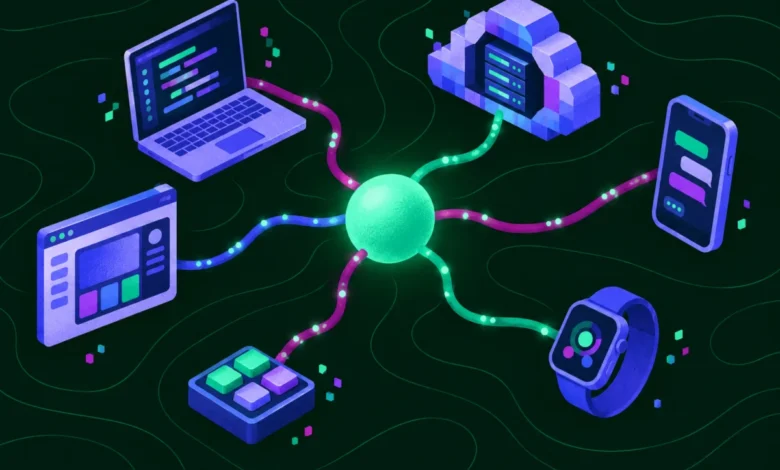
As artificial intelligence models evolve from rapid response query tools into autonomous systems capable of executing complex engineering tasks for hours or even days at a time, the software infrastructure supporting them is undergoing a radical transformation. Historically, AI coding assistants have been anchored tightly to specific application environments. If a developer closed an editor window, switched to a mobile device, or logged onto a remote machine, the active AI session frequently terminated, forcing developers to manually re-establish context and restart tasks. To resolve this architectural bottleneck, GitHub has introduced the Agent Host Protocol (AHP), an open standard designed to maintain seamless session continuity across diverse development environments, including integrated development environments, cloud sandboxes, and mobile applications.
The introduction of AHP marks a significant departure from traditional client-side AI integrations. Previously, tools like GitHub Copilot were tightly coupled to individual host applications such as Visual Studio Code. While this approach enabled robust features within a single editor window, it created an inflexible ecosystem where an agent’s lifecycle depended entirely on the parent application staying open. Updates, window closures, or shifts to remote workspaces abruptly halted background processes, severing the continuous workflow required for long-running autonomous tasks.
The Architectural Limits of Bespoke Client Integration
In the early stages of GitHub Copilot’s development, the feature was constructed as a specialized extension within Visual Studio Code, bundling its own execution harness. Although effective for local code generation, this architecture presented severe limitations. Because extensions are bound to a single window instance, closing that window instantly destroys the active agent state. Similarly, updating the workbench forces a complete application restart, terminating ongoing tasks. Connecting to a remote machine triggers an entirely new extension host commit-locked against a specific workbench version.
Concurrently, product teams at GitHub were engineering the dedicated Copilot app alongside iOS and Android mobile applications. Each platform engineered distinct, independent integrations with cloud-based agents in an effort to achieve session continuity. While these custom solutions resolved immediate product requirements, they exacerbated a fragmented ecosystem. Software engineers increasingly demanded the ability to summon and manage their autonomous agents across any workflow medium—whether desktop terminals, cloud instances, or mobile phones. Relying on bespoke, one-off integrations for every client platform proved unsustainable.
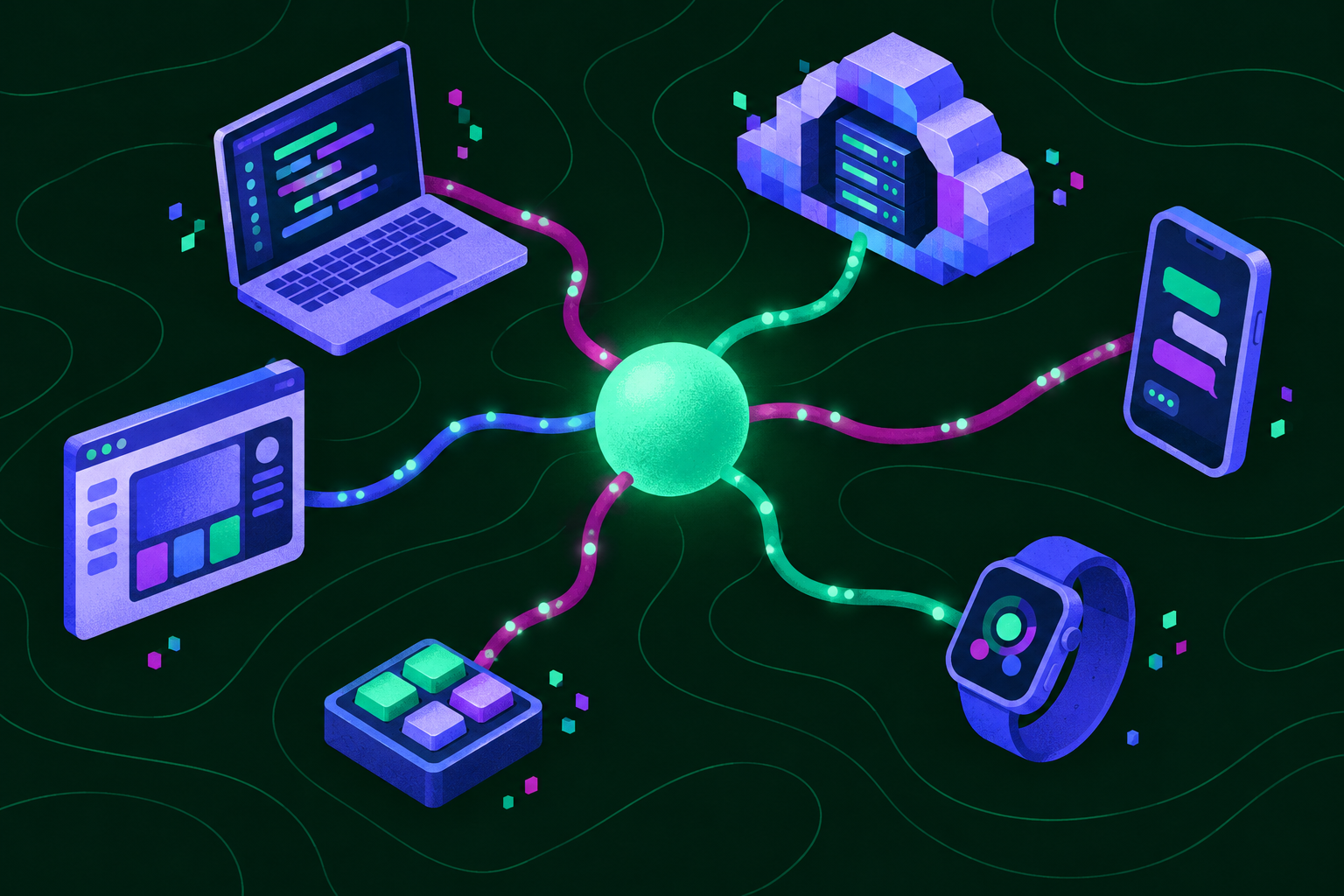
Recognizing that an open standard was urgently required, engineering teams spearheaded the development of the Agent Host Protocol. AHP functions as a version-agnostic communication standard bridging disparate platforms, including VS Code, the GitHub Copilot app, mobile interfaces, and custom-built developer tools. By establishing a shared protocol, all clients access identical agents, interaction histories, and operational states without requiring custom-tailored API implementations.
Designing a Protocol for Universal Agent Interoperability
The foundational requirements for AHP demanded a robust architecture capable of handling multi-client interactions without data corruption or state desynchronization. The protocol had to allow a developer to initiate an agent session in a cloud environment via a mobile phone while commuting, pause the interaction, and seamlessly resume execution from a laptop inside an integrated development environment. Furthermore, the protocol needed to demonstrate resilience against network dropouts, sudden reconnections, and concurrent state mutations executed by multiple client applications simultaneously.
Unlike antecedent protocols such as the Language Server Protocol (LSP) or the Debug Adapter Protocol (DAP)—which were forged in domains with well-established syntax and debugging conventions—the artificial intelligence agent ecosystem evolves at a relentless pace. Consequently, the designers of AHP deliberately excluded agent behavior logic from the protocol specification. Instead, AHP strictly standardizes how users and clients interact with agents, leaving internal execution mechanisms open to rapid innovation.
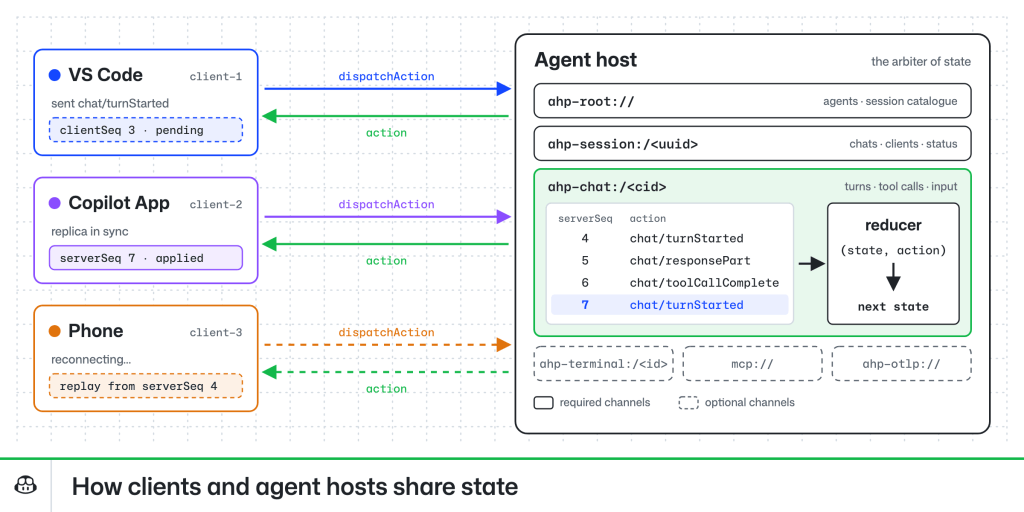
To maintain accessibility for developers building independent clients or servers, the core protocol was deliberately kept minimal. Structurally, AHP is organized around URI-identified entities known as "channels," representing distinct functional domains. Every compliant server must implement three mandatory channels: the root channel, the session channel, and the chat channel. Additional optional channels can be integrated to support advanced capabilities such as terminal emulation, Model Context Protocol (MCP) additions, or OpenTelemetry (OTel) reporting.
Underpinning each channel is a reducer-based state object. In this architecture, the server acts as the definitive arbiter of state, while individual clients transmit sequential streams of actions that either mutate the state or initiate side effects, such as dispatching a chat message. This design yields substantial technical advantages, particularly in poor network conditions. When a connection drops, a client simply queues its outgoing actions, displays a localized loading interface, and waits for the server to reconcile and acknowledge the actions upon reconnection. Moreover, reducer-based states integrate naturally with modern reactive user interface frameworks like React, while simplifying debugging for both client and server developers.
Parallel Implementations and Ecosystem Unification
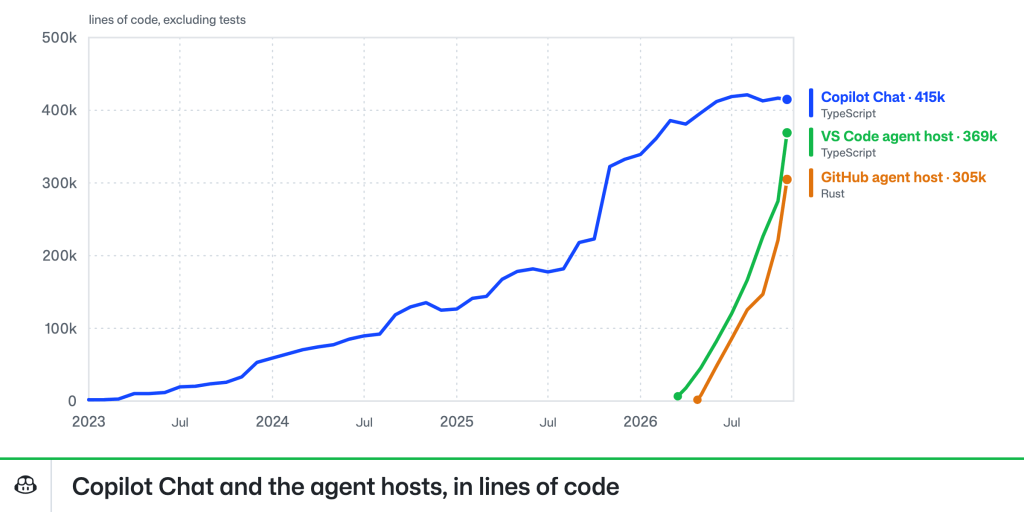
Adopting the Agent Host Protocol within Visual Studio Code required a massive foundational overhaul. The legacy Copilot Chat extension, which had accumulated over 400,000 lines of TypeScript code over three years of active development, was intrinsically tied to the VS Code extension API and window lifecycle. Transitioning to a standalone agent host process necessitated stripping away these legacy dependencies and leveraging the newly developed Copilot SDK as the base for a modern agentic stack.
Simultaneously, GitHub’s cloud agent infrastructure—which allows developers to execute automated tasks in isolated cloud environments from any device—faced the classic N-to-M integration scaling challenge. Rather than building separate bridges for each new surface, GitHub aligned its cloud-hosted systems with the emerging AHP standard.
This dual-implementation strategy resulted in two distinct agent host engines built by separate teams using different programming languages: a TypeScript implementation for VS Code and a Rust implementation for GitHub’s cloud architecture. This linguistic and infrastructural separation served as an empirical stress test for the protocol itself. Maintaining two independent codebases forced engineers to identify architectural blind spots, protocol ambiguities, and platform-specific assumptions.
For instance, early iterations of the protocol lacked the capability to accurately represent shell-type tool outputs that were not backed by a pseudo-terminal (PTY). Similarly, client implementations initially made faulty assumptions regarding the structural formatting of session URIs received from host servers. Through rigorous cross-platform integration testing, engineers ironed out these discrepancies, proving that AHP could achieve true portability across diverse technological stacks rather than existing merely as a theoretical specification.
Practical Deployment and Real-World Impact
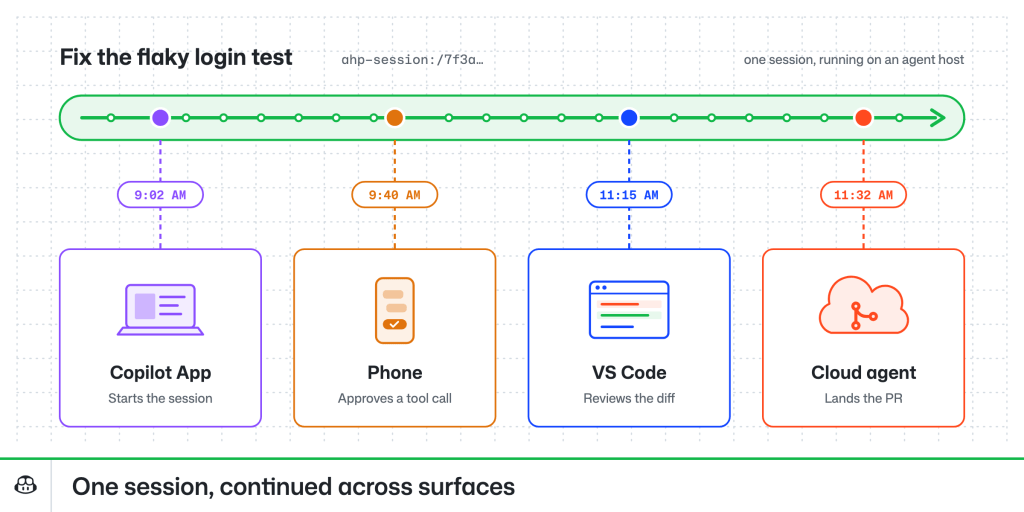
Today, the Agent Host Protocol powers continuous workflows across an extensive matrix of GitHub and VS Code surfaces. A single task—such as diagnosing and resolving a flaky integration test—can be initiated via the Copilot mobile app, authorized for tool execution from a smartphone while away from the desk, reviewed as an active code diff within VS Code, and finalized via a cloud-based agent merging a pull request.

To facilitate broad adoption across the developer community, AHP client and server libraries have been released in multiple programming languages, including Rust, TypeScript, Kotlin, Swift, .NET, and Go. The lightweight nature of the protocol has encouraged developers to experiment beyond traditional software environments, producing hardware integrations such as custom macropads displaying real-time agent states, smart watch applications, and specialized Kanban board automation tools.
Industry analysts observe that the open standardization of agent hosting infrastructure represents a critical maturation phase for generative AI in software engineering. By decoupling autonomous agent execution from specific integrated development environments, protocols like AHP lower the barrier for third-party tool builders and enterprise teams seeking to integrate bespoke AI workflows into their proprietary pipelines.
Developers can interact with local agent hosts directly through the Copilot application by enabling experimental direct connections, or through Visual Studio Code by utilizing remote agent host commands. Standalone agent hosts can also be spawned directly from the command line, providing an accessible testbed for engineering teams aiming to build custom client applications atop the open standard. As artificial intelligence models continue to expand their operational horizons, standardized communication protocols will remain the vital connective tissue ensuring that human oversight and autonomous execution can proceed without friction across the entire digital landscape.