The Evolution of the Svelte Ecosystem
Svelte, originally created by Rich Harris in 2016, introduced a radical departure from traditional front-end frameworks like React or Angular. By shifting the work of framework execution from the browser to a compile-time step, Svelte gained a reputation for generating highly efficient, lean code. SvelteKit, the official application framework built atop Svelte, extended this philosophy to the full-stack domain, providing routing, server-side rendering, and API capabilities.
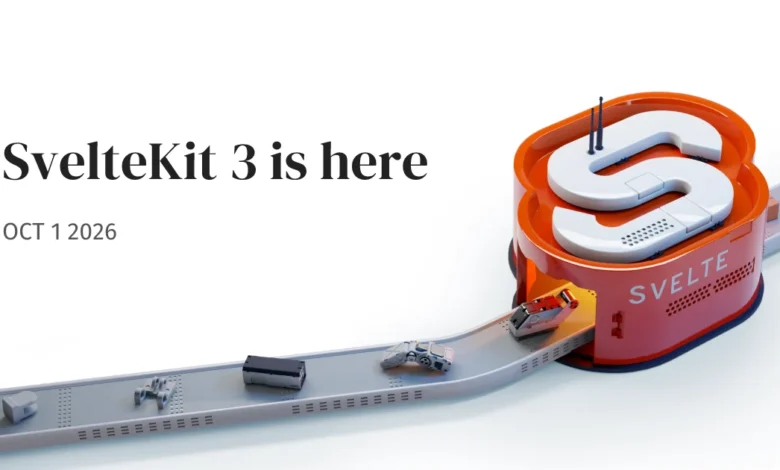
The transition from version 2.0 to 3.0 has been characterized by the core team as a "polishing" effort. Unlike major version updates in other ecosystems that often introduce disruptive architectural shifts, SvelteKit 3.0 focuses on stability and maintainability. The framework has matured significantly over the last three years, moving from a novel experimental tool to a robust solution used by enterprise-level organizations for production-grade applications.
Strategic Migration and Tooling Advancements
A primary concern for any framework update is the friction associated with upgrading existing codebases. To mitigate this, the Svelte team has placed a heavy emphasis on automated tooling. The introduction of the sv migrate command is a centerpiece of the 3.0 release. By executing the command npx sv migrate sveltekit-3 --tasks all --confirm, developers can offload much of the manual labor required to update dependencies and refactor breaking API changes.
The tool is designed to intelligently parse project files and apply updates where the syntax is unambiguous. For more complex refactoring tasks, the utility generates a structured "TODO" list, effectively acting as a roadmap for developers to complete the final manual adjustments. This "agentic" approach—referencing the growing trend of utilizing AI assistants for code maintenance—highlights the framework’s commitment to modern developer workflows. For new projects, the team has streamlined the initiation process through the sv create CLI, which offers a standardized template for rapid application scaffolding.
Chronology of SvelteKit Development
The trajectory of SvelteKit demonstrates a clear pattern of iterative growth:
- 2020: The inception of SvelteKit as the successor to Sapper, aiming to provide a more cohesive, framework-native experience.
- 2021: The transition into public beta, focusing on the refinement of the file-based router and server-side data loading patterns.
- 2022: The official 1.0 release, signaling stability and readiness for production environments.
- 2023: The release of SvelteKit 2.0, which introduced improved error handling and refined routing logic.
- 2024: The launch of SvelteKit 3.0, focusing on deep type safety, improved performance profiles, and the laying of the groundwork for future server-client communication protocols.
Technical Implications and Type Safety
One of the most notable trends in modern web development is the migration toward strict typing. SvelteKit 3.0 leans heavily into this, offering enhanced type safety throughout the development lifecycle. By reducing the reliance on loose JavaScript types, the framework helps developers catch errors at compile-time rather than during runtime.
This update also prepares the infrastructure for "Remote Functions," a highly anticipated feature currently in development. While not yet fully stable, remote functions are designed to bridge the gap between client-side and server-side logic. By providing a secure, type-safe conduit for communication, these functions aim to eliminate the boilerplate code typically associated with API endpoints. Currently, this capability is gated behind an experimental flag, as it requires the integration of "Async Svelte," a nascent technology that redefines how components handle asynchronous data fetching.
Analysis of the Web Framework Landscape
The release of SvelteKit 3.0 arrives at a pivotal time for the JavaScript framework market. With competitors like Next.js and Remix also vying for dominance in the server-side rendering space, the distinction between frameworks is increasingly defined by their performance overhead and developer experience.
Data from the annual State of JS survey consistently places Svelte at the top of the "satisfaction" rankings, with developers citing its low cognitive load and fast build times as primary benefits. By tightening the framework in version 3.0, the Svelte team is betting that consistency will be the deciding factor for engineering managers choosing a stack for long-term projects. The reduction of "junk"—the removal of legacy patterns and redundant configuration—suggests a mature, opinionated framework that prioritizes long-term maintainability over short-term feature chasing.
Industry Reception and Community Sentiment
Initial feedback from the Svelte community has been overwhelmingly positive, particularly regarding the migration tooling. In technical forums and social discourse, developers have lauded the decision to provide an automated path for major version upgrades.
However, industry analysts note that the lack of full "Remote Functions" at launch may be a point of contention for teams hoping for an all-in-one server-client solution. "The roadmap is clear," noted one independent software architect, "but until remote functions are fully stable, developers will continue to rely on traditional load functions and API routes." Nevertheless, the transparency of the roadmap—publicly documented in the release candidate announcements and migration guides—has fostered a high level of trust between the maintainers and the user base.
Preparing for the Future: Svelte Summit
To celebrate the release and the broader evolution of the technology, the Svelte team has announced the upcoming Svelte Summit, scheduled for November 19-20 in Ljubljana, Slovenia. This event is particularly significant as it coincides with the 10th anniversary of Svelte’s initial release.
The summit is expected to serve as a hub for both technical deep dives into the SvelteKit 3.0 internals and high-level discussions about the future of the web. Given that Svelte began as a side project and has grown into a cornerstone of the modern web, the 10-year milestone provides a unique opportunity to assess the framework’s impact on global web standards.
Conclusion and Looking Ahead
SvelteKit 3.0 is a testament to the benefits of incremental improvement. By focusing on the developer experience, rigorous type safety, and efficient migration paths, the framework team has successfully navigated the challenges of maintaining a high-growth open-source project. As the ecosystem looks toward the implementation of remote functions and the continued evolution of asynchronous patterns, SvelteKit remains a robust, performant, and increasingly stable choice for developers worldwide.
For organizations considering an upgrade, the official migration documentation serves as the primary resource, detailing the specific breaking changes and the necessary steps to transition from 2.0. As the industry continues to emphasize performance and developer productivity, the developments introduced in this release provide a strong foundation for the next decade of Svelte development. Whether for small-scale personal projects or complex enterprise systems, the refinements in version 3.0 ensure that SvelteKit remains at the forefront of modern web application development.