GitHub and Microsoft Pilot Codename MDASH to Streamline Open Source Vulnerability Remediation

The open-source software ecosystem underpins the vast majority of modern digital infrastructure, serving as the foundational layer for everything from cloud-native applications to enterprise databases and artificial intelligence stacks. However, the rapid evolution of software development
has introduced a significant operational bottleneck: while automated security tools have made the discovery of potential vulnerabilities remarkably fast and inexpensive, the arduous task of verifying and fixing these security flaws falls squarely on the shoulders of human maintainers. Many of these project leads are currently overwhelmed by a deluge of AI-generated security alerts, which frequently contain false positives and duplicate reports.
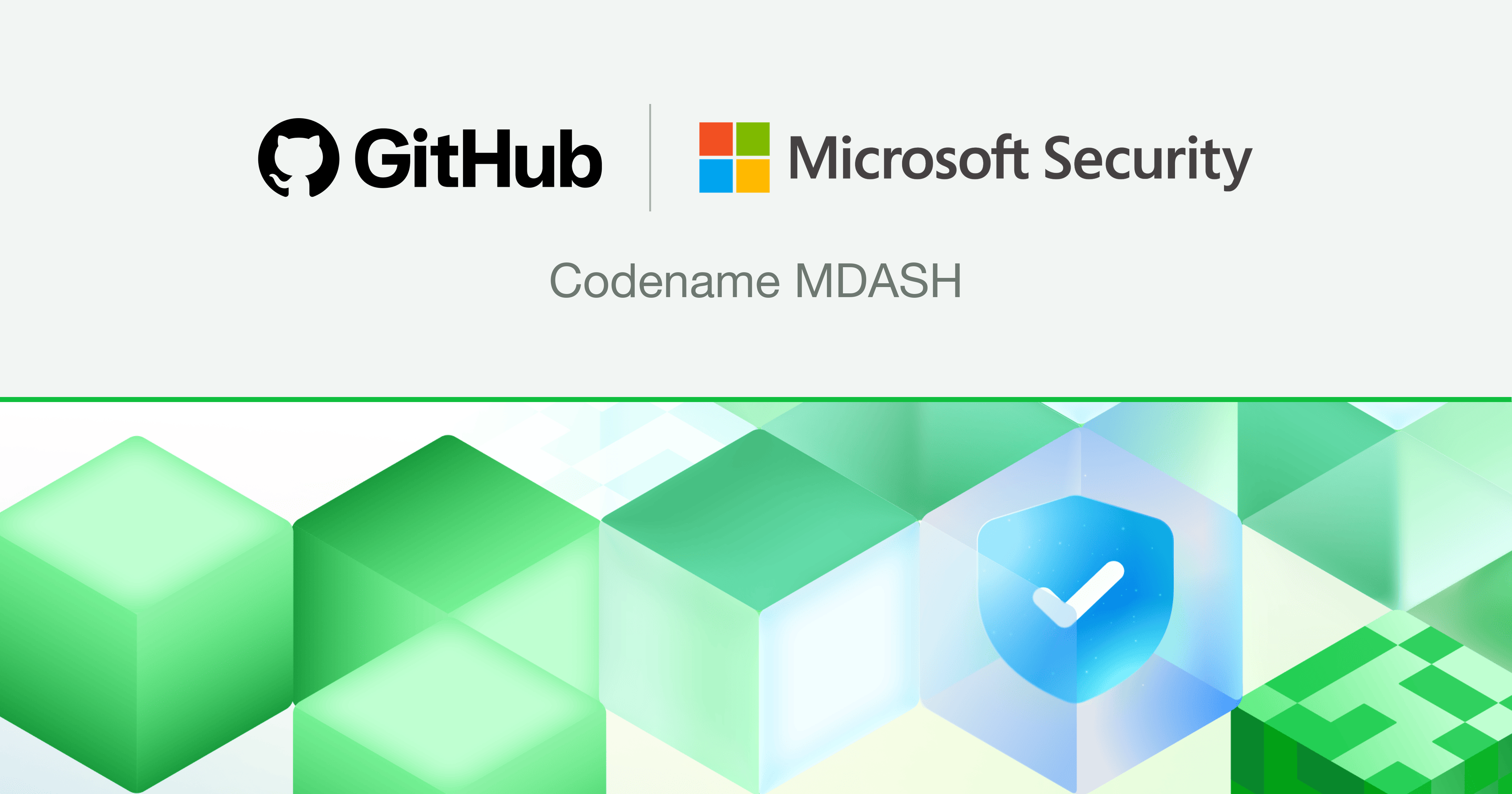
Recognizing that deploying another raw vulnerability scanner only exacerbates maintainer fatigue, GitHub and Microsoft initiated a collaborative pilot program known as Codename MDASH. This multi-model agentic scanning harness was deployed to shift the paradigm from simply flooding open-source maintainers with unverified findings to delivering rigorously vetted, private reports complete with suggested, ready-to-merge patches. Through this initiative, the technological giants aimed to demonstrate that artificial intelligence can shoulder the burden of remediation preparation rather than adding to the administrative and technical workload of project maintainers.
The Operational Framework and Methodology
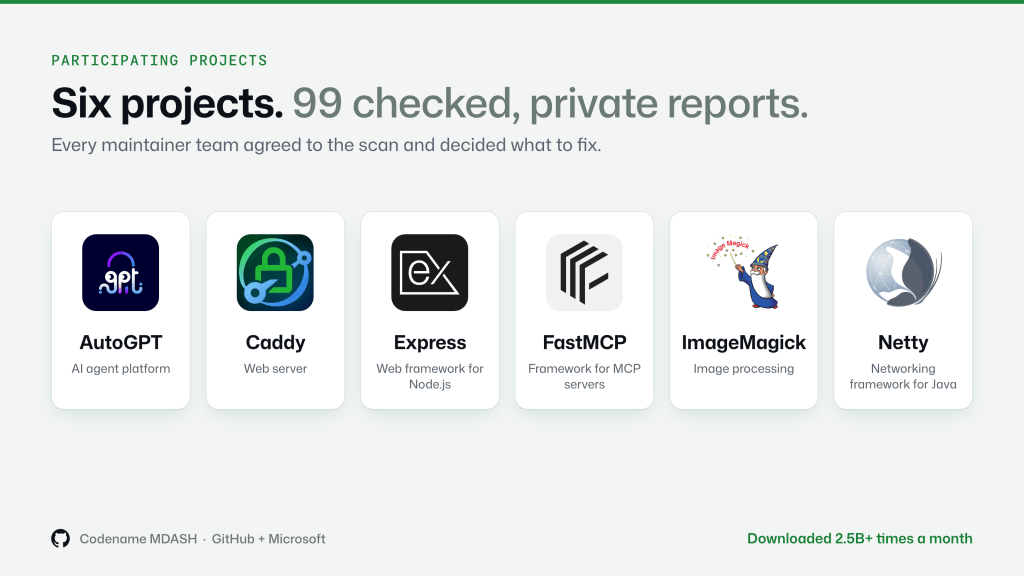
The Codename MDASH pilot was architected around two core principles: transmitting exclusively high-relevance findings and never exposing a project maintainer to an unverified security alert. To achieve this, the project utilized Microsoft’s specialized MAI Cyber model to execute comprehensive initial scans across six widely utilized open-source projects: AutoGPT, Caddy, Express, FastMCP, ImageMagick, and Netty.
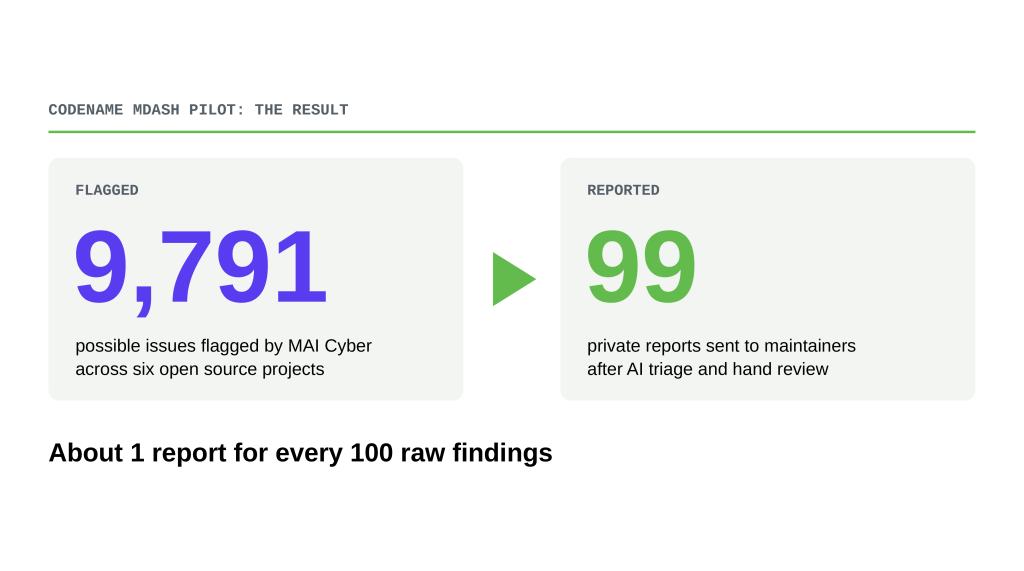
The execution pipeline was structured to filter out the noise inherent in automated code analysis before any documentation reached human maintainers. The multi-model agentic harness flagged a staggering 9,791 potential security issues across the participating repositories. Rather than dumping this raw output onto the community, the findings underwent a rigorous dual-layer triage process. First, advanced AI algorithms filtered out irrelevant flags and duplicates. Subsequently, a team of seven human researchers from the Microsoft FORGE Lab conducted meticulous, hands-on reviews of the remaining alerts, spending an estimated two days per project to manually verify the validity of the code defects and draft precise remediation patches.
Following this exhaustive vetting process, only 99 private vulnerability reports were ultimately generated and transmitted to the maintainers of the six target projects. By ensuring that every report arrived within the familiar environment of GitHub accompanied by a fully scoped, actionable patch, the initiative fundamentally altered the traditional dynamics of vulnerability disclosure. Instead of forcing maintainers to spend hours deciphering cryptic scanner outputs or constructing proof-of-concept exploits, the pilot provided them with a well-defined starting point for code modification.
Chronology and Remediation Timeline
The pilot commenced with initial architectural scans and progressed rapidly through the researcher review phase, culminating in private disclosures delivered directly to project maintainers via private vulnerability reporting channels. The velocity of the response underscored the effectiveness of providing pre-verified patches rather than abstract problem statements.
The first wave of fixes began shipping approximately one week after the initial security disclosures were handed over to the maintain community. For instance, the maintainers of the Caddy web server received 22 distinct reports and successfully resolved all of them within a single week. Similarly, the AutoGPT project received a targeted vulnerability report just three days after its maintainers had shipped a newly implemented, albeit flawed, internal check. The precise nature of the MDASH report directed developers to the exact line of erroneous code, enabling them to expand upon the suggested patch, write an improved version within twenty-four hours, and deploy the fix into production in under a week.
As milestones were reached through mid-November, aggregate tracking data revealed significant momentum. By November 15, open-source maintainers had already addressed and resolved 55 of the 99 private reports issued during the pilot. Furthermore, 14 of those completed fixes had already been integrated into official software releases, demonstrating a remarkably short time-to-remediation cycle compared to traditional vulnerability disclosure timelines.
Empirical Results and Quantitative Data
The quantitative metrics generated by the Codename MDASH pilot offer valuable insights into the efficacy of agentic AI workflows in software security. The filtering ratio stood out as a primary metric of success: out of 9,791 raw issues flagged by the initial AI scan, only 99 actionable, verified reports made it to human maintainers. This translates to roughly one high-fidelity report for every 100 raw findings, effectively eliminating approximately 99% of the administrative noise that typically plagues project leads.
The participating projects represented a diverse cross-section of the software supply chain, ranging from web frameworks and networking libraries to media processing utilities and artificial intelligence tooling. Among them, ImageMagick—noted for being managed by a lean, two-person core team—received 22 reports. Because the vulnerability notifications were paired with exact code-line references and contextual summaries, the ImageMagick maintainers reported that what typically would have taken up to an hour of investigative work per advisory was condensed into a brief 15-minute verification and patching process.
The breakdown of the 55 resolved issues across the six repositories highlights a strong willingness among maintainers to adopt AI-assisted patches when the underlying accuracy is high. While some maintainers accepted the suggested code modifications verbatim, others utilized them as conceptual blueprints to implement more comprehensive architectural fixes tailored to their specific codebase conventions.
Stakeholder Perspectives and Qualitative Insights
The feedback gathered from project maintainers participating in the pilot sheds light on the evolving relationship between open-source communities and automated security tooling. Christian Grobmeier, a maintainer of the widely used Log4j project, has previously emphasized a central tenet of modern cybersecurity: the artificial intelligence defending open-source infrastructure must ultimately surpass the sophistication of the artificial intelligence deployed by malicious actors.
Maintainers across the pilot cohort expressed broad agreement that vulnerability discovery is no longer the primary bottleneck in software security. Instead, the true challenge lies in the labor-intensive process of triage, verification, and patch deployment.
A representative from the Netty project noted that finding vulnerabilities is a solved problem, emphasizing that fixing them remains the difficult aspect because it relies entirely on human maintainers. Express maintainers highlighted that the private reports successfully cut through the persistent noise of standard automated scanners. Caddy maintainers noted that Codename MDASH succeeded in uncovering obscure, unknown security bugs while simultaneously patching blind spots that had evaded detection in prior security audits. Similarly, the FastMCP maintainer reported that the harness yielded unique security insights that transcended the capabilities of legacy automated AI scanners.
Despite these successes, maintainers also pointed out the current limitations inherent in scaling such an approach. The high precision achieved during the pilot was heavily dependent on intensive manual labor, with Microsoft researchers dedicating substantial time to hands-on verification. Without further technological advancements, this level of scrutiny remains difficult to scale across millions of independent open-source repositories.
Broader Implications for the Software Supply Chain
The implications of the Codename MDASH pilot extend far beyond the six participating projects, offering a blueprint for how the broader software industry can secure critical infrastructure without burning out open-source maintainers. Traditionally, vulnerability discovery has often been decoupled from remediation responsibility, leaving developers to shoulder the burden of fixing code they did not necessarily realize was flawed.
The pilot establishes a new standard for responsible vulnerability disclosure in the age of generative artificial intelligence: entities that deploy automated tools to scan open-source projects have an ethical and operational obligation to verify their findings, minimize false positives, and provide actionable remediation pathways. Shifting this burden away from maintainers is essential for preventing alert fatigue and maintaining the integrity of the global software supply chain.
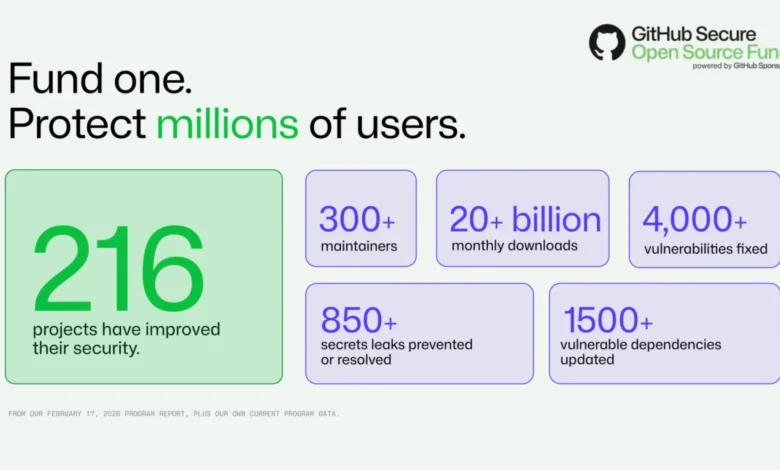
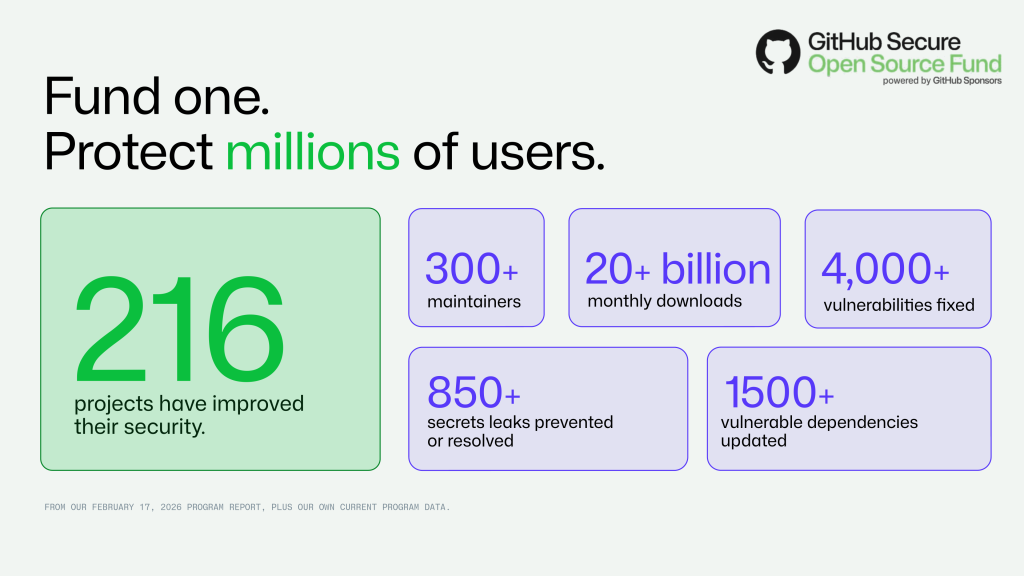
Furthermore, the integration of these fixes triggers a downstream security cascade. When maintainers publish validated security advisories on platforms like GitHub, automated tracking mechanisms such as Dependabot can immediately alert dependent repositories across the ecosystem. This mechanism powers broader ecosystem initiatives, such as the GitHub Secure Open Source Fund, which has historically supported hundreds of projects and helped maintainers resolve thousands of vulnerabilities across packages downloaded billions of times each month.

Future Outlook and Ecosystem Initiatives
Building upon the insights gained from the Codename MDASH pilot, security researchers and platform architects are focusing on several key areas to bridge the gap between defenders and attackers. Future iterations will likely explore deeper integration of cyber-capable AI models directly into continuous integration and continuous deployment (CI/CD) pipelines, enabling maintainers to safely test proof-of-concept exploits and verify patches within private forks.
All six projects involved in the pilot are alumni of the GitHub Secure Open Source Fund, a program backed by GitHub Sponsors, Microsoft for Startups Azure credits, and various security training initiatives designed to reinforce foundational software components. As organizations increasingly recognize their dependency on open-source software, industry leaders are advocating for increased corporate backing of maintainers, aligning with broader strategic frameworks such as Microsoft’s Secure Future Initiative.
Ultimately, the Codename MDASH pilot demonstrates that while artificial intelligence will continue to transform the threat landscape, it can also be harnessed to alleviate the burdens of software maintenance. By combining advanced multi-model scanning with rigorous human oversight and developer-first workflows, the open-source community can achieve a more resilient and secure digital foundation for the future.