Beyond the Terminal: How AI Agents and Physical Controls Are Redefining the Modern Software Development Lifecycle

For decades, the physical manifestation of software engineering remained remarkably uniform. A desk equipped with a mechanical keyboard, a high-resolution mouse, an integrated development environment (IDE), a command-line terminal, and a browser cluttered with dozens of browser tabs served as the universal workstation for programmers worldwide. While the underlying programming languages evolved from procedural paradigms to object-oriented and functional frameworks, and hardware transitioned from monolithic mainframes to distributed cloud clusters, the fundamental relationship between the developer and the machine stayed the same. Programmers were required to adapt their cognitive processes to the rigid syntax and operational mechanics of computers, memorizing terminal commands, navigating complex directory trees, and manually executing repetitive deployment scripts.
Today, that paradigm is undergoing its most profound structural transformation since the advent of high-level programming languages. The convergence of generative artificial intelligence, autonomous software agents, and multimodal human-computer interfaces is shifting the core of software development away from manual tool operation and toward the direct expression of intent. Rather than spending hours writing boilerplate code, configuring build pipelines, and debugging low-level syntax errors, software engineers are increasingly acting as architects and directors. They establish the parameters, supply contextual constraints, and evaluate outcomes while intelligent systems handle the mechanical execution.
The Evolution of Developer Tooling: A Historical Chronology
To understand the magnitude of the current shift, it is helpful to examine the historical trajectory of software interfaces. In the early days of computing, programming was a literal hardware exercise involving punch cards and magnetic tape. The introduction of cathode-ray tube terminals and command-line interfaces in the 1960s and 1970s allowed for interactive computing, establishing the terminal as the primary window into machine logic.
The next major evolutionary leap occurred in the 1980s and 1990s with the rise of Graphical User Interfaces (GUIs). Pioneered at Xerox PARC and popularized by Apple and Microsoft, GUIs made software navigation visual, replacing abstract text commands with windows, icons, menus, and pointers. This lowered the barrier to entry for digital creation.
The late 1990s and 2000s brought widespread connectivity through the World Wide Web, transforming isolated desktop applications into networked ecosystems where code repositories could be shared globally via platforms like GitHub, founded in 2008. Soon after, the mobile revolution of the late 2000s and 2010s introduced touch-based natural interactions, expanding computing to billions of pockets worldwide.
Now, the industry has entered the era of agentic artificial intelligence. Where early AI coding assistants functioned merely as advanced autocomplete tools—predicting the next line of code based on immediate syntax—modern autonomous agents operate with contextual awareness of entire repositories. They can reason through complex logic, select appropriate machine learning models, plan multi-step workflows, invoke specialized external tools, edit multiple files simultaneously, execute unit tests, diagnose failures independently, and iteratively refine their own outputs within predefined safety boundaries set by human developers.
The Mechanics of Intent-Driven Development
Modern developer workflows, exemplified by advanced platforms like GitHub Copilot and its evolving agentic modes, have compressed the traditional software development lifecycle. In a conventional workflow, translating a product requirement into production-ready code requires a tedious chain of events: searching documentation, bootstrapping a file structure, writing boilerplate code, manually running local test suites, debugging failing assertions, and formatting pull requests.
AI-assisted environments compress this chain by allowing developers to describe a desired outcome in natural language. In the IDE, interactive agent modes maintain a continuous feedback loop. When assigned a complex task, a coding agent can take an open GitHub issue, spin up an isolated, secure environment powered by GitHub Actions, analyze the broader codebase to understand dependencies and symbol definitions, implement the required changes, run automated tests to verify functionality, and return a clean, review-ready pull request.
This technological leap does not diminish the role of the software engineer; rather, it elevates it. As routine mechanics are delegated to autonomous systems, human judgment, architectural foresight, and domain expertise become significantly more valuable. An AI agent can generate multiple potential implementations of an algorithm in seconds, but a human engineer must ultimately decide whether a specific abstraction belongs in the core architecture, whether a database migration poses a risk to production data, or whether a generated test suite actually validates the business logic. The developer remains strictly accountable for the final outcome, ensuring that engineering standards, security protocols, and ethical considerations are rigorously maintained.
The Three-Layer Architecture of Modern Workflows
Integrating artificial intelligence directly into the developer workflow—rather than treating it as a separate, ancillary tool—requires a sophisticated technical architecture. Industry architects generally categorize this modern ambient intelligence framework into three distinct layers:
- Modality: This layer captures human intent across multiple formats, whether through natural language text prompts, spoken voice commands, or specialized physical inputs. It translates human thought into structured machine directives without forcing the developer to break their cognitive concentration.
- The Harness: Serving as the core operational engine, this layer plans and executes complex tasks. It relies on protocols like the Model Context Protocol (MCP) to seamlessly connect AI agents to internal tools, databases, and external cloud services. Repository-specific instructions and learned skills encode organizational conventions, while automated security hooks enforce corporate policy and validate outputs before execution.
- The Control Plane: This is the supervisory interface that allows human developers to inspect agentic actions, redirect workflows in real time, and grant or deny approval for sensitive operations. The most effective developer tools maintain a strict balance between automation and human oversight, ensuring that systems never act as unaccountable black boxes.
The Resurgence of Physical Controls in Ergonomic Engineering
While software development has historically relied entirely on the standard QWERTY keyboard and digital mouse, the maker community and forward-thinking hardware manufacturers are increasingly experimenting with alternative physical interfaces to support agentic workflows. As AI systems handle more of the heavy lifting of typing and syntax generation, the primary bottleneck for engineers is no longer writing characters per minute, but maintaining deep focus and context.
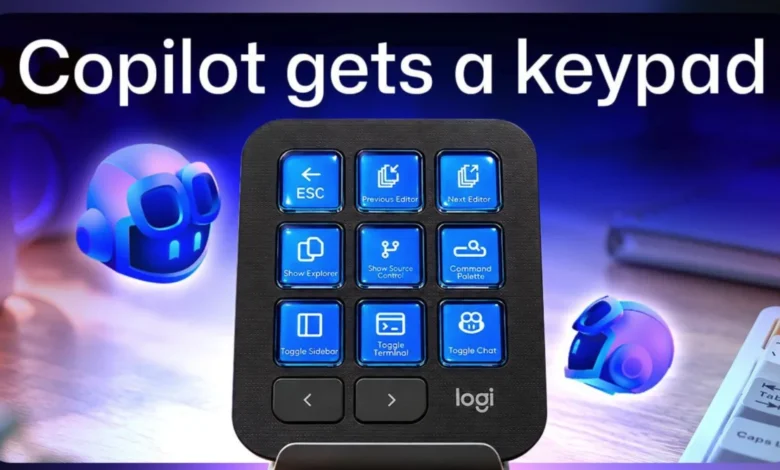
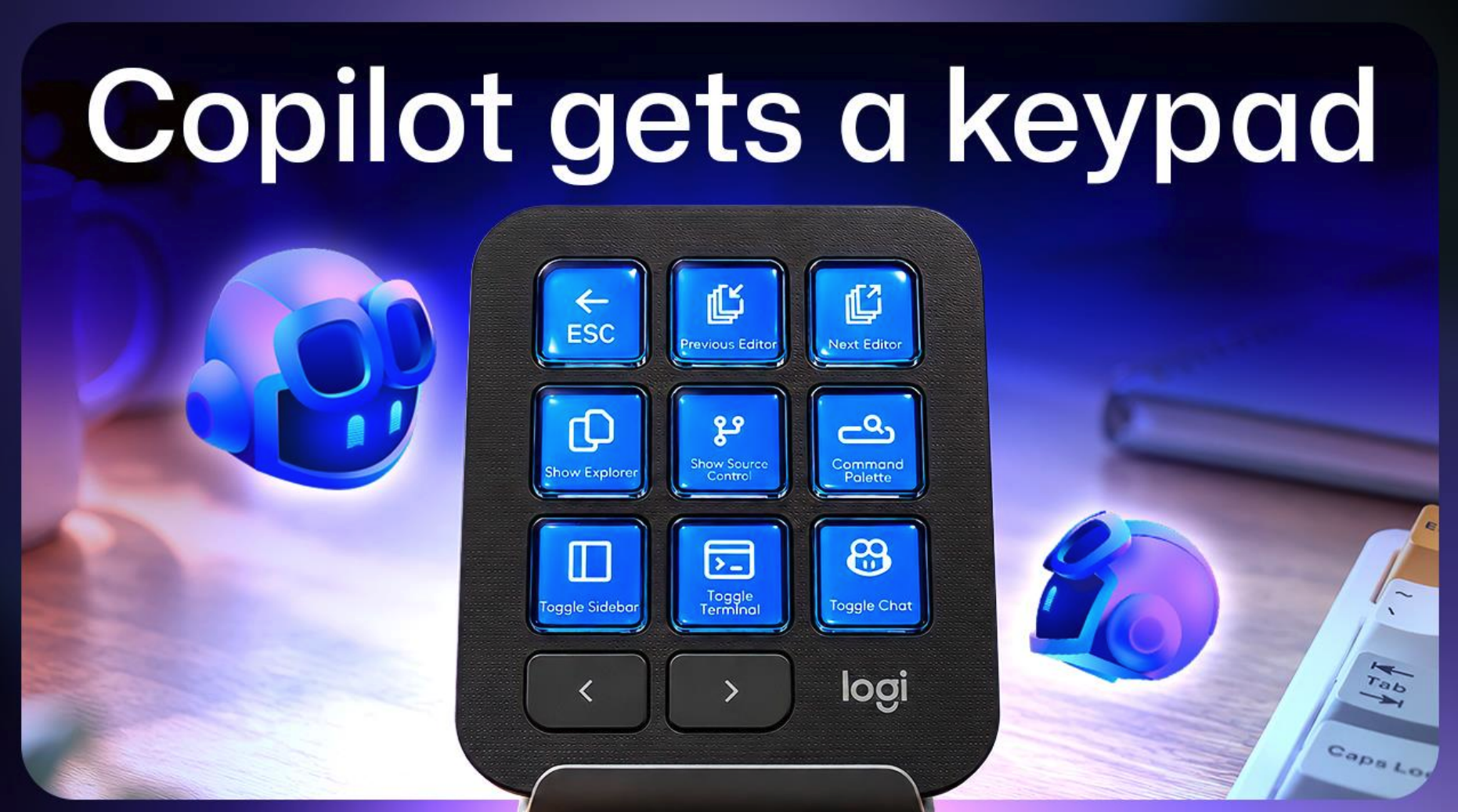
Over the past year and a half, industry collaborations have explored how dedicated physical hardware can accelerate these emerging workflows. For instance, the integration between GitHub and Logitech on devices such as the MX Keypad represents a shift toward ambient, contextual computing. By turning familiar developer actions into programmable hardware inputs, such devices allow engineers to execute complex, multi-step workflows with a single physical keystroke.
Within the GitHub Copilot application, a physical key can be mapped to submit a parameterized prompt, immediately open or resume an active AI coding session, invoke a frequent IDE command, or trigger a synchronized sequence of agentic actions. This hardware earns its place on the desk only when it successfully removes enough operational friction to keep the developer fully immersed in the code, while still preserving transparent human control.
Industry Implications and the Future of the Profession
The integration of agentic AI and physical control interfaces raises important engineering and operational questions for enterprise organizations. Technology leaders must determine how much repository and organizational context an autonomous agent should be permitted to retain, which automated tool calls can run without manual intervention, and how credentials, network access, and API secrets should be strictly scoped. Furthermore, as teams begin deploying multiple collaborative agents simultaneously, engineering managers must establish protocols to prevent redundant work or conflicting pull requests.
Despite these challenges, the overarching trajectory of the software industry is clear. For decades, learning to program meant learning to speak the rigid language of the computer. Today, computers are rapidly learning to meet human engineers halfway. The ultimate goal of modern developer tooling is not to replace human creativity, but to systematically eliminate the operational friction that surrounds the craft. By pairing advanced software agents with ergonomic hardware solutions like the MX Keypad and GitHub Copilot Pro+, the industry is providing engineers with practical environments to experiment with focus, reduce interruptions, and concentrate on building software that matters.
Related posts: