Closing the Loop: Automating Incident Investigation with AWS DevOps Agent and Amazon OpenSearch Service

The modern enterprise observability landscape is currently defined by a persistent and costly friction point: the gap between incident detection and the subsequent manual investigation. While platforms like Amazon OpenSearch Service have become highly efficient at ingesting structured logs, visualizing distributed traces, and firing automated alerts when system anomalies occur, the "human-in-the-loop" requirement often persists long after the notification is received. For many engineering teams, a 2:00 AM alert triggers a labor-intensive sequence: manually querying Dashboards with complex domain-specific language (DSL), hunting for correlated trace IDs, cross-referencing activity with AWS CloudTrail, and attempting to reconstruct the sequence of events that led to a failure. This manual triage process, which can span from several minutes to hours in the event of complex, cascading microservice failures, represents a significant drain on operational productivity and mean time to recovery (MTTR).
The industry is now shifting toward a paradigm of closed-loop observability, where AI-driven agents perform the heavy lifting of initial investigation immediately upon alert ingestion. By leveraging the Model Context Protocol (MCP), organizations can now connect the AWS DevOps Agent directly to the indices responsible for triggering an alert. This integration allows the agent to ingest logs and traces, correlate them with infrastructure-level data, and provide a comprehensive root cause analysis before a human engineer even logs into the system.
The Architectural Shift to Autonomous Investigation
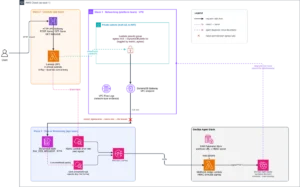
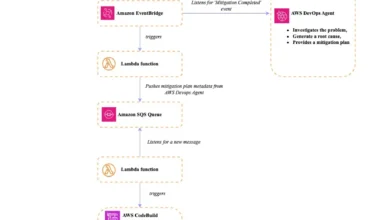
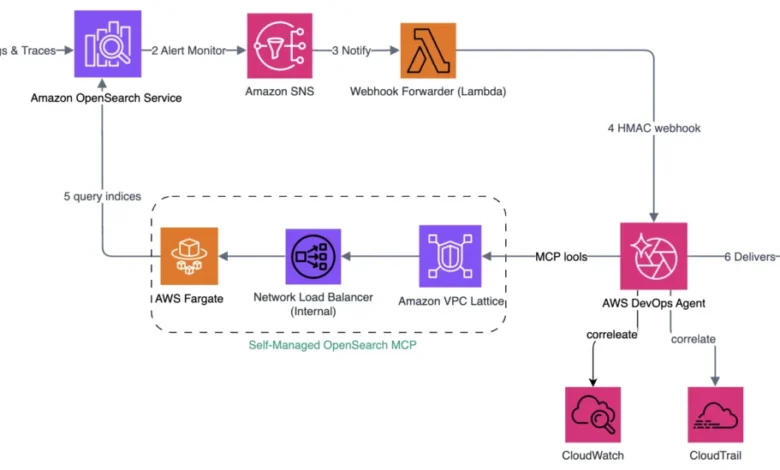
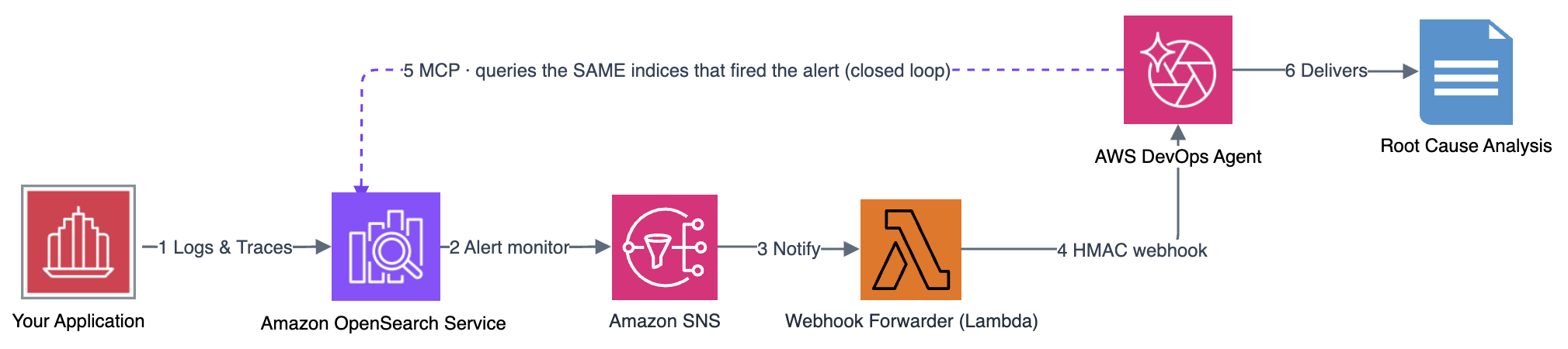
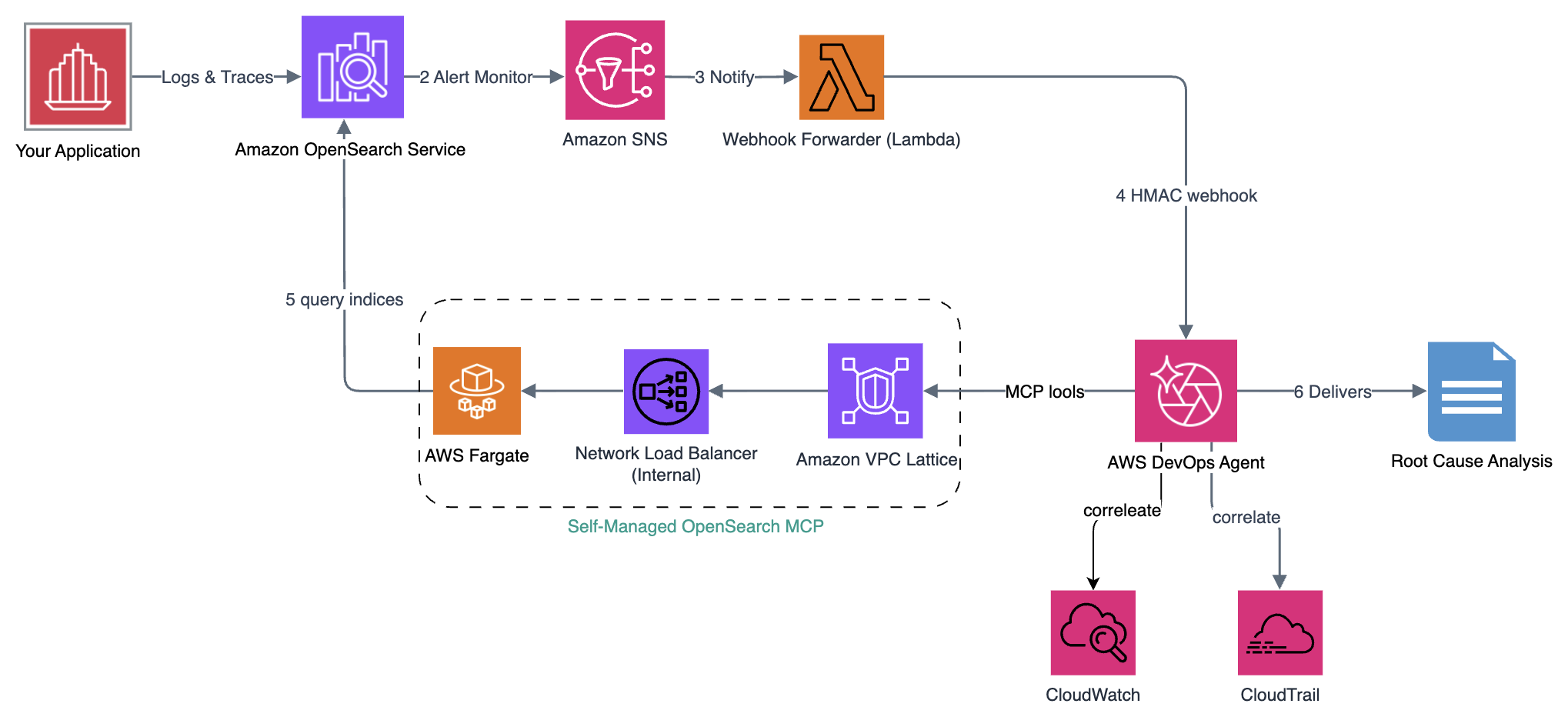
The technical architecture enabling this closed-loop system relies on the AWS DevOps Agent acting as an intelligent orchestrator. When an alert originates from an OpenSearch domain—typically through the Alerting plugin—it is routed via Amazon Simple Notification Service (SNS) to a webhook forwarder. This forwarder performs the critical role of payload transformation and security signing, ensuring the incident data is securely ingested by the AWS DevOps Agent’s event channel.
Once the agent receives the alert, it utilizes registered MCP servers as Capability Providers. These servers function as the bridge between the agent’s reasoning engine and the raw data stored in OpenSearch. By querying the indices directly, the agent can correlate error rates in application logs with specific trace spans and infrastructure changes logged in AWS CloudTrail. This eliminates the need for engineers to pivot between disparate dashboards and search queries.
Deployment Pathways and Operational Flexibility
To accommodate varying regional capabilities and infrastructure preferences, there are three primary deployment paths for the MCP server:
- Self-Managed on Amazon ECS: Designed for maximum compatibility, this path deploys the official
opensearch-mcp-server-pypackage on Amazon ECS Fargate. The service sits behind an internal Network Load Balancer (NLB) and is reached by the AWS DevOps Agent through a VPC Lattice private connection. This configuration ensures that the traffic remains internal to the AWS network, satisfying stringent security and compliance requirements. - Amazon Bedrock AgentCore: In regions where this managed service is available, organizations can utilize a one-click CloudFormation template to host the MCP server. This "low-ops" approach removes the burden of managing underlying container infrastructure while maintaining the robust integration between the agent and the observability data.
- Built-in OpenSearch MCP (Version 3.3+): For domains running OpenSearch version 3.3 or later, the need for a separate server is eliminated entirely. The functionality is baked directly into the OpenSearch domain, which exposes an MCP-compliant endpoint that can be registered directly with the AWS DevOps Agent using SigV4 authentication.
Chronology of an Automated Incident Response
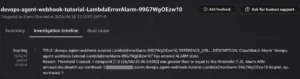
The effectiveness of this closed-loop system is best illustrated by the timeline of a throttled Lambda function failure. In a traditional setup, an engineer might spend 30 to 60 minutes identifying that a reserved concurrency limit was the root cause of an application outage. With the integrated AWS DevOps Agent, the timeline is compressed into a five-minute window:
- T+0s: The incident begins when an application Lambda function hits a reserved concurrency limit of zero, leading to immediate request throttling.
- T+30s: The system records the surge in "TooManyRequestsException" errors within the
application-logs-*index. - T+120s: The OpenSearch Alerting monitor detects the threshold breach and fires an SNS notification.
- T+130s: The webhook forwarder processes the alert and delivers the payload to the AWS DevOps Agent.
- T+135s: The agent initiates the investigation, using its MCP tools to pull logs, traces, and the most recent CloudTrail configuration changes.
- T+300s: The agent delivers a final report, identifying that a
PutFunctionConcurrencycall was made exactly two minutes prior to the error spike, and suggests the specific remediation command.
Security and Data Integrity Considerations
A core requirement for any automated diagnostic tool is strict adherence to the principle of least privilege. In this architecture, security is enforced through fine-grained access control (FGAC). The IAM role assigned to the MCP server or the AWS DevOps Agent is mapped to a specific backend role within OpenSearch. This role is scoped strictly to the observability indices—such as application-logs-* and otel-traces-*—preventing the agent from accessing sensitive business data or performing unauthorized write operations.
Furthermore, the use of VPC Lattice for the self-managed path ensures that the connection between the agent and the NLB is encrypted and private. By using an NLB rather than an Application Load Balancer, the system avoids the potential stripping of chunked transfer encoding headers, which are essential for the streamable-HTTP transport used by MCP.
Broader Implications for Observability Engineering
The implications of this integration extend beyond simple efficiency gains. By automating the "investigation" phase of incident management, organizations can fundamentally change the nature of on-call rotations. When the agent is capable of providing a synthesized root cause analysis, the human engineer transitions from a "data hunter" to a "decision maker." This reduces the cognitive load during high-pressure outages and allows teams to focus on long-term systemic improvements rather than recurring manual triage.
Furthermore, the economic case for this transition is clear. While the infrastructure costs associated with running MCP servers—typically ranging from $50 to $100 per month depending on region and usage—might seem like an additional overhead, they are negligible compared to the cost of engineering hours lost to manual incident response. When multiplied by the number of incidents across a large-scale microservices environment, the reduction in MTTR translates to significant operational savings and improved service reliability.
Conclusion
The path forward for observability is clear: the integration of AI agents into the incident response pipeline is no longer a theoretical exercise but a practical, deployable reality. By leveraging the Model Context Protocol to connect AWS DevOps Agent with OpenSearch, organizations are finally closing the loop that has hampered engineering productivity for years. As these tools continue to mature, the focus will likely move toward automated remediation, where the agent not only identifies the root cause but also suggests or executes the fix. For now, teams are encouraged to begin by identifying their most frequent, time-consuming alerts and routing them through this pipeline, thereby reclaiming hours of productivity and enabling a more resilient operational posture.