Comprehensive Cloud Ecosystem Expansion Positions Enterprise Infrastructure for Next-Generation Artificial Intelligence Workloads


The modern enterprise technology landscape is undergoing a profound structural transformation, driven primarily by the exponential demand for artificial intelligence, machine learning, and scalable cloud-native architectures. In response to these shifting paradigms, leading cloud service providers are systematically overhauling their product portfolios to offer holistic, end-to-end ecosystems. Rather than merely providing isolated virtual machines or basic storage solutions, contemporary cloud infrastructure providers are now expected to deliver fully integrated suites spanning high-performance compute, secure container orchestration, managed database engines, advanced developer toolsets, enterprise networking, multi-layered security protocols, and infinite scalable storage. This strategic consolidation allows organizations ranging from agile startups to multinational corporations to build, deploy, and scale complex digital products with unprecedented velocity and reliability.
Background and Market Context
To fully understand the current momentum in cloud architecture expansion, one must examine the macro-level economic and technological shifts of the past decade. The early phases of cloud computing were characterized by infrastructure-as-a-service (IaaS) adoption, where businesses migrated physical servers into virtualized data centers primarily to reduce capital expenditure on hardware. As the market matured through the mid-2010s, platform-as-a-service (PaaS) offerings emerged, abstracting away underlying operating systems and allowing developers to focus strictly on application logic.
However, the explosive mainstream adoption of generative artificial intelligence, large language models, and data-intensive analytical processing over the last three years has fundamentally redefined enterprise expectations. Modern workloads require hyper-specialized hardware, ultra-low latency networking, and automated pipelines capable of handling petabytes of unstructured data in real time. Industry analysts estimate that global spending on public cloud services will surpass $600 billion, with artificial intelligence infrastructure accounting for the fastest-growing segment of capital expenditure. Consequently, cloud providers are racing to unify their offerings into comprehensive, feature-rich ecosystems that eliminate friction across every stage of the software development lifecycle.
Chronology of Infrastructure Evolution
The journey toward unified cloud ecosystems has accelerated significantly through distinct operational phases over recent years. In the initial foundational phase, providers focused heavily on establishing robust physical data center footprints, guaranteeing high availability, and offering basic elastic compute instances alongside simple object storage buckets. This laid the groundwork for reliable remote data management.
During the subsequent integration phase, which unfolded over the subsequent several years, the industry witnessed the rise of containerization technologies like Docker and Kubernetes. Cloud providers responded by introducing managed container registries and orchestration platforms, enabling developers to package applications with all their dependencies and run them seamlessly across diverse environments. Concurrently, the demand for high-performance, fault-tolerant relational and non-relational databases prompted the introduction of fully managed database engines, relieving database administrators from the burdens of manual patching, scaling, and backup management.
In the current ecosystem consolidation phase, the focus has shifted toward advanced management, developer tooling, and end-to-end security automation. Providers are integrating artificial intelligence directly into the management plane—offering predictive scaling, automated cost optimization, and intelligent threat detection. This evolution ensures that infrastructure not only supports modern applications passively but actively assists in their optimization and protection.
Detailed Breakdown of Core Cloud Infrastructure Pillars
Building, Deploying, and Scaling Cloud Compute Resources
At the heart of any modern cloud architecture lies the compute layer. Enterprises require access to elastic, high-performance compute resources that can scale dynamically based on real-time traffic fluctuations. Modern compute offerings extend far beyond traditional virtual machines, encompassing specialized GPU-accelerated instances designed specifically for training and running complex machine learning models. These resources allow engineering teams to provision thousands of central processing units (CPUs) and graphics processing units (GPUs) within minutes, execute massive parallel computations, and de-provision them immediately upon task completion, ensuring optimal cost efficiency.
Safely Storing and Managing Containers and Backups
As microservices architectures have become the industry standard for software development, containerization has emerged as a critical discipline. Safely storing, versioning, and managing containers and their associated backups is paramount to maintaining continuous integration and continuous deployment (CI/CD) pipelines. Modern container registries provide vulnerability scanning, automated image lifecycle management, and geo-replication. This ensures that development teams can deploy code updates globally with the absolute confidence that their runtime environments remain secure, compliant, and resilient against unexpected system failures.
Fully Managed Resources Running Popular Database Engines
Data management remains one of the most complex challenges for enterprise organizations. The modern cloud ecosystem addresses this by offering fully managed resources running popular open-source and proprietary database engines, including PostgreSQL, MySQL, Redis, and specialized vector databases optimized for AI similarity searches. These managed services automate routine maintenance operations such as automated backups, point-in-time recovery, automatic failover, and performance tuning. By delegating these operational overheads to the cloud provider, database administrators and software engineers can redirect their focus toward data architecture and application innovation.
Controlling Infrastructure and Gathering Insights
Management and developer tools serve as the neurological system of cloud infrastructure. Effective governance requires centralized visibility, granular access controls, and deep telemetry data. Modern management suites empower administrators to define infrastructure-as-code (IaC) templates, enforce compliance policies automatically, and monitor system performance through unified dashboards. Furthermore, advanced observability tools leverage machine learning to analyze log streams, detect anomalous behavior, and provide actionable insights that prevent system outages before they impact end-users.
Securing and Controlling Traffic to Applications
Networking in the cloud is no longer limited to basic virtual private clouds (VPCs) and IP routing. With cyber threats growing increasingly sophisticated, securing and controlling traffic to applications requires a comprehensive suite of networking and security tools. This includes advanced load balancers, content delivery networks (CDNs) with integrated web application firewalls (WAF), and zero-trust network access (ZTNA) policies. These features ensure that data in transit is encrypted, traffic is distributed efficiently across global edge locations, and unauthorized access attempts are blocked at the perimeter.
Protecting Accounts and Resources with Advanced Security Features
Security is a shared responsibility, but cloud providers are continually raising the bar by embedding robust protective measures directly into the fabric of their platforms. From multi-factor authentication (MFA) enforcement and identity and access management (IAM) best practices to hardware-based encryption keys and real-time threat intelligence feeds, these security features help protect enterprise accounts and cloud resources from malicious actors. Compliance frameworks (such as SOC 2, HIPAA, and GDPR) are often natively supported, simplifying the auditing process for heavily regulated industries like finance and healthcare.
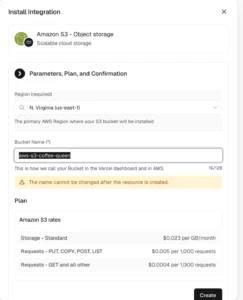
Storing and Accessing Data Reliably in the Cloud
Data is widely regarded as the most valuable asset of the modern enterprise. Cloud storage solutions must provide infinite scalability, high durability, and low latency access. Whether dealing with cold archival storage for long-term compliance or hot object storage for high-frequency transactional applications, modern storage tiers offer 99.999999999% (eleven nines) of durability. Automated lifecycle policies enable organizations to transition data seamlessly between performance tiers based on access frequency, optimizing storage expenditures without compromising data availability.
Data and Market Statistics
Recent empirical data underscores the urgency with which organizations are adopting comprehensive cloud ecosystems. According to enterprise technology research reports, companies that utilize a unified cloud provider for compute, storage, database, and security services experience a 35% reduction in infrastructure management overhead compared to organizations employing multi-vendor, patchwork architectures.
Furthermore, developer productivity metrics indicate that teams utilizing integrated CI/CD pipelines alongside managed container and database services deploy code updates up to four times faster than those relying on legacy on-premise infrastructure. In the realm of artificial intelligence, organizations leveraging specialized cloud compute instances equipped with integrated machine learning toolsets report a 50% decrease in time-to-market for new AI-driven features. These quantifiable metrics illustrate the direct correlation between ecosystem maturity and organizational agility.
Industry Perspectives and Expert Analysis
Technology analysts and industry executives have consistently emphasized the strategic necessity of ecosystem unification. Speaking at a recent enterprise technology summit, Dr. Elena Vance, senior vice president of cloud research at a leading market intelligence firm, noted that the era of treating cloud services as discrete commodities is officially over.
"Enterprises are no longer asking how cheaply they can rent a virtual server," Dr. Vance stated during a keynote address. "They are asking how rapidly they can orchestrate data, machine learning pipelines, and secure microservices across a cohesive global fabric. Providers that fail to deliver a seamless, integrated product suite will find themselves relegated to low-margin commodity hardware suppliers, while platform-centric ecosystems capture the vast majority of enterprise value."
Similarly, enterprise chief technology officers have highlighted the importance of robust security and management tooling within these integrated ecosystems. As remote and hybrid work models become permanent fixtures of the global economy, the attack surface for enterprise networks has expanded exponentially. Industry consensus suggests that unified security monitoring—where networking, identity management, and threat intelligence operate within a single pane of glass—is no longer a luxury feature, but a fundamental prerequisite for business continuity.
Broader Impact and Strategic Implications
The ongoing expansion and refinement of cloud infrastructure portfolios carry profound implications for the global economy, software development methodologies, and the democratization of advanced technology.
From an economic perspective, the lowering of barriers to entry facilitated by comprehensive cloud ecosystems empowers small and medium-sized enterprises (SMEs) to compete on a global scale. Historically, developing sophisticated artificial intelligence applications or globally resilient web platforms required millions of dollars in capital expenditure for data center hardware and specialized personnel. Today, a startup with a modest operating budget can provision enterprise-grade compute, globally distributed databases, and military-grade security protocols within minutes, paying strictly for the resources consumed.
From a technical standpoint, the abstraction of infrastructure complexity accelerates the pace of innovation. Developers are increasingly freed from the undifferentiated heavy lifting of server maintenance, database tuning, and manual patch management. This cultural and technical shift encourages experimentation, allowing engineering organizations to focus their creative energies on solving complex domain-specific problems and delivering superior user experiences.
However, this high degree of integration also introduces new challenges, chief among them being vendor lock-in. As organizations bind their application architectures ever more tightly to proprietary ecosystem services, migrating workloads between competing cloud providers becomes increasingly complex and costly. Enterprise architects must carefully weigh the undeniable operational efficiencies of deep ecosystem integration against the long-term strategic flexibility of multi-cloud or hybrid strategies.
Looking ahead, the trajectory of cloud computing will undoubtedly be defined by deeper automation, tighter integration with generative artificial intelligence agents, and enhanced edge-computing capabilities. As data generation continues to outpace storage capacity growth, and as real-time inference requirements push computing boundaries closer to the end-user, cloud providers that maintain agile, secure, and comprehensive product portfolios will dictate the standards of the digital economy. The continuous evolution of these platforms ensures that the cloud will remain the primary engine of global technological advancement for decades to come.
Related posts: