Solving Cross-Stack Infrastructure Failures with AWS DevOps Agent and Automated Remediation

Modern cloud architecture frequently leverages modularity to scale, with infrastructure teams often partitioning resources into independent Terraform stacks. While this approach provides clear ownership boundaries and limits the blast radius of routine changes, it introduces a significant operational blind spot: the visibility gap. When a configuration change in one stack triggers a silent failure in another, teams often find themselves trapped in a cycle of diagnosing symptoms that point toward the wrong root cause. AWS DevOps Agent, a service designed to bridge these silos, offers a systematic approach to identifying and mitigating cross-stack failures that defy traditional monitoring tools.
The Anatomy of a Cross-Stack Failure
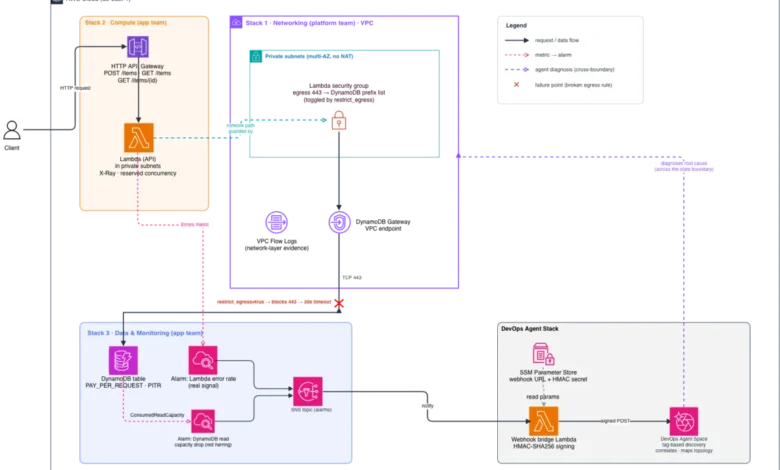
In a typical multi-stack environment, an infrastructure team might manage networking components such as Virtual Private Clouds (VPCs), subnets, and security groups, while an application team oversees compute and data layers, such as AWS Lambda functions and Amazon DynamoDB tables. These teams operate in isolation, utilizing independent Terraform state files to maintain their infrastructure.
The primary challenge emerges during routine maintenance. For instance, an infrastructure engineer performing a security audit might update a security group egress rule to align with compliance policies. By restricting egress traffic to a specific VPC CIDR range rather than a broad prefix list, the engineer inadvertently severs the network path between an application’s Lambda function and its DynamoDB database. Because the Lambda function remains functional and its own IAM policies appear correct, the application team experiences mysterious timeouts. The monitoring alarms trigger, yet the diagnostic data directs the team to investigate the application code, the Lambda runtime, or the DynamoDB table—all of which are functioning correctly. This is the "visibility gap," where the team experiencing the symptom does not own the stack responsible for the underlying failure.
Diagnostic Capabilities of AWS DevOps Agent
AWS DevOps Agent addresses this fragmentation by correlating disparate alarms and mapping dependency chains across state boundaries. By utilizing AWS CloudTrail logs and resource topology discovery, the agent can trace a failure back to a specific infrastructure change that occurred in a separate, seemingly unrelated stack.
The diagnostic process begins when the agent receives signed alarm events through a webhook bridge. Upon receiving these signals, the agent initiates an investigation that operates in parallel, rather than the linear, time-consuming "log-diving" method often employed by human engineers. By cross-referencing Lambda execution metrics, DynamoDB health status, and VPC Flow Logs, the agent isolates the networking modification as the primary catalyst. In the scenario of the restricted egress rule, the agent identifies the exact moment the change was applied, correlating the network configuration update with the subsequent rise in Lambda connection timeouts.
Deployment and Integration Architecture
To implement this diagnostic framework, organizations must deploy a series of interdependent Terraform stacks, typically organized by domain: networking, compute, and data-monitoring. A dedicated AWS DevOps Agent stack is also provisioned to facilitate the investigation. The networking stack houses the VPC, private subnets, and security groups, while the compute stack manages the Lambda functions and API Gateway. The data-monitoring stack contains the DynamoDB table and the associated CloudWatch alarms.
Connecting these layers requires a webhook bridge Lambda function. Because CloudWatch alarms do not possess a native, direct integration with the AWS DevOps Agent, the bridge serves as a secure conduit. It receives SNS notifications from the alarms, signs the payloads using HMAC-SHA256, and forwards them to the Agent Space. This security measure ensures that the agent only processes authenticated and legitimate signals, preventing unauthorized or spoofed traffic from triggering investigative workflows.
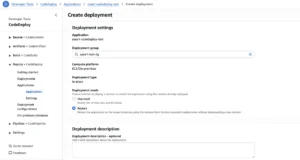
The initial setup requires careful attention to IAM configurations. The service principal for the agent, aidevops.amazonaws.com, must be explicitly granted sts:AssumeRole permissions, and the aws:SourceArn condition must match the specific Agent Space ARN to prevent configuration errors. Once the association is established in "monitor" mode, the agent begins the discovery phase, which maps the relationships between various resources. For a standard environment, this process typically stabilizes within 10 to 15 minutes, creating a baseline topology that the agent uses to contextualize future incidents.
Closing the Remediation Loop with Kiro
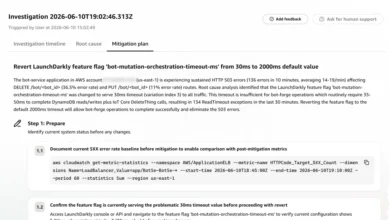
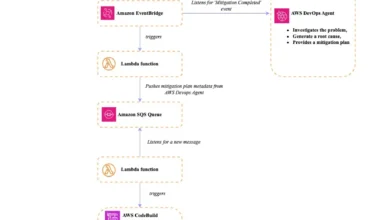
Diagnosis is only the first step in operational recovery. AWS DevOps Agent enhances this process by generating a "mitigation plan"—a structured, actionable guide that details the necessary corrective measures. This plan serves as a handoff to orchestration tools like Kiro.
Kiro interprets the mitigation specification by comparing the current state of the infrastructure with the required fix. For a security group misconfiguration, Kiro identifies the specific egress rule that was toggled and provides the necessary Terraform code to revert or adjust it. This approach ensures that the remediation is precise, minimizing the risk of secondary errors during the recovery process. The engineer reviews the generated diff, verifies the plan through a standard terraform plan execution, and applies the fix, thereby closing the loop between detection and resolution.
Broader Implications and Best Practices
The necessity for such tooling highlights a fundamental shift in cloud operations: as systems grow in complexity, human-led debugging is becoming increasingly inefficient. The reliance on independent Terraform stacks is a standard industry best practice for team autonomy, yet it inherently creates "hidden" dependencies. The AWS DevOps Agent represents a transition toward observability that understands infrastructure as a web of relationships rather than isolated components.
Data from early implementations suggests that automating the correlation of cross-stack signals can reduce Mean Time to Resolution (MTTR) by eliminating the "finger-pointing" phase of incident response. When the agent provides a clear link between a networking change and an application failure, the teams involved can collaborate based on evidence rather than speculation.
However, there are limitations to this automated approach. The agent’s effectiveness is predicated on the quality of its topology discovery and the richness of the available logging data. If VPC Flow Logs or CloudTrail events are disabled or insufficient, the agent’s ability to narrow down the root cause is significantly diminished. Furthermore, the agent is a tool for support, not a replacement for human oversight. The final authority to deploy code or infrastructure changes must remain with qualified engineering staff to ensure that proposed mitigations align with broader system requirements and compliance standards.
Conclusion
The evolution of DevOps requires tools that can see past the boundaries of individual state files and understand the holistic health of the cloud environment. By integrating AWS DevOps Agent into the deployment pipeline, organizations can maintain the benefits of modular, team-owned infrastructure without sacrificing operational transparency. As organizations continue to scale, the ability to rapidly diagnose and remediate cross-stack failures will prove to be a critical component of resilient cloud management. Through the combination of automated diagnostic agents and structured mitigation workflows, teams can ensure that infrastructure changes—even those intended to improve security or compliance—do not inadvertently compromise application availability. The future of cloud operations lies in this synthesis of automated intelligence and human-governed execution, transforming complex, multi-stack troubleshooting into a streamlined, evidence-based process.