AWS Weekly Roundup: Generative AI In Agribusiness, Continuum Vulnerability Management, And Major Enterprise Updates

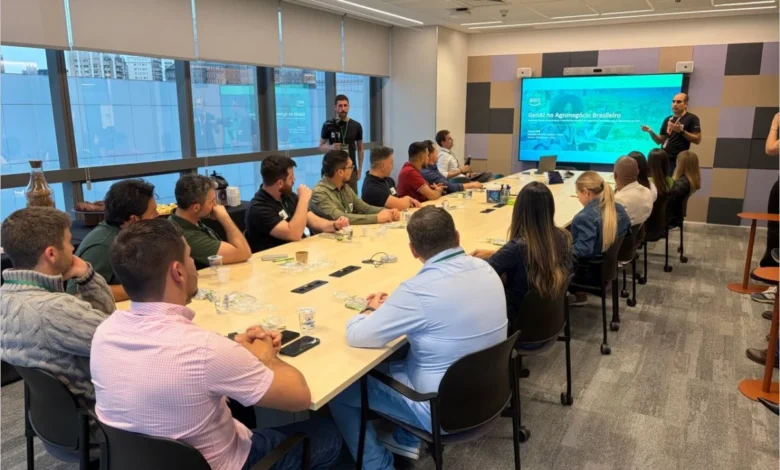
Amazon Web Services recently showcased the transformative intersection of generative artificial intelligence and traditional industries during a high-level briefing with commercial and technology leaders from Brazilian agribusiness in São Paulo. Discussions centered not on whether artificial intelligence belongs in modern agriculture—an argument long settled among field operators—but on the tactical realities of deployment. In environments where users frequently interact with digital systems while navigating remote farm roads, the interface is inherently auditory. This operational necessity elevated a seemingly routine software update to the top of the weekly briefing: the expansion of the Amazon Polly Generative engine, which introduced 14 new voices, notably including two tailored for Brazilian Portuguese.
Beyond human-computer interfaces, the broader technology landscape was dominated by acute security challenges, hardware-agnostic machine learning developments, and monumental database migrations. Security analysts and cloud architects faced a sobering reality regarding the compression of vulnerability lifecycles, evidenced by fresh telemetry data from Amazon’s own threat intelligence operations.
Reimagining Vulnerability Management with AWS Continuum
The security ecosystem is confronting a paradigm shift where the traditional delay between the public disclosure of a software vulnerability and its active exploitation has effectively vanished. Highlighting this urgency, AWS announced the general availability of AWS Continuum, a comprehensive code vulnerability management service designed to move past static scanners that merely output raw lists of findings.
Rather than stopping at severity ratings, Continuum builds an intricate context graph mapping code repositories directly to operational cloud environments. It assigns verified evidence levels to each discovered flaw and safely reproduces exploitable findings within an isolated sandbox environment, generating proof-of-concept code so engineering teams can observe the actual mechanics of a threat. Vulnerabilities are systematically prioritized based on how closely their associated attack paths run to business-critical assets, subsequently automating the remediation process by opening pull requests with proposed fixes.
To maintain strict operational boundaries, current implementations require human intervention and approval before any remediation code can be merged into production environments. Autonomous fix workflows remain gated behind strict confidence thresholds planned for future iterations. At launch, AWS Continuum is available in the US East (N. Virginia) and US West (Oregon) regions.
Telemetry Evidence and the Zero-Day Compression Window
The commercial imperative for tools like AWS Continuum was underscored by empirical data released by Amazon Threat Intelligence during the same week. Telemetry captured by internal honeypots—specifically under the MadPot framework—identified active exploitation attempts of the PHP2Shell vulnerability (cataloged under CVE-2026-109618 and CVE-2026-109619) on October 17. Crucially, this exploitation occurred four days prior to public disclosure.

By the time the vulnerabilities were formally disclosed, working proof-of-concept exploits were actively circulating across hacker forums at approximately 02:00 UTC, a full twelve hours before the official embargo lifted at 14:00 UTC. Cybersecurity analysts stress that these findings dismantle traditional patch management assumptions. Incident response teams can no longer measure patch windows in days or benchmark investigations against disclosure dates; instead, audits must trace timelines back to the earliest known telemetry-backed exploitation attempts. Alongside these findings, AWS published targeted AWS WAF mitigations to help enterprises block ongoing exploit vectors.
Streamlining Microservices Architecture with Amazon ECS Gateway
Addressing architectural complexities in containerized environments, Amazon Web Services introduced the Amazon ECS Gateway. This managed service divides the operational overhead of exposing microservices between network infrastructure teams and application development groups.
Platform engineering teams configure a centralized gateway incorporating organizational subnets, security groups, Transport Layer Security (TLS) certificates, listener settings, and AWS WAF web access control lists. Application teams consume these resources simply by adding a gateway connector to their service definitions. In response, Amazon Elastic Container Service provisions an AWS Certificate Manager (ACM) certificate, a unique DNS hostname, listener rules, target groups, and strict security groups that accept inbound traffic exclusively from the designated Application Load Balancer.
The financial and operational efficiencies of this model are substantial. A single Application Load Balancer can now handle up to 25 separate services. ECS automates the lifecycle of the infrastructure, provisioning the initial ALB upon the first connection and decommissioning it when services are retired. Furthermore, a single gateway supports up to 10,000 clusters, with a maximum of five gateways permitted per cluster. Organizations can adopt the service incrementally using the UpdateService API without disrupting existing load balancers. Amazon ECS Gateway is available at no additional charge in all commercial regions where Amazon ECS operates.
Expanding Voice Capabilities and Hardware Flexibility in Machine Learning
Artificial intelligence infrastructure and machine learning tooling received major updates designed to reduce operational friction and broaden language support.
The Amazon Polly Generative engine upgrade expanded its catalog to 57 generative voices spanning 11 languages and 25 locales. The update introduces 14 new voices across nine locales, bringing general availability to Hindi and Finnish for the first time. The inclusion of Leo and Carolina introduces native Brazilian Portuguese voices into the generative tier. Because the upgrade functions as a drop-in replacement, developers retain existing voice names and SynthesizeSpeech API calls without incurring price changes while benefiting from significantly higher vocal fidelity.
In the hardware tier, AWS announced the public beta of TorchNeuron, an open-source PyTorch backend designed to run advanced machine learning models natively on AWS Trainium chips. By modifying execution code simply to .to('neuron'), developers can execute models on Trainium2 and Trainium3 hardware without rewriting foundational architectures, preserving both eager execution and torch.compile capabilities. The integration relies on the Neuron Kernel Interface for custom operators and arrives alongside the rollout of AWS Neuron 2.33.

Complementing hardware choices, Amazon SageMaker AI introduced generally available training sessions that decouple model customization from GPU management. Developers maintain granular control over the post-training loop—including custom loss functions and reward signals—while SageMaker automates GPU allocation, distributed execution, fault recovery, and checkpoint storage. Billing meters pause automatically while custom reward functions compute batches. This capability launches alongside expanded support for Muse Glimmer, Qwen 3.8, and Ministral 3 models.
Enterprise Database Migrations and Production Data Management
Data engineering teams gained powerful new mechanisms for managing application state and database migrations at scale.
Amazon Bedrock integrated structured output capabilities for Anthropic Claude models across both bedrock-runtime and bedrock-mantle endpoints. Enterprises can now guarantee schema-compliant JSON responses from language models natively, eliminating custom parsing scripts, retry loops, and complex post-processing layers. This enhancement drastically improves the reliability of automated workflows such as extracting mandated fields from complex financial audit reports, parsing clinical medical histories, and routing customer support tickets based on semantic intent.
For real-time data caching, Amazon ElastiCache Serverless for Valkey introduced zero-downtime online migrations. Organizations running self-managed Valkey or Redis OSS instances on Amazon EC2 can migrate live data directly into ElastiCache Serverless without incurring application downtime or dropping client connections, meeting strict enterprise availability service-level agreements. The migration workflow manages data synchronization natively without requiring third-party replication utilities, and is currently available across all commercial, Chinese, and AWS GovCloud regions.
Proving the viability of these enterprise migrations at extreme scales, recent case studies highlighted how institutions like U.S. Bank successfully transitioned 119 terabytes of data from on-premises Oracle Exadata databases to Amazon RDS for Oracle. Utilizing a configuration-driven pipeline powered by Oracle XTTS, AWS DataSync, and Amazon EFS, the initial baseline copy completed in approximately seven days over a bandwidth-constrained Direct Connect link, maintaining zero data loss and achieving average cutover durations of just four hours per database.
Industry Implications and Future Outlook
The breadth of recent updates reflects a maturing cloud ecosystem focused heavily on operational resilience, autonomous remediation, and the removal of infrastructure friction. By bridging the gap between automated code fixes and real-time threat intelligence, tools like AWS Continuum signal a necessary evolution in enterprise cybersecurity as threat actors accelerate exploitation timelines. Simultaneously, architectural abstractions such as ECS Gateway and serverless migration pipelines demonstrate a continued commitment to lowering the administrative overhead of distributed cloud environments.
Industry professionals and cloud architects are currently preparing for the upcoming conference season. Registration and session catalog scheduling are fully underway for AWS re:Invent, scheduled to run from November 30 to December 4 in Las Vegas, which is expected to draw tens of thousands of technologists for over 2,200 specialized sessions. Regionally, the global community circuit will conclude its Brazilian calendar with the AWS Community Day Brasil Norte in Belém, rounding out a consequential quarter for global cloud computing and enterprise artificial intelligence adoption.