Microsoft Azure Databricks Delivers Unprecedented ROI and Accelerated Time-to-Value, New Forrester Study Confirms

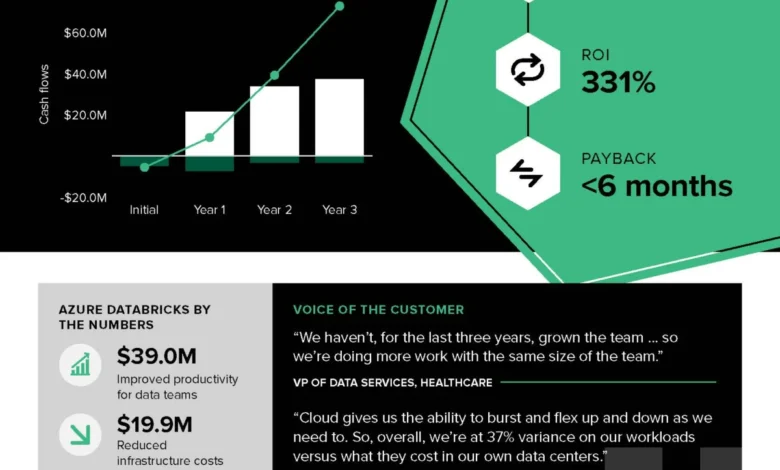
Microsoft Azure Databricks, the deeply integrated analytics platform co-engineered by Microsoft and Databricks, is demonstrating significant and measurable business value for organizations, according to a comprehensive Total Economic Impact™ (TEI) study commissioned by Microsoft and conducted by Forrester Consulting. The findings reveal a compelling financial case for adopting Azure Databricks, showcasing substantial returns on investment, significant net present value, and rapid payback periods for a composite organization representative of interviewed customers.
The study, which evaluated a hypothetical $6 billion company operating within a regulated industry and managing approximately 10 petabytes of data, found that this composite organization realized a remarkable 331% return on investment over a three-year period. This translated into a net present value of $58.1 million, with the initial investment recouped in less than six months. These figures underscore the platform’s ability to drive tangible business outcomes by streamlining data operations, accelerating insights, and fostering broader data accessibility, all while maintaining robust governance.
The Genesis of a Powerful Partnership and a Landmark Study
The strategic alliance between Microsoft and Databricks has been a driving force behind the development and delivery of Azure Databricks. This collaboration is not merely a technological integration but a deep co-engineering effort, ensuring that Databricks’ powerful data and AI capabilities are natively embedded within the Azure ecosystem. This "first-party advantage" means that Azure Databricks benefits from seamless integration with Microsoft’s extensive suite of tools, including identity management, security protocols, and governance frameworks that organizations already leverage.
This inherent integration, rather than being an add-on, is a core tenet of the Azure Databricks offering. The shared engineering roadmap between Microsoft and Databricks ensures continuous optimization and accelerated innovation. This unified approach simplifies go-to-market strategies for customers, offering a single billing experience and a consolidated support path. For technical teams, this translates into enhanced performance and deeper, more intuitive integration. For the business, the advantages are equally profound, manifesting as reduced costs, mitigated risks, and a significantly faster realization of value from data initiatives.
Recognizing the critical need for decision-makers to understand the concrete business impact of such advanced platforms, Microsoft commissioned the Forrester TEI study. The objective was to move beyond technical specifications and quantify the real-world economic benefits derived from Azure Databricks. The study’s methodology involved in-depth interviews with existing Azure Databricks customers, whose experiences were synthesized into a composite organization to provide a representative financial model.
Key Findings: Quantifying the Economic Impact
The Forrester TEI study meticulously detailed the financial transformation experienced by the composite organization. Prior to implementing Azure Databricks, the organization grappled with a fragmented and costly data infrastructure that suffered from unreliability at scale and presented significant governance challenges. The deployment of Azure Databricks fundamentally altered this landscape.
Over a three-year period, the composite organization reported total benefits amounting to $75.6 million, juxtaposed against total costs of $17.5 million. This substantial positive delta resulted in the aforementioned $58.1 million in net present value. The study identified four primary drivers for these significant financial gains:
- Increased Productivity: This was a cornerstone benefit, stemming from the streamlined workflows and enhanced collaboration facilitated by Azure Databricks. The platform’s intuitive interface and robust tooling empower data professionals to work more efficiently, reducing the time spent on repetitive tasks and enabling them to focus on higher-value analytical activities. The deep integration with familiar Microsoft tools further minimizes the learning curve and accelerates adoption, leading to immediate productivity gains.
- Reduced IT Infrastructure and Operational Costs: The consolidated nature of Azure Databricks, as a first-party Azure service, significantly reduces the need for redundant infrastructure and complex management overhead. By eliminating data silos and the associated costs of maintaining disparate systems, organizations can achieve substantial savings. Furthermore, the platform’s inherent scalability and optimized resource utilization contribute to lower operational expenditures.
- Improved Data Governance and Compliance: In regulated industries, robust data governance is not just a best practice but a necessity. Azure Databricks, particularly with its integration of Unity Catalog, provides a centralized and unified approach to data governance. This ensures that data access is strictly controlled, auditable, and aligned with organizational policies, thereby mitigating compliance risks and the potential for costly breaches or violations. The ability to govern data at scale across diverse data types and sources is a critical value driver.
- Accelerated Time-to-Market for Data Products and Insights: In today’s competitive landscape, the ability to quickly derive actionable insights and bring data-driven products to market is paramount. Azure Databricks significantly reduces the time required for data preparation, model development, and deployment. This acceleration allows organizations to capitalize on emerging opportunities, respond swiftly to market changes, and gain a competitive edge.
Beyond these quantifiable benefits, Forrester also highlighted several unpriced advantages that contribute significantly to the overall value proposition of Azure Databricks. These include the seamless integration with native Azure services, which enhances the overall cloud experience; the ability to generate insights more rapidly, empowering faster decision-making; the provision of wider access to data for a broader range of users, fostering a more data-driven culture; and the enhanced governance capabilities delivered through Unity Catalog, which ensures that data is both accessible and secure.
The Role of Co-Engineering and Native Integration
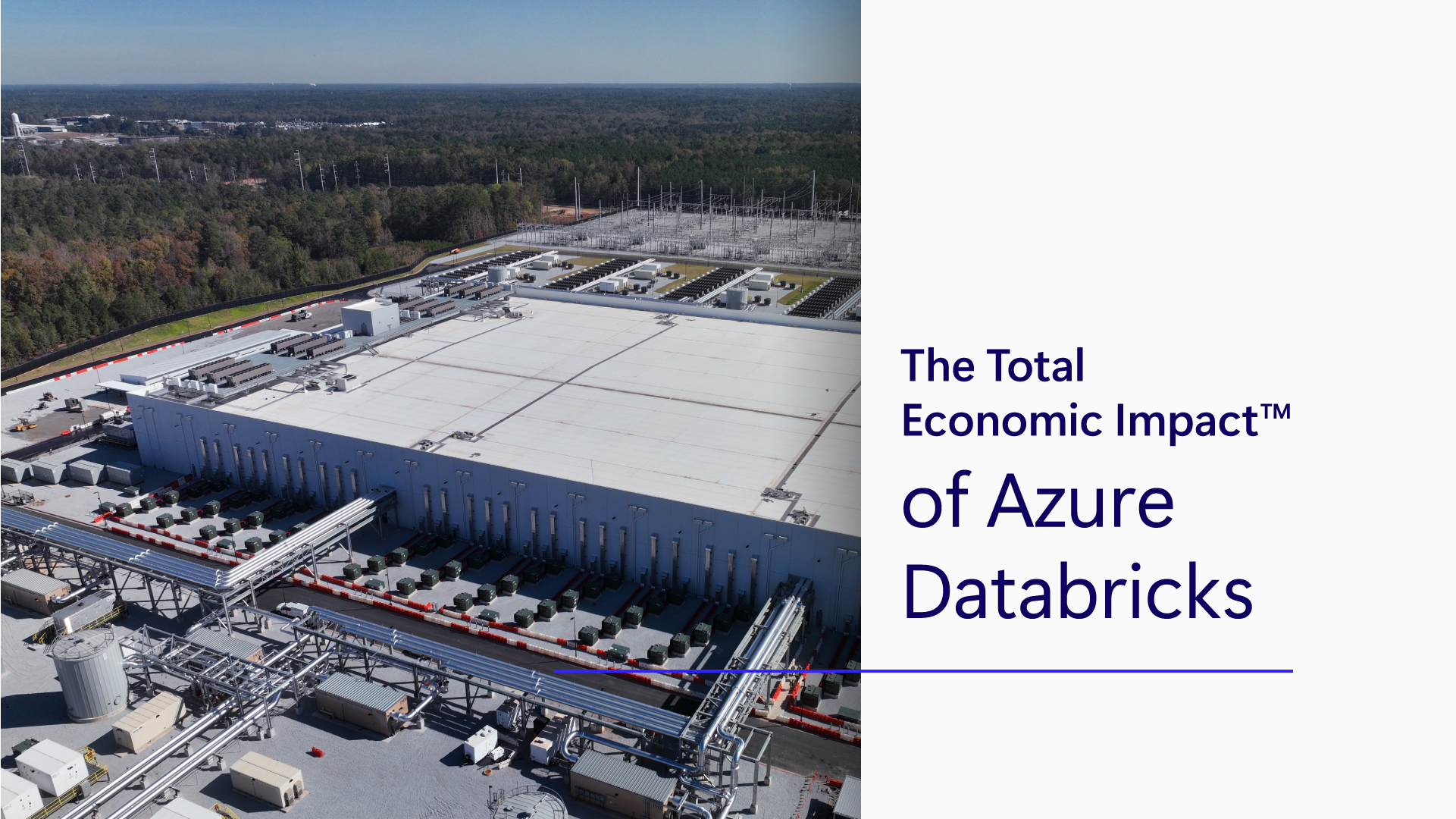
The profound value realized by Azure Databricks customers can be directly attributed to its nature as a true first-party Azure service, meticulously co-engineered by Microsoft and Databricks. This deep collaboration ensures that the platform is not merely hosted on Azure but is intrinsically woven into its fabric. This intrinsic integration eliminates the inefficiencies and added costs often associated with integrating third-party solutions, such as managing extra data copies, maintaining disparate toolsets, and undertaking extensive integration work.
A prime illustration of this integrated advantage is the synergy between Azure Databricks Genie and Microsoft Copilot Cowork. This integration empowers users to infuse their business context into the platform, building upon existing intelligence within the tools they already use daily. Azure Databricks Genie enables users to query their lakehouse using natural language, now accessible directly within Microsoft Teams, Microsoft 365 Copilot, and importantly, Copilot Cowork. Within Copilot Cowork, tasks are grounded in trusted data through Genie Ontology, ensuring that every response is contextually relevant and accurate. Crucially, all answers are meticulously scoped by Unity Catalog, guaranteeing that users only see the data they are authorized to access, thereby extending intelligence seamlessly into workflows without compromising governance.
This depth of integration permeates the entire Azure Databricks platform, extending to other key Azure services. The platform’s seamless interaction with Azure Machine Learning facilitates the end-to-end machine learning lifecycle, from data preparation to model deployment and monitoring. The integration with Azure Synapse Analytics allows for unified data warehousing and big data analytics, providing a comprehensive solution for diverse analytical needs. Furthermore, the connection with Azure Active Directory ensures robust security and identity management, aligning with existing enterprise security protocols. These integrations, while not always directly priced in studies like Forrester’s, are fundamental enablers of the productivity and cost efficiencies that are quantified.
Performance Benchmarks: An Independent Validation
Beyond the economic impact, the performance of Azure Databricks has also been rigorously tested. Principled Technologies, an independent research firm, conducted an industry-standard decision-support benchmark, similar to TPC-DS, on a 10-terabyte dataset. The results were compelling: Azure Databricks demonstrated superior performance compared to Databricks on AWS. Specifically, Azure Databricks completed a single query stream up to 21.1% faster when autoscale was disabled. Moreover, it handled four concurrent query streams over nine minutes faster, highlighting its efficiency and scalability under demanding workloads. These independent benchmarks validate the platform’s ability to deliver both speed and cost-effectiveness, crucial factors for organizations managing large and complex data environments.
Implications for Organizations: A Strategic Advantage
The decision of which data and AI platform to adopt is a strategic one, with long-term implications for an organization’s ability to innovate and compete. Azure Databricks offers a reinforcing ecosystem where each component amplifies the strengths of the others. The deep integration drives the cost savings quantified by Forrester, while the robust performance ensures that these gains are sustained as data volumes and usage grow.
The foundation of this integrated advantage lies in the first-party partnership between Microsoft and Databricks. This partnership ensures that customers benefit from the combined engineering prowess, aligned roadmaps, and unified support of both organizations. The measured value – a 331% three-year ROI with a payback period under six months – is not merely a marketing claim but a demonstrable reality for organizations leveraging Azure Databricks. This compelling economic case is a primary reason why a growing number of teams are choosing to build and manage their lakehouse environments on Azure Databricks, positioning themselves for data-driven success in the modern era.
The implications for businesses are far-reaching. By consolidating their data and AI initiatives on a single, integrated platform, organizations can:
- Democratize Data Access: With tools like Azure Databricks Genie, more users across the organization can interact with data in a natural, intuitive way, fostering a truly data-driven culture.
- Accelerate Innovation Cycles: The reduced friction in data processing, analysis, and deployment allows for faster iteration on new products, services, and business strategies.
- Enhance Security and Compliance: The robust governance features, particularly Unity Catalog, provide granular control over data access, ensuring compliance with evolving regulatory landscapes and protecting sensitive information.
- Optimize Cloud Spend: The efficient resource utilization and integrated nature of Azure Databricks contribute to significant cost savings compared to managing disparate data platforms.
- Future-Proof Their Data Strategy: The continuous innovation driven by the Microsoft-Databricks partnership ensures that organizations remain at the forefront of data and AI advancements.
In conclusion, the Forrester Total Economic Impact™ study provides compelling evidence of the substantial business value delivered by Microsoft Azure Databricks. The platform’s co-engineered nature, deep integration within the Azure ecosystem, and commitment to performance and governance translate into tangible financial returns and strategic advantages for organizations looking to harness the full potential of their data.
Explore Further:
For organizations seeking to delve deeper into the capabilities and economic benefits of Azure Databricks, several resources are available:
- Access the full Forrester Total Economic Impact™ study: [Link to study]
- Learn more about Microsoft Azure Databricks: [Link to Azure Databricks product page]
- Discover the capabilities of Azure Databricks Genie: [Link to Genie documentation]
- Explore integrations with Microsoft Copilot: [Link to Copilot integration details]
- Understand Unity Catalog for enhanced governance: [Link to Unity Catalog information]
- Review performance benchmarks from Principled Technologies: [Link to Principled Technologies report]
- Discover how Azure Databricks fits into the broader Azure data and AI stack: [Link to Azure data and AI overview]
Related posts: