Microsoft Sovereign Cloud Expands Control and AI Integration for Regulated Industries and Global Infrastructure

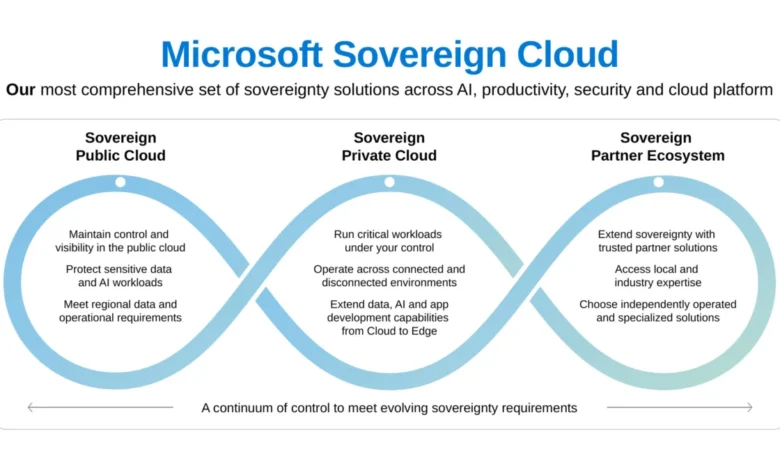
The intersection of digital transformation and national security has become the defining challenge for government agencies and regulated industries. As public sector entities and critical infrastructure operators integrate advanced artificial intelligence and cloud-based services, they face a growing mandate to balance the rapid pace of technological innovation with strict requirements for data residency, operational autonomy, and geopolitical risk management. Microsoft, in response to this shifting landscape, has unveiled a significant expansion of its Sovereign Cloud strategy, introducing a comprehensive "continuum of control" designed to offer organizations granular management over their digital assets, whether they reside in the public cloud, private data centers, or within a specialized partner ecosystem.
The Evolution of Digital Sovereignty
Digital sovereignty refers to the ability of an organization or nation-state to exercise full control over its data, software, and hardware dependencies. In recent years, the geopolitical climate—marked by supply chain vulnerabilities, evolving data privacy regulations like the EU’s General Data Protection Regulation (GDPR), and heightened cybersecurity threats—has accelerated the demand for sovereign solutions.
Microsoft’s journey into this space gained significant momentum last year with the initial launch of the Microsoft Sovereign Cloud. The initiative was a direct response to customer feedback from highly regulated sectors, including defense, healthcare, and finance, which required the benefits of cloud scalability without relinquishing control over sensitive operational environments. The latest iteration, announced ahead of the Microsoft Ignite conference, marks a maturation of that vision, moving from conceptual frameworks to practical, deployable capabilities that bridge the gap between public cloud efficiency and on-premises security.
A Continuum of Control: Workload-Centric Architecture
The core philosophy behind Microsoft’s expanded strategy is the "workload-based approach." Recognizing that a single deployment model cannot satisfy every requirement, Microsoft has structured its Sovereign Cloud to operate as a continuum. This model acknowledges that a public-facing web portal may prioritize speed and global reach, while a national security database requires absolute, localized control.
This continuum is divided into three primary pillars:
- Sovereign Public Cloud: Designed for organizations that require the scale and innovation of the Azure public cloud but need enhanced transparency, policy management, and residency controls.
- Sovereign Private Cloud: Built on Azure Local, this provides the ability to run cloud-native services in customer-operated environments, supporting both connected and air-gapped (disconnected) operations.
- Sovereign Partner Ecosystem: A network of independent operators and specialized firms that provide locally relevant expertise and infrastructure, including national clouds like Bleu in France and Delos in Germany.
By allowing organizations to mix and match these environments based on the specific risk profile of individual workloads, Microsoft is attempting to eliminate the "all-or-nothing" dilemma that has historically hindered public sector cloud adoption.

Strengthening Public Cloud Transparency and Security
For organizations utilizing the Sovereign Public Cloud, the introduction of the Sovereign Control Panel represents a significant advancement in governance. This unified dashboard, launching in public preview at Ignite, provides IT leaders with a real-time assessment of their sovereignty posture. It allows for the identification of potential risks, such as cross-border data access, and provides tools to mitigate them effectively.
Complementing this is a new suite of access-control features. In the European Union and the European Free Trade Association, Microsoft is rolling out the Data Guardian and Production Touch Ledger initiatives. Data Guardian introduces an oversight layer where trusted third-party EU partners monitor remote access by Microsoft engineers, while the Production Touch Ledger provides a tamper-evident, audit-ready record of all administrative actions. These features address long-standing concerns regarding foreign access to domestic digital infrastructure.
Furthermore, the general availability of external key management through Azure Managed HSM allows customers to maintain control over their root encryption keys in hardware they own. This provides an additional layer of security for organizations that cannot entrust encryption keys to cloud provider-managed systems.
Empowering Private and Disconnected Operations
The expansion of Azure Local is perhaps the most critical component for organizations operating in sensitive or remote environments. By bringing cloud-native services like SQL Server, DocumentDB, and Blob Storage to the edge, Microsoft is enabling a truly hybrid experience.
The integration of GitHub Enterprise Local is a major milestone for developers working within high-security environments. By providing a validated appliance that keeps code repositories and development artifacts strictly local, organizations can ensure that their software supply chain remains secure. Additionally, the availability of GitHub Copilot with locally hosted models for inference allows teams to leverage AI-assisted development without needing to send code or data to external servers.
This trend toward local AI is further bolstered by the launch of Foundry Local. By enabling local inference and agentic retrieval on Azure Local, Microsoft is allowing enterprises to ground their AI models in proprietary, on-premises data. This architecture ensures that sensitive intelligence remains within the organization’s perimeter, mitigating the risk of data leakage associated with traditional cloud-based AI training.
The Role of the Sovereign Partner Ecosystem
The complexity of regulatory environments necessitates a localized approach. Microsoft’s partner ecosystem is designed to bridge the gap between global technology platforms and local compliance requirements.

Industry analysts observe that this strategy is a pragmatic necessity. "The challenge of sovereignty is not just technological; it is legal and cultural," notes one industry observer. "By partnering with local firms, Microsoft is effectively outsourcing the navigation of national policies to experts who understand the nuances of local law and operational standards."
The ecosystem includes over 30 partners—ranging from hardware manufacturers like Dell and HPE to global consulting firms like Accenture and Capgemini. These partnerships ensure that the "Sovereign Cloud" is not merely a software offering but a complete infrastructure solution that includes local hardware, managed services, and specialized cybersecurity integration.
Broader Implications and Future Outlook
The implications of this strategy are significant for the global tech landscape. By offering a "sovereign-by-design" infrastructure, Microsoft is positioning itself as the primary partner for governments looking to modernize their digital estates without compromising their regulatory autonomy.
However, the success of these initiatives will likely depend on the transparency of these systems. As AI agents become more deeply embedded in critical processes—such as power grid management, public health, and financial regulation—the ability to verify that these systems are operating within defined boundaries becomes paramount. Microsoft’s focus on "tamper-evident records" and "hardware-based isolation" suggests a commitment to verifiable trust, a trend likely to become an industry standard in the coming decade.
Looking forward, the integration of multitenancy within Azure Local will be a catalyst for further growth. By allowing different government agencies or business units to share the same physical infrastructure while maintaining complete logical separation, organizations can optimize their hardware investments. This, combined with the ability to transition seamlessly between connected and disconnected states, provides the resilience necessary for modern digital infrastructure.
As the industry moves into this next chapter, the focus will likely shift toward the standardization of sovereign architectures. Organizations are no longer asking if they should move to the cloud, but rather how they can retain the essential levers of control while doing so. Through its latest announcements, Microsoft is signaling that the era of "one-size-fits-all" cloud computing is ending, giving way to a more nuanced, controlled, and resilient model of global digital operations.
Related posts: