SvelteKit 3 Enters Release Candidate Phase Marking a Major Evolution for the Web Framework

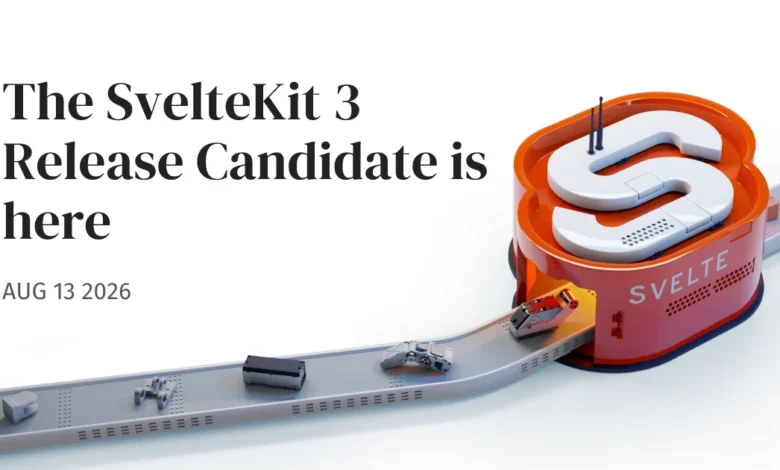
SvelteKit 3 has officially entered its Release Candidate (RC) phase, signaling a pivotal moment in the development lifecycle of one of the JavaScript ecosystem’s most popular meta-frameworks. This milestone, which follows months of iterative development and internal testing, represents the transition from the experimental branch to a stabilized production-ready state. The Svelte team has indicated that if the community-led testing period yields successful results, the stable release will follow shortly, promising a locked-in API surface with no further breaking changes.
The Development Trajectory and Background
The evolution of SvelteKit has been characterized by a drive toward developer ergonomics and performance optimization. Since the release of SvelteKit 1.0 in late 2022 and the subsequent jump to version 2.0, the framework has established itself as a primary competitor to Next.js and Remix. SvelteKit 2 focused heavily on stability and refining the developer experience. SvelteKit 3, however, represents a more structural "pruning" of the codebase, designed to remove technical debt accumulated over the years and align the framework with the modern capabilities of the Vite build tool and the recently released Svelte 5.
The timeline for this transition has been carefully calibrated. Following the successful introduction of Svelte 5, the core maintainers focused on integrating the new framework’s reactivity system into the meta-framework layer. By moving to a Release Candidate, the team is now crowd-sourcing final quality assurance. Developers are encouraged to migrate existing projects to identify edge cases, while the core team focuses on refining the final documentation and ensuring that the newly introduced build-time improvements are compatible with the diverse array of deployment adapters currently supported by the Svelte ecosystem.
Key Architectural Shifts and Technical Enhancements
The transition to SvelteKit 3 is not merely a version increment but a re-platforming of several core configuration patterns. Among the most significant changes is the consolidation of configuration logic. Previously, developers navigated a bifurcated setup involving svelte.config.js and Vite-specific configurations. By migrating these responsibilities into vite.config.ts, the framework eliminates the overhead of asynchronous resolution processes, resulting in faster cold starts and a more unified build pipeline.
Furthermore, the framework has deprecated the $lib alias in favor of standard Node.js subpath imports. This shift reflects a broader industry movement toward native platform standards rather than framework-specific abstractions. By utilizing import ... from '#lib/foo.ts', projects gain better compatibility with TypeScript’s native resolution logic and reduce the reliance on custom path mapping within tsconfig.json.
TypeScript configuration has also undergone a massive simplification. The era of manually managing complex tsconfig.json files that extend internal SvelteKit configurations is over. Version 3 introduces a generated config file located in node_modules/$app, which handles boilerplate requirements automatically. This allows developers to maintain a cleaner codebase, as most project-specific compiler options can now be inherited directly from the framework’s defaults.
Enhanced Environment and Error Management
Environment variable handling, which was already a standout feature of SvelteKit, has been elevated to a first-class citizen with the promotion of explicit environment variables from experimental status. The new system allows for robust, type-safe definition of environment variables within src/env.ts. This implementation enables developers to enforce schema validation—utilizing tools like Standard Schema—ensuring that runtime failures caused by missing or malformed configuration are caught during build or initialization.
Error handling has also seen a dramatic improvement, necessitated by the adoption of Svelte 5. The introduction of error boundaries at the framework level means that the +error.svelte component is no longer limited to data-loading phases but can now gracefully handle rendering-time exceptions. By piping all application errors through the handleError hook, developers gain a centralized point for telemetry, logging, and user-facing notifications, fostering a more resilient application architecture.
Build Performance and Vite 8 Integration
The mandate to use Vite 8 is a cornerstone of the SvelteKit 3 experience. The primary benefit of this upgrade is the integration of Rolldown, a high-performance bundler written in Rust. As projects scale, build times often become a bottleneck in the development lifecycle. By leveraging Rolldown’s speed, SvelteKit 3 aims to maintain sub-second hot module replacement (HMR) speeds even in enterprise-scale applications.
The adoption of the Vite Environment API further simplifies the framework’s internals, allowing for more granular control over how code is bundled for different environments. While the team has decided against supporting the FetchableDevEnvironment in its current form—citing the excessive complexity it imposes on framework maintainers—they have expressed a commitment to finding alternative, more sustainable ways to provide access to cloud-native features like Cloudflare Workers bindings during local development.
Future Outlook: Remote Functions and Async Svelte
Beyond the immediate changes in SvelteKit 3, the framework is laying the foundation for a paradigm shift in client-server communication. The concept of "Remote Functions"—currently kept behind an experimental flag—represents the team’s long-term vision for how developers should interact with backend logic.
These functions are designed to abstract away the boundary between the server and the client, potentially rendering traditional load functions and actions redundant. By allowing developers to invoke server-side logic as if it were a local function call, SvelteKit is positioning itself to compete with emerging "full-stack" frameworks that prioritize seamless data synchronization. This approach, paired with "Async Svelte," suggests that the next phase of the framework’s life will be defined by the removal of explicit network requests in favor of a more transparent, integrated execution model.
Impact and Migration Path
The migration process for existing applications has been streamlined via the sv CLI tool. Developers can execute:
npx sv@next migrate sveltekit-3 --tasks all --confirm
This command automates the majority of the refactoring, generating a comprehensive checklist for tasks that require human intervention. For new projects, the npx sv@next create command provides the latest boilerplate, incorporating all the modern defaults discussed above.
The broader implication of this release is a more stable, performant, and standards-compliant framework. By reducing the surface area of custom configurations and aligning with the Vite ecosystem, SvelteKit 3 reduces the "cognitive load" on developers. The framework is moving away from bespoke, "magic" solutions toward patterns that are common in the wider JavaScript community, making the learning curve shallower for new adopters while providing power users with more robust tooling.
As the Release Candidate period continues, the Svelte community’s role is critical. The maintainers have emphasized that the quality of the stable release is directly proportional to the feedback received during this phase. Developers working in production environments are urged to run the RC in staging branches to ensure that the new sourcemap integration, build-time optimizations, and service worker improvements perform as expected across various deployment platforms.
The transition to SvelteKit 3 is ultimately a testament to the framework’s maturity. It is no longer just a set of convenient utilities but a robust, opinionated platform that anticipates the needs of the modern web—prioritizing type safety, build efficiency, and a simplified developer experience. As the industry watches the final stages of the RC, the focus remains on the seamless integration of these new features into the broader ecosystem, reinforcing SvelteKit’s position as a foundational tool for the next generation of web applications.