Beyond the Hype: Deconstructing AI Industry Dogmas and Real-World Developer Workflows

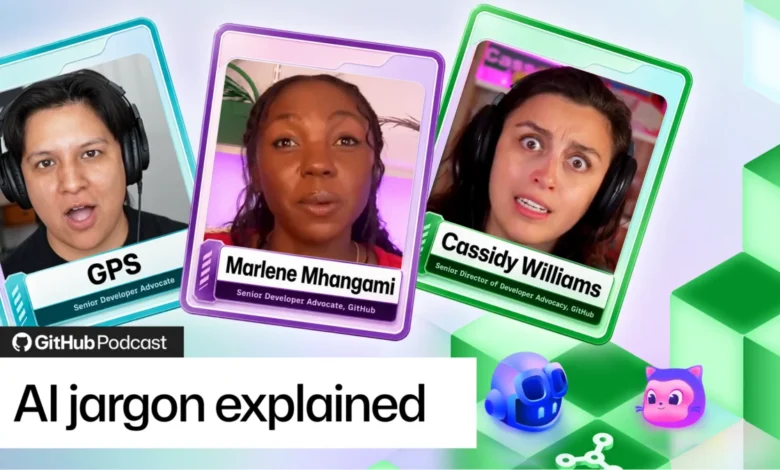
The rapid evolution of artificial intelligence in software engineering has generated an ecosystem saturated with declarative hot takes, tribal dogmas, and absolute pronouncements. Designed for immediate social media engagement, these polarizing assertions frequently oversimplify complex technical realities. To foster a deeper understanding of how AI tools genuinely impact modern development, the latest installment of the GitHub Podcast brings together industry perspectives to unpack five of the most pervasive maxims currently circulating within the tech sector. Hosted by GitHub developer advocates and engineering experts, the discussion shifts the paradigm away from viral rhetoric toward pragmatic execution, examining how developers can navigate the intersection of AI integration, code maintainability, and architectural standards.
The Anatomy of Industry Dogma
In the contemporary software development lifecycle, inflammatory statements regarding artificial intelligence serve a dual purpose. On one hand, they act as conversation catalysts, driving community discourse across platforms like GitHub, X, and Reddit. On the other hand, they frequently obscure the nuanced tradeoffs inherent in adopting nascent technologies. Industry analysts note that as generative AI tools transition from novel curiosities to foundational infrastructure, developers are increasingly subjected to binary narratives: either fully embrace automation or risk professional obsolescence.
This polarization ignores the reality of engineering workflows, where tools are adopted incrementally based on utility, risk profiles, and project requirements. By moving past the initial wave of digital posturing, engineering teams are beginning to recognize that the true value lies not in the hot takes themselves, but in the rigorous interrogation of the assumptions underlying them.
Decoding AI Hot Takes: Review Practices and Code Ownership
Among the most contentious assertions in modern development is the claim that engineers no longer need to read AI-generated code. Proponents of this view argue that if an automated agent can synthesize a functional component or refactor a legacy module, human verification is an unnecessary bottleneck. However, software architecture experts universally reject this premise, emphasizing that ultimate accountability rests squarely with the human author.
Nevertheless, the review process itself is evolving. Industry veterans point out that treating every line of code with uniform scrutiny represents an inefficient allocation of engineering bandwidth. Reviewing a routine CSS styling adjustment requires a vastly different cognitive investment than auditing a production-grade authentication refactor or a cryptographic module. Similarly, a developer’s familiarity with a codebase—whether maintaining a legacy system for a decade or spinning up a repository for a morning hackathon—dictates how they assess risk.
The emergent consensus suggests a pragmatic rule: developers must review generated code until they can confidently explain and own the outcome. This workflow often begins proactively before the agent executes a task. By mapping dependencies, outlining edge cases, and establishing a clear implementation plan beforehand, engineers develop a mental model of the expected output. Consequently, the review phase transforms from passive reading into active validation of performance, error handling, permissions, and test coverage. AI shifts the labor of software creation, but it does not eliminate the necessity of engineering judgment.
Employment Realities and Technical Fluency
As automated coding assistants become ubiquitous, a parallel narrative has emerged suggesting that companies will universally reject candidates who fail to integrate AI into their daily routines. While hiring managers increasingly inquire about a candidate’s familiarity with automated tools, the reality of the technical job market is far more nuanced.
Engineering leadership across major technology firms indicates that total dependence on AI is just as concerning to recruiters as total refusal. The defining metric for modern candidates is not tool-specific proficiency, but foundational technical judgment. Employers look for developers who can articulate precisely when to leverage automated assistance and when to execute tasks manually. Candidates must be able to discuss the implications of generated code on software security, maintainability, and performance, while demonstrating an adaptability to evolving toolchains. Ultimately, AI fluency is rapidly cementing itself as a core component of professional software craftsmanship.
Standardization Versus Packaged Expertise: MCP and Skills
Technical debates in the AI community frequently extend beyond workflow philosophy into architectural frameworks, particularly concerning the relationship between the Model Context Protocol (MCP) and specialized agent "skills." A recent viewpoint suggested that newly developed skill paradigms have rendered MCP obsolete. Technical analysis, however, reveals that these two mechanisms serve entirely distinct architectural functions.
The Model Context Protocol establishes a standardized interface enabling AI agents to securely connect to external tools, databases, and enterprise data sources. This standardization is critical for building reliable, interoperable systems where agents require structured pathways to fetch context and execute remote actions.

Conversely, skills function as packaged expertise—human-readable instructions, often authored in Markdown, that dictate team conventions, project-specific workflows, and best practices. Because skills are transparently readable by both humans and machines, they provide crucial procedural context. Rather than competing, MCP and skills operate in tandem: MCP supplies the standardized plumbing and data access, while skills provide the contextual intelligence required to use that access effectively.
The Endurance of Retrieval-Augmented Generation (RAG)
Another recurring refrain in AI discourse is the declaration that Retrieval-Augmented Generation (RAG) is dead, having been supposedly superseded by native long-context windows in foundational models. Industry practitioners push back against this narrative, noting that RAG remains a vital architectural pillar for enterprise applications.
RAG systems supply AI models with external, domain-specific information outside their static training data, including internal documentation, support ticketing histories, proprietary product specifications, and localized codebase repositories. Relying exclusively on an LLM’s internal memory without retrieval mechanisms often results in excessive token consumption, elevated latency, and an increased propensity for hallucinations. Effective retrieval grounds the model’s output in verifiable, real-time data, narrowing the search space and ensuring accuracy. In complex agentic workflows, RAG, MCP, skills, and autonomous agents coexist harmoniously, each fulfilling a specialized role in information retrieval and execution.
Codebase Maintainability as an AI Pressure Test
A particularly provocative take posits that if an engineering team requires model fine-tuning to make sense of a codebase, the underlying code is inherently flawed. While valid use cases for fine-tuning exist—such as mastering proprietary internal domains or highly specialized syntax—modern foundational models possess extensive exposure to standard software frameworks, architectural patterns, and naming conventions.
If an advanced AI model struggles to parse a repository, it frequently signals that human collaborators will face similar friction during onboarding, code reviews, and debugging sessions. Consequently, the integration of generative AI acts as an objective pressure test for software maintainability. Codebases characterized by clear directory structures, consistent variable naming, robust automated testing, and up-to-date documentation are significantly easier for both automated agents and human engineers to navigate, debug, and extend.
Bridging Debate and Execution through Open Source Innovation
Rather than remaining mired in theoretical debates, the broader developer community is increasingly turning to empirical experimentation, using real-world projects to test the limits of AI-assisted software engineering.
Initiatives like Pollinations AI explore these boundaries by implementing a generative platform where contributors earn digital credits—termed "pollen"—by resolving issues, contributing models, and completing development quests. This model raises critical questions regarding economic incentives, quality assurance at scale, and the future of open-source collaboration in an era where AI lowers barriers to entry.
Similarly, projects such as Avian Visitors demonstrate how hardware and software converge in creative applications. By integrating a Raspberry Pi, a microphone, an e-ink display, and 3D-printed components to translate local wildlife audio into dynamic wall art, the project highlights the value of thorough documentation and cross-disciplinary building.
Broader Implications for the Software Industry
The ongoing discourse surrounding artificial intelligence highlights a maturation phase within the software engineering industry. As initial hype gives way to daily operational integration, the focus is shifting from speculative predictions to measurable outcomes. The consensus emerging from technical communities emphasizes that productivity gains do not eliminate foundational engineering responsibilities.
Organizations are realizing that successful AI adoption requires deliberate investments in developer experience, robust documentation standards, and continuous education. As tools evolve, the distinction between human and machine contributions will continue to blur, making critical thinking, architectural clarity, and rigorous code review more vital than ever.
For software professionals navigating this transitional landscape, the directive is clear: prioritize empirical execution over ideological debate. By rigorously testing new methodologies, documenting operational outcomes, and maintaining strict accountability over codebases, developers can harness the power of artificial intelligence while preserving the core tenets of software craftsmanship.