The Evolution of Digital Media Archiving: How Tools Like yt-dlp Keep Offline Access Alive in the Age of Streaming


The landscape of digital media consumption has undergone a profound transformation over the past three decades, shifting from decentralized peer-to-peer sharing networks to centralized, cloud-based streaming subscription models. In the early days of consumer internet proliferation—spanning the late 1990s and the peak of the peer-to-peer era in the early 2000s—downloading media files such as MP3 audio tracks and compressed video files was a routine digital literacy skill. Platforms and protocols like Napster, Kazaa, LimeWire, and early BitTorrent clients defined an era where local storage was paramount. Users habitually maintained hard drives filled with locally owned digital artifacts, ensuring uninterrupted access independent of network connectivity, server uptime, or corporate licensing agreements.
Today, that digital independence has largely been superseded by modern web architectures. Contemporary websites and media distribution platforms rely heavily on encrypted streaming protocols, dynamic segmented video delivery, blob URLs, and encrypted media extensions designed precisely to deter local caching and unauthorized archiving. While these measures serve to protect intellectual property rights and enforce subscription paywalls, they also present formidable barriers for researchers, educators, archivists, and everyday consumers who wish to secure offline copies of publicly accessible media for legitimate, personal, or educational use. Despite these technological roadblocks, specialized command-line utility tools have emerged to fill the vacuum, chief among them being yt-dlp, an advanced, community-driven fork of the legacy YouTube downloading software that has become the de facto standard for media preservation on the modern web.
The Technological Shift from Local Ownership to Cloud Dependency
To understand the current reliance on tools like yt-dlp, one must examine the broader historical trajectory of internet architecture and digital rights management. In the nascent phases of web video and audio, files were frequently hosted as static assets—simple .mp3, .avi, or .flv files that could be retrieved directly via standard HTTP GET requests. Right-click and "Save As" functionality was the norm, requiring minimal technical acumen to build a personal offline library.
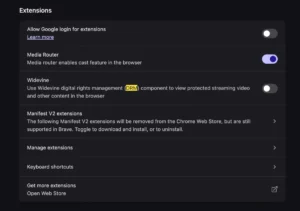
As broadband speeds accelerated and the monetization of digital content matured, media companies sought tighter control over distribution. The introduction of Adaptive Bitrate Streaming (ABS) technologies, such as HTTP Live Streaming (HLS) and Dynamic Adaptive Streaming over HTTP (DASH), fragmented media files into hundreds of tiny, encrypted chunks delivered dynamically based on real-time bandwidth conditions. Furthermore, the implementation of Digital Rights Management (DRM) protocols integrated directly into web browsers effectively locked down playback environments.

These architectural changes rendered traditional web scraping and browser-extension downloaders largely ineffective. Web applications increasingly utilized blob URLs—pointers to binary large objects stored in the browser’s volatile memory—making it impossible for standard tools to intercept and reconstruct the media stream directly from a simple hyperlink. Consequently, consumer behavior shifted entirely toward streaming. Users accepted a paradigm where access replaced ownership, leaving their media consumption entirely at the mercy of platform availability, terms of service updates, and internet connectivity.
The Rise, Fall, and Evolution of Media Download Utilities
Amidst this tightening of digital infrastructure, open-source developers have continually engineered counter-solutions. For years, the software utility youtube-dl served as the foundational open-source tool for extracting video and audio streams from YouTube and numerous other supported platforms. Written in Python, it utilized modular extractors to parse webpage source code, decipher streaming signatures, and reconstruct media files into standard formats.
However, as platforms like YouTube deployed increasingly sophisticated bot-mitigation techniques, rate-limiting algorithms, and signature-decryption challenges, the original youtube-dl repository experienced frequent maintenance bottlenecks. Slow update cycles left the tool frequently broken, prompting the developer community to fork the project. This offshoot became known as yt-dlp.
By incorporating active community contributions, faster bug fixes, and enhanced feature sets—such as improved handling of fragmented formats, integration with external decoders like FFmpeg, and support for a vast array of alternative websites beyond YouTube—yt-dlp rapidly surpassed its predecessor in reliability and capability. Industry analysts and software developers now universally regard yt-dlp as the most robust command-line interface tool for media retrieval, widely adopted by data scientists, archivists, and casual users alike.
Practical Implementation and Command-Line Utility
Operating yt-dlp requires a basic familiarity with command-line interfaces, making it distinct from graphical user interface (GUI) applications, though numerous third-party GUIs built on top of the utility do exist. The tool’s power lies in its versatility and granular configuration flags, which allow users to tailor downloads precisely to their storage constraints and format preferences.

For general archiving purposes—such as downloading an entire creator channel—users execute a straightforward command specifying the target URL:
yt-dlp https://www.youtube.com/@beetlejuicearchives3490When invoked this way, the utility queries the platform’s API and site architecture, extracts the metadata for all available videos on the specified channel, and systematically downloads the highest-quality video and audio streams available, muxing them together via FFmpeg into a unified container format, typically MP4 or MKV.
However, bandwidth, storage capacity, and use-case scenarios often dictate a more refined approach. A significant segment of users prioritizes audio-only extraction—converting video lectures, podcasts, or archival audio recordings into compressed formats suitable for portable listening devices during travel, commutes, or long walks. To achieve this, yt-dlp provides extraction and post-processing flags:
yt-dlp -x --audio-format mp3 https://www.youtube.com/@beetlejuicearchives3490In this command, the -x (or --extract-audio) flag instructs the utility to strip the video track entirely, retaining only the raw audio stream. Subsequently, the --audio-format mp3 argument triggers an automated post-processing routine utilizing FFmpeg to transcode the extracted audio into the universally compatible MP3 format, complete with embedded metadata and thumbnail imagery when available.
Broader Implications: Archival Necessity Versus Intellectual Property Concerns
The persistence and refinement of media downloading tools highlight a continuous tension in the digital age between content creators’ rights, platform monetization models, and the public’s interest in digital preservation and accessibility.

From an economic perspective, platforms and content creators rely heavily on continuous streaming engagement, view-based advertising revenue, and subscription tiers to sustain their operations. Offline downloading bypasses the platform interface, meaning advertisements embedded in the streaming delivery pipeline are omitted, and engagement metrics—such as watch time and active user sessions—are not registered. This discrepancy has historically driven platforms to implement technological countermeasures designed to block automated extraction tools.
Conversely, digital archivists, librarians, and legal scholars argue that tools like yt-dlp fulfill a vital societal function. Educational content, independent journalism, historical documentaries, and ephemeral media hosted on commercial platforms are frequently vulnerable to sudden deletion, channel terminations, copyright disputes, or corporate restructuring. Without robust local archiving tools, significant portions of human cultural output and historical record could be permanently lost to "link rot" and platform deprecation.
Furthermore, accessibility remains a critical consideration. Global disparities in internet infrastructure mean that continuous, high-speed broadband access is far from universal. For users in developing regions, or individuals facing intermittent connectivity, data caps, or high mobile data costs, pre-downloading media content for offline consumption is not a matter of convenience, but of practical necessity. Tools that enable efficient audio and video extraction democratize access to educational and informational resources that might otherwise remain locked behind infrastructural barriers.
Future Outlook for Digital Media Preservation
As artificial intelligence integration, machine learning-driven content delivery, and stricter Digital Rights Management standards continue to evolve, the methodologies governing web interaction will undoubtedly shift further. Platforms are actively exploring server-side watermarking, encrypted playback environments, and real-time behavioral analysis to distinguish human users from automated extraction scripts.
Despite these ongoing technological arms races, the open-source community surrounding utilities like yt-dlp demonstrates remarkable resilience. As long as public-facing media is rendered onto a user’s device for consumption and playback, software developers will continue to engineer mechanisms to decode, capture, and preserve those digital artifacts. The enduring popularity of these tools underscores a fundamental human desire for tangible ownership and reliable access to information, ensuring that personal archiving remains an active, adaptable practice in an increasingly locked-down digital ecosystem.