Building a RAG Pipeline for Semantic Code Search: A Developer Diary and Field Notes

The rapid rise of agentic AI has fundamentally altered the trajectory of software engineering, shifting the developer’s role from manual coding to the orchestration of autonomous agents. As these models gain the capacity to navigate complex, multi-repository codebases, the bottleneck has transitioned from generation to context retrieval. To address this, JetBrains has detailed the architectural development of its proprietary Retrieval-Augmented Generation (RAG) pipeline, branded as JetBrains Context. The project, which emphasizes the transition from basic keyword-based search to sophisticated semantic understanding, offers a blueprint for developers attempting to bridge the gap between AI-driven prototypes and production-grade software engineering tools.
The Evolution of Code Retrieval
For decades, the standard for locating information within a codebase relied on lexical search tools, primarily grep and its modern iterations. While efficient for finding exact strings, these tools fail when an agent must reason through abstract requirements. For example, a request to locate "session token refresh logic" may yield zero results if the code uses synonyms or modular abstractions that do not explicitly contain the word "refresh."
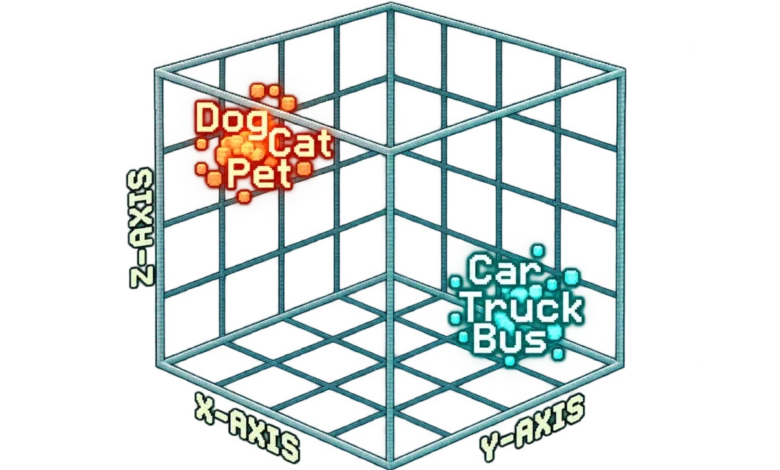
The implementation of RAG technology is designed to solve this by transforming source code into mathematical vectors. By mapping code snippets into a multi-dimensional semantic space, agents can perform "meaning-based" lookups, allowing them to retrieve logically related, albeit syntactically different, code segments. However, moving this capability from a laboratory environment to a high-performance production system—where latency and accuracy are paramount—presents significant engineering hurdles.
Parsing and Chunking: The Structural Foundation
The efficacy of any RAG pipeline begins with how source code is pre-processed. Naive approaches, such as splitting files by a fixed number of lines, often destroy the semantic integrity of the code. Such methods frequently group unrelated elements, such as disparate import statements and function bodies, which leads to "noisy" retrieval results.
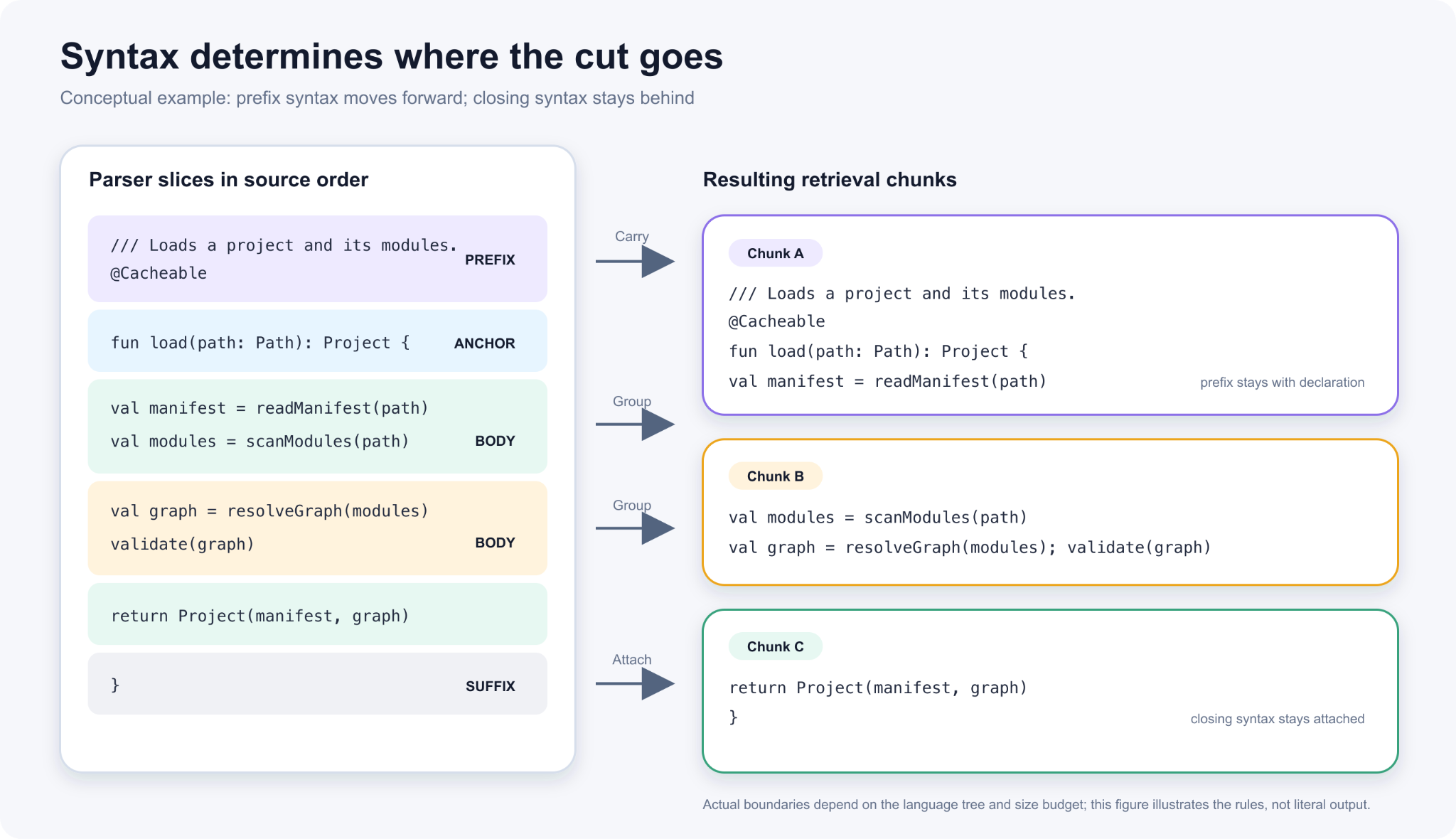
JetBrains’ internal approach leverages its existing expertise in language parsing. By utilizing the JetBrains Code Engine, the team developed a structure-aware chunking algorithm that recognizes the nuances of nine major programming languages, including Kotlin, Java, Python, and Rust. This parser decomposes source files into syntax nodes, ensuring that documentation, annotations, and code declarations remain bundled together. This prevents the loss of context that occurs when a function is severed from its doc-string or metadata. For unsupported languages, the system employs a fall-back mechanism, reverting to primitive line-based splitting to ensure universal compatibility.

Vectorization and the Storage Trade-off
Once the code is parsed into meaningful chunks, the next stage is vectorization. This process uses embedding models to translate text into high-dimensional numerical vectors. In a large-scale enterprise environment, such as the IntelliJ IDEA monorepo which contains over one million files, the scale of data creates an immediate conflict between storage costs and search performance.
Storing millions of vectors—each potentially spanning thousands of dimensions—can quickly balloon into gigabytes of index data. To mitigate this, engineers must balance dimension count against numerical precision. Research conducted during the development of JetBrains Context suggests that retaining a high number of dimensions at low precision (binary quantization) is superior to keeping fewer dimensions at high precision (32-bit floats).
By compressing vectors into single-bit representations, the team achieved a 32-fold reduction in memory footprint. While this shift necessitated a move from cosine similarity metrics to Hamming distance—a significantly faster computational process—the performance gains were substantial. Hamming distance calculations allow for CPU-level efficiency, enabling the system to process queries in milliseconds, a requirement for any real-time development assistant.

Addressing the Metadata Problem
A unique challenge in RAG for code is the role of file paths. In a monorepo, file paths can be excessively long and filled with structural noise, such as redundant package hierarchies. Including these raw paths in the embedding process can overwhelm the model with irrelevant characters.
To resolve this, JetBrains implemented a "capping" strategy for paths. The algorithm preserves the most informative segments—the module prefix and the immediate parent-plus-filename—while eliding the intermediate directories. This ensures that the model focuses on the functional location of the code without being distracted by deep, repetitive directory nesting. Furthermore, by embedding these abbreviated paths directly into the query, the system aligns the user’s search intent with the indexed data, facilitating more accurate retrieval.
Security and Ethical Considerations
The deployment of RAG systems within corporate environments naturally raises concerns regarding intellectual property and data privacy. The potential for proprietary code to be ingested into third-party cloud models is a primary risk for enterprises. In response, the architecture for JetBrains Context was designed with a "local-first" philosophy. By focusing on open-weight models and self-hosted, local infrastructure, the system minimizes the need to transmit sensitive source code to external providers.
This approach aligns with a broader industry trend where organizations are prioritizing the containment of their AI pipelines within secure, internal perimeters. By conducting evaluation against both hosted APIs and open-weight models, the developers determined that performance trade-offs were negligible, provided that the pre-processing and chunking layers were sufficiently optimized.
Implications for the Future of Coding
The transition from keyword-based search to semantic code retrieval represents a shift in how developers interact with their environments. As agents become more prolific in writing code, the complexity of managing these codebases will grow exponentially. A robust RAG pipeline acts as the "memory" for these agents, enabling them to navigate vast repositories with human-like intuition.
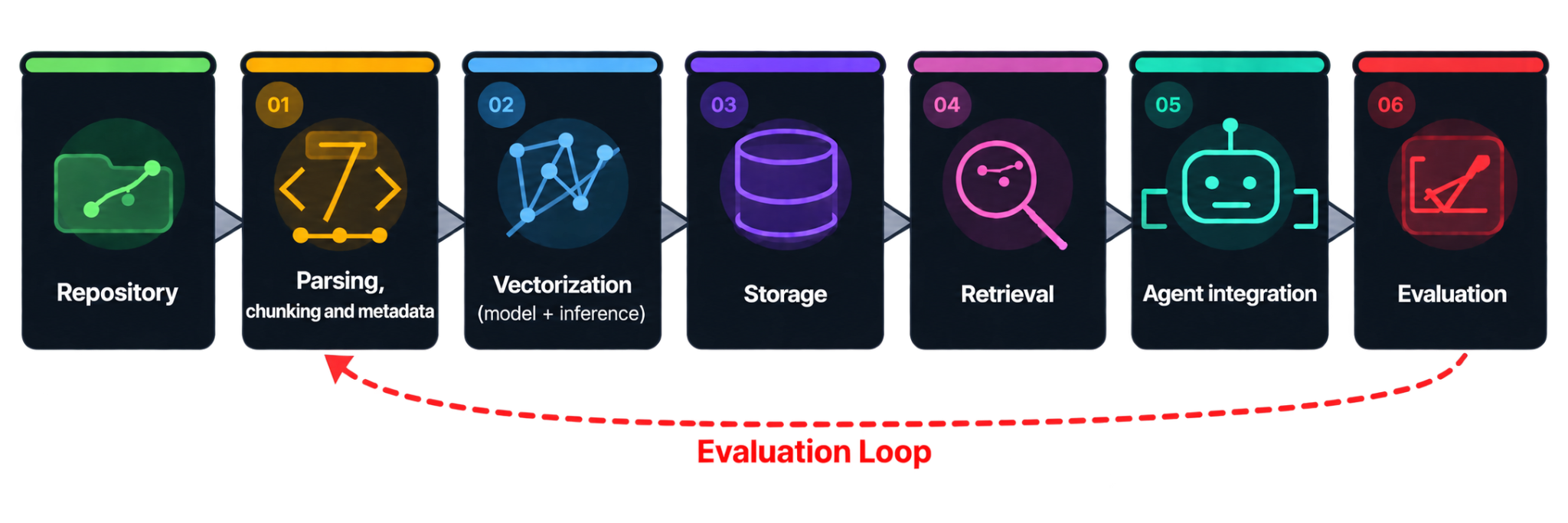
The "scar tissue" documented in this development cycle highlights that the future of AI in software development is not merely about the power of the Large Language Model (LLM) itself, but about the quality of the data pipeline feeding it. Future iterations of these systems will likely focus on even more granular, intent-aware indexing and the integration of real-time evaluation loops to ensure that retrieved information remains relevant as the codebase evolves.
A Look Ahead
As the project enters its public preview phase, the focus for the JetBrains engineering team remains on refining the responsiveness of the system and optimizing the interaction between the agent and the retrieved context. The technical challenges solved in the first stages of this pipeline—parsing, chunking, and binary-quantized vectorization—provide a stable foundation for the next challenges: reducing latency to sub-second thresholds and implementing continuous, automated evaluation.
For developers looking to implement similar systems, the takeaway is clear: success is found in the deep, structural understanding of the code, not just in the capacity of the embedding model. By treating the source code as a structured syntax tree rather than a collection of text strings, developers can build systems that provide the precision and reliability required for the next generation of software engineering. The ongoing series from the JetBrains AI team promises to shed further light on the storage, latency, and evaluation strategies that will ultimately determine the viability of agentic development at scale.