Neo4j Unveils Hosted Model Context Protocol for Aura to Streamline AI-Driven Graph Data Access and Eliminate Infrastructure Friction

Neo4j, the global leader in graph database technology, has officially announced the launch of a hosted Model Context Protocol (MCP) server for its Aura cloud platform, marking a significant milestone in the convergence of Graph Database Management Systems (GDBMS) and Generative Artificial Intelligence. This new integration is designed to eliminate the substantial operational hurdles, often referred to as the "infrastructure tax," that developers face when connecting AI agents to enterprise data. By hosting the MCP server directly within the Aura environment, Neo4j allows customers to bridge the gap between Large Language Models (LLMs) and their proprietary graph data without the need to manage external binaries, secure additional credentials, or maintain separate server instances. The service is immediately available across Neo4j Aura’s Free, Professional, and Business Critical tiers, with support for Virtual Dedicated Cloud (VDC) environments expected in the near future.
The Evolution of AI Connectivity and the Infrastructure Tax
In the rapidly advancing landscape of AI development, the Model Context Protocol has emerged as an open-source standard that facilitates seamless communication between AI applications—such as Anthropic’s Claude Desktop or the Cursor code editor—and external data sources. However, while MCP standardizes the language of discovery and tool-calling, it does not inherently solve the complexities of hosting. Until now, a developer wishing to grant an AI client access to a database had to undertake a repetitive and often arduous setup process. This involved installing local packages, editing complex JSON configuration files, generating and safely storing sensitive credentials, and ensuring the local server remained online and patched against security vulnerabilities.
For enterprise environments, this "setup tax" is more than just a developer inconvenience; it represents a significant security and compliance hurdle. Security teams are frequently hesitant to approve the deployment of disparate, locally-hosted bridge servers that handle production data credentials. By integrating the MCP server directly into the Aura infrastructure, Neo4j effectively removes these barriers. Because the data and the MCP server now reside within the same managed environment, the operational weight that often stalls AI proof-of-concepts is eliminated, allowing organizations to move more rapidly from experimentation to production.
Technical Architecture and the Role of MCP for Aura
The Model Context Protocol acts as a universal interface, much like a USB-C port for AI models, allowing them to plug into various data "peripherals." In this ecosystem, the AI application acts as the "host," while Neo4j Aura now functions as a "server." Previously, Neo4j provided community-driven and local MCP servers that required manual configuration. The new hosted version maintains the same interface for the AI client but simplifies the backend experience entirely.
The authentication mechanism is a standout feature of the hosted service. Rather than relying on static API keys or hardcoded passwords—which are prone to leakage—MCP for Aura utilizes a human-in-the-loop OAuth redirect. When an AI client attempts to access the graph for the first time, it triggers a browser-based login flow. The user authenticates using their existing Aura Console credentials, and the session is established via a secure redirect. This ensures that the AI only accesses data that the specific user is authorized to see, maintaining the integrity of the organization’s security posture.
Core Capabilities: Schema, Read, and Read-Write Tools
The hosted MCP server provides three primary tools that empower AI agents to interact with graph data dynamically:
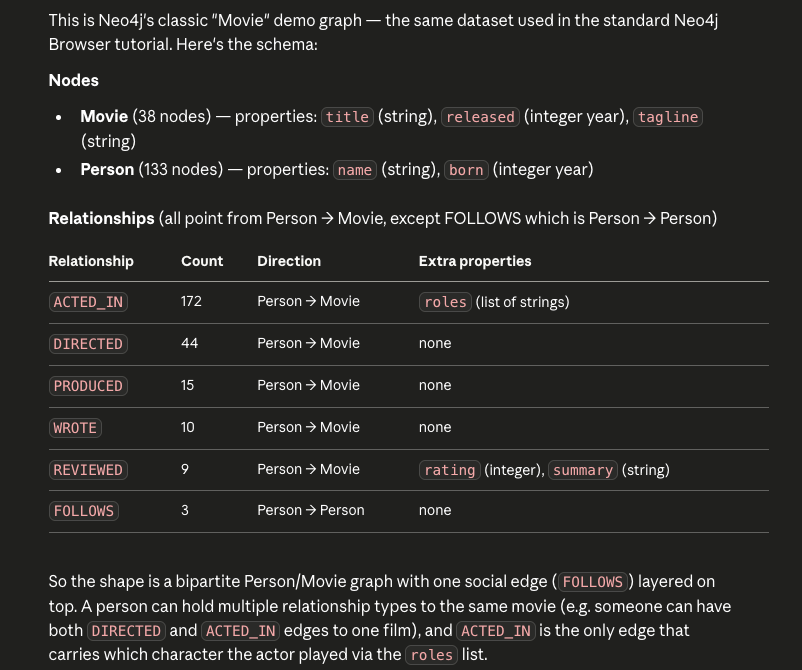
- Schema Discovery Tool: This tool allows the AI to "orient" itself. Instead of the developer having to manually describe the database structure in a system prompt, the AI can query the schema directly. It identifies node labels, relationship types, and properties, enabling it to understand the domain—whether it be a supply chain, a social network, or a fraud detection system—within seconds.
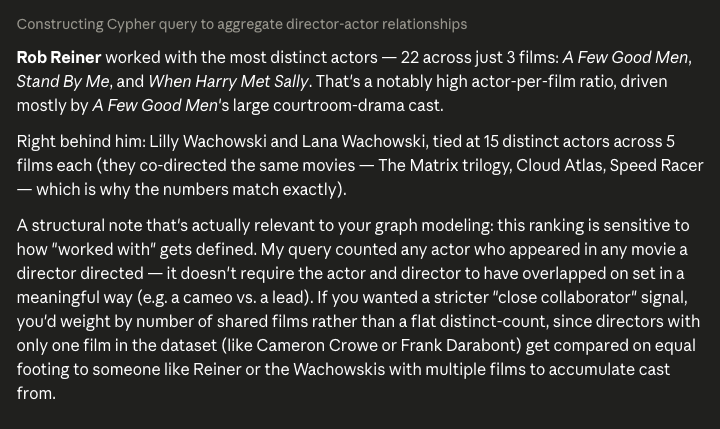
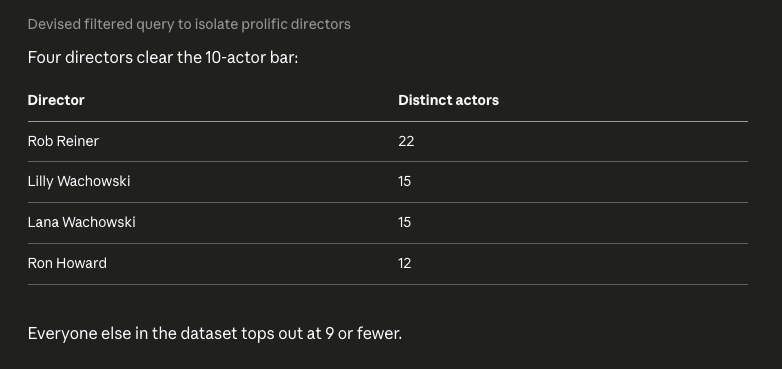
- Read Tool: Once the schema is understood, the AI uses the Read tool to execute Cypher queries (Neo4j’s graph query language). This tool allows the agent to fetch specific data points, perform aggregations, and traverse complex relationships. Crucially, this tool provides "grounding" for the LLM, ensuring that its responses are based on factual data within the graph rather than probabilistic guesses from its training set.
- Read-Write Tool: For more advanced agentic workflows, the Read-Write tool enables the AI to modify the graph. This can include creating new nodes, updating properties, or establishing new relationships. To prevent unauthorized or accidental modifications, Neo4j has designed this tool to be explicitly scoped, allowing administrators to decide which AI clients have write permissions on a per-graph basis.
These tools collectively enable a "zero-prompt" experience where the agent can explore a graph it has never seen before, generate its own Cypher queries, and refine those queries based on the results it receives, all without the developer writing a single line of code.
Chronology of Development and Market Context
The launch of MCP for Aura follows a period of intense development in the "Agentic AI" space. In late 2024, Anthropic introduced the Model Context Protocol to address the fragmentation in how AI models interact with local and remote data. Neo4j was an early adopter, releasing community-led MCP servers shortly after the protocol’s debut.
The transition from local MCP servers to a fully hosted service reflects a broader trend in the industry: the shift from "Chat with your Data" (often limited to simple RAG or Retrieval-Augmented Generation) to "Reason with your Data." While RAG typically relies on vector similarity searches to find relevant text chunks, GraphRAG—which Neo4j champions—combines vector search with the structured relationships of a graph. This allows AI to answer complex questions that require traversing multiple "hops" of data, such as identifying the shortest path between two entities or calculating the impact of a supply chain disruption.
Strategic Implications for Enterprise AI
The implications of a hosted MCP server for the enterprise are profound. One of the primary reasons AI initiatives fail in a corporate setting is the inability to provide the model with real-time, structured context in a secure manner. By utilizing Neo4j Aura as an MCP server, businesses can now enable AI agents to perform tasks that were previously too complex or too risky.
For instance, in a customer 360 application, an AI agent could be asked: "Which high-value customers have an open support ticket and have also experienced a service outage in the last 24 hours?" This question requires a traversal across customer records, support logs, and infrastructure status nodes. In a traditional relational database, this would require complex joins that are difficult for an LLM to generate accurately. In a graph, it is a natural traversal. With MCP for Aura, the agent can perform this traversal autonomously and securely.
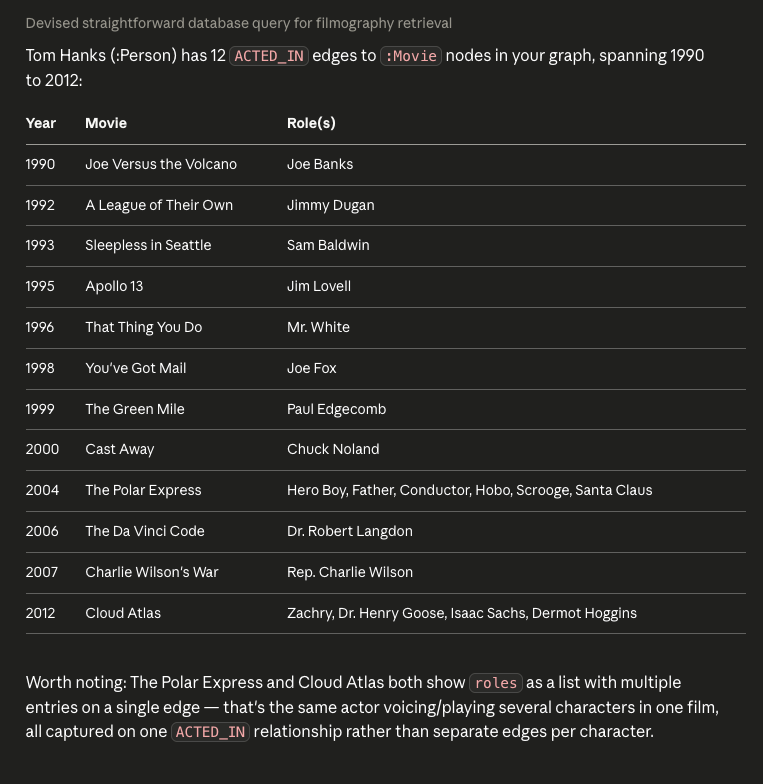
Furthermore, the "human-in-the-loop" aspect of the OAuth integration addresses a major concern regarding AI autonomy. Because the session is tied to a specific user’s credentials, the AI’s actions are auditable and restricted by the same Role-Based Access Control (RBAC) policies that govern human users. This alignment of AI capabilities with existing enterprise security frameworks is a critical step toward the widespread adoption of AI agents in production environments.
Implementation and Setup: A New Standard for Simplicity
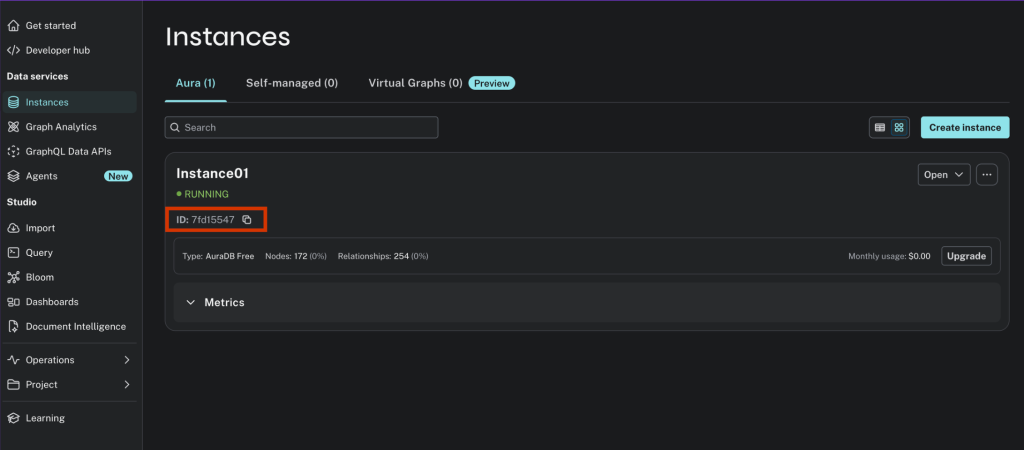
The technical setup for MCP for Aura exemplifies the move toward "low-friction" development. To connect a tool like Claude Desktop to an Aura instance, a developer only needs to modify a simple configuration file. By adding a small snippet of JSON that points to the unique Aura instance ID and utilizes the npx mcp-remote command, the connection is established.
This simplicity is expected to drive a surge in "Graph-Native" AI applications. Developers no longer need to build custom middleware or APIs to expose their graph data to an LLM. Instead, the graph becomes a self-describing, queryable entity that any MCP-compliant AI can interact with out of the box.
Future Roadmap and the Path to Graph Data Science
Neo4j has indicated that the current toolset—Schema, Read, and Read-Write—is only the beginning. The company plans to introduce support for Graph Data Science (GDS) within the MCP framework. This would allow AI agents to not only query data but also invoke advanced graph algorithms, such as PageRank, Louvain community detection, or betweenness centrality, to gain deeper insights into the structure of the network.
Additionally, enhanced granularity in tool exposure is on the roadmap. Administrators will soon be able to curate specific "toolkits" for different AI agents, ensuring that a customer-facing bot might only have access to the Read tool for a specific subgraph, while an internal analyst bot might have access to the full suite of Read-Write and GDS tools.
Conclusion: Grounding the Future of AI in Graph Data
The announcement of hosted MCP for Aura reinforces Neo4j’s position as a foundational layer in the modern AI stack. By removing the infrastructure tax, Neo4j is not just providing a database; it is providing a secure, intelligent gateway for AI to interact with the world’s most complex data. As organizations move away from simple chatbot implementations toward sophisticated, autonomous agents, the ability to ground those agents in the factual, relationship-rich context of a graph will be the deciding factor in the success of AI-driven digital transformation.
The hosted MCP server is a testament to the belief that the value of AI is not just in the model itself, but in the data it can access and the ease with which it can do so. For Neo4j Aura customers, the path to production for AI agents has never been shorter, more secure, or more accessible.
Related posts: