The Death of the Button: How Intent-Driven Design is Rendering Traditional Interfaces Obsolete

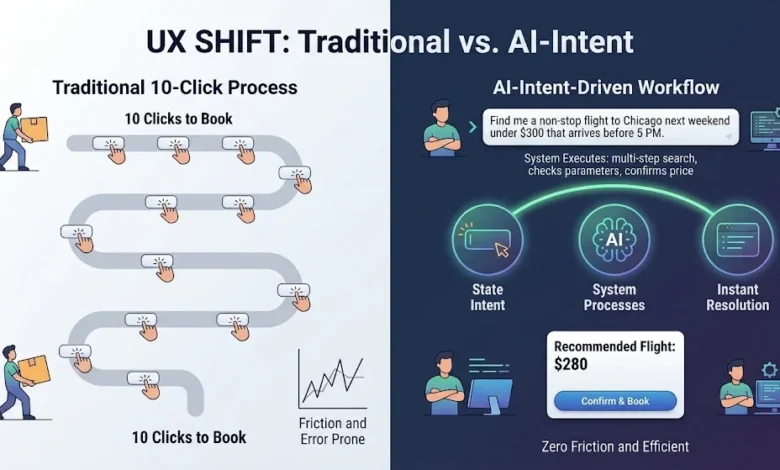
For decades, the digital landscape has been defined by the point-and-click paradigm, a rigid structure of menus, forms, and navigation paths that forced users to act as manual laborers for their own software. This era, born from the pioneering work of the Xerox Star and later refined by the Apple Macintosh, is undergoing a profound transformation. We are currently witnessing a shift toward "Intent-Driven Design," a movement that seeks to minimize user interaction by leveraging artificial intelligence to anticipate and execute tasks autonomously. As large language models and generative AI systems integrate deeper into the web, the industry is pivoting from designing static, visible interfaces toward facilitating transparent, outcome-oriented experiences.

A Historical Retrospective: From Command Line to Endless Clicks
The history of Human-Computer Interaction (HCI) has always been a struggle between machine limitations and human convenience. In the 1980s, the introduction of the Graphical User Interface (GUI) was hailed as a breakthrough because it replaced cryptic text commands with intuitive icons and menus. However, over the past forty years, this "intuitive" model has become increasingly cumbersome.
By the mid-2010s, researchers began to identify a growing problem: "interface fatigue." A 2017 study by the Nielsen Norman Group noted that as web services grew in complexity, the average number of steps required to complete a basic task—such as booking a flight or managing a subscription—had increased by nearly 40% over the preceding decade. Users were spending more time managing software—navigating pop-ups, managing browser tabs, and filling out multi-step forms—than actually achieving their objectives. This shift led designers like Golden Krishna to argue in his seminal work, The Best Interface Is No Interface, that the ultimate goal of design should be to remove the interface entirely, allowing the technology to fade into the background.
The Mechanism of Intent-Driven Design
The current shift toward intent-driven design is not merely aesthetic; it is a fundamental architectural change. In traditional web design, the user is the orchestrator. They provide the "how" (clicking through a filter, adjusting a slider) to get to the "what" (the result). In an intent-driven model, the user provides only the goal—the "what"—and the software assumes responsibility for the "how."
This is made possible through three technological pillars:
- Natural Language Processing (NLP): Modern LLMs allow systems to parse complex, multi-layered requests without requiring the user to map their goal to a specific button or input field.
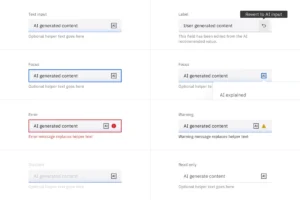
- Generative UI: Unlike static websites, generative interfaces create components on the fly. If a user asks for a price comparison, the system renders a table or a graph dynamically. Once the task is complete, that interface may disappear, as it is no longer required.
- Autonomous Agents: These are background processes that can navigate external APIs, compare data across multiple sources, and perform actions without human intervention.
Industry Case Studies: The New Vanguard
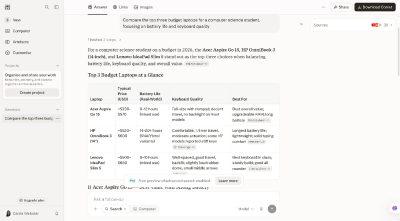
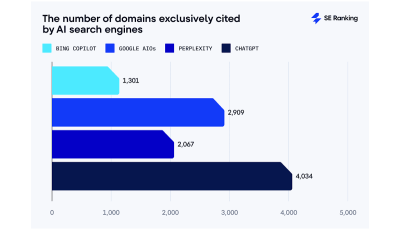
Several platforms are currently spearheading this transition. Perplexity AI, for instance, has fundamentally changed the search engine experience. Whereas traditional search engines, such as the early iterations of Google, functioned as directories—providing a list of links that the user had to manually curate—Perplexity synthesizes data from multiple sources into a single, coherent answer. This eliminates the "tab-switching" behavior that defined web research for two decades.
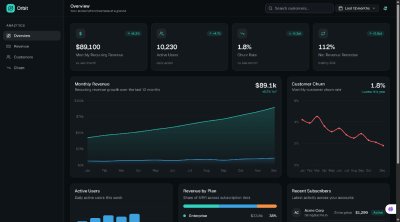
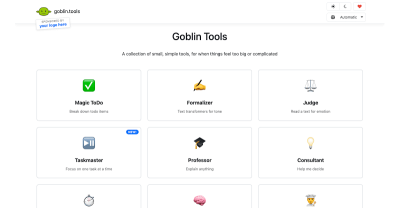
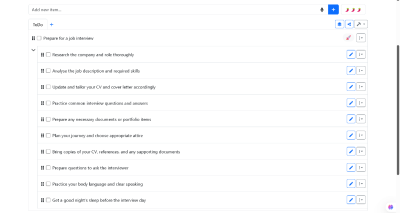
In the realm of software development, Vercel’s v0 platform has disrupted the traditional design workflow. Previously, building a web interface required hours of manual layout configuration in tools like Figma, followed by manual coding. Now, a developer or designer can describe a desired dashboard in natural language, and the AI generates the UI components instantly. Similarly, tools like Goblin.tools have emerged to serve neurodivergent users by breaking down overwhelming, multi-step tasks into simple, manageable action items, effectively acting as an intelligent assistant that manages project management overhead.
Data-Driven Implications for Product Design
The move away from traditional buttons has significant implications for how companies measure success. For years, the industry standard for "engagement" was defined by metrics such as "time spent on site" and "number of clicks per session." In an intent-driven world, these metrics become counterproductive.
"If a user spends ten minutes on a page, they are either deeply engaged or profoundly confused," says Dr. Elena Rossi, a human-factors researcher at the Institute for Digital Ergonomics. "Intent-driven design flips this. We are now optimizing for ‘time-to-resolution’ rather than ‘time-on-page.’ If we can solve a user’s problem in three seconds instead of three minutes, we have succeeded. The interface should be a bridge to a solution, not a destination in itself."
Research from the Google People + AI Research (PAIR) team suggests that while this efficiency is desirable, it introduces the "Black Box" problem. If an AI performs a task on behalf of a user, the user may lack the visibility required to trust the outcome. Consequently, the new role for UX designers is not to build prettier buttons, but to build transparent feedback loops that explain how a conclusion was reached, ensuring the user remains in control even while the computer does the heavy lifting.
Ethical Considerations and the "Illusion of Control"
As automation increases, so do the risks of unintended consequences. The Center for Humane Technology has warned that without strict ethical guardrails, AI agents could prioritize corporate interests over user intent—for example, by subtly steering users toward more expensive flight options or biased information sources.
Furthermore, there is the risk of the "Illusion of Control." If a system is too autonomous, users may become passive, failing to notice when a system has made a critical error in a financial or health-related context. To mitigate this, design guidelines are shifting toward "human-in-the-loop" verification for high-stakes decisions. The most effective systems, according to recent Stanford HCI reports, are those that offer "friction by design"—adding manual confirmation steps only when the cost of an error is high.
The Future of the Web: A Seamless Horizon
The transition to intent-driven design represents the most significant shift in computing since the invention of the mouse. As we move toward a future where interfaces are increasingly invisible, the focus of the web will move away from visual clutter and toward silent, efficient completion.
Industry analysts predict that by 2030, the "browser" as we know it—a tool used to navigate websites—will likely be replaced by a layer of intelligent agents that act as intermediaries between the user and the vast, fragmented architecture of the modern internet. This evolution will force companies to move away from "page-centric" design and toward "action-centric" services.
Ultimately, the digital economy is moving toward a state of "invisible utility." In this new paradigm, the most successful websites will be the ones that disappear entirely, solving problems before the user has to navigate a single menu. The era of the "10-click process" is drawing to a close, replaced by a philosophy where the best interface is, quite simply, no interface at all. The challenge for the next generation of designers will be to balance this unprecedented efficiency with the transparency, trust, and human agency required to keep the digital world safe, equitable, and under human control.