The definitive guide to naming UI components and design tokens for scalable digital systems

Naming is fundamentally an exercise in communication architecture. In the complex ecosystem of modern software development, the language utilized by cross-functional teams shapes not only the mental models of developers and designers but also the efficiency of the entire production pipeline. When naming conventions remain ambiguous or inconsistent, the result is a fragmented digital product characterized by confusion surrounding colors, iconography, component behavior, and functional features. This linguistic misalignment often leads to the proliferation of generic, non-descriptive labels that hinder reusability, or conversely, overly specific tags that lock systems into rigid, unscalable structures.

The Cognitive Burden of Poor Nomenclature
The challenge of naming is rooted in the "semantic gap"—the distance between how a system is engineered and how it is perceived by the end-user. Research into developer productivity suggests that engineers spend a significant portion of their time deciphering existing codebases. When variable names, CSS classes, or design tokens lack a clear, logical taxonomy, the cognitive load increases, leading to higher rates of technical debt.
Industry experts have long recognized that the most effective naming systems are those that decouple visual properties from functional intent. For instance, naming a component based on its color (e.g., "blue-button") creates a maintenance nightmare when the design system requires a dark-mode update. Instead, professional design systems prioritize tokens based on roles and states, such as "action-primary-default," which allows for theme-agnostic styling.

Historical Context and the Evolution of Design Tokens
The formalization of design tokens as a distinct discipline gained significant momentum around 2014, pioneered by Salesforce’s Lightning Design System. The practice emerged from the necessity to synchronize design values across diverse platforms, including web, iOS, and Android. Since then, the taxonomy of these tokens has evolved from simple primitive values (like hex codes) to complex, multi-layered hierarchies.
In recent years, major organizations have begun publishing their internal methodologies to address these systemic challenges. Notably, the team at Intuit—responsible for platforms like QuickBooks and Mailchimp—faced a critical juncture when their legacy design system could no longer support their expanding product suite. Their solution involved developing a highly flexible token taxonomy that serves as a foundation for multiple brands. By shifting from static naming to a structured, semantic approach, they reduced the time required for cross-product updates by an estimated 40%.

Strategic Resources for Standardizing Nomenclature
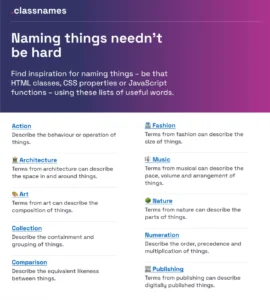
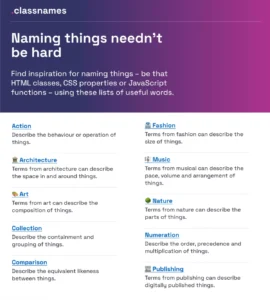
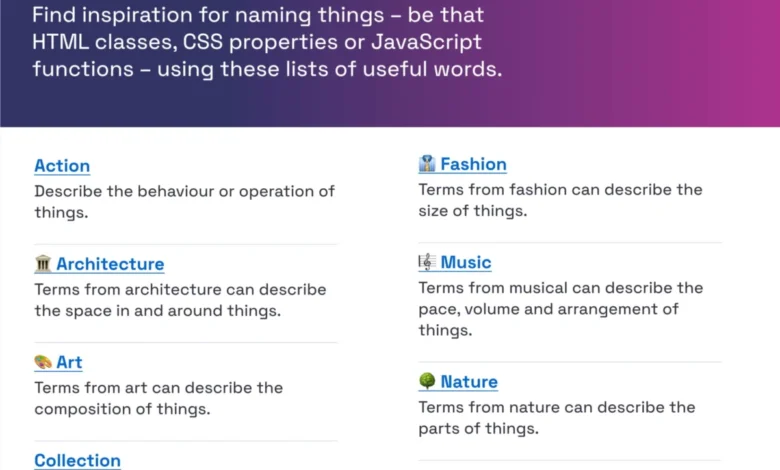
For teams struggling to establish a consistent vocabulary, several high-quality resources have emerged as industry standards. The "Classnames" project serves as a critical repository for developers, providing thematically grouped lists of terms that encourage thinking beyond generic labels. By categorizing words based on behavioral patterns, order, and association, it helps teams avoid the trap of repetitive or confusing class names.
Similarly, the "Component Gallery," curated by Iain Bean, provides a comprehensive audit of how various organizations name their UI elements. By observing that over 50 common UI components—such as accordions, breadcrumbs, and modals—are often identified by different names across major libraries (e.g., Material UI vs. Carbon Design System), developers can better align their own documentation with industry standards, thereby improving discoverability and onboarding for new team members.

The Impact of Naming on Feature Adoption
Beyond the technical layer, naming plays a pivotal role in the user experience. Feature adoption is frequently inhibited not by a lack of utility, but by poor discoverability and opaque labeling. A feature that is named using internal jargon rather than the user’s "job-to-be-done" language will consistently suffer from lower engagement rates.
Data from recent UX studies indicates that when a feature’s name mirrors the terminology used by the target demographic in their day-to-day operations, the "time-to-understand" metric is reduced by nearly 30%. This suggests that the most effective product names are not those conceived in a vacuum by marketing teams, but those derived from active user research and qualitative interviews.

Advanced Taxonomy: The Vodafone Case Study
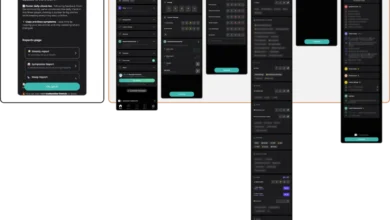
A benchmark in the field is the Vodafone UK Design System team, whose "Variables Taxonomy Map" provides a blueprint for managing complex, multi-brand design systems. Their approach categorizes tokens into four distinct layers: brand, primitives, semantics, and pages. By establishing a clear mapping between these layers, the team ensures that a change in a base brand color cascades correctly through all dependent components without requiring manual refactoring. This hierarchical structure is now widely regarded as a best practice for enterprise-level design systems, allowing for "theming" that remains consistent across varied geographical markets and product lines.
Practical Implementation Strategies
For teams looking to refine their naming conventions, the following framework is recommended by industry leaders:

- Inventory Assessment: Begin by auditing existing CSS classes and design tokens. Identify areas of overlap or conflict where the same element carries different names across the codebase.
- Semantic Decoupling: Remove all references to visual properties from core naming. If a component is named "large-red-box," rename it to "status-alert-container."
- Cross-Disciplinary Workshops: Naming is not just a developer’s responsibility. Product managers, designers, and accessibility experts should participate in naming sprints to ensure the chosen terminology is understood across the entire organization.
- Standardized Documentation: Utilize tools like the "Design Token Naming Guide" by Romina Kavcic to maintain a centralized source of truth. A living document that defines the naming structure—including components, categories, and states—prevents the re-emergence of technical debt.
- User-Centric Validation: For new features, conduct A/B testing on nomenclature. Use the language of the user, not the language of the system.
Implications and Future Outlook
As digital products become increasingly modular, the role of clear, consistent nomenclature will only grow in importance. The emergence of AI-driven code generation and design-to-code tools relies heavily on predictable naming structures. If a codebase uses inconsistent, chaotic naming, automated tools struggle to map components correctly, leading to higher error rates.
The industry is currently trending toward "Design System as a Product," where the system itself is treated with the same rigorous engineering standards as the final user-facing application. In this environment, the name of a component is as vital as its functionality. When team members speak different "dialects"—with designers calling a component an "overlay" and developers calling it a "modal"—the friction costs mount.

Conclusion: A Universal Language for Development
Effective naming is ultimately about reducing friction. It is a technical necessity that directly influences the maintainability, scalability, and accessibility of digital products. By adopting established taxonomies, leveraging community-driven resources like the Component Gallery and Onym, and prioritizing user-centric terminology, organizations can significantly enhance their internal workflows.
The goal is a universal, organization-wide dialect that ensures every stakeholder—from the junior developer to the lead architect—understands exactly what an element is, what it does, and how it behaves. In a professional landscape where time-to-market and operational efficiency are paramount, investing in a robust, standardized naming architecture is not merely an aesthetic preference; it is a critical business strategy that pays dividends in both product quality and team morale. As the web continues to mature, those who master the art of naming will find themselves better equipped to build the complex, resilient systems of the future.