The Strategic Dilemma in Intelligence Platforms: Vendor Control Versus Customer Ownership in Modern Data Architecture

Modern organizations operating in complex national security, law enforcement, and corporate intelligence sectors face a fundamental architectural choice when deploying analytics platforms. As intelligence programs scale to accommodate exponential growth in data volume, user bases, and cross-functional workflows, leadership teams must decide whether to centralize operational capability within a third-party vendor or cultivate technical self-sufficiency internally. This strategic bifurcation has far-reaching implications for operational agility, long-term budgetary health, and institutional autonomy.
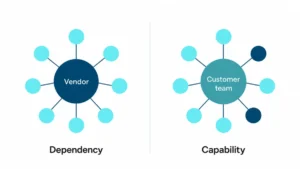
The debate centers on two competing philosophies of platform deployment. The first, a vendor-led model, relies heavily on the technology provider to act as the primary architect, operator, and evolutionary driver of the system. In this environment, the vendor supplies the specialized personnel, data pipelines, and integration services required to maintain the platform. The second approach, a customer-led model, leverages vendor technology and baseline expertise while actively integrating the client’s internal data engineering, IT, and analytical teams into the development process from inception.
Background Context and Industry Evolution
The emergence of these two distinct philosophies reflects broader structural shifts in the enterprise software and intelligence communities over the past two decades. Historically, intelligence analysis relied on rigid, highly customized mainframe systems maintained entirely by internal government or corporate IT departments. As data sources diversified—expanding from structured relational databases to unstructured text, real-time sensor feeds, and graph-based relationship mappings—the complexity of maintaining these environments outpaced the internal capacity of many organizations.
This complexity gave rise to the modern intelligence-platform-as-a-service market. Vendors entered the space offering turnkey solutions designed to alleviate the heavy burden of system deployment. For resource-constrained organizations lacking dedicated data engineering pipelines, these vendor-led models presented an attractive value proposition. A fully managed solution promised rapid deployment, reduced initial friction, and immediate access to specialized expertise without the overhead of recruiting scarce technical talent.
However, industry analysts note that the initial ease of adoption often obscures long-term operational consequences. As organizations mature and their intelligence requirements evolve, the architectural choices made during the initial procurement phase exert a compounding influence over the entire enterprise.
Comparative Analysis of Operational Models

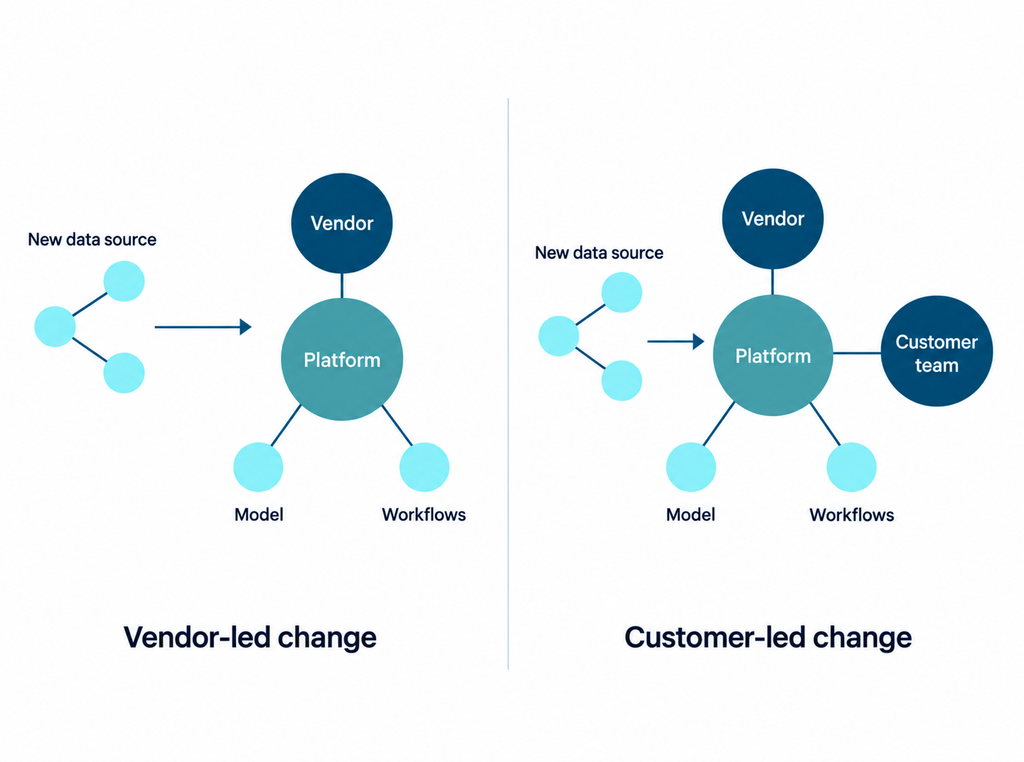
To understand the practical divergence between the two models, one can examine routine administrative tasks such as the integration of a novel data source. In a vendor-led ecosystem, the client organisation typically submits a technical requirement or support ticket, detailing the parameters of the new data stream. The vendor’s engineering team then updates the data models, modifies the ingestion pipelines, and deploys the updated workflows. While this insulates the customer from technical friction, it introduces dependencies that can bottleneck operational momentum.
Conversely, a customer-led framework equips the organization’s internal personnel with the foundational knowledge required to execute these modifications independently. When a new data source is identified, internal data engineers and analysts leverage modular architectures to implement the pipeline directly, engaging vendor support strictly for advanced troubleshooting or specialized advisory services.
Proponents of the customer-led approach argue that this operational proximity to the underlying technology yields vital institutional knowledge. Intelligence requirements are inherently dynamic; geopolitical shifts, emerging criminal enterprises, and evolving corporate threats frequently generate analytical questions that were unforeseen during the platform’s initial commissioning. Organizations equipped to modify their own data models and analytical workflows can pivot instantaneously, whereas those dependent on external support must navigate contractual scoping, scheduling delays, and ticket queues.
The Compounding Mechanics of Platform Growth
As successful intelligence analysis platforms mature, they inevitably attract greater user adoption, absorb larger volumes of data, and support a wider array of use cases. This growth acts as a multiplier, amplifying the structural characteristics of the chosen foundational model.
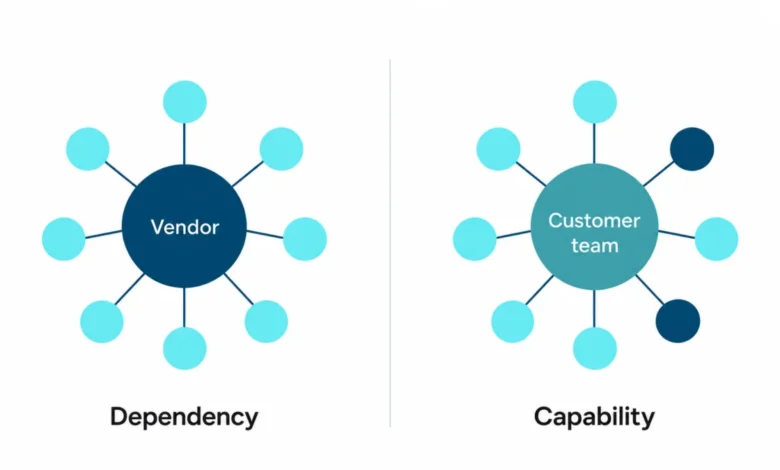
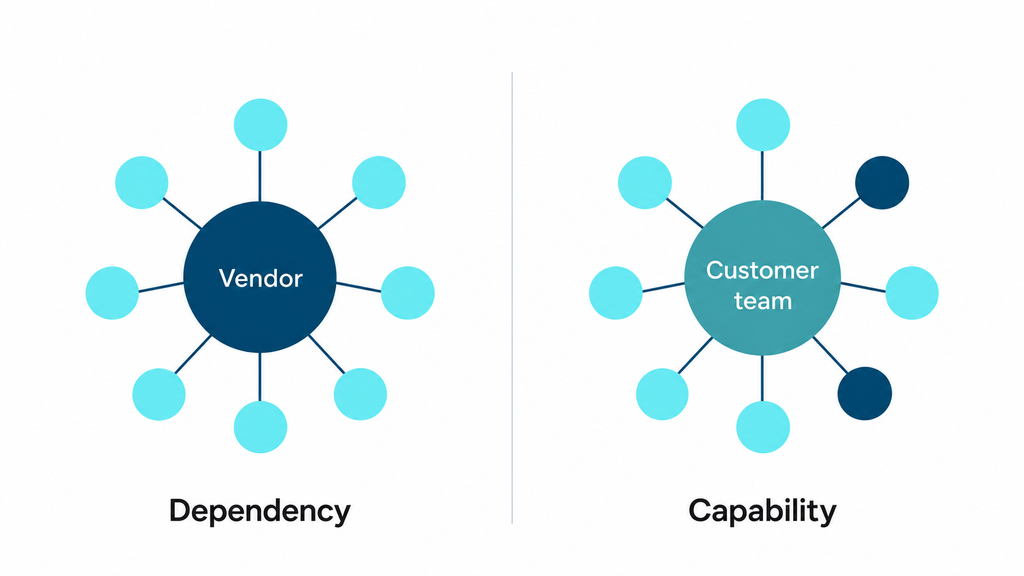
In vendor-led environments, scaling up deepens external dependency. Because the architectural knowledge, data schemas, and custom integrations reside primarily with the vendor, the client organization’s internal capacity to alter the system remains stagnant or diminishes over time. Consequently, minor modifications can transform into complex logistical hurdles. In high-stakes investigative contexts, such delays can prove operationally critical—a surveillance lead may go cold, or an actionable financial trail may dissipate while an agency waits for a vendor to approve and deploy a schema update.
In contrast, organizations utilizing customer-led models experience compounding capability growth. Every new integration, custom model, and analytical workflow managed by the internal team enhances their operational fluency. The platform scales not merely in data volume and user count, but in the internal organization’s capacity to adapt it. Each subsequent system modification becomes progressively more efficient as institutional expertise deepens.
The Risk of Architectural Lock-In
Beyond day-to-day operational velocity lies the critical issue of long-term strategic sovereignty. Industry experts emphasize that an established intelligence platform accumulates far more than raw data over its lifecycle. It encodes the organization’s collective analytical methodology, proprietary data models, automated pipelines, integration bridges, and years of institutional decision-making regarding how intelligence is categorized and synthesized.
When an organization relies exclusively on a vendor to operate and modify these core components, it risks a profound form of technical lock-in. While the client may legally retain ownership of its raw data, the actual intelligence capability—the analytical engine that translates raw inputs into actionable insights—remains bound to the vendor’s proprietary ecosystem.
Consequently, transitioning away from the platform ceases to be a straightforward software migration. Instead, it requires reconstructing years of accumulated analytical architecture and institutional workflow design from the ground up, a prohibitive barrier that can trap organizations in legacy arrangements long after their strategic needs have shifted.
Assessing Organizational Control: Three Critical Diagnostics
To determine where operational control genuinely resides within an enterprise, technology strategists recommend evaluating three core capabilities after a platform has been operational for several years:
-
The Capacity for Autonomous Expansion: If an enterprise initiative generates demand for a novel use case requiring distinct data structures, alternative models, and specialized workflows, can the internal team initiate development independently, or does the project immediately trigger a commercial quotation and dependency on the vendor?
-
Comprehensive Architectural Comprehension: Is the understanding of the system’s underlying mechanics distributed within the organization, or does the platform function as an opaque black box? If the original deployment engineers departed, could internal personnel maintain, secure, and evolve the environment safely?
-
True Strategic Portability: If overarching organizational priorities or national security directives necessitate a strategic pivot, what assets can be successfully migrated? Does the enterprise retain only its foundational data sets, or does it possess the intellectual property and architectural control of the intelligence capability built around them?
Industry Response and Modular Architecture Trends
Recognizing the long-term vulnerabilities associated with heavy vendor dependency, certain segments of the enterprise software market have begun shifting toward modular, open-architecture frameworks. Solutions such as GraphAware Hume—a graph data integration and investigation environment designed for Neo4j ecosystems—explicitly prioritize client ownership across all operational layers, including data models, analytical pipelines, and visualization workflows.
By decoupling the foundational graph database technology from proprietary management layers, these architectures allow client teams to build, modify, and scale their intelligence environments without surrendering structural control. Industry advocates for this approach maintain that open architectures do not preclude rapid deployment; modern graph solutions can achieve baseline operational capability within compressed timeframes, such as a matter of days, by pairing initial vendor-led onboarding with immediate knowledge-transfer protocols.
Broader Implications for Enterprise Strategy
Ultimately, the choice between a vendor-led and a customer-led intelligence analysis platform is a strategic decision that extends far beyond immediate budgetary considerations or deployment timelines. While vendor-led models offer short-term relief for resource-strapped organizations by outsourcing operational complexity, they do so by trading away long-term autonomy and flexibility.
As data environments grow increasingly complex and operational landscapes shift with unprecedented velocity, the organizations best positioned to succeed are those that treat intelligence capability not as a software service to be consumed, but as an internal core competency to be developed, retained, and continuously evolved. Leadership teams must enter into platform acquisitions with explicit awareness of these long-term trade-offs, recognizing that the platform chosen today will dictate not only next year’s analytical efficiency, but the absolute ownership of institutional knowledge for the lifetime of the program.
Related posts: