Next.js Prepares for Major September 2026 Security Release Highlighting Nine Vulnerabilities Across Core Framework Versions

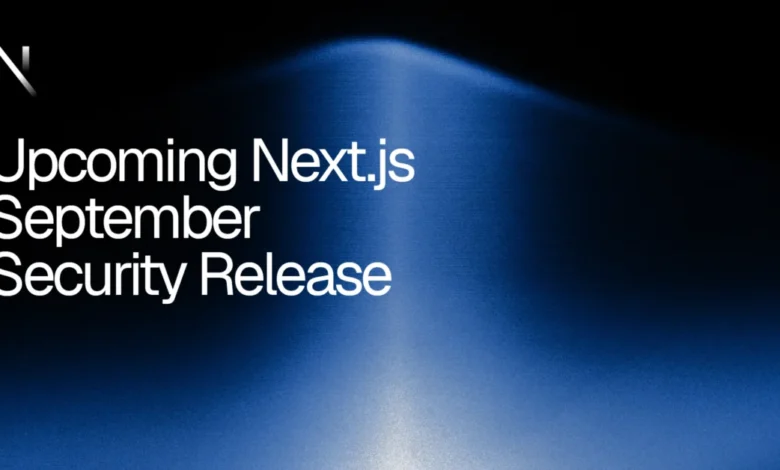
The open-source development community is bracing for a critical software update as Vercel prepares a scheduled security release for Next.js, set to go live on September 30, 2026. This advance notice has been issued to give enterprise development teams, independent contractors, and IT infrastructure managers adequate time to plan and schedule necessary system upgrades well before the official patches are published. Advance warnings of this nature have become an industry best practice among major open-source maintainers, allowing organizations to minimize production downtime and mitigate potential zero-day exploitation risks by aligning patch deployment with regular maintenance windows.
The upcoming September 30 release is slated to comprehensively address a total of nine distinct security vulnerabilities discovered within the Next.js framework. According to the preliminary advisory distributed by the development team, the severity breakdown of these flaws spans the entire risk spectrum: one vulnerability has been classified as critical, two as high severity, five as medium severity, and one as low severity. To remediate these issues, maintainers plan to publish two specific patched versions concurrently: Next.js version 16.3.7 and version 15.5.27. Alongside these software updates, comprehensive security advisories will be released detailing the exact nature of each flaw, their potential impact on running applications, the specific software versions affected, and step-by-step upgrade instructions. Technical leads and system administrators are strongly advised to apply these updates immediately upon availability to maintain application integrity and data security.
Background Context of the Framework and Vulnerability Management
Next.js, developed and maintained by Vercel alongside a vast global community of open-source contributors, has established itself as one of the preeminent React frameworks for building high-performance web applications. Powering millions of websites ranging from individual blogs to massive enterprise-grade e-commerce platforms and government portals, the framework’s expansive attack surface makes proactive vulnerability management a critical operational priority. Modern web frameworks handle complex server-side rendering, API routing, and client-side hydration, which inherently introduces intricate security challenges across the full software development lifecycle.
The identification of nine simultaneous vulnerabilities underscores the ongoing complexity involved in maintaining a modern, feature-rich web framework. Software vulnerabilities in frameworks like Next.js often stem from edge cases in routing logic, server-side execution environments, data deserialization, or cross-site scripting vectors. When multiple vulnerabilities are bundled into a single scheduled advisory, it typically represents a coordinated disclosure effort where various security researchers have privately reported findings over a specific reporting cycle. This methodology contrasts with emergency out-of-band patches, providing a structured, predictable environment for both maintainers and enterprise consumers to handle risk.
Chronology of the Security Disclosure and Advance Notice
The announcement follows a standard vulnerability disclosure timeline designed to balance public safety with responsible disclosure practices.
Historically, the lifecycle of such security releases begins months prior when independent security researchers or internal automated auditing tools discover potential flaws within the codebase. These findings are reported privately to Vercel via secure channels, typically through their designated bug bounty platform.
Upon receiving a report, the security engineering team verifies the vulnerability, assesses its scope and potential impact, and calculates its CVSS (Common Vulnerability Scoring System) severity score.
Once the affected codebase is isolated, developers begin drafting fixes and testing them against regression suites to ensure stability.
Rather than releasing patches immediately—which can catch system administrators off guard and lead to rushed deployments—maintainers often opt for a scheduled advisory model. By providing an advance notice window, organizations are given a definitive countdown.
On September 30, 2026, the timeline culminates with the simultaneous publication of versions 16.3.7 and 15.5.27, complete with detailed technical advisories and immediate download availability across package registries such as npm.
The Role of Vercel Open Source Bug Bounty and Collaborative Security
The discovery and mitigation of these vulnerabilities are largely driven by collaborative efforts between core maintainers and the global security research community. Vercel operates the Vercel Open Source Bug Bounty program hosted on HackerOne, a platform designed to incentivize ethical hackers and security researchers to audit critical repositories for security flaws. This crowdsourced approach to cybersecurity has become a cornerstone for modern open-source sustainability, acknowledging that no single internal team can anticipate every potential attack vector in a rapidly evolving threat landscape.
Through the HackerOne program, security researchers are rewarded financially for discovering and responsibly reporting vulnerabilities before malicious actors can exploit them in the wild. This proactive ecosystem encourages continuous scrutiny of the framework’s codebase. Anyone interested in contributing to the security posture of Next.js and other eligible open-source frameworks maintained by Vercel is officially encouraged to participate through the HackerOne portal, where submission guidelines and scope definitions are clearly outlined.
Furthermore, maintainers maintain open communication channels for any questions or concerns regarding their broader security programs or vulnerability management lifecycles. Organizations or researchers needing to interface directly with the security team can reach out via email at [email protected]. This transparency fosters trust between enterprise users who rely on the framework for mission-critical operations and the developers working behind the scenes to secure it.
Broader Impact and Technical Implications for Enterprise Architecture
The announcement of a critical vulnerability within a widely deployed web framework carries profound implications for enterprise software architecture. Because Next.js integrates deeply into both the frontend presentation layer and backend server environments, a critical vulnerability could theoretically expose applications to risks such as remote code execution, server-side request forgery (SSRF), or unauthorized data access, depending on the exact nature of the unpatched flaw.
Enterprise development teams face unique challenges when patching dependencies. Large organizations often maintain sprawling dependency trees with hundreds of microservices and web properties running varying versions of Next.js. Upgrading from version 15 to 16, or even applying minor patch releases across legacy branches, requires rigorous automated testing, regression analysis, and staging deployment verification to prevent breaking changes in production environments.
The advance notice period serves as a vital buffer for these QA processes. Without such warnings, organizations forced to react to sudden zero-day patches often experience significant operational stress, rushed code deployments, and an increased risk of human error during the patching process. By scheduling the release for September 30, Vercel allows engineering leadership to allocate sprint capacity specifically for security hardening, ensuring that the transition to versions 16.3.7 and 15.5.27 is smooth and systematic.
Reactions and Industry Best Practices
Industry analysts and DevSecOps professionals have consistently praised the shift toward scheduled security releases in the JavaScript ecosystem. In an environment where software supply chain attacks and complex dependency vulnerabilities are on the rise, predictability is a valuable commodity. When maintainers communicate patch dates in advance, it empowers compliance officers and Chief Information Security Officers (CISOs) to track patching SLAs (Service Level Agreements) more effectively.
Security experts recommend that development teams take several proactive steps during the advance notice window leading up to September 30. First, organizations should audit their current dependency graphs to identify all repositories utilizing Next.js, explicitly noting whether they fall under the 16.x or 15.x release branches. Second, CI/CD pipelines should be reviewed to ensure that automated dependency update tools, such as Dependabot or Renovate, are properly configured to flag the new versions the moment they drop. Finally, staging environments should be prepared to receive the patched binaries immediately upon release, allowing for rapid validation of application performance and security posture before pushing updates to live production servers.
Conclusion and Next Steps for Maintainers and Users
As the September 30, 2026 release date approaches, the focus within the Next.js community centers entirely on readiness. With a balanced mix of one critical, two high, five medium, and one low severity vulnerability slated for remediation across versions 16.3.7 and 15.5.27, the forthcoming patch represents a substantial maintenance milestone for the framework.
Developers and system administrators are urged to bookmark the official advisory channels, monitor the npm registry for the release of the updated packages, and review internal deployment schedules to accommodate the necessary upgrades. Through proactive planning, transparent communication, and collaborative security initiatives like the Vercel Open Source Bug Bounty, the Next.js ecosystem continues to demonstrate a mature and resilient approach to navigating the complexities of modern web application security.