The Strategic Dilemma in Modern Intelligence Platforms: Vendor-Led Convenience Versus Customer-Led Capability

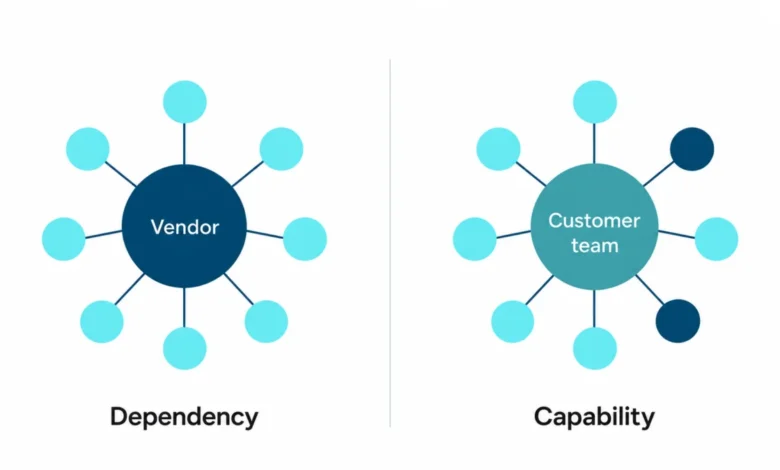
Organizations deploying advanced intelligence analysis platforms face a fundamental architectural and philosophical divergence that dictates the long-term viability of their data operations. As big data analytics, complex graph databases, and artificial intelligence integration become central to national security, corporate investigations, and financial crime detection, leadership teams are forced to choose between two competing models of deployment: the tightly integrated vendor-led model and the collaborative, customer-led capability framework.
This strategic choice goes far beyond initial software procurement. It dictates whether an organization builds deep internal expertise or deepens a permanent dependency on external providers. Industry analysts note that while both philosophies aim to optimize analytical success, their long-term trajectories create entirely different organizational outcomes regarding operational agility, institutional knowledge, and vendor lock-in.
The Two Core Philosophies of Platform Architecture
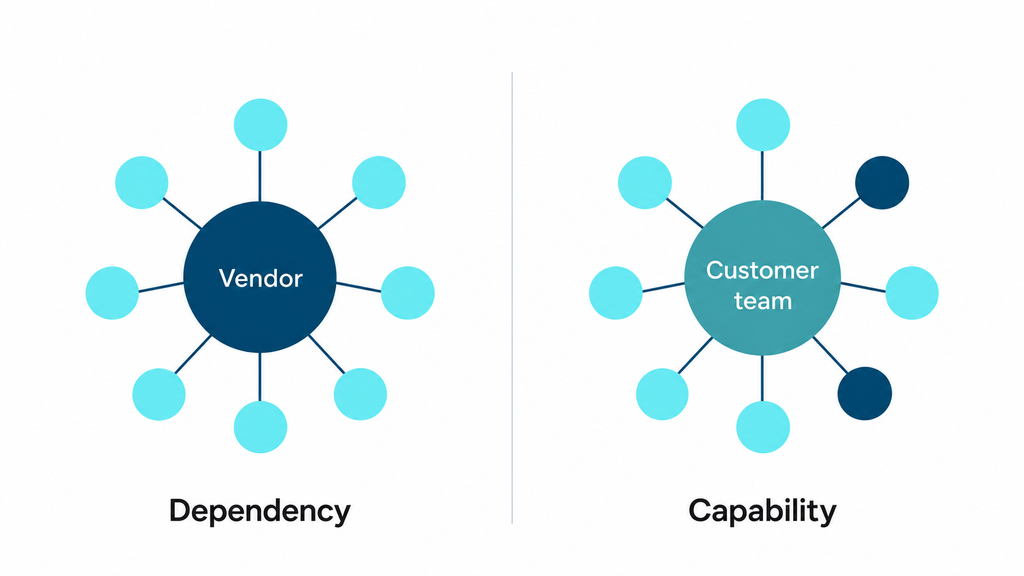
To understand the current debate in enterprise and public sector technology deployment, one must examine how platforms evolve from inception to enterprise-wide integration. The vendor-led model concentrates knowledge, engineering capability, and infrastructure management primarily inside the vendor’s organization. Under this framework, the vendor delivers a comprehensive, turnkey solution, bringing technology, specialized personnel, and proprietary methodologies to construct and evolve the platform on behalf of the customer.
Conversely, the customer-led model distributes capability directly into the hands of the client organization. While the vendor supplies the core technology, foundational expertise, and ongoing technical support, the customer’s internal teams—comprising data engineers, IT specialists, and intelligence analysts—are embedded in the build process from day one. They learn to operate, configure, and extend the platform themselves.
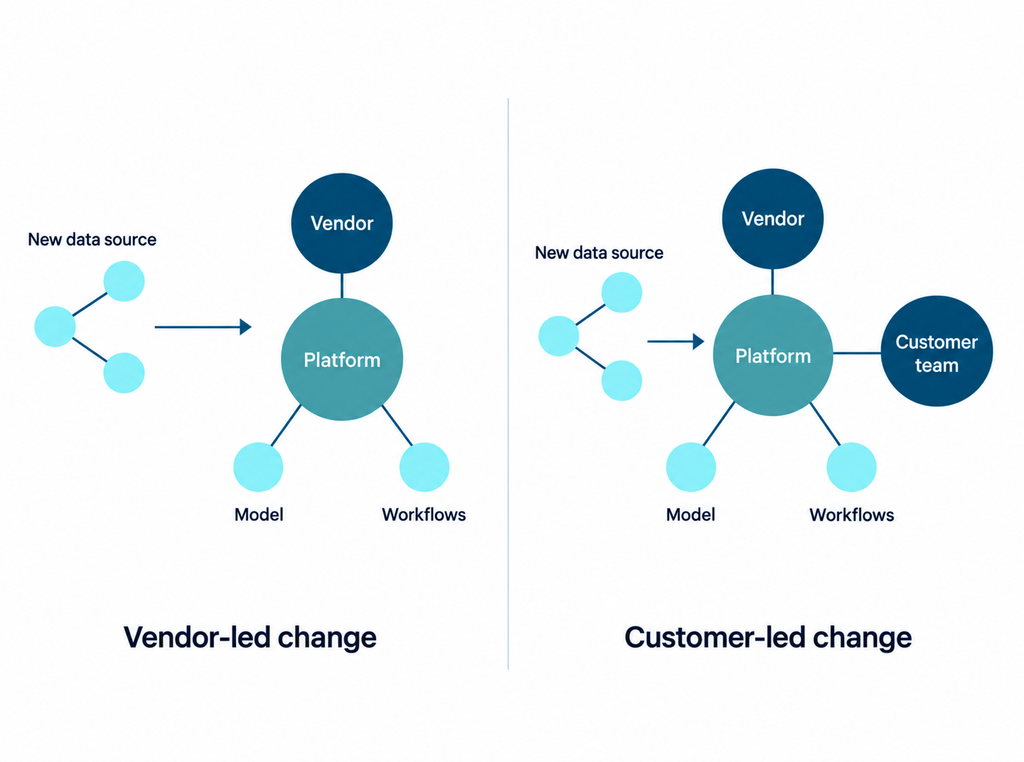
The practical implications of this divide become evident during routine maintenance tasks, such as incorporating a new data source. In a vendor-led environment, the client submits a request, defining their requirements while relying entirely on external engineers to update data models, pipelines, and analytical workflows. In a customer-led environment, internal teams leverage their acquired system knowledge to execute these changes independently, calling upon vendor support only when specialized intervention is required.
Background and Context: The Evolution of Enterprise Intelligence
Historically, intelligence analysis platforms were built entirely in-house by specialized government agencies or large financial institutions using legacy databases and custom-coded scripts. However, the exponential growth of unstructured data, cyber threats, and cross-border financial networks rendered custom-built solutions financially and operationally unsustainable.
Over the past decade, the market shifted toward commercial off-the-shelf (COTS) and enterprise software-as-a-service (SaaS) platforms. This shift introduced significant efficiency gains, allowing organizations to deploy sophisticated relationship-mapping and graph-analysis tools in months rather than years. Yet, it also created a new vulnerability: the black-box syndrome. As platforms grew to handle millions of data points, many organizations realized they could operate the user interface but lacked the fundamental comprehension of the underlying data pipelines, semantic models, and algorithmic logic governing their intelligence operations.
This historical context informs current procurement strategies, particularly within the public sector and highly regulated industries like defense, aerospace, and banking, where institutional data sovereignty is paramount.
Chronology of Platform Scaling: The Compounding Effects of Growth
The true divergence between the two deployment models does not manifest during the initial proof-of-concept phase, but rather over a three-to-five-year operational lifecycle as the platform scales.
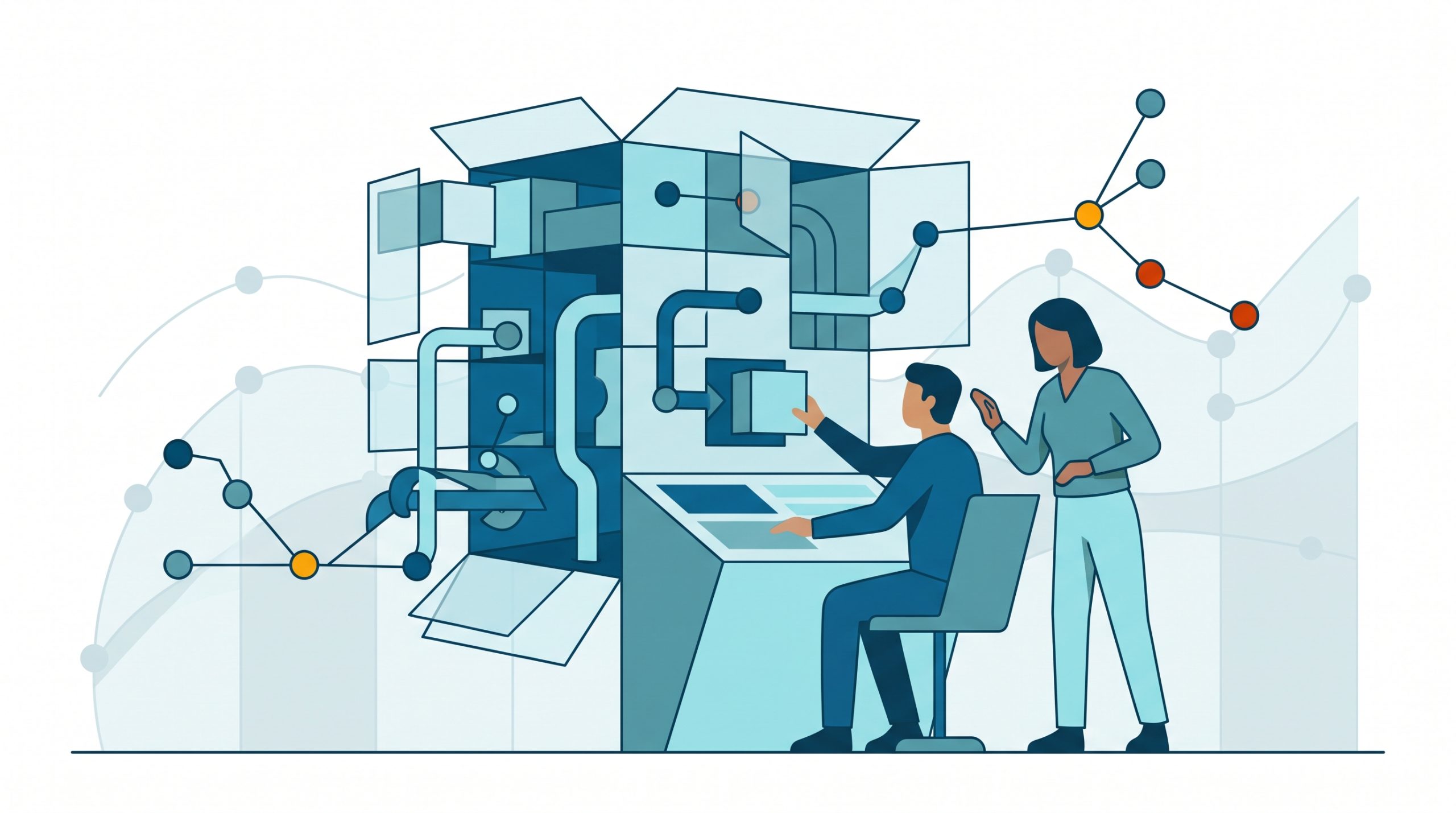
During Year One, the implementation phase, the vendor-led model appears overwhelmingly attractive. Complex intelligence programs require substantial upfront engineering. Organizations frequently lack idle data engineering personnel to spearhead a new initiative. When a vendor arrives with a turnkey plan, a dedicated deployment team, and a promise to lift the operational burden off internal staff, leadership naturally seizes the opportunity.
By Year Three, however, successful platforms experience exponential growth. They attract a larger user base, ingest disparate data feeds, and support novel analytical use cases. At this juncture, the foundational model chosen years prior dictates organizational agility:
- Vendor-Led Trajectory: Growth correlates directly with heightened vendor dependency. Because the architectural knowledge remains externalized, even minor adaptations require formal support tickets, scoping meetings, and commercial change orders. In high-stakes environments—such as financial fraud investigations or active law enforcement leads—delays in modifying data pipelines can cause crucial investigative leads to go cold.
- Customer-Led Trajectory: Growth builds compounding internal competence. Each newly integrated data source or custom workflow refines the internal team’s operational mastery. Adapting the platform to address unforeseen analytical threats becomes progressively faster and more autonomous.
Assessing Control: Three Critical Diagnostic Questions
Industry experts argue that an organization’s true level of platform autonomy can be measured by answering three critical diagnostic questions regarding long-term system governance.
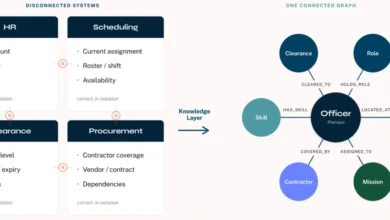
First, an organization must ask: Could you change it? If an intelligence platform achieves widespread success and a secondary business unit demands a bespoke use case requiring distinct data schemas and analytical workflows, can internal engineers initiate the project, or must the organization immediately solicit a commercial quote from the vendor?
Second, leadership must evaluate: Could you understand it? There is a profound operational gulf between knowing how to execute a query on a dashboard and understanding the architectural lineage of the intelligence capability. If the original implementation engineers departed, could internal personnel maintain system integrity, or would they face an opaque black box?
Third, and perhaps most critically, organizations must confront: Could you leave it? Vendor lock-in rarely manifests as mere data captivity. Most modern contracts ensure organizations can export their raw tabular or graph data. True lock-in occurs because years of operations yield an accumulation of custom data models, integration pipelines, analytical logic, and institutional workflows. If an organization decides to pivot its technology strategy, leaving no longer means migrating a database; it requires reconstructing years of embedded operational capability elsewhere.
Industry Response and Technological Shifts
Recognizing these systemic risks, certain platform developers have consciously shifted toward open, modular architectures designed to preserve customer sovereignty. For instance, solutions like GraphAware Hume—the graph data integration and investigation environment built for Neo4j ecosystems—have been explicitly optimized for customer ownership.
By utilizing modular frameworks, such platforms allow internal teams to retain direct control over data models, integration pipelines, and analytical workflows without sacrificing initial deployment velocity. Industry benchmarks indicate that teams utilizing modular, customer-empowering frameworks can demonstrate initial operational value within days, while retaining the underlying technical competencies required for long-term mission adaptation.
Implications for Future Enterprise Architecture
The choice between a vendor-led and customer-led intelligence analysis platform is a foundational governance decision that echoes far beyond IT procurement departments. While vendor-led models provide immediate relief for resource-constrained organizations, they mortgage long-term operational autonomy for short-term convenience.
As geopolitical tensions, sophisticated financial crimes, and dynamic security threats continue to accelerate, the organizations best equipped to respond will be those that not only own their data, but fully master the analytical platforms driving their enterprise intelligence.