Bridging the Gap Between Workforce Data and Operational Readiness Through Graph Intelligence

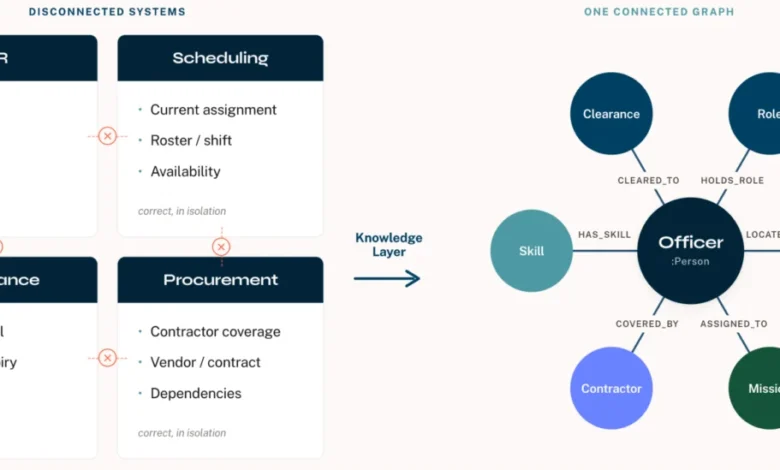
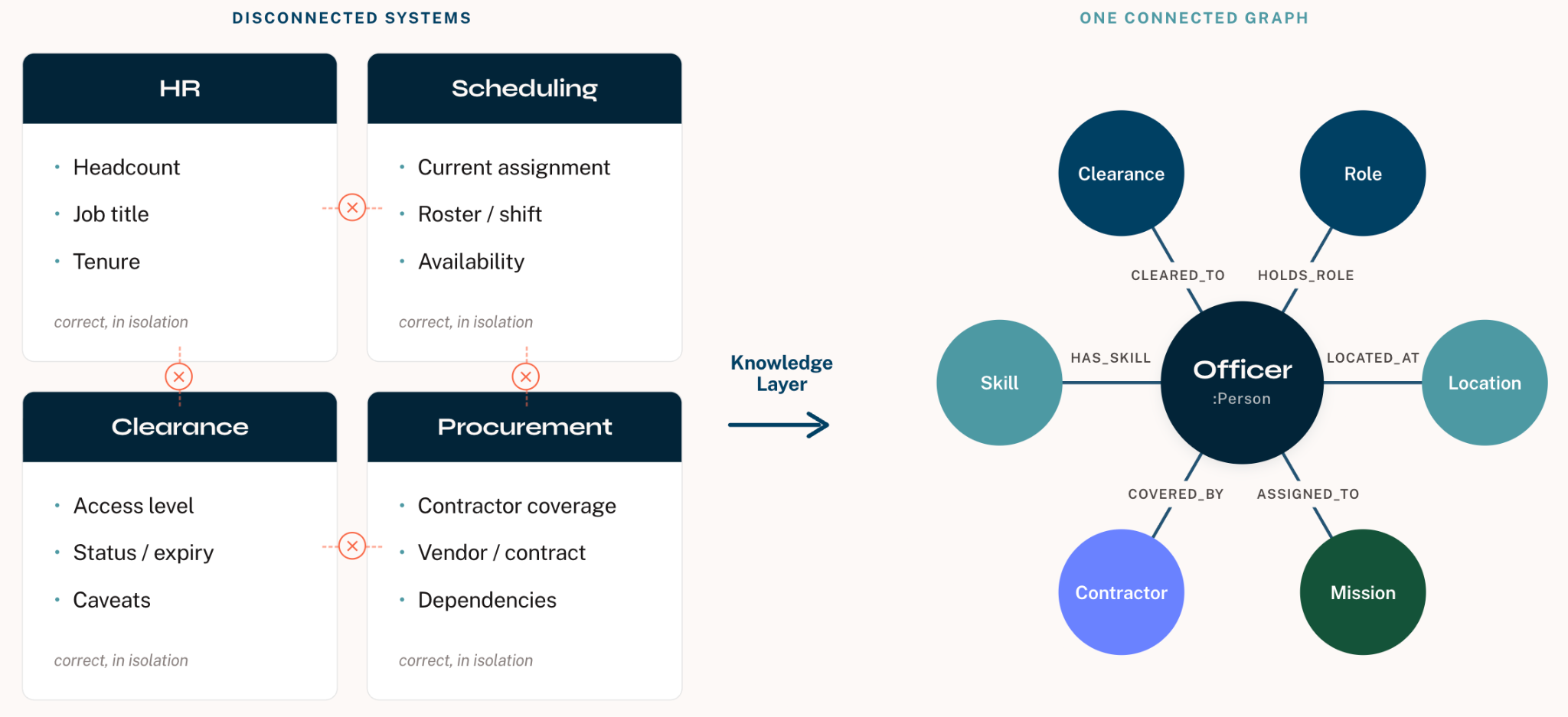
In the high-stakes environments of emergency response, national defense, and critical infrastructure, the most vital question an operations leader can ask is also the most difficult to answer: who is available right now with the specific skills and security clearances required, in the correct geographic location, whose redeployment will not create a catastrophic capability gap elsewhere in the organization? This inquiry represents a complex chain of conditions, each dependent on the last, spanning multiple disparate systems that were historically never designed to communicate. While human resources departments maintain records of employment, scheduling systems track deployments, security databases manage clearances, and procurement offices oversee contractor support, these systems function as isolated silos. Each may answer its specific query correctly, but none are equipped to answer the compound questions that define modern operational reality.
The current methodology for resolving these discrepancies is often manual and dangerously slow. In many public sector organizations, staff must reconcile headcount from HR, deployment status from scheduling, and clearance records from security via spreadsheets—often under immense pressure. By the time a comprehensive briefing is prepared, the operational situation on the ground has frequently shifted, rendering the data obsolete. In sectors where seconds matter, such as healthcare or disaster response, a three-day delay to reconcile data is not merely an administrative hurdle; it is a significant operational risk that threatens public safety and national resilience.
The Evolution of Operational Pressure: From Sequential to Concurrent
Historically, workforce management systems were built for a more predictable operating environment. In previous decades, organizational pressure tended to arrive in a linear sequence: an agency would respond to a crisis, enter a recovery phase, and then prepare for the next event. This allowed for deliberate workforce decisions, planned handovers, and a thorough understanding of the downstream consequences of moving personnel between missions. However, the modern landscape has shifted toward what analysts call a "polycrisis" environment, where multiple, overlapping emergencies occur simultaneously.
Data from the European Union’s Civil Protection Mechanism highlights this shift. In 2025, the mechanism was activated 64 times—a record frequency driven by the simultaneous occurrence of regional conflicts and natural disasters. This concurrent demand means that workforce leaders can no longer focus on a single mission at a time. Instead, they must manage a delicate balancing act, ensuring that every deployment to a wildfire or a cyber-attack does not leave another critical sector, such as border security or public health, dangerously understaffed.
Furthermore, the OECD Employment Outlook 2025 underscores structural pressures that exacerbate this operational strain. Advanced economies are facing aging workforces and shrinking talent pipelines, with skills shortages accumulating faster than organizations can replace them. When fewer experienced personnel are available, the margin for error in deployment decisions narrows significantly. Every recruitment or redeployment decision becomes a high-stakes prioritization exercise: which vacancy poses the greatest risk, and where will one additional specialist provide the most significant strategic advantage?
The Failure of Siloed Data Architectures
The primary challenge facing the public sector is rarely a lack of data. Most government agencies are data-rich, possessing sophisticated platforms for HR, training, security, and procurement. The failure occurs in the "seams" between these systems. Operational decisions almost always cross organizational boundaries, yet the underlying data architecture remains rigid and compartmentalized.
For example, if an organization needs to assemble an urgent cyber response team following a major infrastructure breach, the HR system can identify employees with "Cybersecurity" in their job titles. However, the HR system does not know if those individuals are currently on leave or deployed to another high-priority project. The scheduling system knows their location but not their security clearance level. The security database knows their clearance but not their specific technical certifications or their proximity to the incident site.
This is fundamentally an architectural problem. Traditional relational databases are designed to store and retrieve individual records in rows and columns. While they can link data through "joins," these connections become exponentially more complex and slower to process as the number of relationships increases. When an operations leader needs to traverse five or six different systems to find a single person who meets a multifaceted set of criteria, the relational model begins to break down under the weight of its own complexity.
The MissionSquare Perspective: The Impending Succession Crisis
The urgency of solving this data fragmentation is heightened by an impending demographic shift. Research from the MissionSquare Research Institute indicates that more than half of public sector HR leaders in the United States expect a massive wave of retirements within the next few years. Despite this "silver tsunami," only 13% of state and local governments reported having a formal succession planning process in place.
This lack of preparation creates a "knowledge vacuum." When veteran employees retire, they take with them an intuitive understanding of the organization’s informal networks and capabilities—the very "relationships" that are not captured in traditional HR databases. Without a technological solution to map these dependencies and capabilities, organizations face a future where they not only have fewer people but also have less visibility into the skills and clearances of the personnel who remain.
Graph Intelligence: Connecting the Operational Dots
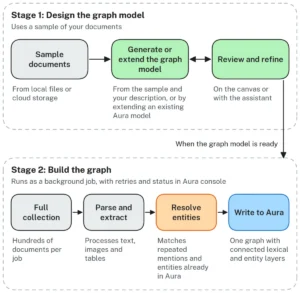
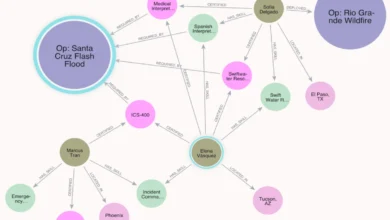
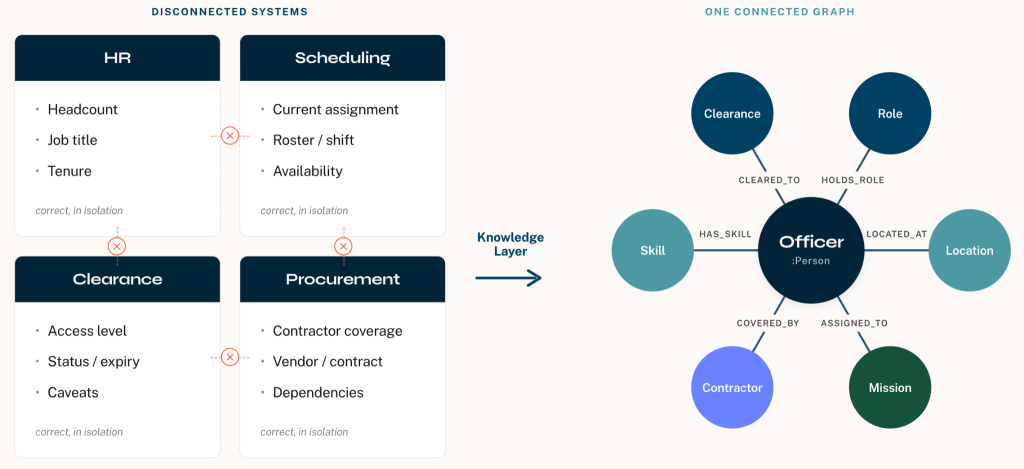
To address these challenges, a new approach to data management is emerging: the use of Graph Intelligence. Unlike traditional databases, graph technology—such as that pioneered by Neo4j—treats the relationships between data points as being just as important as the data points themselves. By building a "knowledge layer" across existing workforce systems, graph intelligence connects people, skills, clearances, contractors, and missions into a single, unified view.
Crucially, this approach does not require organizations to replace their existing, trusted systems of record. Instead, the knowledge layer acts as an overlay, pulling data from HR, security, and scheduling tools to create a map of interconnected nodes and edges. This allows leaders to reason across the entire workforce as a single, living organism.
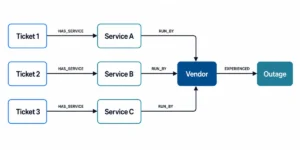
In a graph database, a query does not just look for a "record"; it traverses a "path." It can instantly identify every individual who holds a specific certification (Node A), who also has a Top Secret clearance (Node B), who is currently located within 50 miles of a crisis (Node C), and who is not currently assigned to a mission-critical role (Node D). This shift from reporting what exists to understanding what is possible is the hallmark of workforce intelligence.
From Management to Intelligence: Implications for Public Safety
The transition from traditional workforce management to workforce intelligence has profound implications for national resilience. When data is connected, leaders can move from a reactive posture to a proactive one. They can run "what-if" simulations to understand the cascading impacts of their decisions.

For instance, if a specialist is moved from a long-term infrastructure project to an emergency response team, a graph-based system can immediately flag that the move will delay a compliance audit scheduled for the following week, which in turn might jeopardize a federal funding stream. This level of visibility allows for more nuanced decision-making, where risks are not just identified but actively managed.
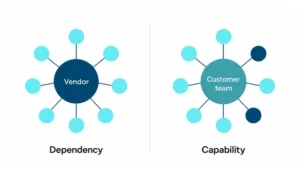
Furthermore, graph intelligence supports "capability-based" planning. Instead of searching for people based on job titles—which are often vague or outdated—leaders can search based on specific skills and historical performance. This is particularly valuable in the context of the OECD’s findings on skills shortages; it allows organizations to identify "adjacent skills" in their workforce, finding people who may not have the exact title required but have the foundational capabilities to be rapidly upskilled for a new mission.
Conclusion: The Path Toward Operational Resilience
As public sector organizations navigate an era of compound pressures and shrinking resources, the ability to make fast, informed decisions is the ultimate competitive advantage. The organizations that thrive will not necessarily be those with the largest budgets or the most employees, but those that have achieved a connected understanding of their most valuable asset: their people.
The failure to bridge the gaps between siloed workforce systems is no longer just a technical inconvenience; it is a strategic vulnerability. By adopting graph intelligence and building a comprehensive knowledge layer, government agencies can turn disconnected records into actionable intelligence. The ultimate goal is to ensure that when the next crisis arrives—be it a natural disaster, a pandemic, or a national security threat—the answer to "who is available" is available in seconds, not days. The alternative is to continue discovering critical dependencies only after they have already failed.
Related posts: