The Building Blocks of Public Sector Resilience Why Knowledge Layers Are the Missing Link in Government AI Adoption

Across the global public sector, the era of theoretical artificial intelligence has ended, replaced by a period of massive budgetary allocation and rapid deployment pressure. Government agencies, from municipal emergency services to national defense departments, have already secured funding and moved beyond the initial experimentation phase. Pilots are currently running in nearly every facet of public administration, driven by high expectations that AI will enable organizations to operate more efficiently with fewer personnel, accelerate critical decision-making processes, and significantly expand operational capabilities. However, as these systems move from controlled environments to real-world applications, a fundamental architectural flaw is beginning to emerge: the disconnect between sophisticated AI models and the fragmented data environments they are meant to analyze.
In high-consequence environments where the margin for error is non-existent—such as emergency response, national defense, healthcare, and critical infrastructure—the limitations of current AI implementations are becoming starkly apparent. When AI is applied directly to fragmented workforce and operational data, it often produces answers that are linguistically polished but factually incomplete. These systems can generate responses at speeds far exceeding human capacity to verify them, creating a dangerous gap between rapid output and operational accuracy. Experts suggest that the primary limitation does not lie within the AI models themselves, but rather in the data architecture that sits beneath them.
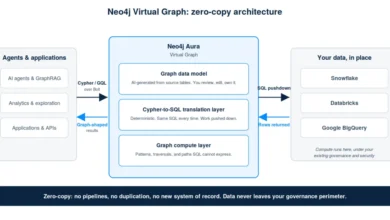
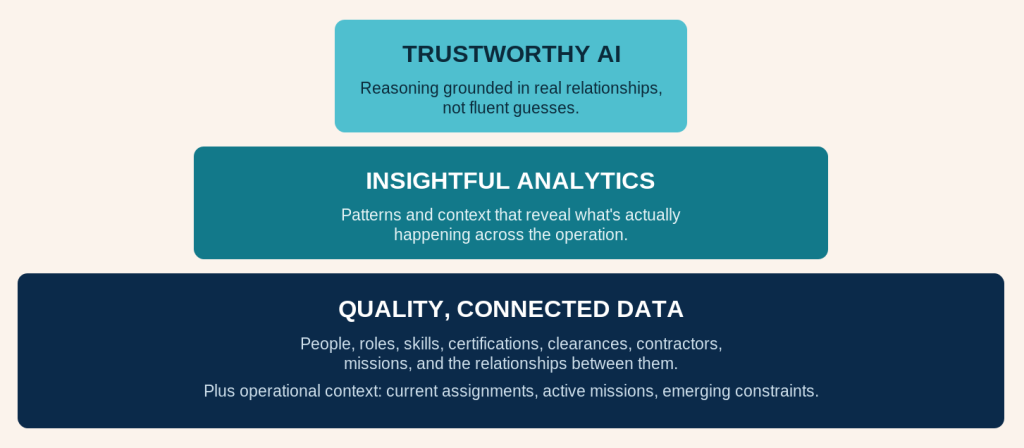
The strategic landscape for government AI was clarified by the US Department of Defense’s (DoD) Data, Analytics, and AI Adoption Strategy. This document is explicit about the necessary hierarchy for successful implementation: quality data serves as the indispensable foundation, insightful analytics are built upon that base, and responsible, effective AI sits at the apex. The strategy emphasizes that all analytic and AI capabilities require trusted, high-quality data. A defining characteristic of such data is its "linked" nature—information that allows users to exploit complementary data elements through their innate relationships. This is not merely a technical preference but an architectural requirement. In modern governance, relationships between data points must be treated as first-class assets that require dedicated storage, governance, and querying capabilities.
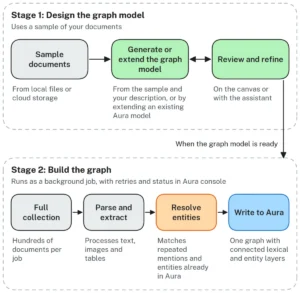
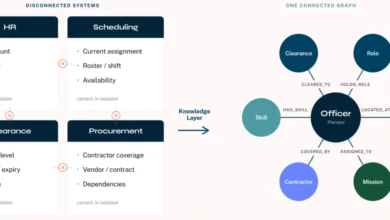
The primary obstacle to achieving this vision is the prevalence of siloed systems. When workforce data is trapped in isolated databases, compound questions—those that require reasoning across multiple domains—inevitably fail. The missing component in current government technology stacks is the "knowledge layer." This layer acts as a bridge, connecting disparate workforce data into a coherent operational model that an AI can actually reason over. Without this layer, AI tools are essentially guessing based on incomplete records rather than analyzing a unified operational reality.
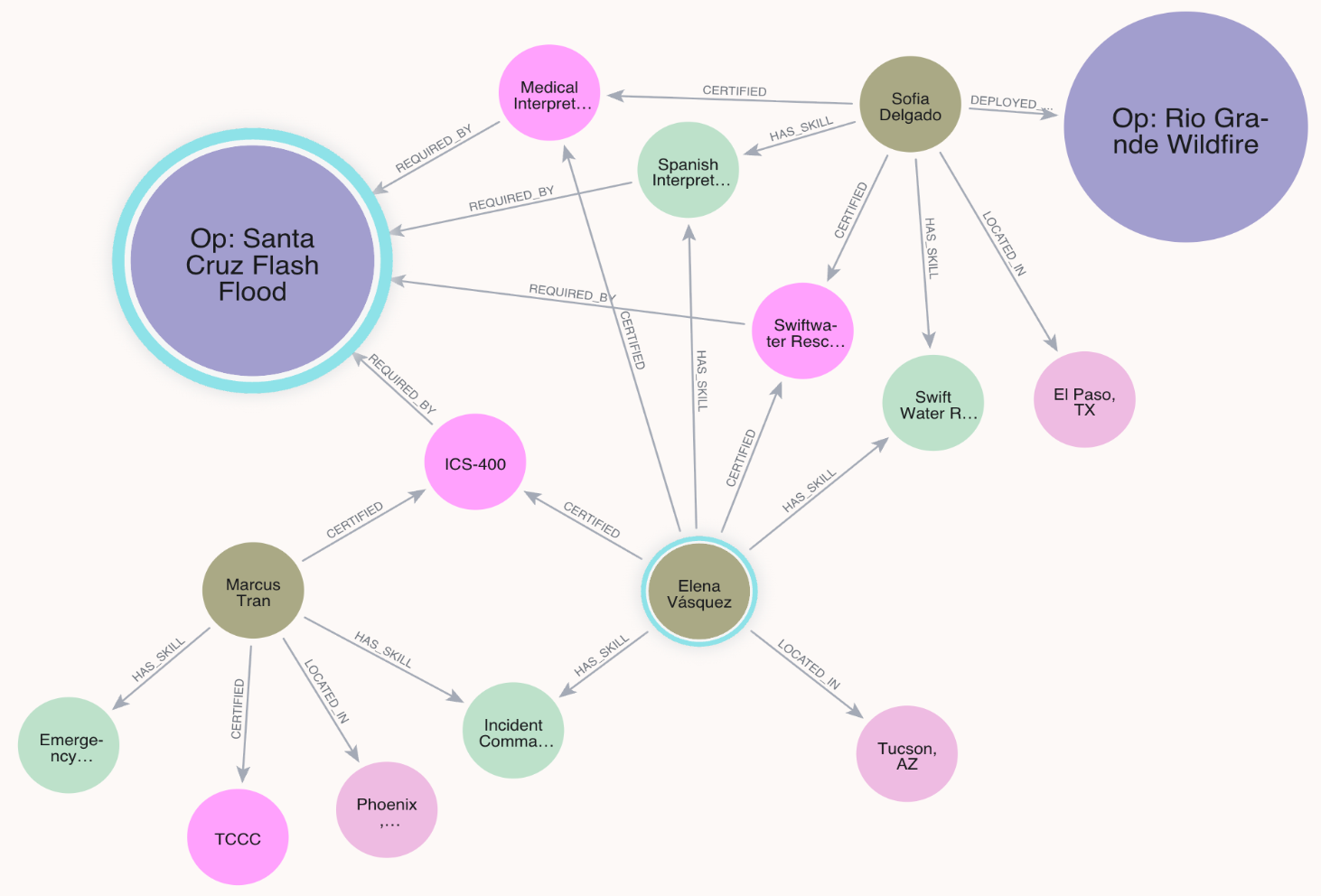
The composition of a workforce knowledge layer is fundamentally different from a traditional database. While a standard human resources system might list a person’s name and job title, a knowledge layer connects persistent facts into a continuously maintained knowledge graph. This includes people, roles, specific skills, certifications, security clearances, contractors, suppliers, and missions. Most importantly, it captures the intricate relationships between these entities. As personnel transition into new roles, certifications expire, or contractors move between programs, the graph reflects the current operational reality in real-time. This prevents the "stale data" problem, where AI decisions are based on the last exported report rather than what is happening on the ground today.
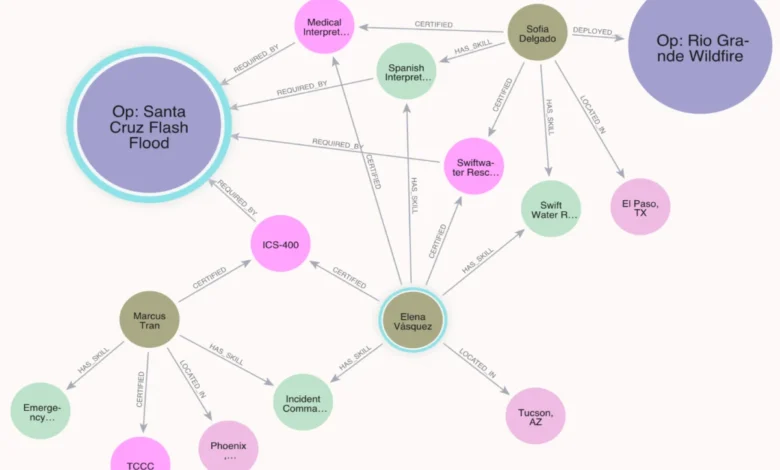
The practical necessity of this architecture is best illustrated through surge decision-making during crises. Consider a hypothetical but realistic scenario involving a flash flood in Santa Cruz, California. An emergency response team must be deployed within 24 hours. The mission requires personnel who are certified in ICS-400 (Advanced Incident Command System) and Swiftwater Rescue, hold medical interpreter certifications, and are fluent in Spanish. In a siloed system, an AI might identify two qualified individuals: Elena and Sofia. However, a knowledge layer reveals a critical operational conflict. Sofia is currently the only medical interpreter attached to an active wildfire response two counties away. Redeploying her would leave the wildfire mission with a capability gap that cannot be backfilled. Elena, conversely, is in a role with adequate coverage. Only by understanding the relationships between personnel, active missions, and broader organizational constraints can an AI—or a human leader—make the correct call.
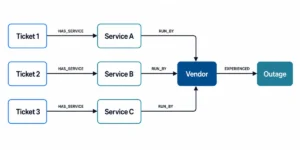
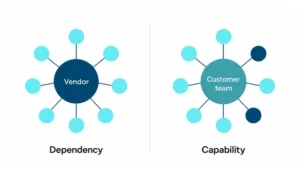
This level of "compound reasoning" is equally vital in managing contractor dependencies and supply chain risks. Public sector organizations frequently ask: "What is the operational impact if this contractor exits tomorrow?" Answering this requires more than just looking at a contract. It necessitates a multi-hop traversal across the organization to see which programs the contractor supports, which roles depend on their expertise, where no internal capability exists, and which downstream missions become exposed. This analysis must extend further to investigate ownership chains—who owns the supplier, who owns the parent company, and whether any point in that chain carries financial, geopolitical, or regulatory risk. Traditional record-based systems are notoriously inefficient at answering these types of relational questions, often leaving agencies blind to hidden vulnerabilities.
Furthermore, the alignment of access, clearance, and operational responsibility presents a significant security challenge. According to the Cybersecurity Insiders’ 2025 Insider Risk Report, which surveyed 635 security leaders, 93% of respondents consider insider threats to be as hard or harder to detect than external cyberattacks. The difficulty stems from the fact that the signals for insider risk are almost entirely relational. They involve who a person is connected to, what systems they can access, and which missions depend on them. These signals do not live in a static clearance database; they exist in the operational network. A knowledge layer makes these relationships visible, allowing leaders to see if a person’s privileged access still aligns with their current responsibilities or if their position in the network has changed their risk profile.
From a governance perspective, the knowledge layer provides a level of auditability that is mandatory for public sector AI. By grounding decisions in explicit, traversable relationships, leaders can explain the reasoning path behind an AI-generated recommendation. They can see exactly which pieces of evidence were considered and when those facts were last validated. This transparency is crucial for maintaining public trust and ensuring that AI augments, rather than replaces, human judgment in critical sectors like combat medicine, disease surveillance, and intelligence analysis.
The economic implications of this architectural choice are significant. As AI budgets are deployed, organizations face a binary choice: build the knowledge layer before deploying AI, or attempt to retroactively fix the foundation later. History suggests that applying AI to fragmented systems effectively "automates the wrong architecture." This leads to confident but incorrect outputs that fail to reflect operational reality. Rebuilding a data foundation after an AI deployment is notoriously slower, more expensive, and technically more difficult than establishing it from the start.
In the coming years, the workforce challenges facing the public sector will only intensify. Aging populations in developed nations are leading to a "silver tsunami" of retirements, resulting in a loss of institutional knowledge and a shrinking pipeline of specialists. Simultaneously, budget restrictions and increasing operational demands are forcing agencies to rely more heavily on contractors and automated systems. In this environment, the true force multiplier is not simply "more AI" or "more automation," but "connected intelligence."
Governments that prioritize a strong knowledge foundation will be able to discover critical dependencies before a crisis occurs. Those that continue to operate with fragmented data will likely only discover those dependencies during the crisis, when the cost of failure is highest. The organizations that derive the most value from the current AI revolution will not necessarily be those with the largest or most expensive language models. Instead, they will be the ones that have successfully turned their fragmented records into a traversable, governed, and connected operational intelligence.
Ultimately, the functions that society depends on—emergency coordination, cyber defense, and public health—remain fundamentally human endeavors. The goal of the knowledge layer is to provide those humans with a trustworthy, real-time map of their own organization. By connecting the dots between people, skills, and missions, the public sector can ensure that its AI investments lead to actual resilience rather than just faster, more automated confusion. The choice between being a "connected" organization or an "exposed" one will likely define the success of public administration in the latter half of this decade.
Related posts: