How Graph Intelligence Solves the Crisis of Modern Workforce Operations in the Public Sector

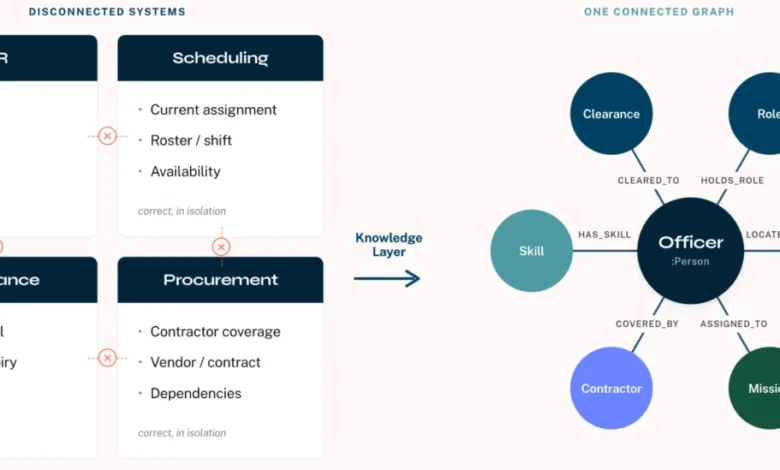
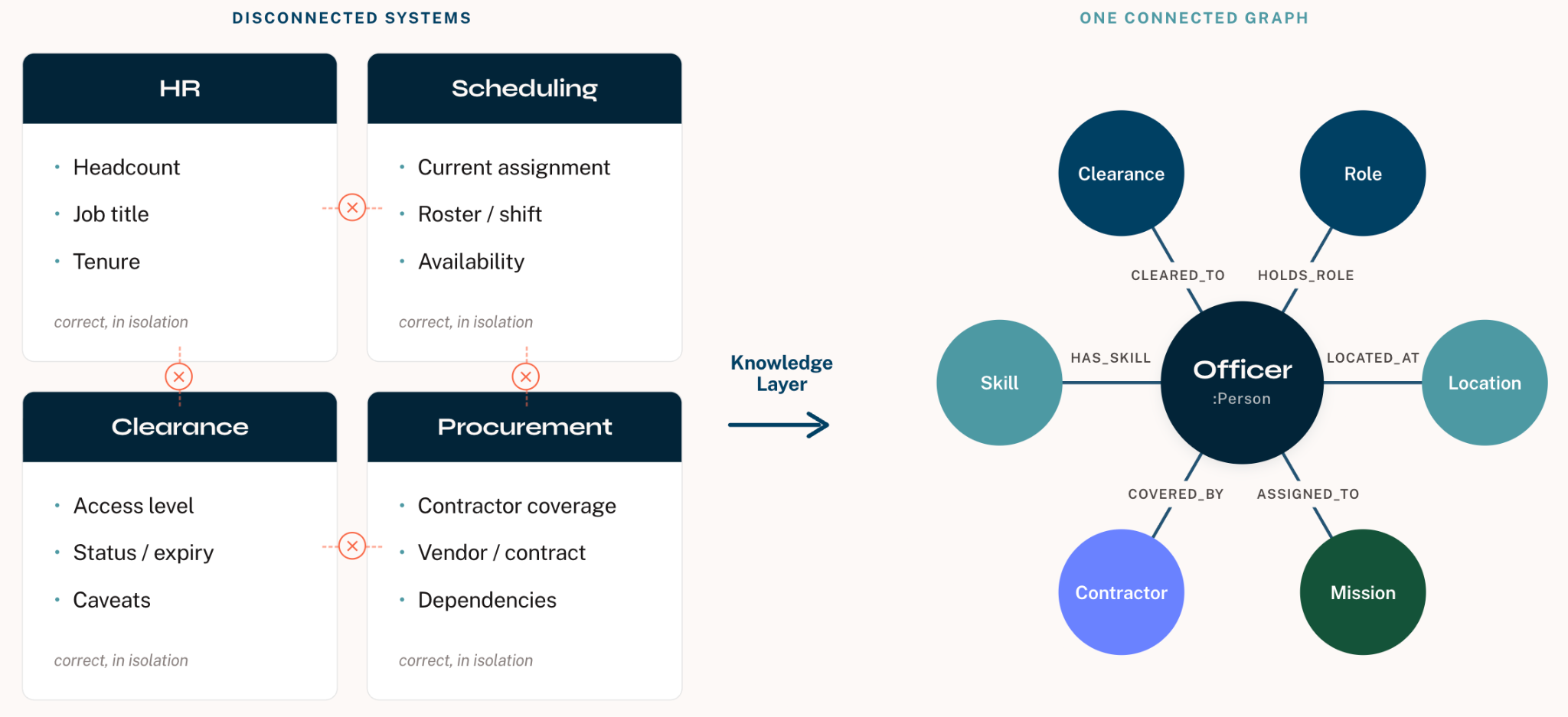
Public sector operations leaders across the globe are increasingly confronted with a deceptively simple yet operationally paralyzing question: Who is available right now, equipped with the necessary skills and security clearances, situated in the correct location, and capable of being redeployed without creating a critical service gap elsewhere? This inquiry represents a complex chain of conditions where each link is dependent on the last, spanning multiple administrative systems that were never engineered to communicate with one another. While human resources departments maintain records of employment, scheduling systems track deployments, security offices manage clearances, and procurement divisions oversee contractor support, these systems remain isolated silos. Each may answer its specific portion of the query accurately, but none can provide a unified answer to the compound challenges facing modern governance.
The Operational Risk of Manual Data Reconciliation
In the current landscape of public sector management, answering a multifaceted workforce question often requires a manual and labor-intensive process of data "stitching." Personnel are tasked with pulling headcount figures from HR platforms, cross-referencing deployment statuses from scheduling tools, verifying clearance levels from security databases, and assessing contractor availability from procurement records. This data is typically aggregated under immense pressure during times of crisis. However, by the time a comprehensive briefing is prepared for decision-makers, the operational reality on the ground has often shifted, rendering the information obsolete.
In high-stakes environments such as emergency response, national defense, healthcare, and critical infrastructure, this delay is far more than a bureaucratic inconvenience; it is a profound operational risk. When public safety and national resilience are at stake, leaders cannot afford a three-day waiting period while analysts reconcile disparate spreadsheets. The inability to move with agility during a crisis directly impacts an organization’s ability to protect citizens and maintain essential services.
The Evolution of Crisis: From Sequential to Concurrent Pressures
The fundamental failure of current workforce management systems stems from the fact that they were built for a different era of public administration. Historically, operational pressure arrived in a linear sequence. Governments would typically respond to a single crisis, undergo a period of recovery, and then begin preparations for the next event. This chronological spacing allowed for deliberate workforce decisions, planned handovers, and a thorough understanding of the downstream consequences of moving personnel between missions.
However, data from the mid-2020s suggests that this environment of sequential crisis management has vanished. According to the OECD Employment Outlook 2025, advanced economies are facing a "perfect storm" of structural pressures. These include rapidly aging workforces, shrinking talent pipelines, and a skills gap that is accumulating faster than public sector organizations can replace departing talent. Simultaneously, the demand for operational response has become increasingly concurrent rather than consecutive.
The shift toward simultaneous crises is evidenced by the activity of the EU Civil Protection Mechanism. In 2025, the mechanism was activated 64 times, often in response to multiple, overlapping conflicts and natural disasters occurring at the same time. This trend creates "compound workforce pressure," where fewer experienced professionals are available at the exact moment that organizations are expected to manage multiple, high-intensity events.
Data-Driven Challenges: The Retirement Wave and Budget Constraints
The crisis is further exacerbated by demographic shifts and fiscal limitations. Research from the MissionSquare Research Institute indicates that more than 50% of public sector HR leaders in the United States anticipate their largest wave of retirements within the next few years. Despite this looming "silver tsunami," only 13% of state and local government bodies report having a formal succession planning process in place. This lack of foresight creates a vacuum of leadership and specialized institutional knowledge.
In this environment, every budgetary decision becomes a high-stakes prioritization exercise. Workforce leaders must determine where limited investments in hiring, training, and retention will yield the highest operational impact. They must identify which vacancies are most critical, which capability gaps create the most dangerous downstream exposure, and where a single specialist can strengthen multiple missions simultaneously. The modern question is no longer just "Who has this skill?" but rather, "Who has the capability, is available now, holds the required clearance, is close enough to deploy, and can move without triggering a secondary operational failure?"
The Architectural Failure of Traditional Databases
The primary obstacle to answering these questions is not a lack of data. Most public sector organizations are saturated with information stored across HR platforms, training records, clearance databases, and procurement systems. The failure occurs in the "seams" between these systems.
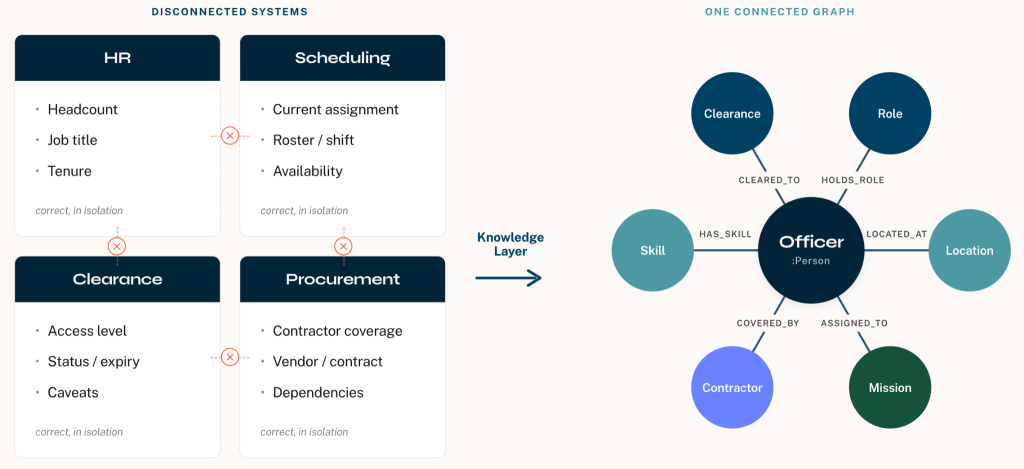
Traditional relational databases are designed to retrieve individual records, but operational decisions require traversing complex relationships. For instance, standing up an urgent cyber-response team after a major national breach requires a simultaneous understanding of employment status, specific technical certifications, current assignment location, and security clearance level. A relational database struggles with this because it requires increasingly complex "joins" and manual orchestration as the number of relationships between data points multiplies. Eventually, the technical query becomes more difficult to maintain than the decision-making process it was intended to support.
This architectural gap is where mission risk emerges. When systems cannot talk to each other in real-time, the organization loses its "connective intelligence," leaving leaders to make guesses based on fragmented information.
Graph Intelligence: Building a Knowledge Layer
To address this disconnect, organizations are turning toward Graph Intelligence Platforms, such as Neo4j, which build a "knowledge layer" across existing workforce systems. Rather than attempting the costly and often futile task of replacing established HR, security, or procurement platforms, a knowledge layer connects the data within them. It treats people, skills, certifications, clearances, contractors, and missions as a single, interconnected web of information.
By mapping these relationships, the technology allows organizations to maintain their existing, trusted systems while gaining the ability to reason across them as a unified operational force. This represents a shift from simple workforce management—reporting on what exists—to workforce intelligence—understanding what is possible.
With a grounded knowledge layer, leaders can ask sophisticated operational questions that would previously take days of manual analysis to answer:

- "Which of our contractors have the certifications to step in if we redeploy our internal specialists to a new emergency?"
- "If we move this specific team to a regional crisis, which ongoing long-term programs will fall below their minimum safe staffing levels?"
- "Who are the ‘single points of failure’ in our organization—individuals whose unique combination of skills and clearances makes them indispensable to multiple high-priority missions?"
Implications for National Resilience and Future Readiness
The transition from workforce management to operational workforce intelligence is becoming a cornerstone of national resilience. The organizations that successfully navigate today’s compound pressures will not necessarily be those with the largest budgets or the highest headcount, but those with the most sophisticated understanding of their own internal dependencies.
The reality of modern governance is that the workforce already operates as a highly connected system; the data simply hasn’t reflected that reality until now. By adopting a graph-based approach to data, public sector leaders can turn disconnected records into a strategic asset.
As geopolitical and environmental crises continue to overlap, the mandate for government agencies is clear: they must discover their internal dependencies and resource connections before the next crisis hits. Failing to do so ensures that those dependencies will only be discovered through the failure of critical missions during a time of need. The shift toward connected intelligence is no longer a technological luxury; it is a fundamental requirement for the continuity of public service in an era of permanent volatility.
Related posts: