Building Agentic GraphRAG Applications: A Comprehensive Guide to Modern Knowledge Graph Integration and Exploration

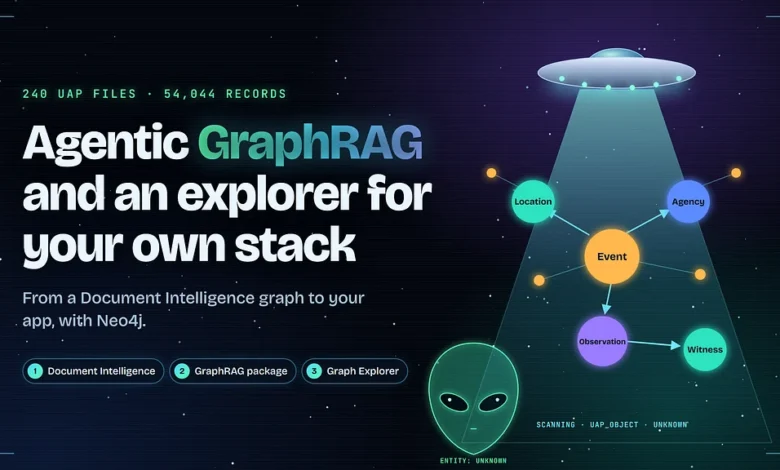
The landscape of modern artificial intelligence has shifted dramatically away from isolated, static document repositories toward interconnected, dynamic knowledge graphs. As organizations increasingly adopt Retrieval-Augmented Generation (RAG) to ground large language models in proprietary data, a persistent engineering challenge has emerged: bridging the gap between raw unstructured files and production-ready applications. While modern data ingestion tools can automatically extract entities and relationships from documents into cloud-hosted graph databases like Neo4j Aura, developers frequently struggle with the subsequent step. Building custom application layers, implementing agentic workflows, and deploying user-facing interfaces to query and visualize these complex networks has historically required extensive custom development.
To address this architectural bottleneck, developers and data architects are turning to unified toolkits that bridge automated document intelligence with agentic graph querying. By leveraging foundational libraries such as neo4j-graphrag, engineers can now deploy robust APIs, intelligent query agents, and interactive visualization layers directly on top of enterprise knowledge graphs. This architectural approach not only streamlines the transition from raw file ingestion to application deployment, but it also fundamentally enhances the precision of AI-driven data retrieval.
The Mechanics of Automated Document Intelligence
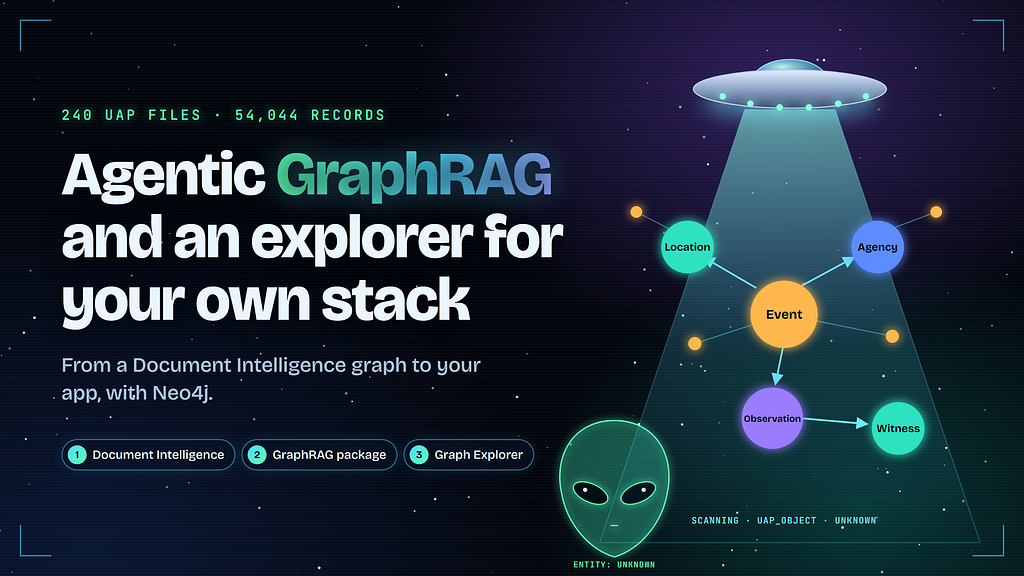
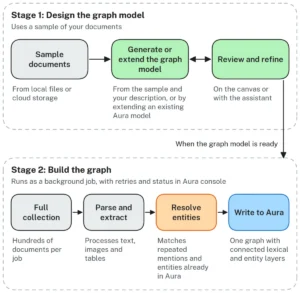
The foundational phase of any advanced knowledge graph deployment relies on transforming unstructured or semi-structured files into a coherent, queryable schema. Document Intelligence platforms automate this transformation by ingesting diverse file formats—ranging from modern digital PDFs to degraded historical scans requiring optical character recognition (OCR)—and mapping their contents into structured graph architectures.
In rigorous testing environments, such as those processing thousands of historical government records and declassified reports regarding unidentified aerial phenomena, the scale of data ingestion highlights both the power and the complexity of automated parsing. Out of thousands of prepared pages in archival datasets, a significant portion typically requires advanced OCR processing due to degraded typewritten text, while a subset may remain entirely illegible. Despite these challenges, automated pipelines successfully extract tens of thousands of individual records, relationships, and contextual passages.
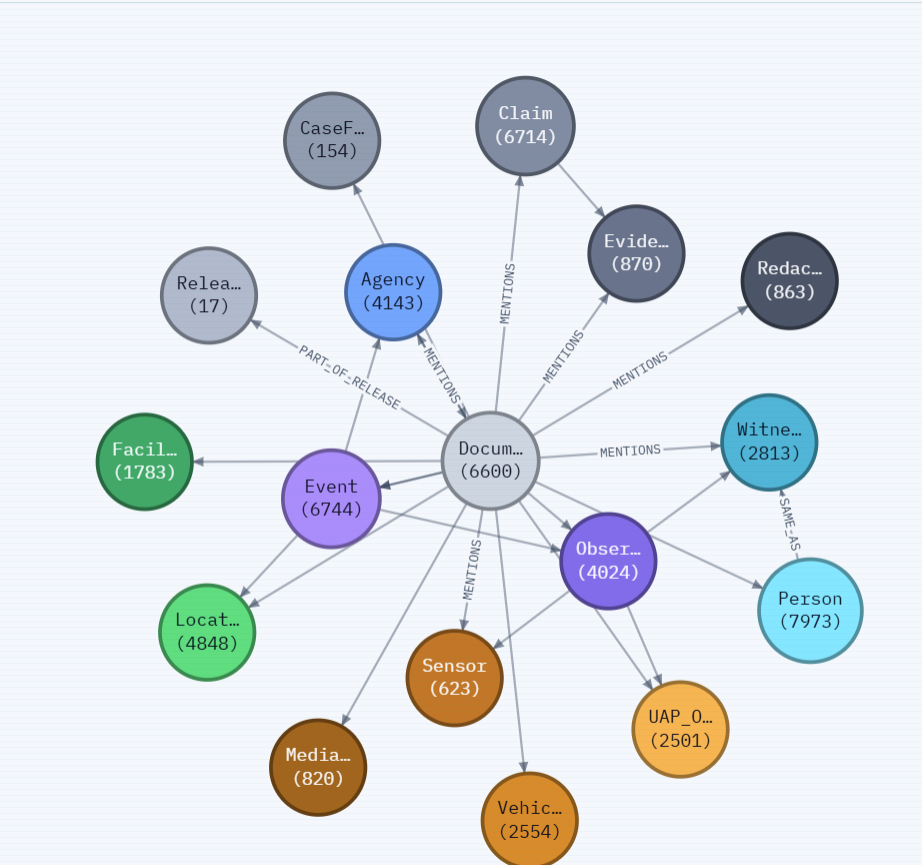
The resulting data models frequently adhere to established domain ontologies, such as POLE (Person, Object, Location, Event), supplemented by organizational hierarchies, evidentiary paper trails, and specific nodes for analytical claims, evidence, and redactions. Crucially, this methodology preserves strict data provenance. Every extracted claim or entity maintains a direct link back to its original source passage and file, allowing auditors and researchers to verify AI-generated assertions against primary documentation. Furthermore, identity resolution protocols ensure that while generic or sensitive entries—such as heavily redacted individual names—remain distinct to prevent erroneous database merges, core entities like recognized government agencies and geographic locations are cleanly unified across disparate files.
Agentic GraphRAG: Overcoming the Limitations of Vector Search
Traditional semantic search and vector retrieval methods, while effective for surface-level similarity matching, often struggle with complex, multi-hop queries that require synthesizing information across separate documents. For instance, inquiring about specific historical events investigated by multiple government agencies in a particular region often yields fragmented results if the witness testimony resides in one document and the investigative summary in another. Vector embeddings alone frequently fail to capture the relational bridge connecting these disparate data points.
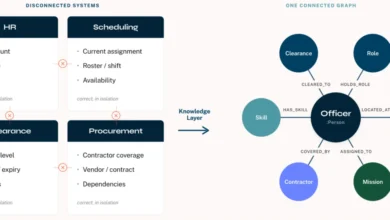
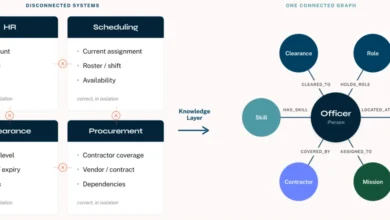
Knowledge graphs resolve this limitation by encoding relationships explicitly. By structuring data as interconnected nodes and edges—such as an Event that occurred at a specific location, was investigated by a designated agency, and contains observations reported by witnesses—the underlying database preserves the complete narrative chain.
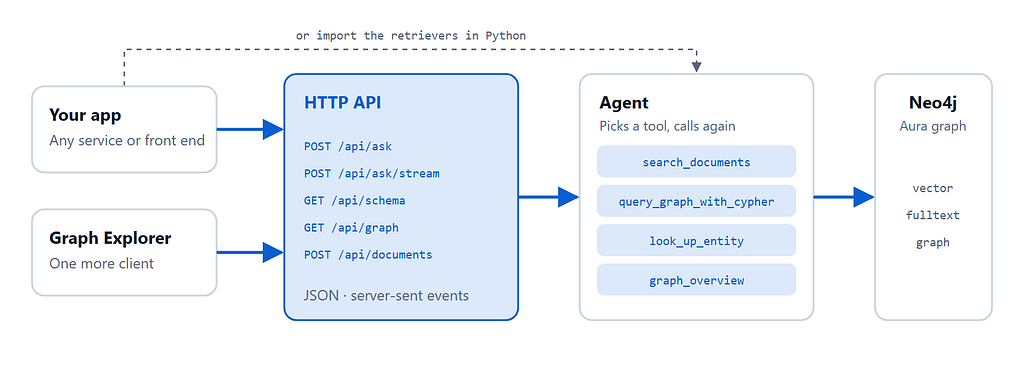
To capitalize on this structural advantage, modern development kits implement agentic GraphRAG frameworks. Rather than relying on a single, rigid retrieval strategy, an autonomous agent utilizes multiple specialized tools depending on the nature of the user’s query. The agent can dynamically select semantic vector search for contextual prose, execute precise Cypher queries for numerical counting and aggregations, or traverse graph relationships to uncover hidden connections. This hybrid approach ensures that complex analytical questions—such as determining which investigative bodies handled the highest volume of distinct incidents—are answered with high mathematical and contextual accuracy.
Streamlining Integration Through Modular Architecture
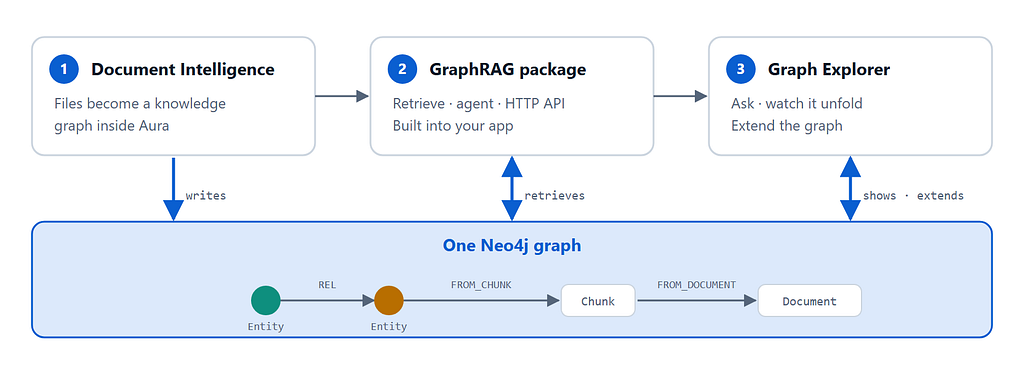
Deploying these advanced capabilities within production application environments requires minimizing integration friction. Contemporary software design patterns achieve this by encapsulating domain-specific configurations—including database schemas, extraction rules, sample query patterns, and seed questions—into centralized configuration classes.
Developers are subsequently provided with flexible integration vectors, including standardized HTTP APIs supporting both JSON responses and server-sent events for streaming outputs. Additionally, specialized adoption utilities allow teams to integrate custom embedding models with existing graph deployments. Because vector indices strictly require consistency between the model used to embed source data and the model used to process incoming queries, alignment tools enable seamless re-embedding and indexing without disrupting legacy data structures. Dry-run capabilities and undo commands provide safe deployment mechanisms, allowing engineering teams to test schema modifications and index updates without risking data integrity in production environments.
Interactive Exploration and Visualizing Complex Networks
Empowering end-users to interact directly with complex knowledge graphs requires intuitive client interfaces that visualize data as it is retrieved. Modern graph exploration kits integrate seamlessly with backend retrieval APIs to deliver real-time visual feedback. As an agent processes a user query, the interface dynamically renders the retrieval pipeline: matched source passages appear first, followed by extracted entities, and subsequently outward-radiating relational neighborhoods.
This visual representation is particularly valuable when navigating heavily networked domains, such as defense archives, intelligence agency records, and cross-jurisdictional investigations. Users can anchor their explorations in highly connected spine entities—such as federal law enforcement bodies, defense commands, or scientific oversight panels—and expand outward to examine specific investigative threads. By displaying overlapping records, conflicting witness accounts, and institutional conclusions within a unified canvas, analysts can trace the provenance of complex claims and identify discrepancies across historical reporting.
Broader Industry Implications and Future Outlook
The convergence of automated document ingestion, agentic GraphRAG, and interactive visualization tools marks a significant maturity milestone in enterprise artificial intelligence adoption. As organizations across legal, financial, healthcare, and governmental sectors accumulate vast repositories of unstructured data, the ability to rapidly convert these files into structured, queryable knowledge graphs becomes a vital competitive advantage.
By abstracting the complexities of graph database management, embedding alignment, and agent orchestration into cohesive developer kits, the software engineering community is lowering the barrier to entry for advanced knowledge graph applications. Moving forward, the widespread implementation of agentic architectures promises to transform passive data archives into active, reasoning systems capable of answering intricate questions with unprecedented transparency, verifiable provenance, and structural precision.
Related posts: