AWS Unveils Fully Automated Incident Remediation, Revolutionizing Cloud Operations with Agentic AI Integration.

The landscape of modern cloud operations is undergoing a profound transformation, with the advent of agentic artificial intelligence (AI) poised to redefine how organizations manage and respond to critical incidents. A significant leap forward in this evolution has been demonstrated by Amazon Web Services (AWS) through a groundbreaking integration: combining the autonomous investigation capabilities of AWS DevOps Agent with the automated code remediation prowess of Kiro CLI. This powerful synergy establishes a closed-loop incident response pipeline, dramatically reducing the time from detection to deployed fix and minimizing human intervention to a single, critical review point.
The Evolving Landscape of Cloud Operations and Incident Management
In today’s interconnected digital economy, businesses rely heavily on distributed cloud workloads hosted on platforms like AWS. While these environments offer unparalleled scalability and flexibility, they also introduce inherent complexities in monitoring, troubleshooting, and maintaining operational integrity. Incidents, ranging from minor performance degradations to full-scale outages, are an inevitable reality. Traditionally, responding to these events has been a labor-intensive, often frantic process. When an alarm triggers, typically in the dead of night, on-call engineers embark on a rigorous investigation, correlating disparate data points from services like Amazon CloudWatch, deployment pipelines, and application logs. This diagnostic phase is frequently followed by a manual effort to write, test, and deploy a fix—a sequence that can routinely consume several hours, leading to significant downtime, financial losses, and reputational damage.
The industry has long sought more efficient means to address these challenges. The concept of "mean time to recovery" (MTTR) has become a critical metric for operational efficiency, with every minute of downtime directly impacting business continuity. The pressure to reduce MTTR, coupled with the increasing complexity of cloud-native architectures, has fueled the demand for intelligent automation in incident response. This is where agentic AI, a paradigm where AI agents perform tasks autonomously and proactively, steps into the spotlight.
AWS DevOps Agent: Streamlining Investigation and Mitigation Planning
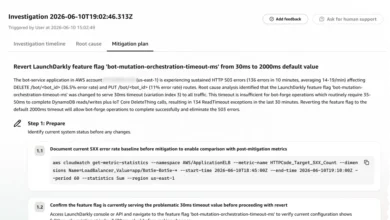
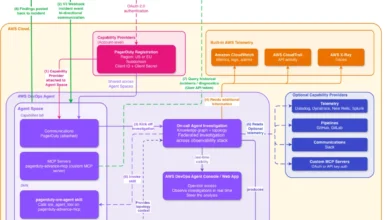
The journey towards automated remediation begins with robust incident investigation. AWS DevOps Agent, introduced to address this critical need, represents a significant advancement in autonomous problem-solving. This AI-powered agent is designed to autonomously investigate incidents, swiftly identify root causes, and generate comprehensive mitigation plans within minutes. During its preview phase, early adopters and partners reported compelling results: up to a 75% reduction in MTTR, an 80% acceleration in investigation times, and an impressive 94% accuracy in root cause identification. These figures underscore the profound impact AWS DevOps Agent has had on the initial phases of incident response, effectively tackling the diagnostic bottleneck that has long plagued operations teams.
However, even with these remarkable efficiencies, a crucial gap remained. While the agent could pinpoint the problem and propose a solution, the actual implementation—the writing, testing, and deployment of the fix—still required manual effort. This "second half of the story" represented a significant opportunity for further automation, pushing the boundaries of what’s possible in cloud incident management.
Bridging the Gap: Automated Remediation with Kiro CLI
The missing piece in the fully automated incident response puzzle is addressed by integrating AWS DevOps Agent’s mitigation outputs with Kiro CLI, running in a headless configuration on AWS CodeBuild. Kiro CLI, a tool designed for programmatic code generation and modification, becomes the execution arm of the automated pipeline. This integration allows the mitigation plan, once formulated by AWS DevOps Agent, to be directly translated into actionable code changes and deployed fixes, all with minimal human intervention.
This breakthrough signifies a paradigm shift: L1 and L2 incidents can now transition from initial detection to a fully deployed resolution with only a single human touchpoint—the essential pull request approval. This strategic approval step ensures that while the agents drive the automation, human oversight remains in place for critical validation and governance, blending the best of AI efficiency with human accountability.
A Detailed Look at the End-to-End Automated Remediation Pipeline
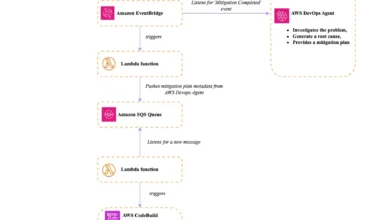
The solution architecture for this closed-loop system is meticulously designed, leveraging a suite of AWS services to create a resilient and event-driven pipeline. Consider a typical AWS-hosted web application comprising a frontend behind an Application Load Balancer, backend compute on Amazon EC2, and an Amazon RDS database, with all source code and CloudFormation templates managed in AWS CodeCommit. When an anomaly surfaces, this integrated solution orchestrates a seamless flow:
-
Detection and Initial Investigation: The process kicks off with an anomaly detected by an Amazon CloudWatch alarm. This alarm, configured to monitor critical application metrics, triggers an automatic investigation by AWS DevOps Agent. Previous demonstrations highlighted how CloudWatch alarms could be wired to automatically initiate these autonomous investigations, setting the stage for the next phase.
-
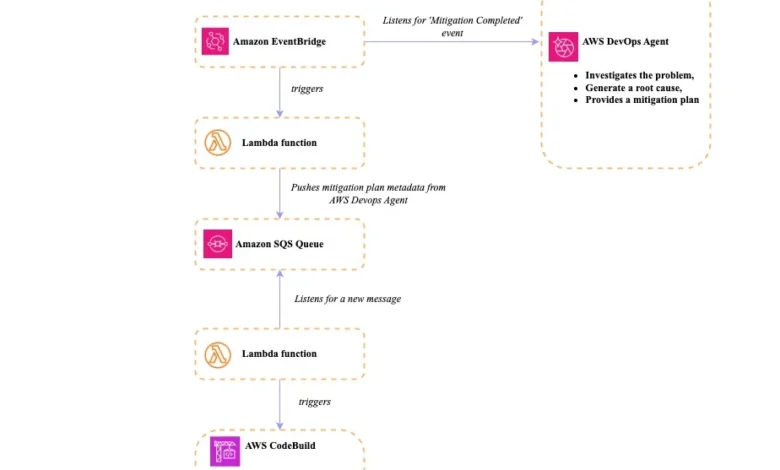
Event-Driven Orchestration: Upon successful completion of a mitigation analysis, AWS DevOps Agent publishes lifecycle events to the Amazon EventBridge default event bus. Specifically, the system is configured to capture the "Mitigation Completed" detail-type event. An Amazon EventBridge rule, precisely matching this event, invokes a dedicated AWS Lambda function. This Lambda function acts as an intelligent extractor, querying AWS DevOps Agent using the event’s metadata (agent_space_id, task_id, execution_id) to retrieve the detailed mitigation summary and the step-by-step execution plan. This structured payload, containing the "what to do and why," is then published to an Amazon SQS queue, serving as a robust buffer for downstream processing.
-
Headless Remediation via CodeBuild and Kiro CLI: The arrival of a message in the Amazon SQS queue triggers another AWS Lambda function, which in turn initiates an AWS CodeBuild execution. AWS CodeBuild, chosen for its on-demand compute capabilities and native integration with AWS CodeCommit, provides the ideal environment for automated code changes. The Amazon SQS message body, containing the mitigation plan, is passed as an environment variable to the CodeBuild project.
The CodeBuild buildspec orchestrates a sequence of critical steps:
- Repository Checkout: The application and infrastructure repository from AWS CodeCommit is cloned.
- Kiro CLI Execution: Kiro CLI 2.0, running in its headless mode, is invoked. This non-interactive mode is crucial for programmatic execution within a CI/CD pipeline. Authentication is handled securely via an API key stored in AWS Secrets Manager.
- Code Transformation: Kiro CLI processes the mitigation summary and execution plan, intelligently applying the necessary code changes to the codebase. This could involve modifying CloudFormation templates, application code, or configuration files to implement the fix identified by AWS DevOps Agent.
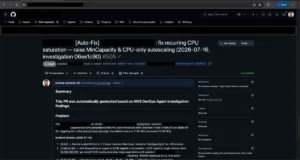
- Branching and Pull Request Creation: Kiro CLI creates a new feature branch, commits the modified files, and then generates a pull request (PR) back to the main branch. This PR is enriched with a detailed description, explaining the changes made, the rationale (directly from AWS DevOps Agent’s reasoning), and full traceability information including the agent space and execution IDs.
- Notification: Upon successful PR creation, notifications are sent, alerting relevant stakeholders (e.g., development teams) that a human review is required.
-
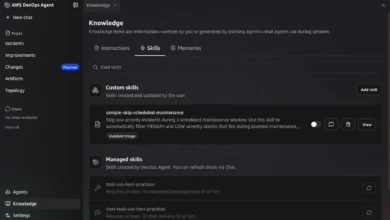
The Role of the Steering File: Central to Kiro CLI’s effectiveness in generating targeted and predictable code changes is the "steering file." This file, committed directly to the repository, provides Kiro with persistent context about the project. It outlines:
- Repository Structure: Understanding where different types of files reside.
- Coding Conventions: Adhering to established style guides and best practices.
- Decision Frameworks: Guiding Kiro on how to approach different types of code modifications.
- Allowed Modifications: Acting as guardrails, specifying which parts of the codebase Kiro is permitted to alter, preventing unintended broad refactors.
This steering file ensures that Kiro CLI operates within predefined boundaries, making its automated changes reliable and predictable.
-
The Human-in-the-Loop: Critical Review and Deployment: This is the singular manual intervention point in the entire cycle. A developer reviews the automatically generated pull request. This human gate is deliberate and critical. It allows for verification that the proposed change is correct, appropriately scoped, and safe for deployment. Despite the high accuracy of the AI agents, the final deployment decision rests with a human, ensuring accountability and adherence to organizational policies. Once approved and merged into the main branch, the organization’s existing deployment pipelines take over, implementing the approved changes into the target environment.
Impact and Measured Benefits
This end-to-end automated remediation pipeline delivers tangible, measurable benefits for enterprise operations:
- Drastically Reduced MTTR: By automating both investigation and fix deployment, incidents that once took hours can now be resolved in minutes, significantly improving system uptime and availability. The reported 75% lower MTTR during AWS DevOps Agent preview is now extended by automating the deployment phase, leading to even greater overall reductions.
- Reduced Operational Toil: Operations teams are freed from the repetitive, high-pressure tasks of manual incident response, allowing engineers to focus on higher-value activities such as innovation, architectural improvements, and strategic projects. This addresses the chronic issue of burnout among on-call engineers.
- Enhanced Root Cause Accuracy: Building upon the 94% root cause accuracy of AWS DevOps Agent, the automated remediation ensures that the correct fix is applied based on robust, AI-driven diagnostics, minimizing the risk of misdiagnosis and recurring incidents.
- Increased Consistency and Compliance: Automated processes inherently introduce greater consistency in incident response, reducing human error and ensuring that remediation steps adhere to predefined organizational standards and compliance requirements.
- Faster Innovation Cycles: With less time spent on firefighting, development and operations teams can accelerate their innovation cycles, bringing new features and services to market more quickly and reliably.
Strategic Implications for Enterprise DevOps
The integration of AWS DevOps Agent and Kiro CLI represents a significant stride towards the vision of "NoOps" or "AIOps," where intelligent systems handle the vast majority of operational tasks. For enterprises grappling with the scale and complexity of modern cloud infrastructure, this solution offers a strategic advantage. It transforms incident management from a reactive, labor-intensive chore into a highly efficient, proactive, and automated process.
This shift has broader implications for team structures and skill sets. While the need for human engineers remains paramount, their roles evolve from manual responders to architects, validators, and innovators who oversee intelligent systems. It empowers organizations to scale their operations without proportionally increasing their operational headcount, making cloud adoption more economically viable and sustainable.
Industry Perspectives and Future Outlook
Industry analysts have lauded this development as a crucial step in the maturation of AIOps. "This kind of integrated, agentic AI solution fundamentally changes the cost structure and efficiency profile of cloud operations," stated a leading cloud industry analyst. "The ability to move from an alert to a deployed fix with minimal human touch is a game-changer for businesses where every second of downtime translates to lost revenue and customer dissatisfaction."
An AWS spokesperson, in a recent briefing, emphasized the company’s commitment to empowering developers and operations teams: "Our goal with AWS DevOps Agent and its integration capabilities is to abstract away the toil of incident response, allowing our customers to focus on building and innovating. By automating the full remediation loop, we’re not just improving MTTR; we’re fundamentally enhancing the developer experience and operational resilience across the board."
Looking ahead, this foundational integration paves the way for even more sophisticated autonomous capabilities. Future enhancements might include self-healing systems that can dynamically adapt and prevent incidents before they even manifest, or more advanced AI agents capable of learning from past remediation successes and failures to continually refine their strategies. The "human-in-the-loop" approval step, while critical today, could evolve to handle increasingly complex scenarios as trust in AI systems grows and regulatory frameworks adapt.
Implementation and Next Steps
For organizations ready to embrace this transformative approach, the complete implementation is readily available. The aws-samples repository provides all necessary source code, including infrastructure definitions, anomaly generation scripts, event routing configurations, and the Kiro CLI steering configuration. To get started, users need to meet specific prerequisites, including an active AWS account, the AWS CLI, AWS CDK, and Node.js. Following the Readme file in the repository will guide users through the setup and execution of the architecture, allowing them to experience firsthand the power of closed-loop incident remediation.
To avoid ongoing charges, users are advised to follow the complete teardown sequence outlined in the Readme file upon completion of their exploration.
In conclusion, the integration of AWS DevOps Agent and Kiro CLI marks a pivotal moment in cloud incident management. By delivering a fully automated, agentic AI-driven remediation pipeline, AWS is not merely offering incremental improvements; it is redefining the operational paradigm for distributed cloud workloads. This innovation promises to unlock unprecedented levels of efficiency, resilience, and developer velocity, setting a new standard for how enterprises will manage their cloud infrastructure in the years to come.
Related posts: