Microsoft Named a Leader in the 2026 Gartner Magic Quadrant for Container Management

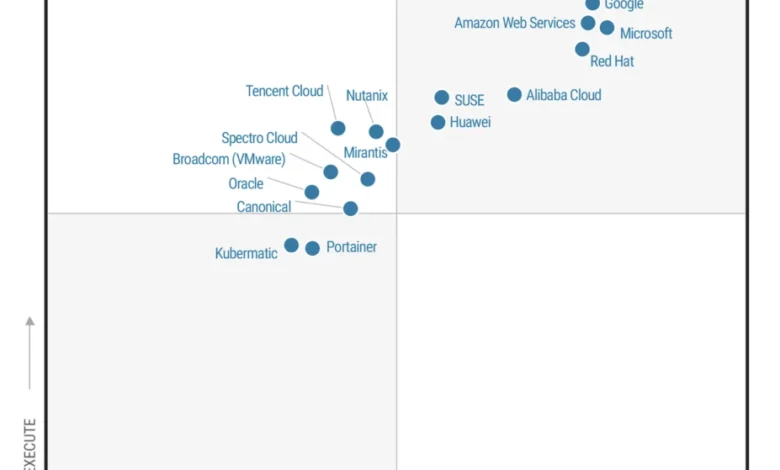
Microsoft has officially been recognized as a Leader in the 2026 Gartner Magic Quadrant for Container Management, with the research firm positioning the technology giant furthest to the right on the "Completeness of Vision" axis. This designation marks a significant milestone in Microsoft’s decade-long evolution in cloud-native computing, validating its shift from a provider of basic infrastructure to a comprehensive orchestrator of AI-integrated, hybrid-cloud, and edge-computing environments.
The recognition arrives at a pivotal juncture for enterprise IT. As organizations grapple with the increasing complexity of modernizing legacy applications while simultaneously deploying resource-intensive artificial intelligence workloads, the container management landscape has shifted from simple orchestration to a fundamental requirement for consistent operational governance.
A Decade of Kubernetes Evolution
The history of container management at Microsoft is inextricably linked to the democratization of distributed systems. When Microsoft first began contributing to the Kubernetes project over ten years ago, the primary objective was to lower the barrier for developers to build reliable, scalable services. The design philosophy was centered on "intent"—describing what a workload required rather than prescribing where it should reside. This abstraction allowed the scheduler to make dynamic decisions, ultimately ensuring the system remained agnostic toward the specific nature of the workloads it managed.
This foundational flexibility has proven to be the key to Microsoft’s current dominance. While the initial goal was simple service reliability, the rise of Large Language Models (LLMs) and agentic AI has forced a radical change in requirements. Modern applications are no longer just running in centralized public clouds; they are increasingly being pushed to the "edge," requiring deployment within specific sovereign boundaries and strict regulatory frameworks.
The Two Pillars of AI Container Architecture
As enterprises integrate AI into their operational pipelines, Microsoft has observed a bifurcation in how container platforms are utilized. By addressing both, the company has effectively captured a broader market share.
The first model, favored by platform engineering teams, involves a persistent serving layer. In this architecture, teams manage GPU scheduling, the model lifecycle, and compliance guardrails. This approach provides the predictability required for high-volume production environments. To support this, Microsoft utilizes the AI toolchain operator within Azure Kubernetes Service (AKS), allowing for automated model deployment and hardware provisioning. Crucially, AKS has achieved CNCF AI Conformance certification, which provides a standard of compatibility that prevents vendor lock-in for the ecosystem surrounding these applications.
The second model prioritizes elasticity and rapid, event-driven scaling. In this scenario, an application or an AI agent invokes inference only when necessary, releasing compute capacity immediately upon task completion. Azure Container Apps was architected specifically for this "serverless" model, offering hardware-isolated sandboxes that maintain state between interactions. The challenge for modern enterprises—and the primary focus of Microsoft’s current engineering efforts—is to blur the lines between these two models, allowing organizations to use the same container images, identity controls, and network policies regardless of whether a workload is running in a persistent cluster or a burstable serverless environment.
Managing Global Estate Sprawl
The dispersion of data and the rise of sovereign cloud requirements have ended the era of the "centralized datacenter." Today, clusters are scattered across regional zones, on-premises datacenters, and remote edge sites. This geographic distribution creates significant coordination challenges, including configuration drift, inconsistent security policies, and fragmented upgrade cycles.
Microsoft’s strategy to combat this involves a multi-layered portfolio:

- AKS Everywhere: Designed to provide a consistent, Azure-hardened Kubernetes platform that functions identically from the public cloud to remote edge hardware.
- Azure Arc for Kubernetes: This service acts as the connective tissue, extending identity, policy, and observability across CNCF-conformant clusters, even those hosted by competing cloud providers.
- Azure Kubernetes Fleet Manager: This tool addresses the "coordination tax" of large-scale operations, enabling administrators to manage multi-cluster upgrades and workload placement as if they were dealing with a single, unified entity.
These tools are built on a bedrock of open-source contributions. Microsoft currently ranks as the second-largest contributor to Cloud Native Computing Foundation (CNCF) projects, a position it has held consistently for three years. This commitment to the upstream Kubernetes project is a strategic decision to ensure that the API remains stable and compatible, preventing the emergence of proprietary forks that would ultimately hinder user portability.
The Future of Operations: Agentic Management
As the number of clusters within a single enterprise grows, human-led operations are increasingly becoming a bottleneck. To address this, Microsoft is transitioning toward "agentic operations." This shift represents the next phase of cloud management, where AI is used to manage the infrastructure that powers AI itself.
Tools such as the Azure SRE Agent and the AKS MCP Server are designed to assist operators by accelerating the "detect-diagnose-remediate" cycle. By leveraging existing permissions and operational controls, these agents aim to automate routine maintenance tasks, allowing human SREs to focus on architectural oversight rather than troubleshooting. According to internal metrics, this transition is intended to reduce the "operational toil" that typically scales linearly with cluster growth.
Industry Impact and Customer Momentum
The adoption of these technologies is reflected in diverse use cases across global industries. From training clusters requiring thousands of GPUs to regulated SaaS platforms subject to strict multi-tenant isolation, the common thread is the need for an adaptable, stable platform.
Brian Sutliffe, Vice President of Engineering at CallRevu, noted that the scalability of the Azure container portfolio has been instrumental in their success. "Azure Kubernetes Service gives us the control and cost efficiency we need," Sutliffe stated. "We can scale GPU resources based on call volume and test new models without touching production."
The Gartner recognition serves as a testament to the fact that the industry is moving away from bespoke, single-use container platforms toward unified, policy-driven ecosystems. For Microsoft, the path forward is clear: as long as the platform remains capable of absorbing new operational requirements—whether for AI, edge computing, or regulatory compliance—without forcing developers to rewrite their applications, it will continue to define the standard for container management.
Analytical Context
The Gartner Magic Quadrant for Container Management is a critical industry benchmark that evaluates vendors on their ability to execute and their completeness of vision. Microsoft’s positioning at the extreme right of the "Completeness of Vision" axis suggests that the firm is not merely reacting to market trends, but is actively defining the roadmap for how enterprises should handle the intersection of Kubernetes and AI.
The primary implication of this research is that the container market has reached a maturity phase. The focus has moved from "how do we run a container?" to "how do we manage thousands of containers across hybrid environments with a single, consistent policy?" By integrating AI-driven operational tools and maintaining a strict adherence to upstream open-source standards, Microsoft has effectively reduced the perceived risk of adopting cloud-native strategies for traditional, risk-averse enterprises.
As the industry looks toward 2027 and beyond, the competition in this space is expected to intensify. However, the current momentum suggests that the winner will not be the vendor with the most features, but the one that best simplifies the inherent complexity of distributed, AI-ready infrastructure. For now, Microsoft’s strategy of "building the platform that keeps the operator steady" appears to be the most effective answer to the growing demands of the modern enterprise.
Related posts: