Amazon Web Services Expands Enterprise AI Portfolio with New GPT-6 and Claude 5.5 Offerings on Amazon Bedrock

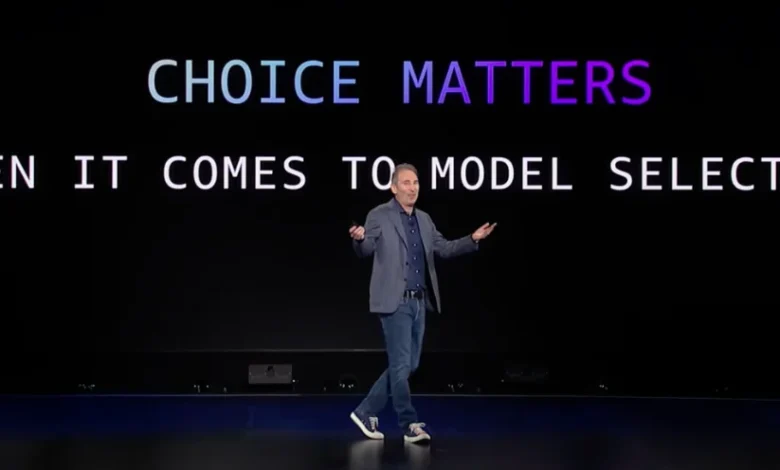
The landscape of enterprise artificial intelligence experienced a significant expansion last week as Amazon Web Services (AWS) integrated a powerful new suite of frontier models into Amazon Bedrock. The platform now features GPT-6 Sol and GPT-6 Luna from OpenAI, alongside Anthropic’s Claude Opus 5.5. This strategic rollout underscores a broader industry pivot away from monolithic, one-size-fits-all AI deployments toward a more granular, cost-conscious approach to machine learning operations. Rather than simply evaluating models on raw intelligence benchmarks, enterprise architects are increasingly tasked with balancing task-specific performance, operational latency, and infrastructure expenditure.
The introduction of these advanced architectures on AWS addresses the growing complexity of modern enterprise workflows. As organizations transition from basic conversational assistants to complex, autonomous agentic systems, the demand for specialized models has surged. By providing immediate, managed access to these high-performance models through Amazon Bedrock, AWS aims to streamline the integration of next-generation AI into existing enterprise pipelines, offering developers the flexibility to match specific operational requirements with the most efficient computational tool available.
Main Facts and Model Specifications
The latest additions to Amazon Bedrock bring distinct capabilities and architectural optimizations tailored to specific enterprise workloads. OpenAI’s GPT-6 Sol is engineered specifically to tackle the rigorous, recurring demands of software development and IT operations. It provides deep reasoning and contextual awareness necessary for complex debugging, code refactoring, and automated deployment monitoring. Conversely, GPT-6 Luna is optimized for focused, highly repeatable tasks executed at massive scale. By streamlining high-volume transactional processing and data categorization, Luna achieves substantial computational efficiencies without sacrificing the reliability required by enterprise-grade applications.
Crucially, both OpenAI models debut on AWS at significantly reduced price points compared to their GPT-5.6 predecessors, reflecting ongoing optimization in model inference and hardware acceleration.
Simultaneously, Anthropic’s Claude Opus 5.5 enters the ecosystem as the flagship offering of the new Claude 5.5 generation. Tuned explicitly for advanced agentic coding and long-running autonomous tasks, Opus 5.5 demonstrates a markedly improved token-efficiency ratio. It achieves superior output quality while consuming fewer tokens than its predecessor, Opus 5. This reduction in token overhead directly translates to lower operational costs and reduced latency for multi-step reasoning processes—a vital requirement for autonomous agents executing extended workflows without human intervention.
Chronology and Strategic Evolution of Amazon Bedrock
The deployment of GPT-6 Sol, GPT-6 Luna, and Claude Opus 5.5 represents the latest milestone in the rapid evolution of Amazon Bedrock since its inception. Initially launched to provide organizations with secure, scalable access to foundational models through a unified API, Bedrock has progressively transformed into a comprehensive orchestration hub for multi-model strategies.
Over the preceding year, the platform has systematically absorbed successive generations of frontier models. The integration pace accelerated following the introduction of advanced reasoning models, which prompted a market-wide reassessment of how enterprises consume AI. Throughout late 2024 and 2025, AWS expanded Bedrock’s capabilities to include advanced observability tools, fine-tuning mechanisms, and robust guardrails, positioning the service as a secure staging ground for enterprise production workloads.
The arrival of the GPT-6 and Claude 5.5 families follows months of closed-beta testing and architectural optimization between AWS, OpenAI, and Anthropic. By ensuring day-one availability of these models within secure AWS virtual private clouds (VPCs), the cloud provider has reinforced its value proposition: combining state-of-the-art external intelligence with the enterprise-grade security, compliance, and data privacy inherent to the AWS infrastructure.
Supporting Data and Economic Implications
The economic calculus of enterprise AI deployment is undergoing a fundamental transformation. Historically, organizations relied on the largest, most generalized models available, often incurring prohibitive inference costs for routine tasks. Industry data indicates that up to 60 percent of enterprise AI expenditures are driven by repetitive, low-complexity operations that do not require maximum cognitive capacity.
The introduction of tiered efficiency models—exemplified by GPT-6 Luna’s high-volume optimization and Claude Opus 5.5’s token conservation—directly targets this inefficiency. Preliminary benchmark data released alongside the Bedrock integration suggests that enterprises transitioning routine workflows from legacy foundational models to these newly optimized architectures can realize inference cost reductions ranging from 30 to 50 percent. Furthermore, the decrease in latency associated with smaller, task-specific models enables real-time customer service interactions and automated code generation pipelines that were previously constrained by processing bottlenecks.
These efficiency gains are particularly critical as enterprises scale their multi-agent systems. When dozens of autonomous agents collaborate on complex business processes, cumulative token consumption and latency multiply rapidly. By offering models that maximize output per token, AWS and its partners are addressing the primary economic barrier to the widespread adoption of autonomous enterprise agents.

Official Responses and Industry Reactions
While specific financial terms of the partnerships remain confidential, statements from leadership across AWS, OpenAI, and Anthropic highlight a shared commitment to democratizing high-end AI capabilities within secure, managed cloud environments.
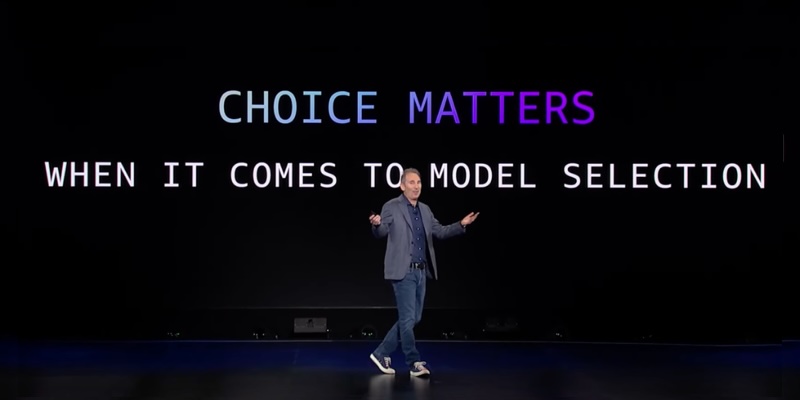
Industry analysts have responded favorably to the expansion, viewing it as a validation of the multi-model paradigm championed by AWS. Rather than betting the platform on a single proprietary architecture, AWS continues to position Amazon Bedrock as a neutral, highly secure bazaar for the world’s leading foundational models. Enterprise technology leaders have similarly praised the move, noting that granular control over model selection helps mitigate vendor lock-in and allows CTOs to continuously optimize their technology stacks against shifting market prices and performance benchmarks.
Broader Impact and Future Implications
The integration of GPT-6 Sol, GPT-6 Luna, and Claude Opus 5.5 into Amazon Bedrock signals several broader trends for the enterprise technology sector. First, it accelerates the maturation of agentic workflows. As models become more adept at long-range planning and execution with fewer errors, enterprises are shifting from passive AI assistance—such as drafting emails or summarizing documents—to active delegation, where AI agents autonomously manage software pipelines, supply chain adjustments, and financial reconciliations.
Second, the competitive dynamics among model providers are increasingly pivoting toward efficiency and specialization rather than raw parameter count. As the marginal utility of adding billions of parameters begins to plateau for certain tasks, innovations in architecture, token efficiency, and domain-specific tuning are becoming the primary differentiators.
Finally, the expansion reinforces the critical role of cloud hyperscalers as the definitive orchestration layer for enterprise AI. By abstracting the immense infrastructure complexity required to run, scale, and secure frontier models, AWS allows organizations to focus on application logic and business value. As the ecosystem continues to evolve, the ability to rapidly ingest, govern, and deploy new model iterations will likely remain a decisive factor in enterprise digital transformation strategies.
Related posts: