Amazon S3 Vectors Introduces Metadata Pre-Filtering to Boost Search Recall in Enterprise AI Applications


Amazon Web Services (AWS) has officially announced the rollout of metadata pre-filtering for Amazon S3 Vectors, a significant architectural enhancement engineered to dramatically improve recall accuracy on filtered similarity searches. By evaluating metadata filters prior to executing vector similarity computations, the new capability ensures that enterprise applications—such as retrieval-augmented generation (RAG) frameworks, semantic search engines, and agentic AI systems—can isolate relevant data scopes without sacrificing precision or performance. The feature is available immediately at no additional cost across all commercial AWS regions that support Amazon S3 Vectors, as well as AWS China regions.
The introduction of pre-filtering addresses a fundamental architectural challenge in modern vector database management. Historically, vector search indices operated on a post-filtering or in-tandem validation model, where similarity searches scanned expansive datasets before validating candidate vectors against specific metadata attributes like tenant IDs, categories, timestamps, or security statuses. For highly selective queries—such as retrieving documents associated with a single user or account within an index containing millions of items—this approach frequently resulted in suppressed recall, as relevant candidate vectors were filtered out after the initial similarity sweep.
With the new enhancement, Amazon S3 Vectors introduces a dual-mode index architecture. Existing indices continue to operate under a CLASSIC mode by default, evaluating vector similarity and metadata validation in tandem. However, administrators can now update their indices to an ENHANCED mode, shifting the sequence of operations so that metadata filters are resolved first. Consequently, similarity searches execute exclusively within the subset of vectors that match the precise filter criteria. AWS internal benchmarks indicate that this methodology yields up to a fivefold increase in matching vectors for highly selective queries compared to traditional post-filtering or concurrent evaluation paradigms.
Technical Mechanics and Implementation Architecture
Under the updated architecture, each vector stored within an S3 Vectors index can carry up to 2 kilobytes of application-defined metadata. These metadata attributes are fully indexed by default, enabling developers to query fields dynamically without declaring rigid database schemas upfront. The system supports complex filtering logic through a compact JSON syntax, accommodating traditional equality matches, numeric range operators ($gt, $lt), set memberships, boolean logic ($and, $or), existence checks, and a newly introduced prefix-matching operator, $startsWith.
The $startsWith operator is particularly valuable for applications dealing with hierarchical data structures, file paths, and Uniform Resource Locators (URLs). By allowing developers to filter keys based on partial string matches—such as isolating specific directory subtrees or document paths—the operator streamlines multi-tenant document management and legal discovery workflows. Furthermore, a single query can handle up to 100 distinct filter constraints, providing granular control over enterprise data governance and scoping.
To operationalize the feature, developers interact with updated AWS Command Line Interface (CLI) commands and API endpoints. Creating a vector index requires specifying parameters such as the index name, vector bucket name, dimensionality matching the chosen embedding model (e.g., 1,536 dimensions for text embeddings), and the appropriate distance metric, such as cosine similarity. Once established, vectors and their associated metadata are ingested via the PutVectors API. Transitioning an existing index to the new operational standard requires a single call to the UpdateIndexMode API, shifting the index mode parameter to ENHANCED. This modification occurs in-place, eliminating the operational overhead, compute expenses, and downtime associated with re-ingesting massive vector datasets.
Background Context: The Evolution of Vector Search in Cloud Infrastructure
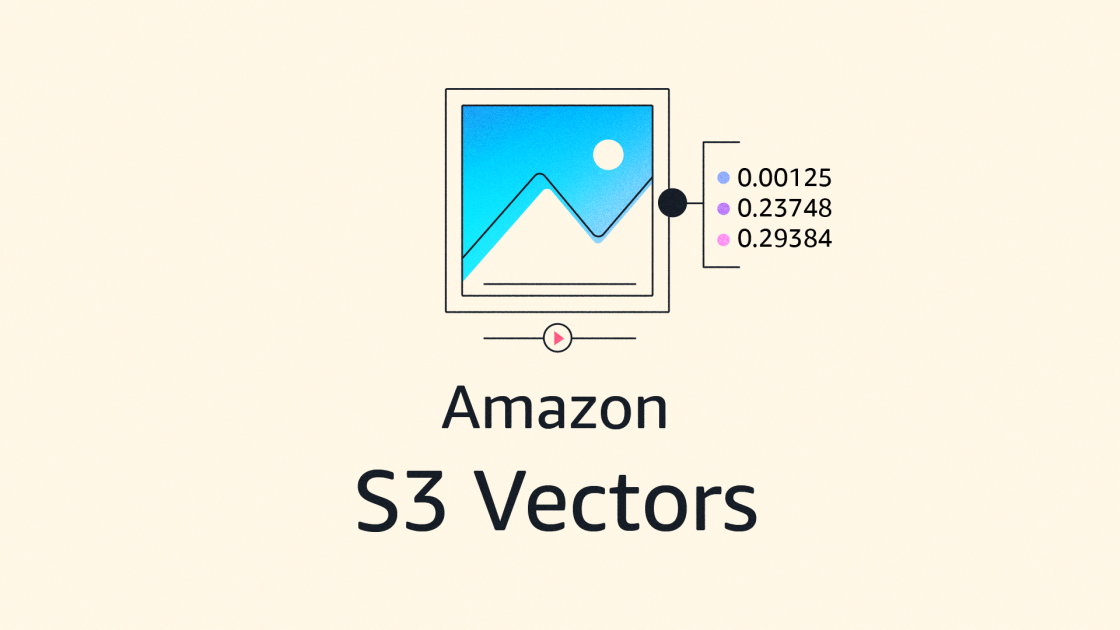
The launch of metadata pre-filtering reflects the rapid maturation of vector databases as foundational components of enterprise cloud infrastructure. Over the past several years, the explosive growth of generative artificial intelligence and large language models (LLMs) has transformed how organizations handle unstructured data. Text, images, audio, and video are increasingly converted into high-dimensional vector embeddings, allowing systems to perform semantic searches based on conceptual similarity rather than rigid keyword matching.
However, as enterprise deployments scaled from proof-of-concept projects to production-grade multi-tenant environments, developers encountered severe performance bottlenecks. In a standard multi-tenant enterprise software-as-a-service (SaaS) platform, data isolation is paramount. Ensuring that User A cannot access data belonging to User B traditionally required either partitioning vectors into entirely separate indices—which complicates infrastructure management and increases costs—or relying on metadata filtering during similarity queries.
Prior to the advent of efficient pre-filtering mechanisms across the cloud database industry, metadata filtering often degraded query performance or severely limited recall. When databases evaluated filters concurrently with vector approximation algorithms, indices would frequently run out of candidate vectors before satisfying the requested top-k results, leading to incomplete or inaccurate outputs. By shifting to an advanced pre-filtering pipeline, AWS has aligned vector search mechanics with traditional relational database indexing principles, ensuring that scope enforcement precedes similarity ranking.
Industry Implications and Enterprise Use Cases
The enterprise implications of enhanced search recall span multiple industrial sectors, including legal technology, customer relationship management, healthcare informatics, and financial compliance. In customer support environments, for example, AI-driven assistant agents frequently comb through millions of historical support tickets to diagnose recurring technical errors for a specific client account. Under legacy search paradigms, if a single client accounted for only a minuscule fraction of a massive multi-million-record database, broad similarity searches risked omitting critical historical context due to candidate exhaustion.
With pre-filtering enabled, the query engine instantly isolates the client’s specific ticket history before computing vector distances. This guarantees that support agents receive a comprehensive, highly relevant result set drawn exclusively from that account’s historical data, thereby improving automated troubleshooting accuracy and reducing resolution times. Similar efficiency gains apply to retrieval-augmented generation pipelines, where generative models rely on precise context retrieval to synthesize accurate, hallucination-free responses for end users.
Security, compliance, and multi-tenancy frameworks also stand to benefit significantly. In legal and financial sectors, where document access must strictly adhere to regulatory boundaries and licensing windows, metadata pre-filtering provides an airtight mechanism for scoping searches. Because the filtering constraints are evaluated at the storage and indexing layer, organizations can enforce strict data segregation policies without sacrificing the speed and semantic depth of vector-based information retrieval.
Deployment Strategies and Administrative Best Practices
Cloud architects and database administrators planning to adopt the new functionality are advised to follow a structured rollout methodology. Initial deployment typically involves testing the ENHANCED index mode on staging or development indices to validate query performance against specific application workloads. Once performance metrics are verified, administrators can update production indices on an individual basis via the AWS CLI or software development kits (SDKs).
For organizations managing large fleets of vector indices, operational efficiency can be maintained by configuring default behaviors at the vector bucket level. By utilizing the put-vector-bucket-default-index-mode API command, administrators can ensure that all subsequently created indices automatically initialize in ENHANCED mode, standardizing pre-filtering across newly provisioned workloads without requiring manual follow-up configurations. Furthermore, comprehensive Identity and Access Management (IAM) policies must be reviewed and updated to ensure that execution roles possess the necessary permissions to invoke the new API actions.
Market Context and Future Outlook
The release of metadata pre-filtering underscores the intensifying competition among major cloud providers to deliver comprehensive, developer-friendly infrastructure for artificial intelligence workloads. As enterprises demand deeper integration between object storage repositories and machine learning pipelines, features that reduce computational friction while enhancing data governance will play a pivotal role in platform adoption.
Industry analysts note that while vector search technology has achieved widespread initial deployment, the next phase of market maturity will be defined by operational resilience, cost efficiency, and deterministic accuracy. By integrating advanced filtering directly into Amazon S3 Vectors without introducing additional storage or query surcharges, AWS is positioning its storage infrastructure as a versatile foundation for complex, agentic AI applications that require both massive scalability and strict contextual boundaries.
As organizations continue to transition experimental generative AI applications into hardened production environments, capabilities that bridge the gap between unstructured semantic search and structured metadata governance will remain critical. The deployment of metadata pre-filtering marks an important milestone in this evolutionary trajectory, offering developers a streamlined pathway to higher-recall searches across diverse enterprise ecosystems.
Related posts: