Microsoft Azure Databricks Delivers Unprecedented Return on Investment, Unveiled in Forrester Total Economic Impact Study

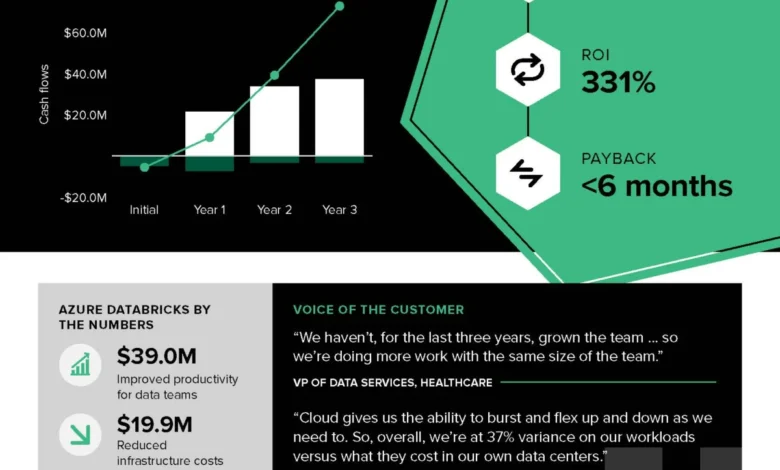
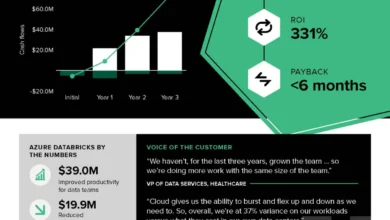
Microsoft Azure Databricks, the integrated data analytics and AI platform co-engineered by Microsoft and Databricks, is demonstrating significant tangible value for enterprises, according to a recent Total Economic Impact™ (TEI) study commissioned by Microsoft and conducted by Forrester Consulting. The report reveals that a composite organization utilizing Azure Databricks realized a remarkable 331% return on investment (ROI) over three years, with a net present value (NPV) of $58.1 million and an investment payback period of less than six months. These findings underscore the platform’s ability to deliver substantial financial and operational benefits, solidifying its position as a leading choice for organizations navigating complex data landscapes.
The core advantage of Azure Databricks lies in its seamless integration as a first-party service within the Microsoft Azure ecosystem. This co-engineering approach ensures that Databricks’ powerful capabilities are not an add-on but are deeply embedded within the Azure fabric. This native integration translates into inherent efficiencies, allowing organizations to leverage their existing Microsoft tools, identity management systems, and governance frameworks without the friction often associated with disparate platforms. The "built-in, not bolted on" philosophy means a unified roadmap, a single billing process, and a consolidated support structure, simplifying operations for both technical teams and business stakeholders. For IT departments, this translates to deeper native integration and enhanced performance. For the business, the benefits manifest as reduced costs, mitigated risk, and accelerated time-to-value for data-driven initiatives.
The Genesis of the Study and its Rigorous Methodology
The impetus behind commissioning the Forrester TEI study stems from a consistent inquiry from decision-makers regarding the quantifiable business value derived from advanced data and AI platforms. While the strategic partnership between Microsoft and Databricks drives an accelerated integration roadmap and continuous performance optimization, translating these technical advancements into concrete business outcomes is paramount.
The Forrester TEI methodology is a well-established framework designed to quantify the business impact of technology investments. It involves a multi-stage process:
-
Defining the Composite Organization: Forrester interviews existing customers of the technology in question to construct a representative "composite organization." This composite organization is based on the aggregated characteristics of these interviewed customers, providing a generalized yet realistic profile for financial modeling. In this instance, the composite organization was a $6 billion company operating within a regulated industry, managing approximately 10 petabytes of data. This profile is crucial for grounding the study’s findings in a plausible enterprise context.
-
Identifying Benefits: The study meticulously identifies both quantifiable and unquantifiable benefits. Quantifiable benefits are those that can be assigned a monetary value through direct cost savings or revenue generation. Unquantifiable benefits, while not directly factored into the financial ROI, represent significant strategic advantages that contribute to overall business success.
-
Identifying Costs: All costs associated with implementing and operating the technology are identified. This includes direct costs such as licensing and subscription fees, as well as indirect costs like implementation services, training, and ongoing operational expenses.
-
Constructing a Financial Model: Based on the identified benefits and costs, Forrester constructs a three-year financial model. This model projects the financial impact of the technology over its expected lifecycle, allowing for the calculation of key financial metrics such as NPV, ROI, and payback period.
-
Analysis and Presentation: The study concludes with a detailed analysis of the findings, including a breakdown of the value drivers and a discussion of the implications for organizations considering similar investments.
The study, conducted in June 2026, involved in-depth interviews with a cohort of Azure Databricks customers. The aggregated data from these interviews formed the basis for the composite organization, allowing Forrester to model the platform’s impact on a typical enterprise. The findings highlight a significant transformation from a pre-Azure Databricks environment characterized by fragmented, expensive, unreliable, and difficult-to-govern data estates to a streamlined and efficient data foundation.
Quantifiable Business Value: The Pillars of Return
The Forrester study identified a total of $75.6 million in benefits realized over three years, against an investment of $17.5 million, resulting in a substantial net present value of $58.1 million. This impressive financial outcome is attributed to four primary value drivers:
-
Increased Productivity: This is a critical area where Azure Databricks excels. By providing a unified platform for data engineering, data science, and machine learning, it eliminates the need for disparate tools and complex integration efforts. Data professionals can access and process data more efficiently, leading to faster development cycles for analytics and AI models. The study found that the reduction in time spent on data preparation, model development, and deployment significantly boosted the productivity of data teams. This streamlined workflow allows organizations to extract insights and build intelligent applications more rapidly, directly impacting business agility and competitive advantage.
-
Reduced Infrastructure Costs: The native integration of Azure Databricks within the Azure cloud infrastructure leads to significant cost optimizations. By eliminating the need for redundant data storage and processing layers that often arise from fragmented architectures, organizations can reduce their overall infrastructure footprint. Furthermore, the platform’s efficient resource utilization and autoscaling capabilities ensure that compute resources are provisioned and de-provisioned dynamically based on demand, preventing over-provisioning and associated costs. This optimization is particularly impactful for organizations managing large volumes of data, where infrastructure expenses can escalate rapidly.
-
Enhanced Data Governance and Security: In today’s data-driven world, robust data governance and security are non-negotiable, especially within regulated industries. Azure Databricks, through its integration with Azure’s comprehensive security and compliance offerings and the capabilities of Unity Catalog, provides a centralized and auditable framework for managing data access and usage. Unity Catalog, in particular, offers fine-grained access controls, data lineage tracking, and automated governance policies, ensuring that sensitive data is protected and compliant with regulatory requirements. The study quantified the benefits derived from reduced risk of data breaches, streamlined compliance audits, and improved data quality through consistent governance.
-
Accelerated Time to Market for Data Products and Insights: The ability to quickly translate data into actionable insights and deploy data-driven products is a key differentiator for modern businesses. Azure Databricks significantly shortens this cycle by providing a collaborative environment where data teams can work together seamlessly. The platform’s integrated development tools, automated deployment pipelines, and efficient processing capabilities enable organizations to bring new analytics dashboards, machine learning models, and AI-powered applications to market much faster. This accelerated delivery of business value translates directly into increased revenue opportunities and a stronger competitive position.
Unquantified but Crucial Benefits
Beyond the directly quantifiable financial gains, the Forrester study also highlighted several significant unquantified benefits that contribute to the overall strategic value of Azure Databricks. These include:
-
Deeper Native Azure Services Integration: The platform’s first-party status means it benefits from continuous and deep integration with the broader Azure data and AI stack. This includes seamless connectivity with services like Azure Synapse Analytics, Azure Machine Learning, and Power BI, creating a powerful and cohesive data ecosystem.
-
Faster Insights Generation: The performance optimizations inherent in Azure Databricks, coupled with its intuitive interface, enable users to generate insights more rapidly. This empowers business users and analysts to make quicker, more informed decisions.
-
Wider Access to Data: By democratizing access to data through a unified platform and robust governance, Azure Databricks allows a broader range of users within an organization to leverage data for their work, fostering a data-driven culture.
-
Streamlined Governance through Unity Catalog: As mentioned earlier, Unity Catalog provides a centralized and unified approach to data governance, simplifying management and ensuring compliance without hindering innovation.
The Power of Integration: Azure Databricks Genie and Microsoft Copilot
A prime example of the platform’s advanced integration capabilities, driving both quantified and unquantified value, is the Azure Databricks Genie integration with Microsoft Copilot. This synergy allows organizations to imbue their existing Microsoft tools with the intelligence of their data lakehouse. Users can now query their data directly in plain language within familiar applications like Microsoft Teams and Microsoft 365 Copilot.
Azure Databricks Genie acts as a natural language interface to the lakehouse, enabling anyone to ask questions of their data without needing specialized SQL or data engineering skills. The recent expansion into Copilot Cowork further enhances this capability by grounding tasks in trusted data through Genie Ontology. This ensures that the insights generated are relevant, accurate, and contextually aware. Crucially, every answer is scoped by Unity Catalog, adhering to individual user permissions. This means that while intelligence flows seamlessly into the user’s workflow, data governance remains robust, preventing unauthorized access to sensitive information.
This deep integration is a testament to the co-engineering efforts between Microsoft and Databricks, demonstrating a commitment to embedding advanced data and AI capabilities directly into the tools that employees use daily. These types of integrations, while not always directly priced in a TEI study, are critical drivers of the productivity and cost benefits that are quantified.
Independent Benchmarking: The Speed Advantage
Beyond the economic impact, the performance of Azure Databricks has also been independently validated. Principled Technologies, a reputable independent firm, conducted a decision-support benchmark, similar to the TPC-DS standard, on a 10-terabyte dataset. The results indicated that Azure Databricks consistently outperformed its competitor on AWS. Specifically, Azure Databricks completed single query streams up to 21.1% faster than Databricks on AWS (when autoscale was disabled). Furthermore, when running four concurrent query streams, Azure Databricks finished more than nine minutes faster, demonstrating a significant advantage in handling complex, concurrent workloads. This speed advantage directly contributes to faster insights and improved user experience, translating into tangible productivity gains.
Implications for the Enterprise Data Strategy
The findings of the Forrester Total Economic Impact study carry significant implications for organizations grappling with the complexities of modern data management and AI adoption. The choice of a data and AI platform is a long-term strategic decision, and Azure Databricks presents a compelling case for its integrated approach.
The synergistic reinforcement between its components is key. The deep integration drives the substantial cost savings and efficiency gains identified by Forrester. The platform’s robust performance ensures that these benefits are sustained and scaled as data volumes and analytical demands grow. All of this is built upon the foundation of a first-party partnership, meaning that the collective engineering prowess, product roadmap, and support infrastructure of both Microsoft and Databricks are dedicated to the success of your data estate.
In an era where data is increasingly recognized as a critical business asset, the ability to unlock its full potential efficiently, securely, and cost-effectively is paramount. Azure Databricks’ demonstrated ability to deliver a 331% ROI with a payback period of under six months is not merely a marketing claim; it is a validated measure of tangible business value. This compelling financial performance, coupled with the platform’s advanced integration capabilities and independent performance benchmarks, solidifies its position as a preferred choice for organizations looking to build and scale their lakehouse on a trusted and powerful cloud foundation. The comprehensive nature of the platform, from data ingestion and preparation to advanced analytics and AI model deployment, all within a secure and governed Azure environment, makes it a strategic imperative for businesses seeking to thrive in the data-driven economy.
Exploring Further Resources
For organizations seeking to delve deeper into the capabilities and economic advantages of Microsoft Azure Databricks, several resources are available:
- The full Forrester Total Economic Impact™ study on Microsoft Azure Databricks is accessible for detailed review.
- Microsoft Azure Databricks product pages offer comprehensive information on features, pricing, and use cases.
- Documentation and tutorials on Azure Databricks Genie and its integrations with Microsoft Copilot provide practical insights into leveraging these advanced AI capabilities.
- Case studies and white papers further illustrate real-world success stories and the transformative impact of Azure Databricks across various industries.
These resources collectively underscore Microsoft’s commitment to empowering organizations with cutting-edge data and AI solutions that deliver measurable business outcomes. The strategic alliance with Databricks, manifested in Azure Databricks, represents a significant leap forward in making advanced data analytics and artificial intelligence accessible, efficient, and highly valuable for businesses of all sizes.
Related posts: