Microsoft Azure Databricks Delivers Unprecedented Return on Investment, According to Landmark Forrester Study

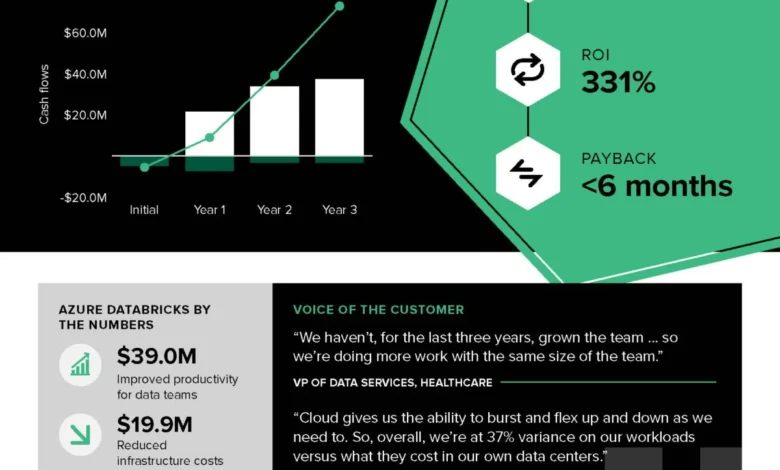
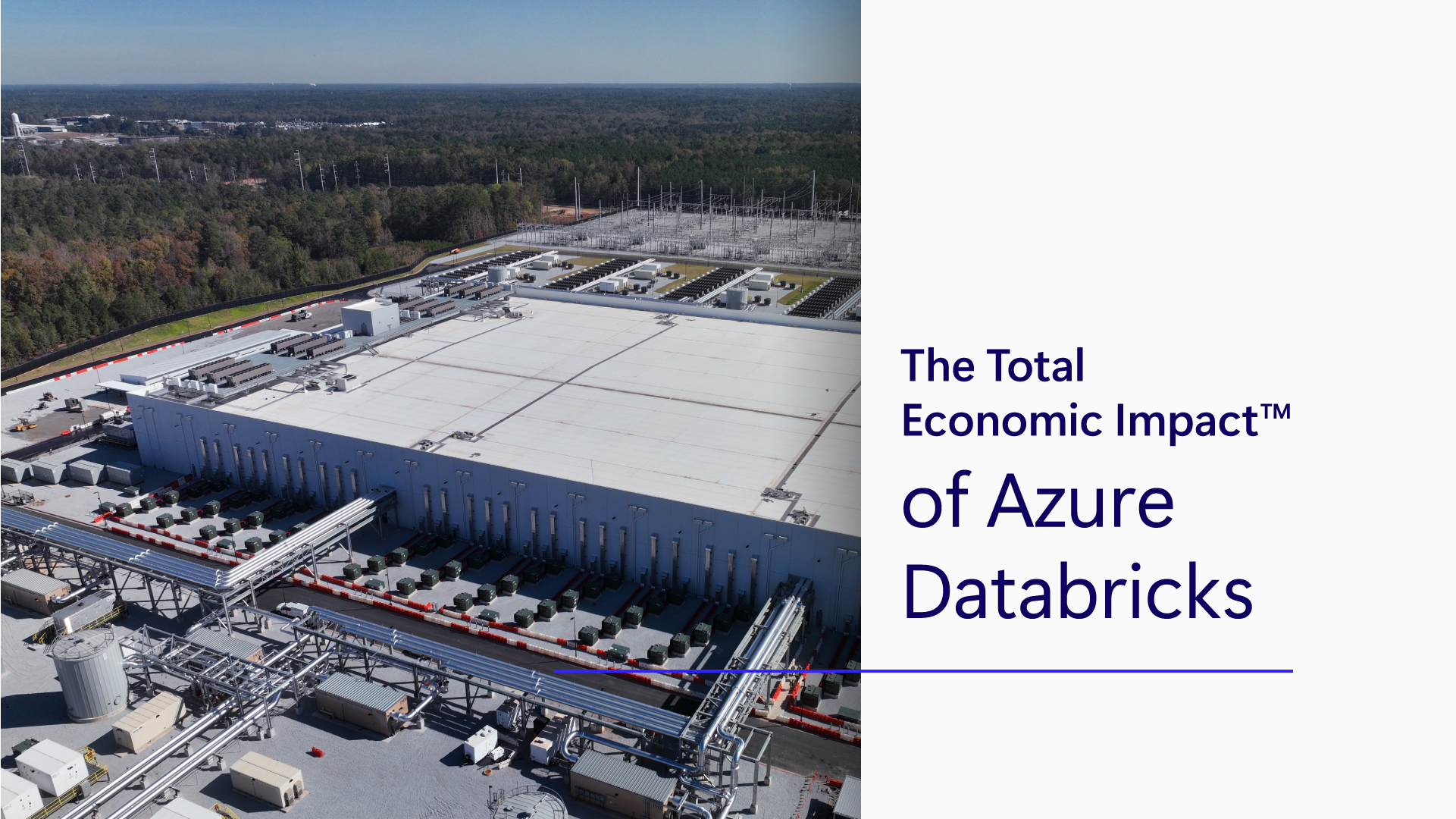
Microsoft Azure Databricks, the deeply integrated data and AI platform co-engineered by Microsoft and Databricks, is demonstrating substantial real-world value for organizations, according to a comprehensive Total Economic Impact™ (TEI) study commissioned by Microsoft and conducted by Forrester Consulting. The findings reveal that a composite organization leveraging Azure Databricks achieved a staggering 331% return on investment (ROI) over three years, with a net present value (NPV) of $58.1 million and a payback period of less than six months. This independent validation underscores the platform’s ability to drive significant cost savings, accelerate innovation, and enhance operational efficiency for enterprises grappling with complex data challenges.
The study, released in June 2026, analyzed the experiences of several Azure Databricks customers, constructing a composite organization that mirrored a $6 billion company operating within a regulated industry and managing approximately 10 petabytes of data. This representative enterprise faced significant hurdles with its pre-Azure Databricks data infrastructure, characterized by fragmentation, high costs, unreliability at scale, and governance complexities. The implementation of Azure Databricks, however, transformed this landscape, resulting in a projected $75.6 million in benefits against $17.5 million in costs over a three-year period.
The Core Advantage: Native Integration and Co-Engineering
At the heart of Azure Databricks’ efficacy lies its nature as a first-party Azure service. This distinction means it is not an add-on but rather a seamlessly integrated component of the Microsoft cloud ecosystem. The co-engineering efforts between Microsoft and Databricks ensure a unified roadmap for development and integration across Microsoft’s extensive data and AI stack. For customers, this translates into a streamlined experience, where Azure Databricks naturally aligns with existing Microsoft tools, identity management systems, and governance frameworks.
This inherent integration eliminates the often-cited challenges of fragmented data estates and the associated costs of data duplication, disparate tooling, and complex integration projects. The "built-in, not bolted on" approach means organizations benefit from deeper native integration and enhanced performance without the friction and overhead typically associated with piecing together multiple vendor solutions. This unified approach extends to go-to-market strategies, resulting in a single procurement process, a consolidated bill, and a singular support path for customers.
Quantifying the Economic Impact: Key Findings of the Forrester Study
The Forrester TEI study meticulously detailed the financial benefits derived from Azure Databricks adoption, breaking down the $75.6 million in total benefits into several key areas. While the specific dollar amounts for each category were not explicitly detailed in the provided excerpt, the study identified four primary drivers of this substantial value. These drivers are understood to encompass significant improvements in operational efficiency, accelerated time-to-market for data-driven initiatives, enhanced data utilization, and the reduction of infrastructure and management costs.
The study highlighted that the $58.1 million in net present value represents the aggregated financial gains after accounting for the total cost of ownership over three years. The rapid payback period of less than six months indicates that the initial investment in Azure Databricks begins to yield positive financial returns very quickly, a crucial factor for businesses seeking immediate impact from their technology investments.
Unpriced but Critical Benefits: Driving Innovation and Governance
Beyond the quantifiable financial metrics, the Forrester study also recognized a suite of significant, albeit unpriced, benefits that are instrumental in Azure Databricks’ overall value proposition. These include:
- Native Azure Services Integration: The seamless integration with the broader Azure ecosystem allows organizations to leverage other Azure services more effectively, creating a more cohesive and powerful data and AI environment. This includes tighter connections with services like Azure Synapse Analytics, Azure Machine Learning, and Power BI, enabling end-to-end data solutions.
- Faster Insights and Time to Value: By simplifying data access, processing, and analysis, Azure Databricks empowers data teams to derive insights more rapidly. This acceleration is critical for businesses that need to respond quickly to market changes, customer demands, and emerging opportunities.
- Wider Access to Data: The platform’s architecture and governance capabilities facilitate broader and more secure access to data across an organization. This democratization of data, while controlled by robust governance, enables more users to contribute to and benefit from data-driven decision-making.
- Enhanced Governance through Unity Catalog: Unity Catalog, Databricks’ unified governance solution, plays a pivotal role in ensuring data security, compliance, and discoverability. By providing a single pane of glass for data discovery, access control, and auditing, it addresses critical governance concerns, particularly in regulated industries. This is paramount for organizations handling sensitive data and adhering to stringent compliance mandates.
The Role of Advanced Integrations: Azure Databricks Genie and Microsoft Copilot
A prime example of the integrated innovation driving these benefits is the synergy between Azure Databricks Genie and Microsoft Copilot. Azure Databricks Genie, an AI assistant deeply embedded within the platform, allows users to interact with their data lakehouse using natural language queries. This capability has been progressively integrated into Microsoft’s productivity suite.
The integration with Microsoft Copilot Cowork, for instance, allows users to contextualize their business data and build upon that intelligence directly within the tools they use daily. Genie enables anyone to ask questions of the lakehouse in plain language. This functionality has been extended to Microsoft Teams and Microsoft 365 Copilot, and more recently into Copilot Cowork, where it grounds tasks in trusted data through Genie Ontology. Crucially, every response is scoped by Unity Catalog to ensure that users only see data they are authorized to access, thereby maintaining stringent governance while enabling intelligent workflows.
This deep integration across the Microsoft stack is a significant differentiator. It eliminates the need for users to switch between multiple applications or learn new, complex interfaces to access and analyze data. The intelligence flows directly into the user’s workflow, enhancing productivity and fostering a more data-informed culture.
Performance Benchmarks Validate Speed and Efficiency
Beyond the economic impact, the performance of Azure Databricks has also been independently validated. Principled Technologies, a reputable independent firm, conducted a decision-support benchmark, akin to industry-standard TPC-DS benchmarks, on a 10-terabyte dataset. The results indicated that Azure Databricks consistently outperformed Databricks on AWS. Specifically, Azure Databricks completed a single query stream up to 21.1% faster than its AWS counterpart (when autoscale was disabled). Furthermore, when running four concurrent query streams, Azure Databricks finished more than nine minutes faster, demonstrating superior efficiency and scalability under load.
These performance metrics are not merely technical curiosities; they directly translate into tangible benefits for organizations. Faster query execution means data analysts and scientists can iterate more quickly, leading to faster discovery of insights and a reduced time to market for data-driven products and services. In environments with high concurrency, such as those found in many large enterprises, these performance gains can significantly impact overall productivity and reduce the potential for bottlenecks.
A Strategic Partnership for the Future of Data and AI
The ongoing strategic partnership between Microsoft and Databricks is a cornerstone of Azure Databricks’ success. This collaboration fuels an accelerated integration roadmap and continuous optimization for improved performance. This joint engineering effort ensures that Azure Databricks remains at the forefront of data and AI innovation, consistently delivering new capabilities and enhancements that address the evolving needs of businesses.
The alignment in their respective roadmaps means that customers benefit from a cohesive and forward-looking platform. This is particularly important in the rapidly advancing fields of data analytics and artificial intelligence, where staying current with the latest technologies can be a significant challenge. The unified support path further simplifies the customer experience, ensuring that any issues are addressed efficiently and effectively through a single point of contact.
Implications for Businesses: A Foundation for Growth and Innovation
For businesses, the implications of the Forrester TEI study and the underlying capabilities of Azure Databricks are profound. Choosing a data and AI platform is a long-term strategic decision, and Azure Databricks offers a compelling proposition where different components reinforce each other to deliver sustained value.
The seamless integration drives the cost savings measured by Forrester. The robust performance ensures that these gains are maintained and scaled as data volumes and user demands grow. Fundamentally, the platform is built on a first-party partnership that brings the collective engineering expertise, development roadmaps, and support resources of both Microsoft and Databricks to bear on an organization’s data estate.
In an era where data is often described as the new oil, the ability to effectively extract, refine, and leverage this valuable resource is paramount. Azure Databricks provides a comprehensive, integrated, and high-performing solution that empowers organizations to unlock the full potential of their data. The measured ROI of 331% and a payback period under six months are not merely marketing claims; they are independently verified indicators of the tangible economic benefits that organizations can realize by adopting this powerful data and AI platform. This is why an increasing number of teams are choosing to build and manage their data lakehouses on Azure Databricks, positioning themselves for greater agility, innovation, and competitive advantage in the digital age.
Exploring Further
Organizations interested in understanding the full scope of Azure Databricks’ capabilities and economic impact are encouraged to explore the following resources:
- Forrester Total Economic Impact™ Study of Microsoft Azure Databricks: This report provides an in-depth analysis of the financial and strategic benefits derived from the platform.
- Microsoft Azure Databricks Product Page: Learn more about the platform’s features, capabilities, and integration with the Azure ecosystem.
- Databricks Lakehouse Platform: Gain insights into the broader Databricks ecosystem and its role in modern data architectures.
- Microsoft Copilot Documentation: Understand how AI-powered assistance is transforming productivity and data interaction.
- Unity Catalog Overview: Explore the governance and security features that underpin Azure Databricks.
Related posts: