Microsoft Named a Leader in the 2026 Gartner Magic Quadrant for Container Management

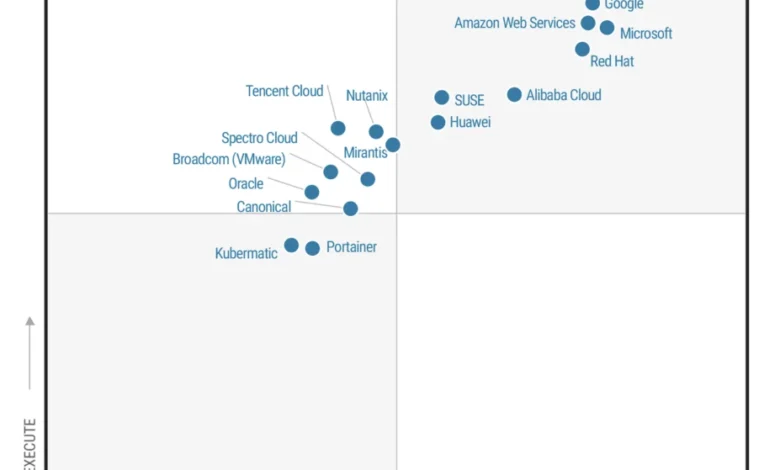
Microsoft has officially been recognized as a Leader in the 2026 Gartner Magic Quadrant for Container Management, achieving the furthest positioning to the right for Completeness of Vision. This acknowledgment marks a pivotal moment for the software giant as it navigates the transition from traditional cloud-native application development to the increasingly complex requirements of artificial intelligence (AI) and hybrid, sovereign cloud environments. The recognition underscores Microsoft’s strategic pivot toward providing a unified operating model that bridges the gap between massive, centralized data centers and the decentralized, high-stakes requirements of the modern enterprise.
A Decade of Evolution: From Orchestration to Intelligence
The journey toward this leadership position began over a decade ago when Kubernetes first emerged as an open-source project. At that time, the industry objective was relatively narrow: to democratize distributed systems and make reliable services easier to build. The design philosophy was centered on "what" a workload needed rather than "where" it should reside. This abstraction proved to be the bedrock of modern cloud computing, allowing schedulers to make autonomous, intelligent decisions about resource allocation.
As AI began to permeate the enterprise landscape, the requirements for container management shifted dramatically. The industry moved beyond simple orchestration to a demand for platforms that could run applications closer to the data source and the end-user. Today, regulatory boundaries, data sovereignty, and the need for low-latency inference have forced organizations to rethink their container strategies. Microsoft’s current portfolio—comprising Azure Kubernetes Service (AKS), Azure Container Apps, Azure Arc, and Azure Kubernetes Fleet Manager—is built specifically to address these cross-environment demands without forcing developers to fundamentally rebuild their applications.
Architectural Models in the Age of AI
Industry analysis reveals that enterprise container adoption has consolidated into two primary architectural models. Understanding the distinction between these models is essential for grasping why Microsoft’s integrated approach has gained traction in the 2026 market landscape.
The first model involves a centralized platform team managing a persistent serving layer, GPU scheduling, and the rigorous compliance boundaries required for enterprise-grade AI. In this setup, AI infrastructure is treated as a core platform capability, similar to networking or identity management. By utilizing tools like the AI toolchain operator and adhering to CNCF (Cloud Native Computing Foundation) AI Conformance certification, organizations can ensure that their AI stacks remain stable and compatible as they scale.
The second model is driven by agility and elasticity. Here, applications or autonomous agents invoke inference on demand, consuming resources only for the duration of the task. This model demands high-speed capacity provisioning and strong workload isolation. Azure Container Apps was architected with this specific need in mind, offering serverless GPU capabilities and hardware-isolated sandboxes that maintain state across complex agentic interactions.
The primary engineering challenge identified by enterprise leaders today is not choosing between these models, but making the boundary between them fluid. The ability to maintain consistent image definitions, identity controls, and security policies across both static and elastic environments is what distinguishes a mature container platform from a collection of fragmented tools.
Expanding the Perimeter: Hybrid and Edge Strategy
The modern enterprise estate is rarely contained within a single region. Clusters are proliferating across satellite offices, industrial edge sites, and regional data centers, often dictated by strict jurisdictional compliance. This geographic sprawl has introduced a new class of operational failures: coordination gaps. When teams attempt to manage these environments as isolated clusters, they often encounter configuration drift, uneven deployment of security patches, and policy inconsistencies.

Microsoft has responded to this challenge with a "consistent operating model" strategy. By utilizing AKS Everywhere, the company extends the Azure-managed Kubernetes experience to the edge. Furthermore, Azure Arc serves as a connective layer, providing a unified identity and observability model across CNCF-conformant clusters, even those residing in competing cloud environments or on-premises data centers. To manage the resultant "cluster sprawl," Azure Kubernetes Fleet Manager enables centralized oversight, allowing platform engineers to push updates, manage workload placement, and enforce governance across vast, geographically dispersed fleets.
Commitment to Open Source and Standardized APIs
A critical component of Microsoft’s strategy is its ongoing investment in the upstream Kubernetes ecosystem. Avoiding proprietary forks is a core tenet of the company’s current cloud-native roadmap. According to recent data from the CNCF’s DevStats, Microsoft has solidified its position as the second-largest overall contributor to CNCF projects and remains the leading cloud provider in terms of contributions over the past three years. This commitment ensures that the APIs developers build against remain stable, preventing vendor lock-in and allowing for seamless portability of workloads between Azure and other infrastructures.
The Rise of Agentic Operations
As cluster counts continue to outpace the growth of operations teams, the industry is seeing a transition toward "agentic operations." This shift represents the next frontier in cloud management. Traditional manual intervention is increasingly incapable of keeping pace with the velocity of modern deployment cycles.
Innovations such as the Azure SRE (Site Reliability Engineering) Agent and the AKS MCP (Model Context Protocol) Server are designed to assist operators by automating the diagnostic process. Rather than replacing human oversight, these tools serve to accelerate the transition from alert to remediation, filtering out noise and allowing engineers to focus on complex systemic issues rather than routine maintenance. This evolution toward automated, intelligent operations is expected to be a primary area of investment for the next several years.
Industry Implications and Market Impact
The designation of Microsoft as a Leader in the 2026 Gartner Magic Quadrant for Container Management serves as a validation of the company’s long-term strategy of integrating AI into the core platform layer. For enterprise customers, this provides a roadmap for modernizing existing applications while preparing for the next wave of AI-driven workloads.
Industry analysts suggest that the success of a container platform is now measured by its ability to hide complexity. As Brian Sutliffe, Vice President of Engineering at CallRevu, noted in recent documentation, the ability to scale GPU resources based on call volume without disrupting production environments is a critical competitive advantage. By abstracting the hardware layer and providing a consistent management plane, Microsoft is addressing the fundamental tension between the need for high-performance AI compute and the necessity of stable, reliable operations.
The broader implication for the market is a clear trend toward platform consolidation. Enterprises are moving away from heterogeneous, disparate container management solutions in favor of unified platforms that can bridge the gap between cloud and edge. As AI becomes an embedded component of the software development lifecycle, the platforms that succeed will be those that provide developers with the freedom to innovate while giving operators the controls necessary to maintain security and compliance at scale.
While this Gartner recognition reflects current market standing, it also sets a baseline for the future. The "surface area" of container platforms continues to expand, and the burden of managing this complexity remains a significant hurdle for IT leadership. Looking forward, the integration of AI-driven operational tools, combined with the continued push for sovereign, edge-ready infrastructure, will likely define the next phase of the container management race. Microsoft’s strategy, built upon a foundation of upstream open-source participation and a unified control plane, positions the company to influence the trajectory of this evolution significantly.