Governing the Spend: The Final Pillar of Agentic AI Economics and Enterprise Sustainability


The rapid proliferation of autonomous AI agents within the enterprise has fundamentally shifted the nature of software development, moving from static, predictable applications to dynamic systems that operate with varying degrees of autonomy. As organizations transition from isolated, experimental pilots to integrated agentic ecosystems, IT leaders are facing an unprecedented challenge: managing costs for systems that can execute tasks and consume resources at speeds far exceeding traditional software architectures. This article, the fourth and final installment of the Economics of Agent Optimization series, examines the critical role of continuous governance in transforming AI from an experimental expense into a managed, high-return investment system on Microsoft Foundry.

The Governance Gap in Autonomous Systems
In a traditional enterprise IT environment, governance is synonymous with security, compliance, and lifecycle management. However, in the era of agentic AI, governance must extend to the economic layer. Without a unified framework, decentralized teams often make independent choices regarding model selection, tool integration, and compute capacity. When these small, disparate inefficiencies are aggregated across an entire enterprise estate, the financial impact can become significant.
The primary difficulty lies in the nature of agentic workflows. Unlike standard SaaS applications where costs are relatively static, agents utilize non-deterministic paths. A single agent may trigger multiple model calls, engage in complex tool usage, and loop through retries based on the context of its task. If these processes are not governed at the request path, an organization may only realize it has incurred a massive, unforeseen expense after the monthly invoice has closed. Consequently, effective governance requires a shift from passive, retrospective reporting to active, real-time control.

Establishing the Governance Lifecycle: Visibility, Limits, and Value
Effective cost management for AI agents follows a three-part lifecycle: visibility through observability, containment through granular limits, and justification through business outcomes.
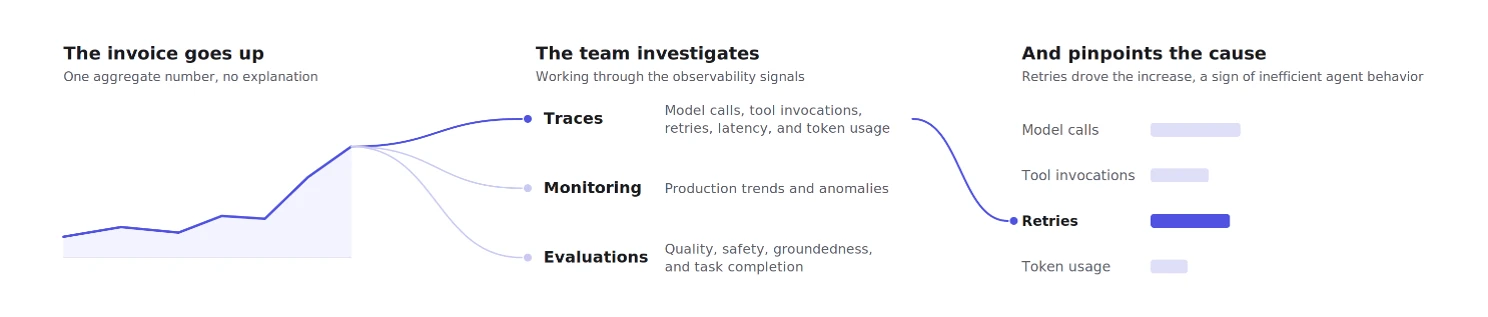
Visibility is the foundational step. The complexity of modern AI stacks often obscures the true cost of an operation. A single deployment might serve multiple agents, each utilizing different models and tools. To address this, Microsoft Foundry integrates cost management capabilities that provide transparency at the project level. By associating every Foundry project with specific metadata tags, finance and IT departments can map consumption directly to business units, teams, or specific workloads. This level of attribution is essential for accountability, particularly as Azure OpenAI models and other integrated services become core components of the enterprise tech stack.
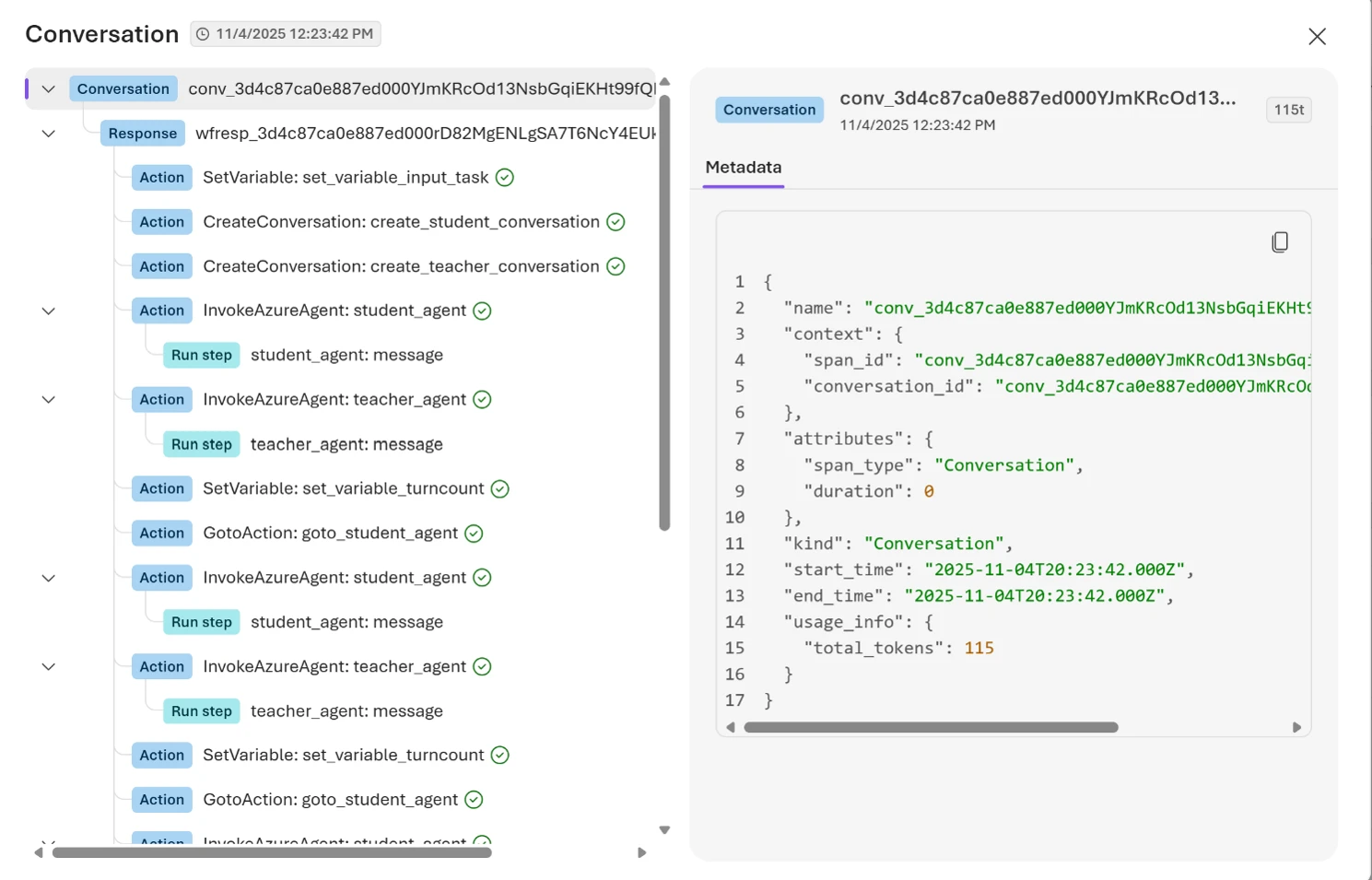
Furthermore, observability signals—such as those captured through Azure API Management’s AI Gateway—provide the "why" behind the "how much." By tracking metrics like latency, token consumption, and tool-use frequency, organizations can distinguish between costs driven by organic customer demand versus those caused by inefficient architectural designs or infinite retry loops.
The Architecture of Control: From Smoke Detectors to Circuit Breakers
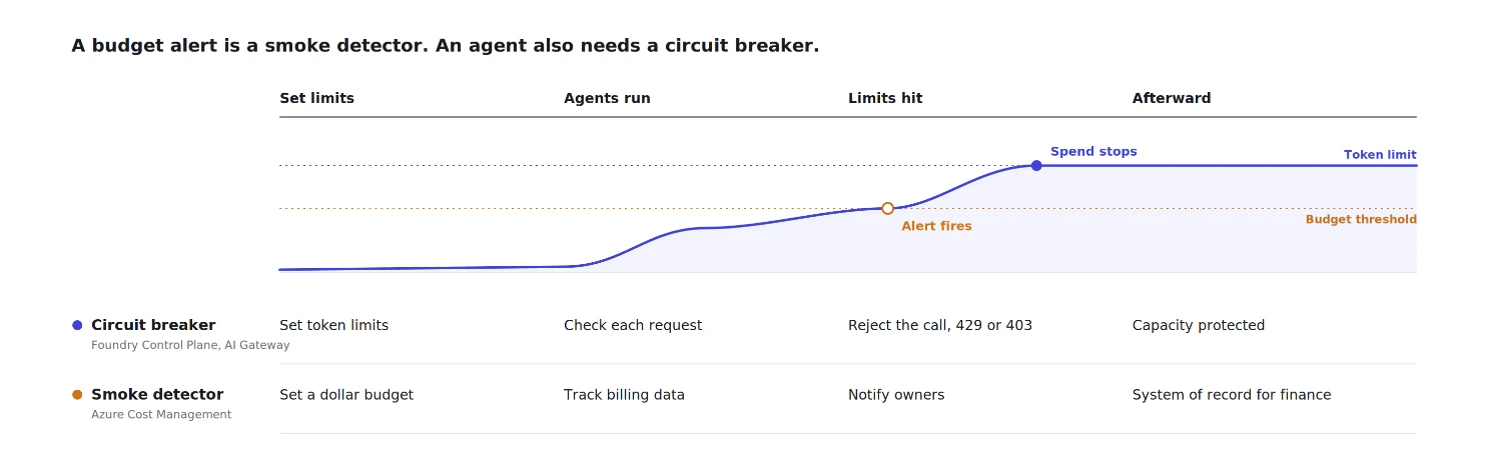
A robust governance strategy must distinguish between reactive and proactive controls. Financial budget alerts act as the "smoke detector" of the system; they are essential for long-term fiscal planning and notifying stakeholders of budget deviations. However, they are insufficient for controlling runaway agents in real-time.
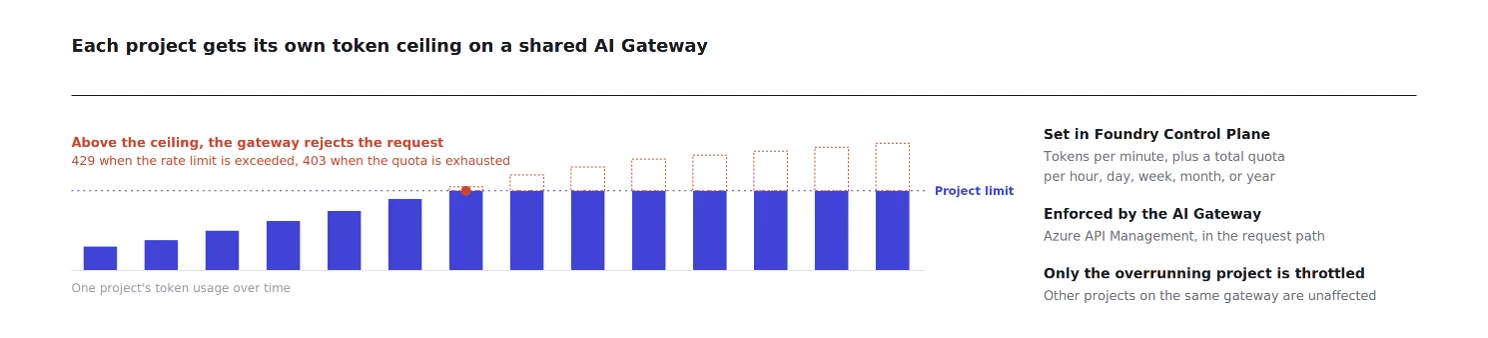
For high-velocity agentic systems, organizations require "circuit breakers"—mechanisms that operate directly within the request path. Through the Foundry Control Plane and the AI Gateway, IT leaders can now enforce tokens-per-minute rate limits and total token quotas at the project scope. When an agent exceeds these pre-defined thresholds, the system can issue a 429 (Too Many Requests) or 403 (Forbidden) response, effectively halting the expenditure before it escalates.
This multi-layered approach ensures that developers have the flexibility to innovate while IT retains the ability to establish hard boundaries. By implementing policies such as llm-token-limit across various models and providers, organizations can maintain a consistent governance model that encompasses not only OpenAI-compatible APIs but also Anthropic and other agent-to-agent frameworks. This protects shared capacity and prevents a single malfunctioning agent from monopolizing the organization’s entire token budget.
Measuring Return on Investment (ROI)
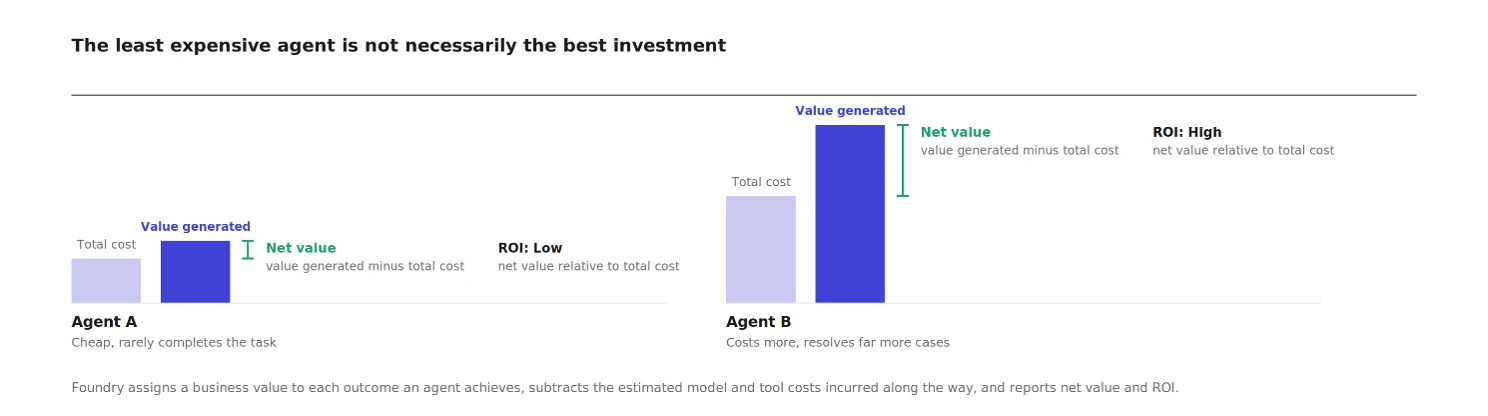
The ultimate goal of governing AI spend is not merely cost reduction, but the maximization of value. The most cost-effective agent is not necessarily the most profitable one. If an agent costs $100 to run but generates $1,000 in business value through task completion or customer satisfaction, it is a superior investment compared to a $10 agent that produces negligible results.
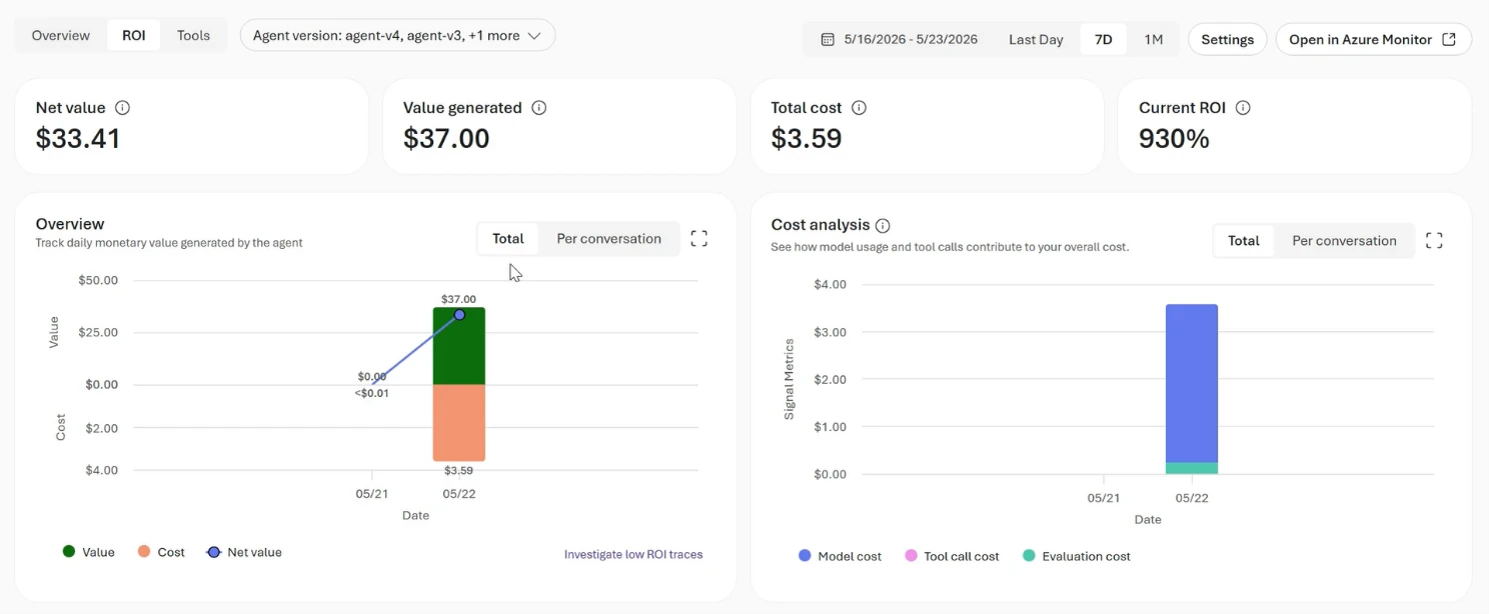
Microsoft is addressing this need through the development of ROI tracking features in Foundry. By allowing organizations to define specific business outcomes—such as case deflection rates or successful document processing—and assigning a value to those outcomes, the platform can calculate the net gain of an agent’s operation. This shift from "token-focused" metrics to "value-focused" metrics is a paradigm shift for enterprise leadership. It allows managers to justify AI expenditures to financial controllers with data that reflects business performance rather than just raw consumption figures.
Chronology of the Economics of Agent Optimization
The journey toward mature agentic governance has been marked by a systematic progression:
- Foundational Strategy: The initial phase focused on the three core decisions that dictate system architecture: choosing the right model, defining the autonomy level, and selecting the infrastructure.
- Runtime Optimization: The second phase addressed cost management at the request level, utilizing techniques such as prompt caching, model routing, and deployment selection to minimize waste.
- Workflow Engineering: The third phase explored context management, memory, and tool-use optimization, ensuring that agents remain efficient over long-running workflows.
- Continuous Governance: The final, current phase focuses on the permanent, ongoing oversight of the AI estate, bridging the gap between engineering telemetry and financial accountability.
Broader Implications and Future Outlook
The transition to an AI-first enterprise necessitates a change in how we perceive software maintenance. We are moving toward a future where "AgentOps" becomes as standard as DevOps. In this model, IT departments will be responsible for managing the "AI estate" with the same level of rigor as they manage cloud infrastructure or human capital.
The industry is currently trending toward a closer integration between financial systems and real-time operational telemetry. As organizations continue to scale, the distinction between a "technical cost" and a "business expense" will continue to blur. Future iterations of tools like Foundry are expected to offer dollar-denominated budgets, allowing organizations to set limits in local currency rather than abstract token counts. This will further simplify the communication between engineering teams, who speak the language of tokens and latency, and finance departments, who speak the language of P&L statements and operational budgets.
Conclusion: Running AI as a Managed Investment
The objective of agent optimization is not to stifle innovation by driving costs to zero. Rather, it is about instilling the discipline required for sustainable, scalable growth. By implementing visibility, enforcing limits, and measuring ROI, organizations can treat their agentic systems as a sophisticated, managed investment.
As enterprises move forward, the most successful firms will be those that manage to balance the rapid velocity of agentic deployment with the necessary controls to ensure that every dollar spent generates verifiable business value. This governance framework, when applied correctly, transforms the AI agent from an unpredictable, costly experiment into a reliable, high-performance engine of enterprise efficiency. The tools now exist to make these agents efficient by design, contained as they scale, and accountable for the outcomes they deliver, marking the maturity of the enterprise AI era.