AWS Announces Enhanced Custom Event Bus in Amazon EventBridge to Streamline Multi-Account Serverless Architectures

Cloud computing architecture has undergone a radical transformation over the past decade, moving away from monolithic applications toward highly distributed, serverless, and event-driven models. At the heart of this paradigm shift for Amazon Web Services (AWS) users is Amazon EventBridge, a serverless event bus service that makes it easy to connect applications together using data from your own applications, integrated Software-as-a-Service (SaaS) systems, and AWS services. However, as enterprise adoption scaled, a distinct operational friction point emerged around multi-account management, cross-account routing complexities, and cost management.
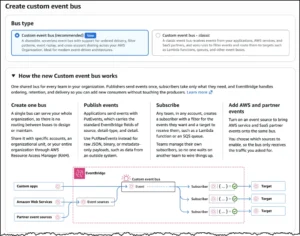
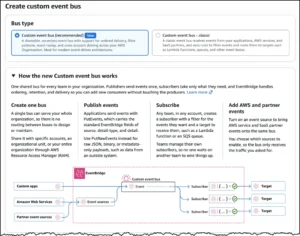
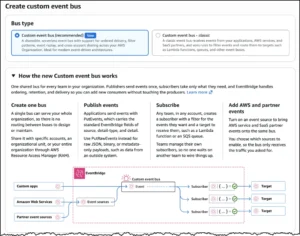
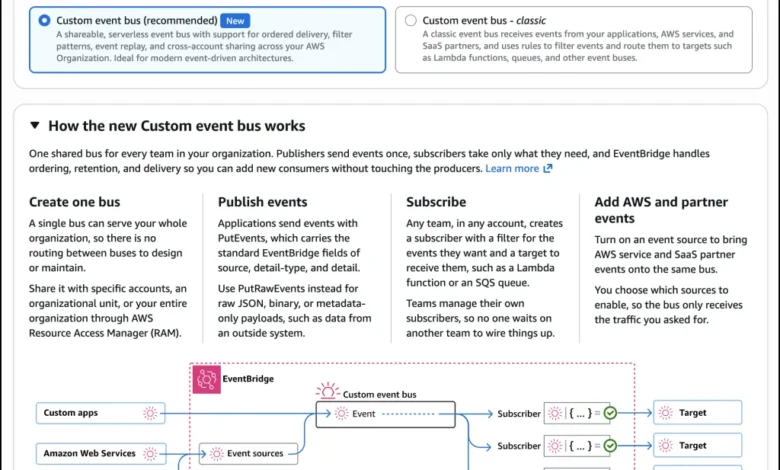
Addressing these enterprise-scale growing pains, Amazon Web Services has officially announced the launch of an enhanced custom event bus in Amazon EventBridge. Purpose-built for large organizations scaling event-driven applications across disparate teams and accounts, this new iteration introduces centralized sharing, robust event ordering guarantees, simplified Subscriber resources, content-based deduplication, JSONata transformation capabilities, and a streamlined ingress-egress pricing model.
The introduction of the enhanced custom event bus marks a significant milestone in the evolution of serverless infrastructure management, promising to alleviate the architectural workarounds that platform engineering teams have historically relied upon as their cloud footprints expanded.
The Architectural Evolution of Event-Driven Systems
To understand the significance of this release, it is necessary to examine how organizations naturally adopt serverless technologies. Typically, an enterprise begins its event-driven journey with a single custom event bus housed within a single AWS account. This straightforward architecture thrives when managed by a solitary team possessing deep visibility and total ownership over the code, the publishers, and the subscribers.
However, as cloud adoption accelerates across business units, enterprise governance best practices mandate a strict multi-account strategy. This framework dictates that individual teams operate within isolated, dedicated AWS accounts to enforce security boundaries, manage budgets independently, and limit blast radii.
To bridge the communication gap between these siloed accounts, developers previously had to implement complex cross-account rules or intricate bus-to-bus configurations. This workaround inadvertently reintroduced the very operational complexity that serverless architectures were originally designed to eliminate. Platform engineering teams found themselves struggling with a lack of visibility into subscription metrics, while cross-account and bus-to-bus routing charges compounded rapidly. Furthermore, teams requiring critical capabilities like strict event ordering were forced to abandon native serverless simplicity entirely, building burdensome internal workarounds or integrating external technologies to maintain sequence integrity.

Recognizing these systemic pain points, AWS engineering teams spent months developing a unified solution that balances decentralized publishing with centralized visibility and control.
Core Features and Technical Capabilities
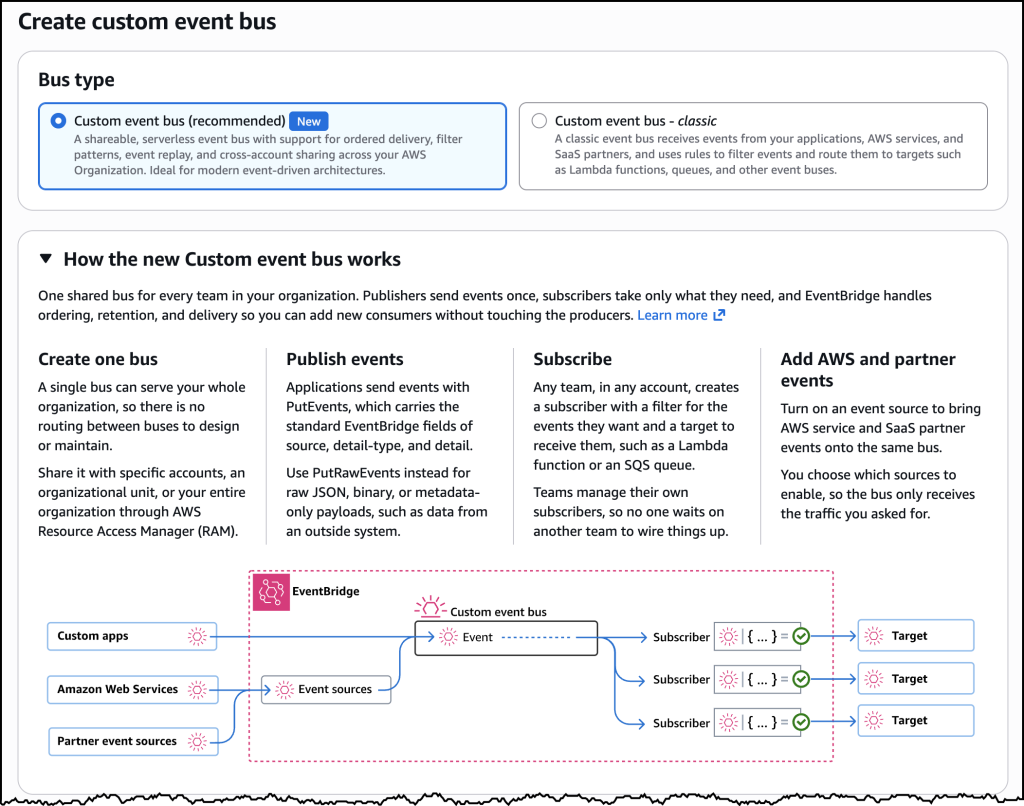
The newly introduced enhanced custom event bus fundamentally redesigns how organizations handle distributed events at scale. Rather than forcing teams to stitch together multiple independent buses across accounts, the enhanced custom bus enables the deployment of a single, centralized event backbone shared securely across all AWS accounts within an entire AWS Organization.
Seamless Organization-Wide Sharing via AWS RAM
Configuring the new bus is integrated directly into the AWS Management Console and supported natively through the AWS Command Line Interface (AWS CLI) and APIs. When creating the bus, platform administrators can enable event bus sharing limited strictly to their designated AWS Organization.
By leveraging AWS Resource Access Manager (AWS RAM), the infrastructure removes the administrative overhead of manually configuring cross-account permissions or complex routing tables. Platform teams can establish the bus as a single source of truth, while application-level teams can independently publish and subscribe to relevant events without waiting for infrastructure provisioning tickets to clear.
Crucially, the system features a default quota of 10,000 Subscribers per bus—with higher limits available upon request—drastically reducing architectural fragmentation caused by legacy subscriber constraints. Publishers can dispatch events uniformly without needing to maintain an exhaustive registry of downstream consumers, while subscribers curate their own intake parameters.
Granular Event Ordering and Synchronous Processing
While asynchronous design patterns remain the gold standard for event-driven resilience, certain business logic domains—such as financial transaction processing, IoT telemetry, and logistics routing—demand strict chronological sequencing. For instance, in a fleet management or logistics application, real-time driver location updates must arrive in precise sequence to prevent routing algorithms from making critical decisions based on stale or out-of-order data.
The enhanced custom event bus solves this challenge by supporting dual paradigms on a single bus. Publishers can attach an EventGroupId payload attribute to outgoing messages. EventBridge then guarantees sequential delivery of events sharing the same identifier to subscribers configured for ordered processing, while simultaneously permitting other consumers on the same bus to process events asynchronously without delivery blocks.

To support this reliable sequencing, the enhanced bus introduces native synchronous invocation for downstream targets such as AWS Lambda. This capability confirms successful downstream processing before acknowledging event receipt, effectively eliminating the common architectural anti-pattern of placing an Amazon Simple Queue Service (Amazon SQS) queue between an event bus and a Lambda function solely to enforce processing reliability.
Streamlined Subscriber Resources and Advanced Event Evaluation
Management of consumer logic has also been heavily streamlined. The new release debuts a unified "Subscriber" resource that consolidates event filtering patterns, target configurations, retry policies, and dead-letter queue (DLQ) destinations into a single, cohesive management entity. Previously, achieving this level of control required stitching together disparate rules, targets, and retry parameters across multiple console pages and cloud resources.
Additionally, the architecture addresses data hygiene through native content-based deduplication. Publishers can activate a setting that directs EventBridge to hash the meaningful payloads of incoming events, automatically detecting and dropping duplicate retries arriving within a five-minute window. This grants systems exactly-once delivery semantics for erratic sources lacking native idempotency tokens, replacing the traditional at-least-once delivery model.
For data transformation, subscribers can deploy JSONata expressions to reshape incoming payloads before they reach their final targets—extracting fields, altering keys, or computing derived values on the fly. Furthermore, for organizations utilizing Apache Avro or Protocol Buffers, EventBridge can natively deserialize these binary payloads into standard JSON, allowing fine-grained filtering and routing without requiring custom consumer-side parsing code.
A Predictable, Scale-Friendly Pricing Model
Financial governance is a primary concern for enterprise cloud architects. Under legacy multi-bus configurations, cascading charges for cross-account routing and inter-bus data transit frequently caught finance departments off guard.
The enhanced custom event bus introduces an equitable ingress and egress throughput pricing model. Under this structure, publishers pay strictly for events ingested into the bus, while subscribers pay for events delivered to their respective endpoints. This decouples publisher costs from subscriber consumption patterns and eliminates the compounded fees associated with complex multi-hop routing architectures. Existing legacy custom event buses remain fully functional and are designated in the console as "Custom event bus – classic," ensuring that current production workloads experience zero disruption while teams transition at their own operational pace.
Industry Implications and Market Analysis
Cloud industry analysts view the release of the enhanced custom event bus as a mature maturation step for AWS in the serverless space. As enterprise clients shift focus from initial cloud migration to deep optimization, governance, and cost-control, toolsets that remove administrative overhead without sacrificing flexibility are in high demand.
By collapsing multi-account routing complexity into a managed, organization-wide resource, AWS is directly challenging internal platform engineering burdens. Observers note that this feature set lowers the barrier of entry for complex event-driven architectures in heavily regulated industries—such as healthcare and finance—where auditability, ordering guarantees, and strict access controls are mandatory compliance requirements.
Furthermore, the integration of advanced transformation tools like JSONata and native schema deserialization signals a broader industry trend: shifting data-wrangling responsibilities closer to the ingestion and routing layer, thereby simplifying application codebases and accelerating developer velocity.
Availability and Getting Started
The enhanced custom event bus is available immediately across a broad footprint of global AWS Regions, including US East (N. Virginia, Ohio), US West (Oregon), Europe (Ireland, Frankfurt, Stockholm, Spain), and Asia Pacific (Hong Kong, Malaysia, Mumbai, Singapore, Sydney, Thailand, Tokyo).
Enterprise engineering teams can begin provisioning and evaluating the new architecture today via the AWS Management Console, AWS CLI, or programmatic API calls. Comprehensive documentation and migration guides are currently accessible via the official Amazon EventBridge developer portal.