President Trump Escalates Rhetoric on AI Safety Labeling Regulatory Concerns as Political Hoaxes

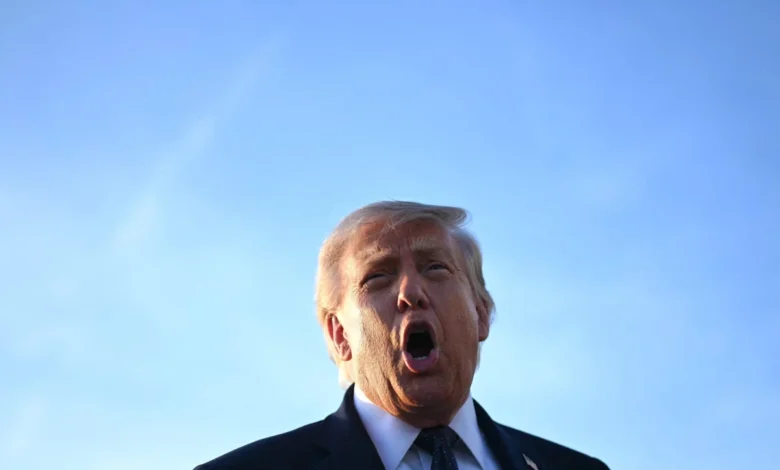
The growing discourse surrounding artificial intelligence safety has emerged as a central flashpoint in the current administration’s policy agenda, as President Donald Trump has formally characterized calls for increased oversight as part of a series of politically motivated hoaxes. The president’s recent assertions, disseminated through social media and public appearances, represent a significant pivot in the government’s approach to the rapidly evolving tech sector, signaling a preference for aggressive industrial expansion over restrictive safety frameworks.
This shift in tone follows months of mounting pressure from both legislators and independent researchers who argue that the rapid deployment of large-scale AI models poses systemic risks. However, the president maintains that these warnings are being weaponized by political opponents to stifle American technological dominance.
Chronology of the Regulatory Conflict
The current tension has been building throughout the year, punctuated by specific milestones in both industry development and government policy.
In March 2026, the administration saw a change in its internal advisory structure when venture capitalist David Sacks stepped down from his role as the administration’s AI and crypto czar. Sacks, a prominent voice in the Silicon Valley tech ecosystem, transitioned to a role as co-chair of the President’s Council of Advisors on Science and Technology. His departure marked a transition phase in how the White House coordinates its technological policy.
By May 2026, the rhetoric surrounding AI safety had begun to permeate public discourse, including academic and professional commencement ceremonies, where speakers increasingly debated the existential risks posed by machine learning. Throughout the summer, the focus shifted to the physical infrastructure required to sustain the AI boom. By July 14, 2026, New York State took the unprecedented step of halting all new permits for large-scale data center projects, citing environmental concerns and power grid capacity, a move the president later described as an attack on the industry.
The debate reached a fever pitch in September 2026. On September 9, a senior researcher at the AI firm Anthropic resigned, issuing a public warning that leading industry players were operating under the belief that current development trajectories could pose catastrophic risks to humanity by the end of the decade. This prompted a swift response from Anthropic CEO Dario Amodei, who released a "frontier pacing" plan on September 12, aimed at aligning development speeds with safety testing—a move endorsed by industry leaders including Sam Altman and Elon Musk.
The President’s Strategic Response
President Trump’s reaction to these developments has been multi-faceted. On September 17, 2026, he utilized his Truth Social platform to challenge the very terminology used in the field, suggesting that "Artificial Intelligence" is an "ineloquent" moniker. He proposed a rebranding of the technology to "Superior," "Extreme," or "Supreme Intelligence," framing the current naming convention as part of a broader, misunderstood narrative.
Shortly thereafter, the president explicitly linked the AI safety movement to his list of "Democratic hoaxes," placing it in the same category as past political controversies, including the Russia investigations and various impeachment proceedings. The president’s central thesis is that the narrative of AI risk is a manufactured distraction designed to undermine the economic and strategic advantages gained through the establishment of massive data centers.
"I will not stand by and let this happen," the president stated, framing the protection of the AI industry as a matter of national prestige. He announced plans to establish an "AI Force," an executive body modeled after the Space Force established during his first term. While specific mandates remain undefined, the administration has signaled that this force will be led by an "AI Czar," with the president explicitly noting that the position is reserved for "high I.Q. individuals."
Supporting Data and Industry Context
The skepticism surrounding AI is not strictly partisan, despite the president’s framing. The rapid expansion of data centers has triggered localized resistance across the United States. Data centers, which provide the computational backbone for LLMs (Large Language Models), are intensive consumers of both electricity and water. According to recent industry analyses, a single hyperscale data center can consume as much electricity as 80,000 households.
In regions like Northern Virginia, the "Data Center Alley," and parts of the Pacific Northwest, local governments have faced intense pressure from residents concerned about rising utility costs and the environmental footprint of these facilities. The New York moratorium serves as a bellwether for this localized opposition.
Conversely, the industry has pushed back against these regulations with significant lobbying power. At the All-In Summit, Nvidia CEO Jensen Huang publicly aligned with the president, stating that the industry would not permit a "slowdown." This unified front between the administration and industry titans underscores a growing divide between those who view AI as an existential threat and those who view it as the primary driver of 21st-century economic growth.
Implications for Future Governance
The emergence of an "AI Force" suggests that the administration intends to shift the governance of the technology away from traditional regulatory agencies—such as the Federal Trade Commission or the Environmental Protection Agency—and toward an executive-led, mission-oriented model.
The primary implication of this approach is the potential for reduced friction in the scaling of AI infrastructure. By labeling safety concerns as "hoaxes," the administration is effectively lowering the barrier for entry and expansion for major tech corporations. However, critics argue that this approach ignores the "immediate harms" of AI, such as algorithmic bias, labor displacement, and the proliferation of misinformation, which have been highlighted by academic institutions and civil rights groups.
Furthermore, the lack of clarity regarding the duties of the proposed AI Czar creates a period of regulatory uncertainty. If the mandate is purely promotional, the lack of guardrails could accelerate the pace of development beyond the reach of existing ethical frameworks. If, however, the AI Force is granted the authority to police the industry, it may find itself in conflict with the very companies it is tasked with supporting.
Conclusion: A Clash of Perspectives
The current situation represents a fundamental disagreement over the nature of technological risk. The administration views the AI sector as a sovereign asset, akin to the military or space program, which must be protected from "negative forces" that seek to introduce bureaucratic bottlenecks. Meanwhile, a coalition of researchers and state-level regulators views the sector as a public utility that requires rigorous oversight to prevent systemic failure.
As the administration prepares to appoint its new AI czar, the technology sector remains caught between the promise of unprecedented growth and the reality of mounting societal and environmental friction. The coming months will likely determine whether the "AI Force" acts as a facilitator for rapid deployment or if the mounting pressure from state legislatures and independent researchers will force a compromise that integrates safety into the core of American AI strategy. The outcome of this debate will undoubtedly shape the trajectory of global technological development for the remainder of the decade.