Microsoft Shatters Security Patch Records With Nearly 1,000 Fixes in Unprecedented September Update


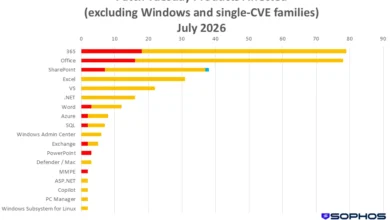
In a development that highlights both the accelerating pace of cyber-vulnerability discovery and the growing strain on enterprise IT departments, Microsoft Corp. released a massive security update package this month designed to remediate at least 974 distinct vulnerabilities across its ecosystem. This release, part of the company’s recurring "Patch Tuesday" cycle, marks the largest single volume of security patches ever deployed by the software giant in its history. The update addresses a wide array of products, ranging from core Windows operating systems to various server-side applications and developer tools, underscoring a year defined by an aggressive expansion in software flaw identification.
A Historic Escalation in Patch Volume
The September release represents a dramatic escalation from the previous record set just two months prior in July 2026, when Microsoft issued patches for 570 vulnerabilities. To put this year’s trend into perspective, the company has now addressed more than 2,600 vulnerabilities in the first three quarters of 2026 alone. This figure is already more than double the total for all of 2020, which saw 1,245 patches—a year previously considered an outlier in software security maintenance. With three months remaining in the calendar year, the industry is bracing for a total that could reach unprecedented heights, fundamentally shifting the operational requirements for system administrators and security teams worldwide.
The shift is largely attributed to the integration of Artificial Intelligence (AI) in the research and development phase of cybersecurity. Microsoft and other technology leaders, including Google, Cisco, and Adobe, have begun leveraging machine learning models to scan massive codebases for anomalies. While this technological leap is instrumental in identifying bugs before they can be weaponized by state-sponsored actors or criminal syndicates, it has simultaneously created a "patch fatigue" crisis for the organizations tasked with implementing these fixes.
Active Exploitation and Critical Vulnerabilities
Among the 974 vulnerabilities addressed this month, two have been identified as "zero-day" flaws, meaning they were actively being exploited in the wild prior to the patch release. CVE-2026-81963 and CVE-2026-85880 both allow unauthorized actors to elevate their privileges within a Windows system. Such vulnerabilities are particularly dangerous, as they typically serve as a second phase in a multi-stage attack, allowing a malicious actor to move from a standard user access level to administrative control, effectively granting them total reign over the compromised machine.
Of the total count, 113 vulnerabilities have been categorized as "critical." This classification signifies that the flaws can be leveraged to execute code remotely without any user interaction or, in some cases, without requiring the attacker to possess authentication credentials. Among these, CVE-2026-69730, a DNS-related weakness affecting Windows Server 2012 through modern iterations of Windows 10, stands out for its high risk. An unauthenticated attacker can trigger this vulnerability by sending a specially crafted packet to the server, potentially leading to a full system compromise.
Furthermore, CVE-2026-69829, a remote code execution (RCE) flaw within the Windows Shell, has been assigned a CVSS base score of 9.8 out of 10. Given that this vulnerability requires low attack complexity and no user interaction, security analysts suggest that it will likely be prioritized by botnet operators and ransomware gangs in the coming weeks.
The Human Toll of AI-Driven Patching
The rapid growth in patch volume has created a significant divide between the speed of automated vulnerability discovery and the human-intensive process of testing and deployment. Tyler Reguly, associate director of security research and development at Fortra, emphasized that for enterprise environments, the process is far from instantaneous.
"It’s time to put our CISOs and CSOs on notice," Reguly stated. "The current cadence of updates is becoming untenable for many organizations. When you are dealing with hundreds of patches, you cannot simply push them out to a production environment. You have to test for compatibility with third-party software, internal business applications, and legacy systems. This often necessitates weekend work, late-night deployment windows, and significant overtime for IT staff. Management needs to recognize the toll this takes on the human element of security."

Reguly’s comments reflect a growing sentiment within the IT sector: that the "patching treadmill" is accelerating faster than internal business processes can adapt. The necessity of testing is not merely a bureaucratic hurdle but a technical requirement; an improperly vetted patch can cause system instability, application crashes, or downtime that could cost a corporation millions of dollars in lost productivity.
Risk Contextualization: Separating Haystacks from Needles
Despite the staggering headline numbers, security experts urge organizations to avoid panic and instead focus on risk-based prioritization. Satnam Narang, senior staff research engineer at Tenable, suggests that while the sheer volume of vulnerabilities is growing, the number of truly "reachable and exploitable" flaws remains a smaller subset of the total.
"AI-assisted vulnerability discovery in 2026 is creating larger haystacks, but it isn’t necessarily finding more needles," Narang explained. "The risk to an organization is determined by whether a vulnerability exists on an internet-facing asset, whether it is currently being exploited by threat actors, and what the potential business impact would be if that system were compromised. Organizations must move away from the ‘patch everything as quickly as possible’ mindset and toward a risk-contextualized model."
This perspective is becoming the gold standard for modern cybersecurity operations. By utilizing vulnerability management platforms that integrate threat intelligence, organizations can filter out the noise of the hundreds of low-risk patches and focus their limited resources on the critical flaws that present an immediate and tangible danger.
The Broader Ecosystem and Future Outlook
Microsoft is not an isolated actor in this trend. The industry-wide push toward AI-led vulnerability identification has resulted in a broader shift in how software companies manage security lifecycles. Google, for instance, has recently announced plans to move to a bi-weekly security update cadence, reflecting a move toward more frequent, smaller patch drops rather than massive monthly bundles. This approach, while more manageable in terms of individual testing, requires a continuous-integration pipeline that many legacy enterprise systems are not currently equipped to handle.
For the average Windows user, the path forward remains straightforward: enabling automatic updates. However, for systems administrators and IT departments, the challenge is structural. The reliance on AI to find vulnerabilities has outpaced the industry’s ability to fix them, creating a widening "patch gap."
As we look toward the final months of 2026, the SANS Internet Storm Center and independent resources like AskWoody continue to provide essential breakdowns of the monthly releases. These resources remain critical for administrators who need to identify which patches are causing stability issues before they are deployed to production servers.
Conclusion: A New Era of Maintenance
The events of this month’s Patch Tuesday serve as a definitive marker in the history of software security. We have entered an era where the discovery of vulnerabilities is largely automated, while the mitigation of these risks remains fundamentally tied to human oversight and manual validation. This decoupling of speed and capacity is the central challenge of the modern cybersecurity landscape.
As corporations evaluate their 2027 budgets and staffing levels, the realities of this year’s patch volume suggest that security teams must be better resourced, more effectively automated, and strategically focused. Without a shift toward more robust testing automation and smarter prioritization frameworks, the growing volume of patches will continue to stress the infrastructure that powers the modern digital economy. The focus for organizations must now shift from the quantity of patches addressed to the quality and efficiency of their remediation programs.