The evolution of local artificial intelligence for software development has reached a significant milestone with the release of the Qwen3.8-3.6-27B-blend, a model engineered to balance high-level reasoning with the performance constraints of consumer-grade hardware. Developed by the JetBrains team behind the Junie coding assistant, this new model addresses a persistent friction point in the local AI landscape: the trade-off between the cognitive depth required for complex coding tasks and the latency that often renders such tools impractical for daily use.
The Development Chronology and Strategic Pivot
The development of the blend model follows a clear trajectory within the Junie Local roadmap. In the initial August 2026 launch, developers were forced into a binary choice. Users could opt for the Qwen3.6 architecture, which offered rapid, responsive performance but lacked the sophisticated reasoning capabilities necessary for intricate, multi-step coding problems. Alternatively, users could deploy the Qwen3.8 model, which possessed the required reasoning depth but necessitated a "thinking" mode that increased task completion time by approximately 400%.
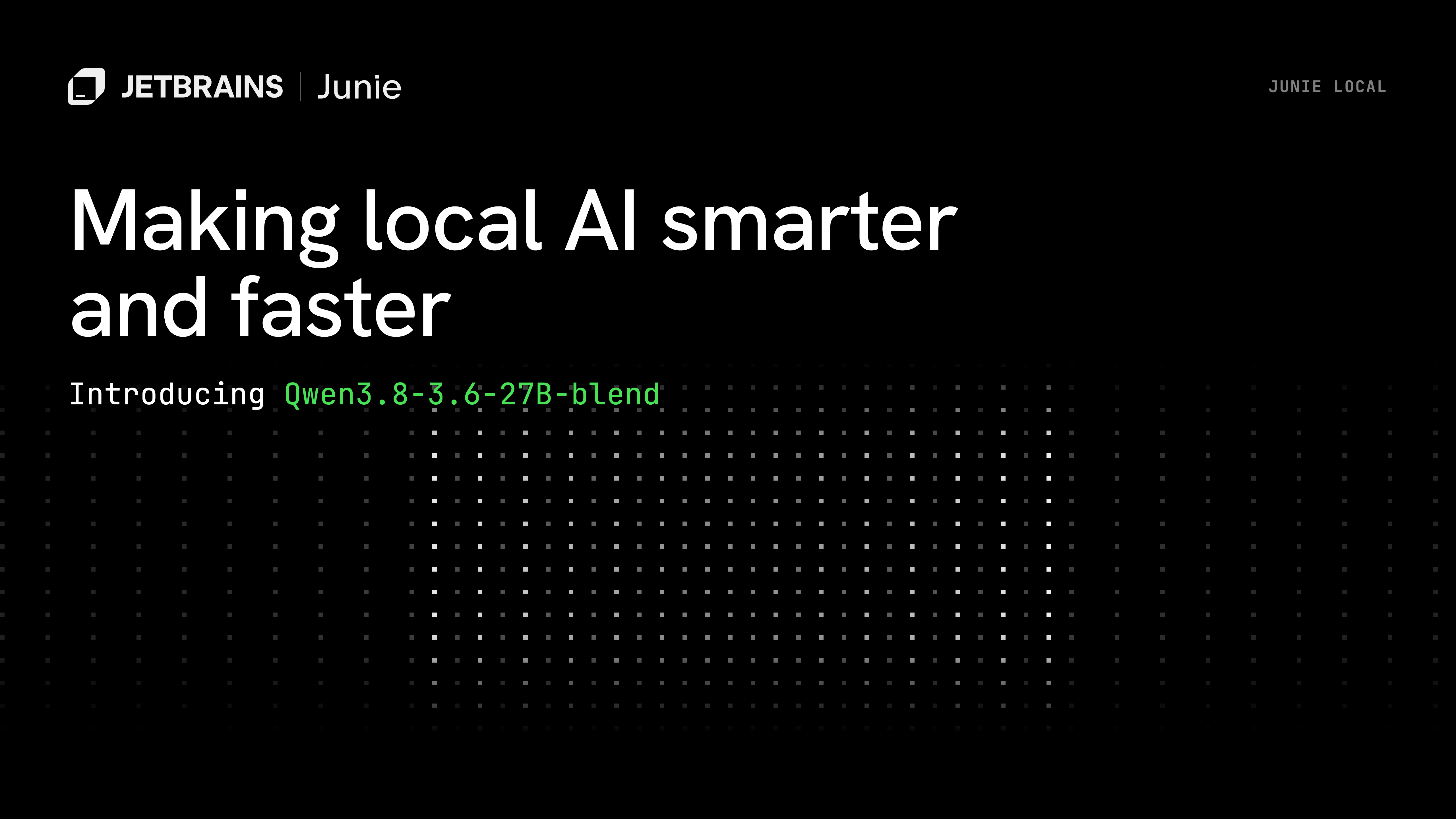
For developers operating on local machines, particularly laptops, the latter option was often untenable due to power consumption and time-to-completion overhead. The engineering team initiated the "blend" project as a direct response to user feedback, aiming to create a hybrid model that could bypass the need for extensive Chain-of-Thought (CoT) processing while maintaining a higher success rate than the baseline Qwen3.6. By merging the weight parameters of both models in equal proportions, the team created a 27B parameter model that requires no further post-training, effectively bridging the gap between speed and accuracy.

Performance Metrics and Token Efficiency
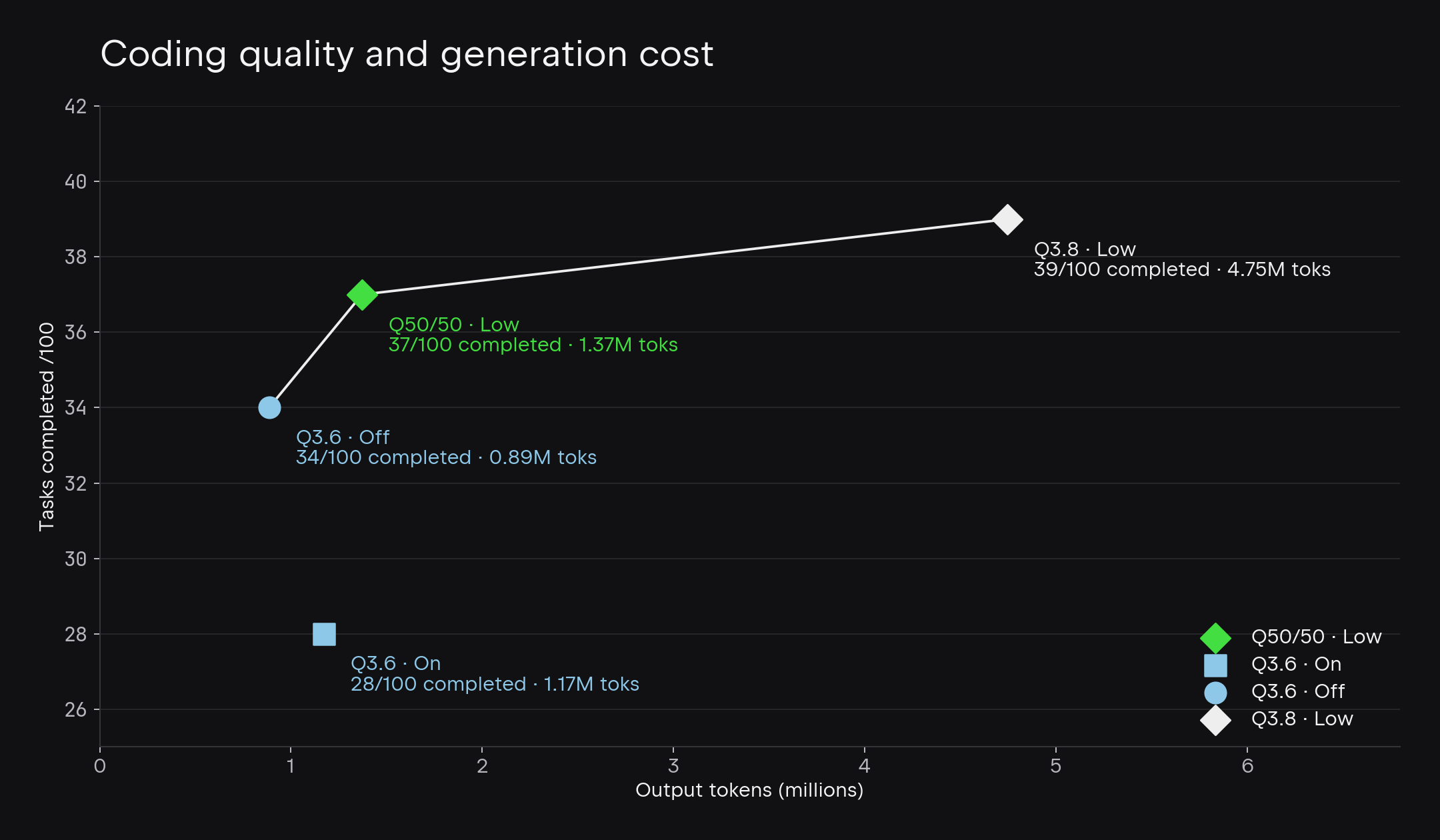
The efficacy of the Qwen3.8-3.6-27B-blend is best illustrated through its performance on internal benchmarks. In a controlled study of 100 distinct coding tasks, the blend model successfully resolved 37 tasks. While this falls slightly short of the 39 tasks completed by the fully-reasoning Qwen3.8, it represents a notable improvement over the 34 tasks completed by Qwen3.6.
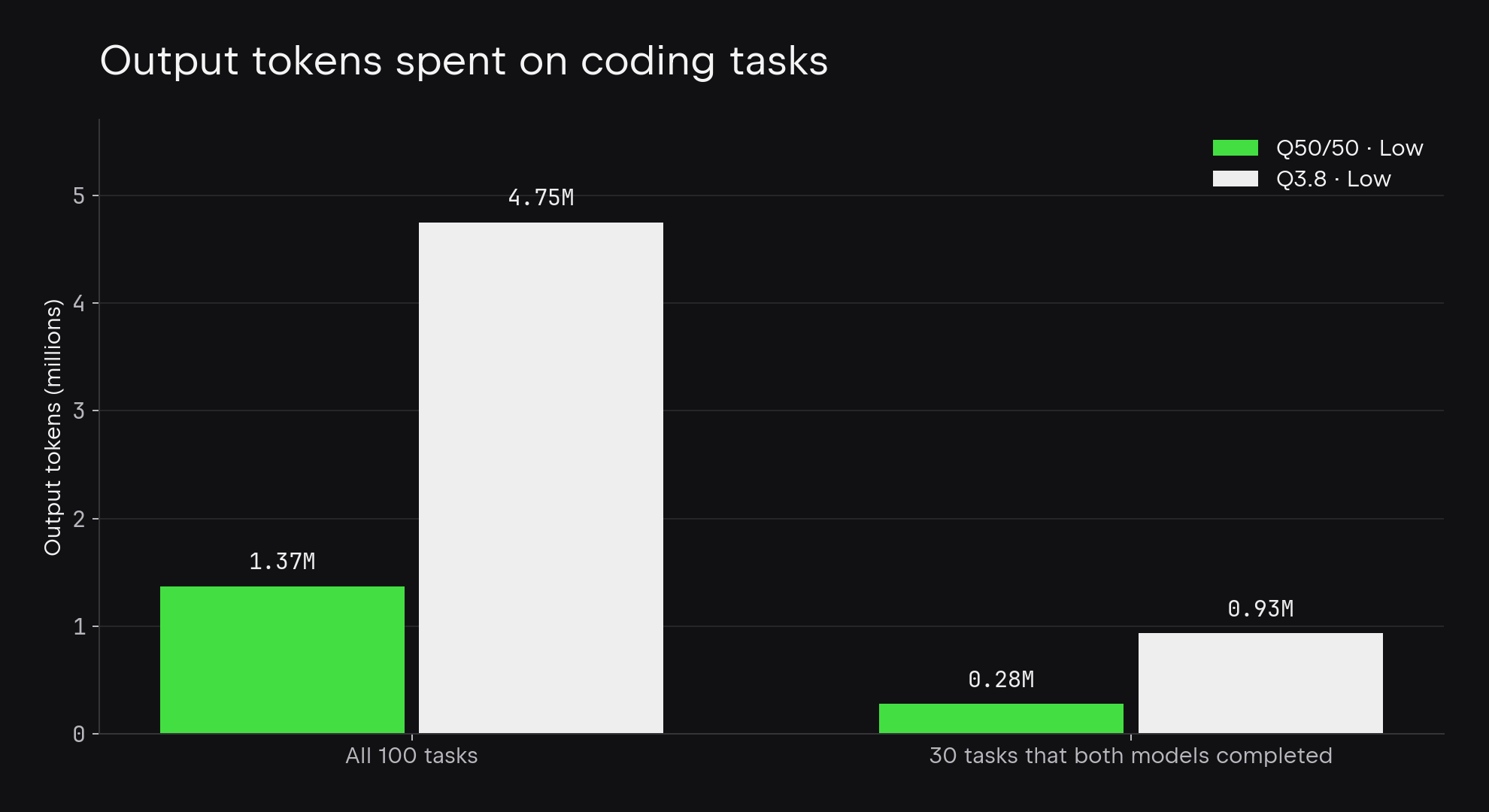
Crucially, the metric of "token output" provides the strongest evidence for the model’s efficiency. The blend model generated 71% fewer output tokens than the Qwen3.8 model during these evaluations. To ensure these savings were not merely a byproduct of the model "giving up" early on difficult tasks, researchers analyzed the 30 tasks completed successfully by both the blend and Qwen3.8. In this subset, the blend model utilized only 279,000 tokens, compared to 935,000 tokens for Qwen3.8. This reduction in token overhead not only saves computational cycles but also significantly decreases the time a user spends waiting for the agent to conclude its reasoning process.
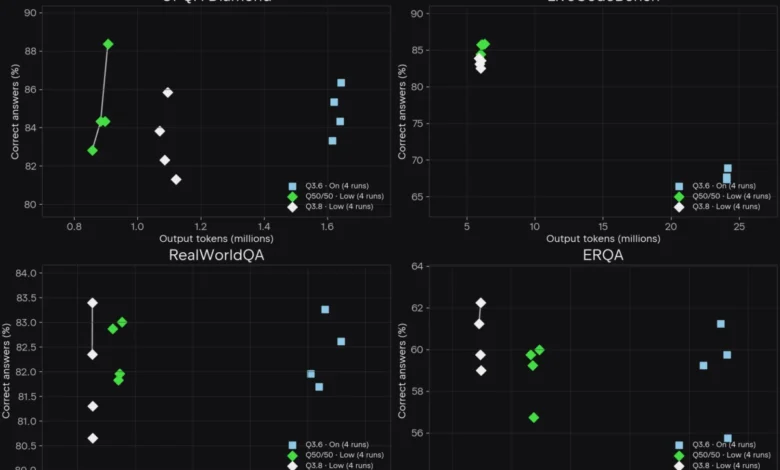
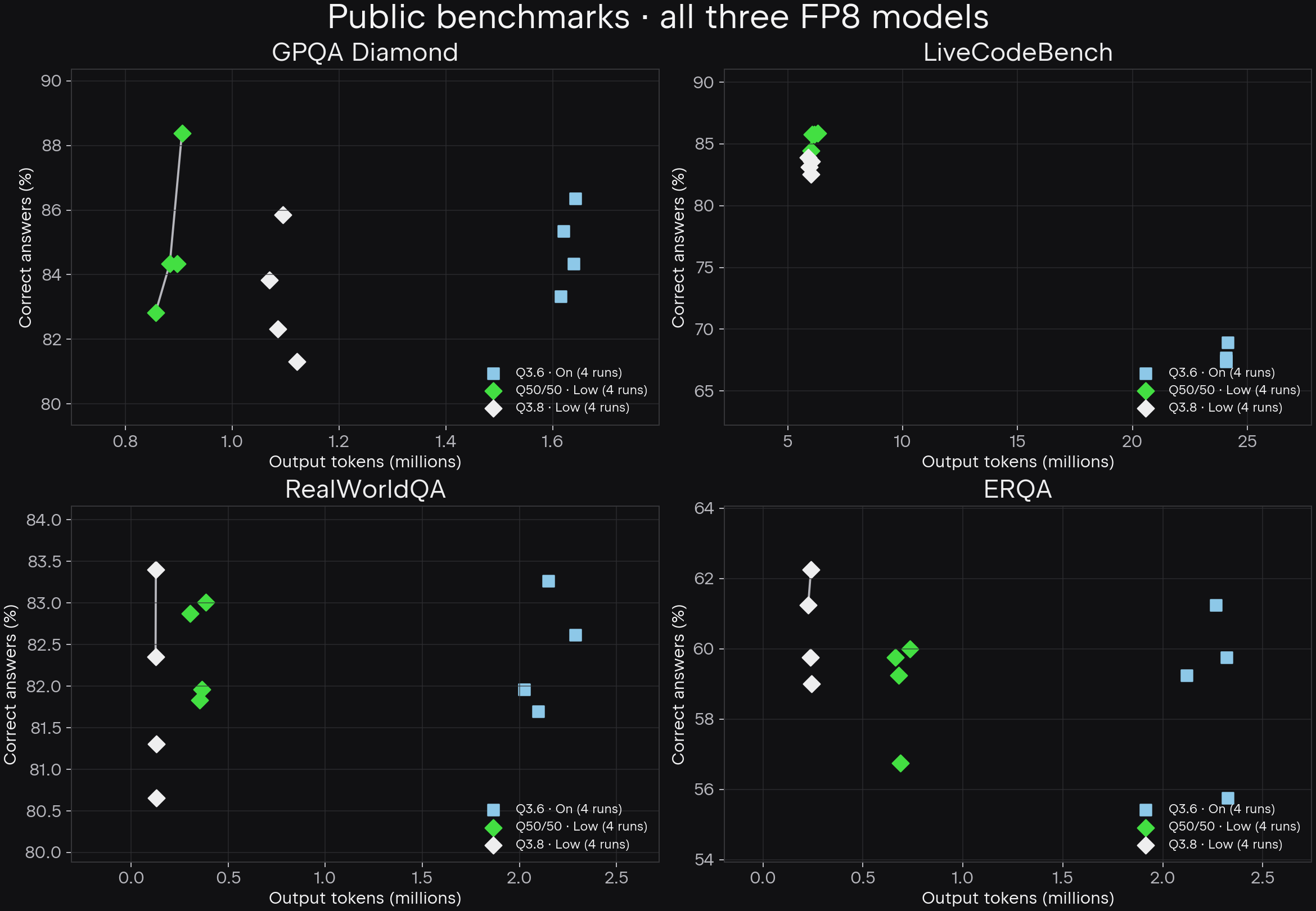
Further validation was sought through LiveCodeBench, a standard public benchmark. Over four iterative testing runs, the blend model achieved an average success rate of 85.47%, outperforming the 83.29% recorded by Qwen3.8. The efficiency gap remained stark, with the blend model requiring roughly 6.14 million tokens per pass, compared to the 24.1 million tokens necessitated by the Qwen3.6 configuration.
Optimization of the Inference Runtime
Beyond the model weights themselves, the JetBrains team has focused heavily on the runtime architecture, specifically through the refinement of Multi-Token Prediction (MTP). MTP functions by utilizing a lightweight subnetwork—the MTP head—to propose multiple potential tokens in a single forward pass, which the primary model then verifies.
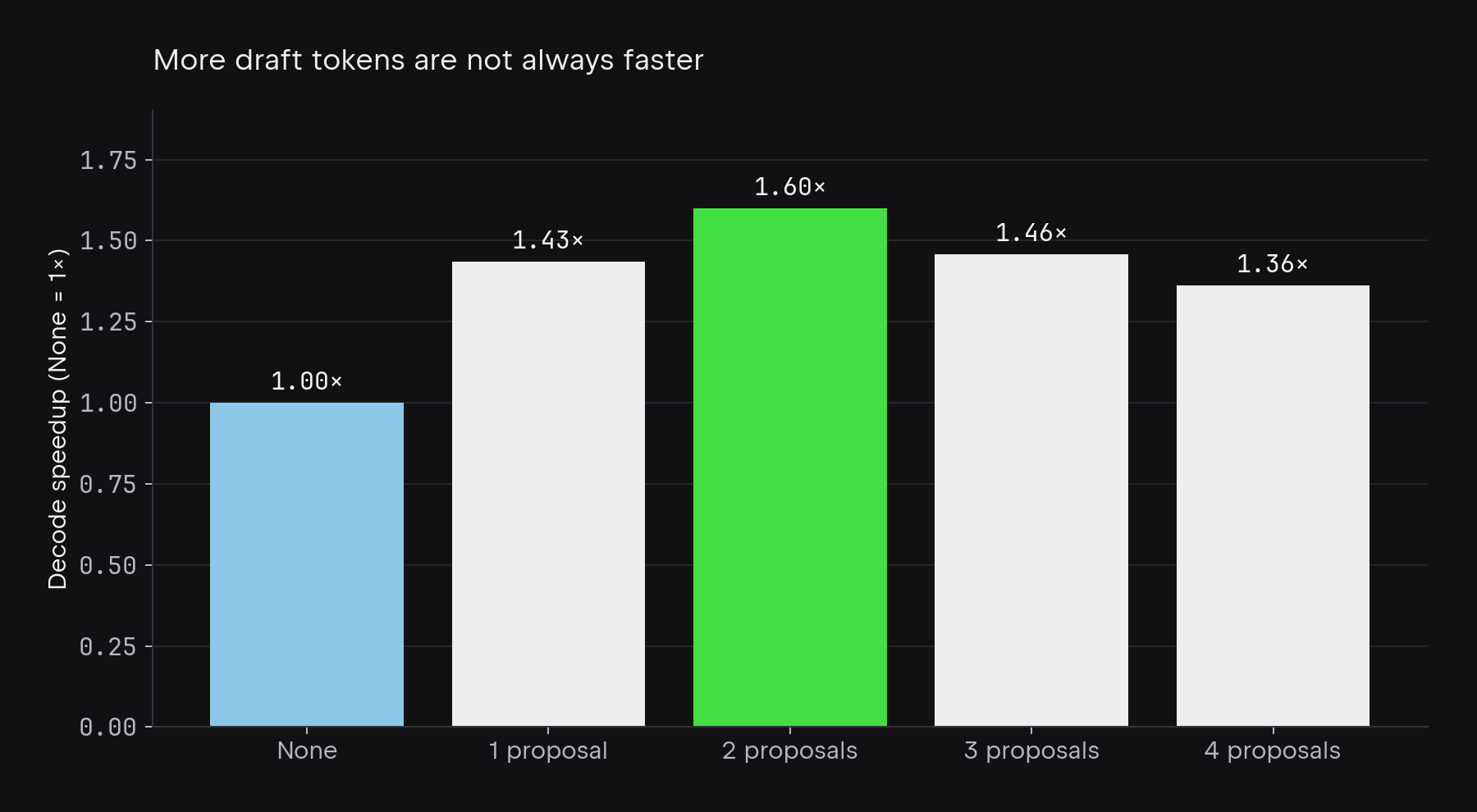
Testing on the M5 MacBook Pro revealed that the "sweet spot" for MTP is proposing two tokens per round, which yields a 60% increase in decoding speed. Increasing this proposal count to four tokens actually resulted in a performance degradation, as the overhead of verifying the additional tokens on the GPU outweighed the benefits of the successful predictions.
Data further indicated that the precision of the MTP head itself is a critical variable. Comparisons between a four-bit (Q4) and an eight-bit (Q8) MTP head showed minimal difference in acceptance rates (63.0% for Q4 vs. 63.6% for Q8). Given that the Q8 head provides no consistent speed advantage while consuming more memory, the team has standardized the Q4 configuration for the current release. GPU profiling identified that as context length increases, the attention calculation becomes the primary bottleneck, rising from 8.4ms to 40.2ms per round. Addressing this latency in long-context sessions remains a primary objective for future development.
Challenges in Evaluation: The Seed Instability Phenomenon
A critical insight gained during the development process involved the role of random seeds in evaluation. Initially, researchers used static random seeds to ensure tests were reproducible. However, this introduced a form of "numeric instability." Because the model’s sampler was receiving the same random input for every attempt, it often fell into a loop, repeatedly attempting the same failed strategy even when the environmental prompt had evolved.
The Qwen3.8 architecture was found to be particularly susceptible to this behavior. By modifying the evaluation pipeline to advance the random seed at every agent step and reflection attempt, the team was able to ensure reproducibility while allowing the model to explore diverse paths toward a solution. This correction underscores the importance of stochasticity in agentic AI—if an agent is too deterministic, it can become "stuck" in a sub-optimal logic loop.
Broader Implications and Future Accessibility
The implications of this update extend beyond the immediate performance gains for the Junie assistant. By making a 27B model highly performant on standard hardware, the industry is seeing a shift toward "local-first" AI development, which prioritizes user privacy, data security, and reduced reliance on expensive cloud-based inference endpoints.
For the developer community, this represents a shift in the economics of coding agents. As inference costs for high-reasoning models have historically been high, the ability to run equivalent logic locally effectively democratizes access to sophisticated coding tools. Furthermore, the expansion of Junie Local to include experimental support for NVIDIA RTX cards (Ampere architecture and newer) on Windows marks the platform’s transition from a macOS-centric tool to a cross-platform solution.
Looking forward, the research team has identified "overthinking" as a residual challenge. In instances where the model struggles, it often generates excessively long chains of thought without making progress. Data suggests that the current model could potentially reduce its reasoning path length by nearly 25% without sacrificing accuracy, a finding that will likely guide future distillation and reinforcement learning experiments.
As of the current release, Apple M5 users can access the updated model via the standard command-line interface, while Windows users can access the experimental build via the nightly channel. This update not only provides an immediate toolset for developers but also highlights the ongoing technical synthesis between model architecture, runtime optimization, and rigorous evaluation methodologies. The transition from large, opaque, cloud-reliant models to transparent, locally-optimized architectures remains a pivotal trend in the field of artificial intelligence engineering.