OpenAI Enters Hardware Market with Micro Keypad Amid Legal Conflict and Mixed Industry Reception

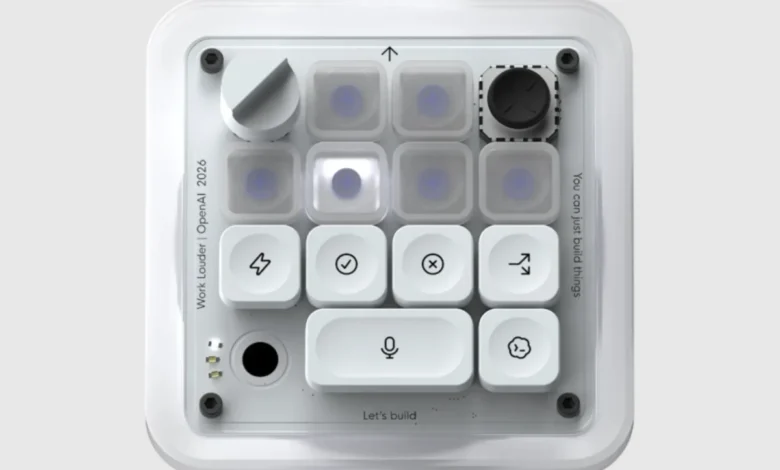
OpenAI, the San Francisco-based artificial intelligence research laboratory, has officially transitioned from a software-centric entity into a hardware manufacturer with the release of its first physical device: a specialized keypad named "Micro." Developed in a strategic partnership with Work Louder, a boutique designer known for high-end, artisanal mechanical keyboards, the Micro is positioned as a productivity tool specifically engineered to streamline interactions with ChatGPT and OpenAI’s agentic coding tool, Codex. While the device represents a milestone in OpenAI’s corporate evolution, its debut arrives during a period of intense legal scrutiny and market skepticism, as the company faces a high-stakes trade secret lawsuit from Apple and pushback from the developer community regarding the product’s price-to-utility ratio.
The Genesis and Technical Specifications of Micro
The Micro is essentially a "macropad"—a compact, secondary keyboard designed to trigger specific macros or commands. In this instance, the hardware is deeply integrated with OpenAI’s ecosystem. The device features a minimalist, industrial design consisting of twelve primary keys. The top row contains six "frosted" agent keys, which users can map to specific "agentic" tasks. Within the context of modern AI, "agents" are autonomous or semi-autonomous programs that can execute multi-step workflows, such as writing code, debugging, or summarizing long-form documentation.
Below the agent keys are six command keys intended for direct software manipulation. The hardware supports both Bluetooth connectivity and a wired USB-C interface, allowing it to integrate into various workstation setups. One of the standout physical features of the Micro is its build quality. Weighing significantly more than standard plastic peripherals, the device has been described by early reviewers as having a "sturdy, paperweight-like" density, suggesting a focus on durability and premium materials common in the mechanical keyboard enthusiast community.
A central functional element of the Micro is its dedicated voice dictation button. By holding this key, users can bypass manual typing and provide verbal instructions directly to ChatGPT. Once the dictation is complete, an adjacent "send" button submits the prompt. This workflow is intended to reduce the friction of AI interaction, moving the user experience away from traditional text-entry boxes and toward a more fluid, conversational interface.
The Aesthetics of Influence: The Apple Connection
Industry observers have noted that the Micro’s presentation—from its immaculate white packaging to its sleek, minimalist aesthetic—closely mirrors the design language of Apple Inc. This "Apple-coded" branding is particularly noteworthy given the current relationship between the two companies. For years, OpenAI has been poaching talent from Silicon Valley’s established giants, including several high-profile hardware engineers from Apple.
The aesthetic similarities are more than skin-deep. Reports have surfaced that OpenAI is simultaneously developing a screenless smart home speaker capable of autonomous movement, a project reportedly led by former Apple engineers. This suggests that the Micro is not a one-off novelty but the first step in a broader hardware roadmap intended to embed OpenAI’s software into the physical environments of its users.
Legal Headwinds: The Apple vs. OpenAI Trade Secret Lawsuit
The launch of the Micro has been overshadowed by a significant legal battle. In July 2026, Apple filed a comprehensive lawsuit against OpenAI, alleging the theft of trade secrets. The litigation centers on claims that OpenAI recruited former Apple employees specifically to gain access to proprietary hardware designs and integrated AI technologies.
Legal experts suggest that this battle could set a precedent for the "AI hardware" era. As tech companies race to build dedicated devices for artificial intelligence—such as wearable pins, smart glasses, and specialized controllers—the intellectual property surrounding the integration of local hardware with cloud-based LLMs (Large Language Models) has become a primary battlefield. Apple’s lawsuit argues that OpenAI’s hardware ambitions are built upon a foundation of misappropriated technical knowledge, a charge OpenAI has vowed to fight.
A Chronology of OpenAI’s Hardware Evolution
The path to the Micro began long before its official release last week. To understand the significance of this launch, one must look at the timeline of OpenAI’s expanding footprint:

- Late 2023: Rumors begin to circulate regarding a "dream team" hardware collaboration between OpenAI CEO Sam Altman and legendary former Apple designer Jony Ive.
- Early 2024: OpenAI begins hiring specialized mechanical and electrical engineers, signaling a shift toward internal hardware R&D.
- Mid-2025: Strategic partnership with Work Louder is established to create a "tactile interface" for the GPT-5 era.
- July 2026: Apple files its trade secret theft lawsuit against OpenAI, specifically targeting the hardware division.
- August 2026: OpenAI launches the Micro keypad, marking its official entry into the consumer electronics market.
Market Reception and User Feedback
Despite the hype surrounding OpenAI’s first piece of hardware, the initial reception from the professional developer community—the device’s primary target audience—has been decidedly mixed. On platforms like Reddit and specialized coding forums, the Micro has faced criticism regarding its $230 price point.
Critics argue that the Micro offers little functionality that cannot be replicated by existing, more affordable alternatives. For example, many "power users" already utilize devices like the Elgato Stream Deck or custom QMK/VIA-compatible mechanical macro pads, which retail for significantly less and offer greater customization across multiple software applications. One review from the independent tech outlet Aftermath described the device as feeling "engineered to piss me off," citing the high cost and the perceived redundancy of the hardware for those already proficient with keyboard shortcuts.
However, proponents of the device argue that the value lies in the deep, native integration with OpenAI’s "agentic" ecosystem. The Micro’s software interface allows users to customize the brightness of the key LEDs and assign specific projects or ChatGPT sessions to individual keys. The device uses a color-coded feedback system:
- White: The agent is idle or ready.
- Blue: The AI is currently processing or "thinking."
- Green: The task has been successfully completed.
- Red: An error has occurred in the workflow.
For users who manage dozens of simultaneous AI-driven projects, this visual feedback loop provides a layer of ambient information that a standard screen interface might lack.
Analysis: The Strategy Behind the Hardware
From a business perspective, the Micro serves a dual purpose. First, it acts as a "loyalty lock-in" mechanism. By selling a $230 physical peripheral that only works at peak efficiency with ChatGPT, OpenAI is encouraging its most active users to remain within its ecosystem. Second, the Micro serves as a low-stakes pilot program. Hardware is notoriously difficult and capital-intensive; by starting with a simple macro pad rather than a complex smartphone or home robot, OpenAI can refine its supply chain, distribution, and hardware-software integration before moving on to more ambitious projects.
The decision to partner with Work Louder also reflects a desire to appeal to the "artisanal" tech market. There is a growing segment of professionals who view their workstations as a form of personal expression, prioritizing tactile feel and aesthetic coherence. By branding the Micro as a boutique, limited-run novelty, OpenAI avoids the pressure of needing to achieve "iPhone-level" sales numbers immediately.
Broader Implications for the AI Industry
The release of the Micro signifies the beginning of the "post-app" era of AI. For the past several years, the industry focus has been on making LLMs more capable and accessible via web browsers and mobile applications. Now, the focus is shifting toward "agentic" hardware—physical tools that allow AI to act as an autonomous assistant rather than just a chatbot.
If OpenAI can successfully defend itself against Apple’s legal challenges and prove that there is a market for dedicated AI peripherals, it could trigger a wave of similar products from competitors like Anthropic or Google. The "agentic" future implies a world where users no longer navigate menus or type long prompts but instead tap physical triggers to initiate complex, multi-stage digital tasks.
Conclusion
The OpenAI Micro is a polarizing debut. To its detractors, it is an overpriced accessory that solves a problem that does not exist. To its supporters, it is a beautifully crafted tool that hints at a more tactile, efficient future for human-AI collaboration. Regardless of its commercial success, the Micro has established OpenAI as a hardware player to be reckoned with, setting the stage for a long-term rivalry with Apple that will likely be settled in both the courtroom and the consumer marketplace. As the company continues to develop its rumored smart home devices and "agentic" systems, the Micro will be remembered as the sturdy, clicky foundation upon which OpenAI built its physical empire.
Related posts: