Unlocking Seamless Markdown Publishing: How Docsify-This Eliminates Website Setup and Transforms Digital Content Delivery

The modern landscape of digital content creation has long been defined by a friction-heavy paradox: while lightweight markup languages like Markdown offer unparalleled simplicity for drafting text, publishing that content typically demands complex website setup, static site generators, and tedious build pipelines. For educators, technical writers, and corporate knowledge managers seeking to distribute documentation without wrestling with hosting architecture, this barrier has remained stubbornly high. Enter Docsify-This, an innovative open-source project designed to bridge the gap between raw text repositories and dynamic web delivery. By leveraging the underlying capabilities of Docsify.js, the utility instantly transforms publicly hosted Markdown files into responsive, standalone web pages or multi-page mini-sites entirely on the fly, bypassing traditional deployment workflows.

The genesis of Docsify-This reflects a broader industry movement toward decoupled publishing architectures and decentralized content management. Over the past decade, Markdown has evolved from a niche hobbyist format into the universal lingua franca for developers, technical authors, and open-source communities. However, displaying Markdown outside of specialized platforms like GitHub or dedicated static sites historically required setting up complex Node.js environments or maintaining server infrastructure. Recognizing this inefficiency, creator Paul Hibbitts engineered Docsify-This to act as a dynamic rendering layer. By pointing the service to a raw Markdown file hosted on platforms like GitHub or Codeberg, users can generate a shareable URL instantly. This approach mirrors the architectural shift seen in API-first and headless content management systems, where the presentation layer is decoupled from content creation, allowing authors to focus exclusively on drafting material.
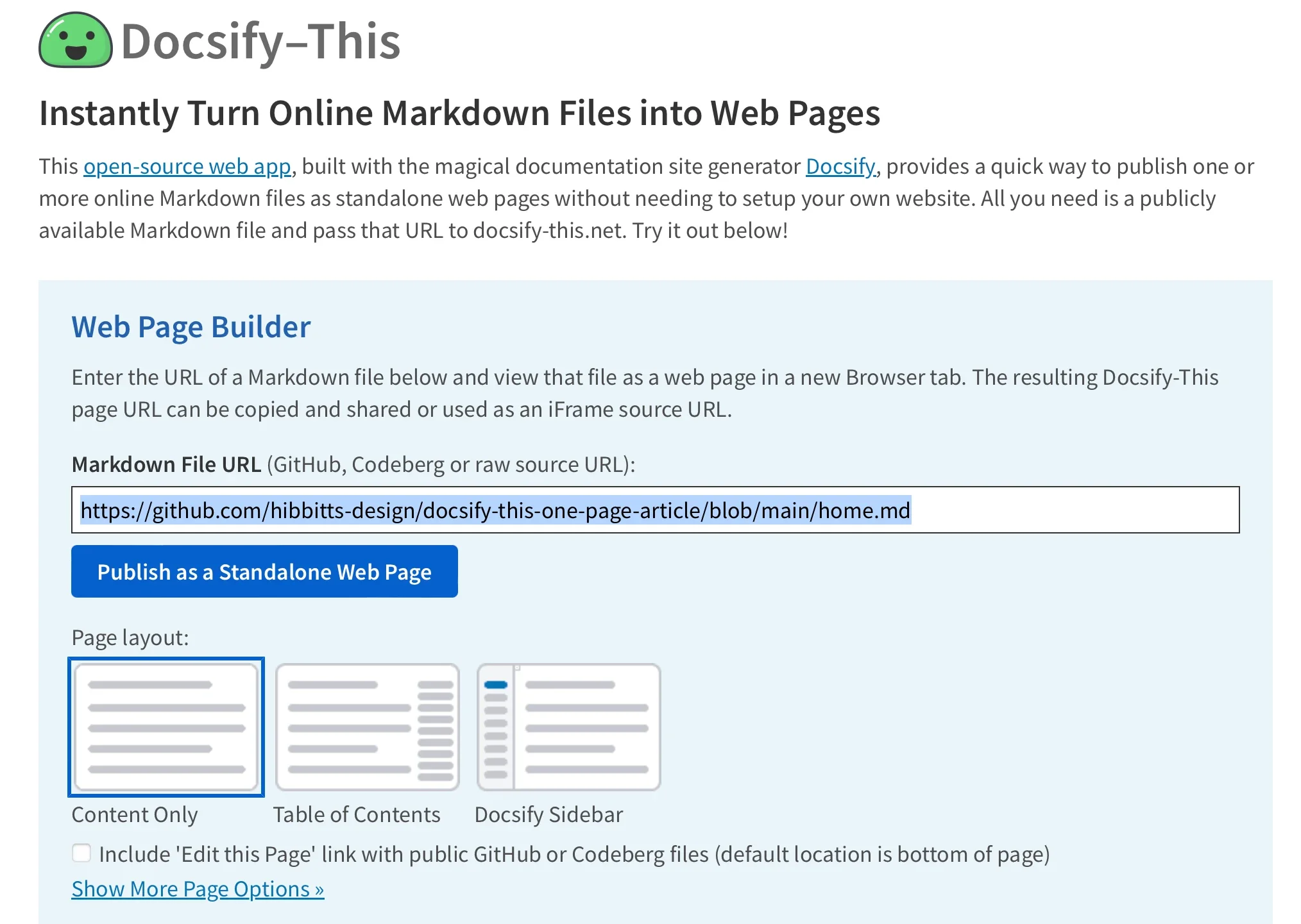
At its technical core, Docsify-This operates through a straightforward yet powerful URL parameter structure and a graphical Web Page Builder interface. When an author inputs a repository path and a target filename into the public or self-hosted instance of Docsify-This, the application fetches the raw text and renders it dynamically within a responsive single-page application framework. Beyond basic rendering, the platform provides granular control over visual presentation through standard cascading style sheet parameters appended directly to the URL. Administrators can dynamically alter typography, font sizes, line heights, and link colors to match external branding guidelines without modifying the underlying source files. Furthermore, the tool supports specialized Markdown CSS classes, enabling authors to turn ordinary text links into interactive buttons or apply custom styles—such as multi-column layouts using standard HTML snippets—directly within their documents.
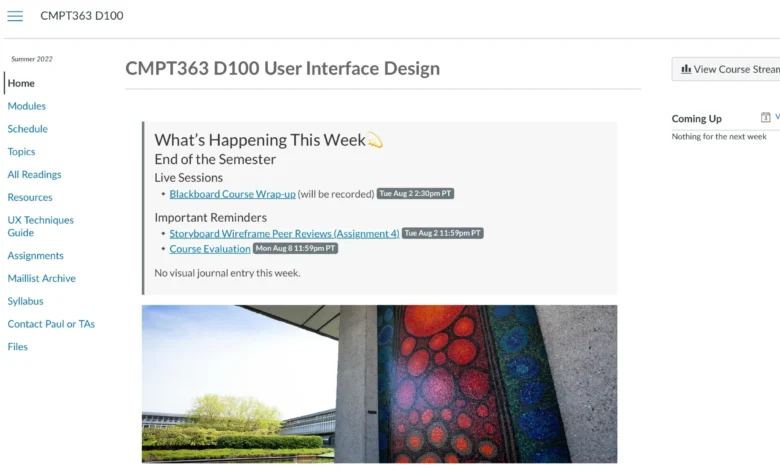
The implications of this rendering model extend profoundly into the realms of education and enterprise resource management, particularly regarding integration with Learning Management Systems (LMS) and Content Management Systems (CMS). Platforms such as Canvas and Moodle are notorious for presenting rigid, siloed interfaces that make updating course materials or centralized policy documents a cumbersome chore. Docsify-This solves this integration challenge by allowing rendered pages to be seamlessly embedded via standard iFrames or linked directly through external navigation tools like the Canvas Redirect Tool. By embedding a Docsify-This instance, an instructor or administrator can update a Markdown file in a GitHub repository, and the changes will instantly propagate across every LMS course or corporate portal where the page is embedded, eliminating the need for manual file re-uploads or redundant content updates.
Adoption of the platform has been particularly strong within academic institutions and open-source documentation teams seeking collaborative, version-controlled workflows. Because Docsify-This integrates natively with Git hosting services, administrators can enable an optional "Edit this Page" link on every rendered document. When clicked, this link directs users straight to the source repository on GitHub or Codeberg, fostering a collaborative authoring environment where peers, students, or community members can propose revisions via pull requests. This workflow harnesses established developer tools—such as GitHub Desktop, Git-Cola, SparkleShare, and modern code editors like Visual Studio Code or Pulsar Edit—bringing robust version control practices to non-traditional documentation tasks such as syllabus creation, policy handbooks, and community knowledge bases.
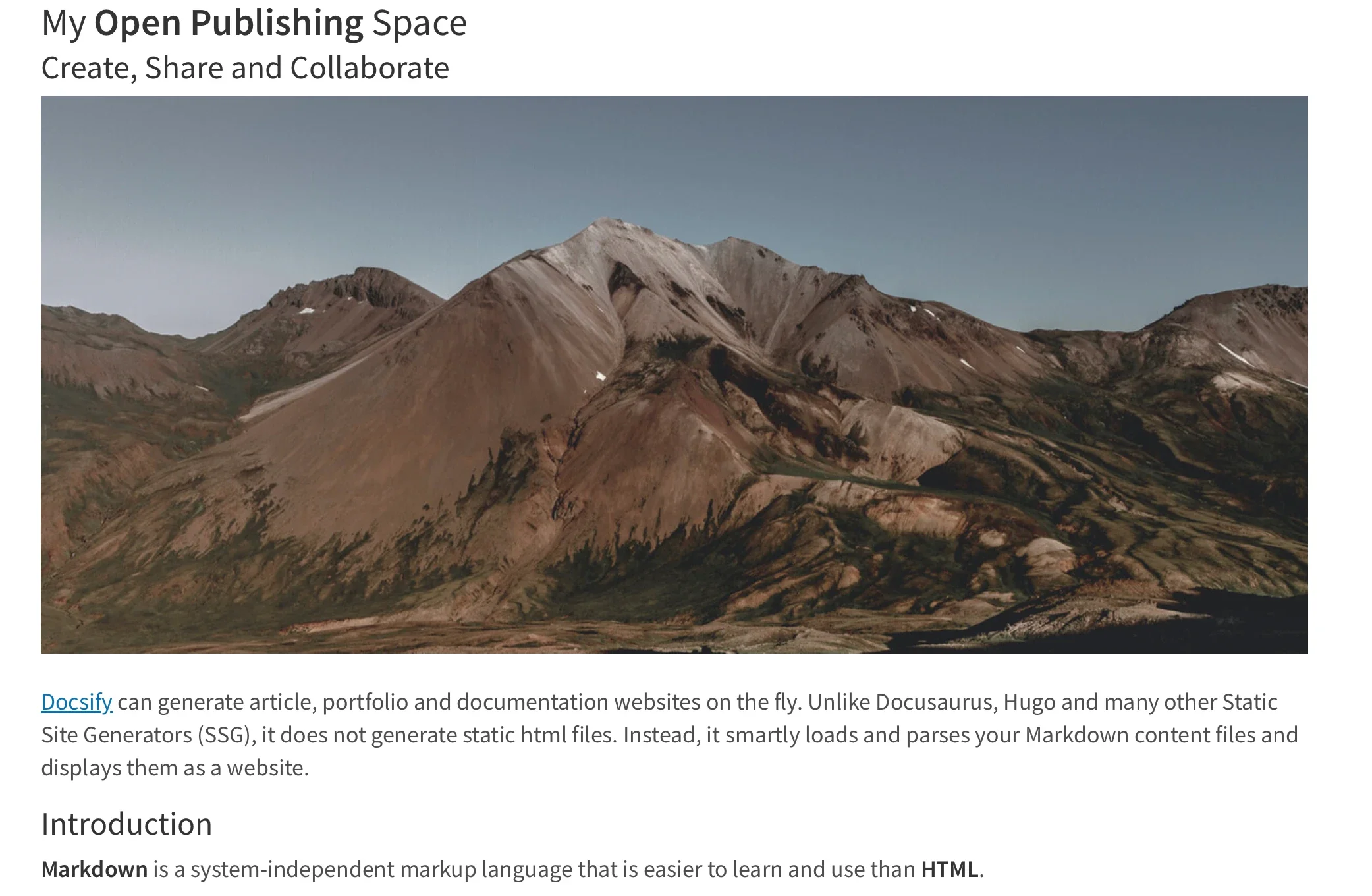
Security, data privacy, and the avoidance of platform lock-in represent additional pillars of the Docsify-This architecture. As a fully open-source solution, organizations are not restricted to using the public domain instance hosted at docsify-this.net. Enterprises and educational institutions with strict data governance policies can readily deploy their own private or public instances of Docsify-This on custom domains using internal infrastructure. This self-hosting capability guarantees operational continuity, ensuring that content delivery remains uninterrupted even if third-party services experience downtime or policy shifts. By maintaining ownership over both the rendering engine and the underlying Git repositories, organizations achieve complete sovereignty over their digital publishing pipelines.
Industry analysts reviewing the current trajectory of content management tools note that solutions like Docsify-This point toward a future where infrastructure complexity is increasingly abstracted away from content creators. As organizations face mounting pressure to deliver timely, accurate information across a sprawling ecosystem of digital touchpoints—ranging from corporate intranets to specialized learning platforms—the demand for lightweight, adaptable publishing tools will only accelerate. By removing the technical friction traditionally associated with web deployment, Docsify-This democratizes advanced publishing capabilities, empowering subject matter experts to share structured, beautifully styled knowledge with minimal overhead and maximum flexibility.
Related posts: