Daemonarchy brings the modern desktop experience to FreeBSD with AI-assisted development

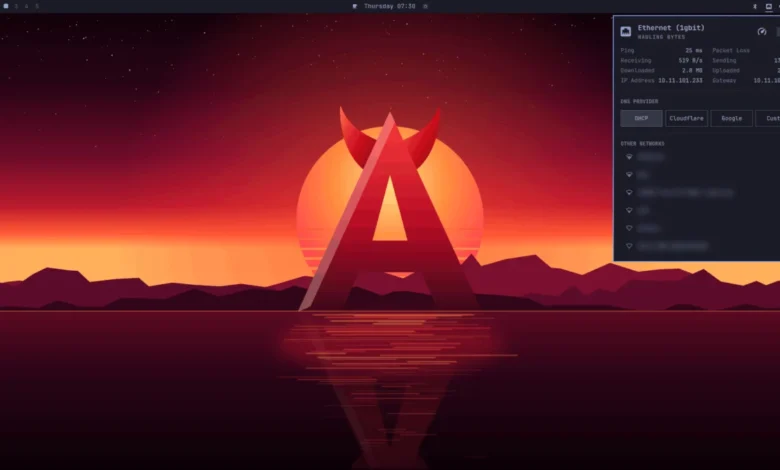
The landscape of open-source operating systems has shifted significantly with the release of Daemonarchy, a new distribution that bridges the historical robustness of the Berkeley Software Distribution (BSD) with the streamlined, contemporary desktop experience popularized by modern Linux distributions. Spearheaded by Jordan Hubbard—a co-founder of the FreeBSD project—this initiative represents a bold experiment in rapid development, leveraging advanced generative artificial intelligence to port the Omarchy desktop environment onto a FreeBSD 16.0-CURRENT foundation.
The Genesis of a Hybrid Vision
The motivation behind Daemonarchy is rooted in a growing demand from the community for a FreeBSD user experience that rivals the aesthetic and functional accessibility of modern Linux distributions like Arch Linux. For decades, FreeBSD has maintained a reputation for technical excellence, stability, and its sophisticated networking stack, yet it has often been perceived as having a steeper learning curve compared to user-centric Linux distributions.
Jordan Hubbard, responding to direct community feedback on professional networking platforms, sought to address the persistent question: Why should FreeBSD remain difficult to deploy or visually archaic when modern tools exist to simplify the process? This inquiry led to the creation of Daemonarchy. By utilizing OpenAI’s GPT-Astra 6, Hubbard was able to architect the core framework of the distribution in under two hours. While this rapid initial phase relied on AI-driven code generation, the project underscores a hybrid methodology, where automated intelligence provides the scaffolding, while human expertise—specifically through the use of Poudriere for package validation—ensures the rigorous standards of the FreeBSD ecosystem are maintained.
Chronology of Development
The project is remarkably young, having emerged only weeks ago. Despite its infancy, the development cycle has been characterized by high velocity. Following the initial proof-of-concept, the team moved quickly to integrate the project into the broader FreeBSD ports tree. This move is significant; by pushing the necessary ports upstream, the developers have ensured that Daemonarchy is not merely a standalone ISO but a set of enhancements that can be applied to an existing FreeBSD installation.
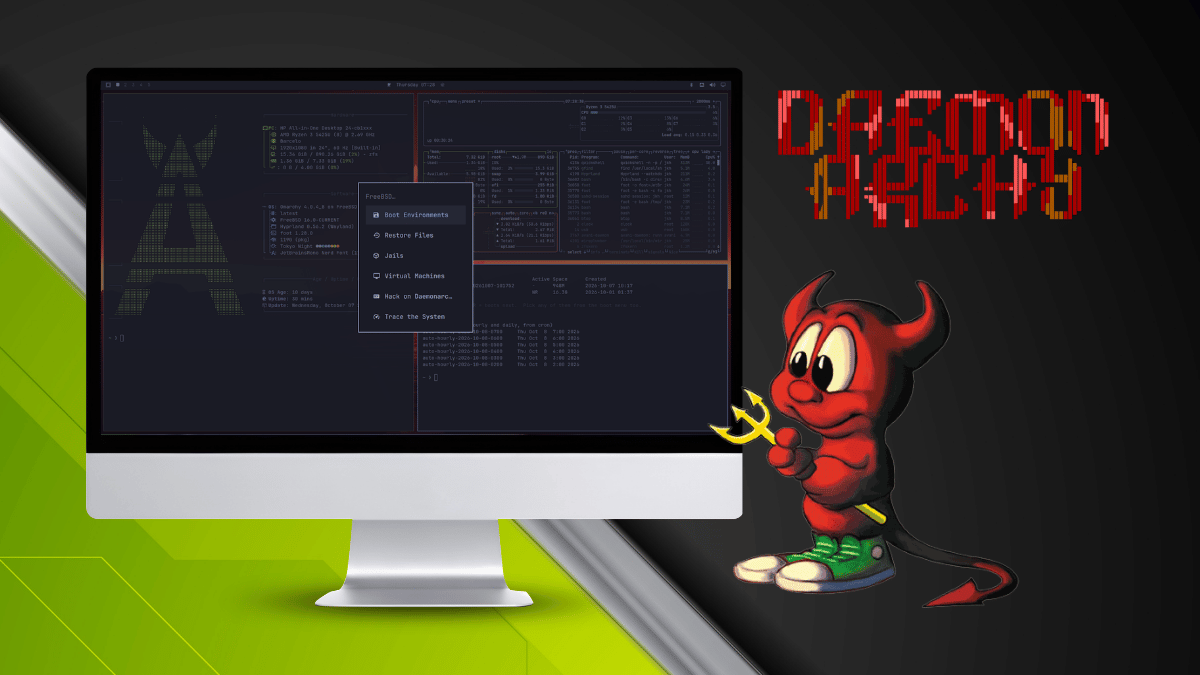
Key milestones in its short history include:
- Initial Conception: Triggered by community requests for a more "pretty" and accessible FreeBSD.
- AI-Assisted Prototyping: A sub-two-hour development phase using GPT-Astra 6 to generate the foundational installer scripts and architecture.
- Upstream Integration: Submission of ports to the official FreeBSD repository for peer review and inclusion.
- Release v1.3.1: Currently the latest iteration, reflecting ongoing refinement and stabilization efforts just hours after the project’s initial public unveiling.
Architectural Framework and Technical Specifications
Daemonarchy is built upon FreeBSD 16.0-CURRENT, which necessitates a strict versioning strategy. Because the CURRENT branch of FreeBSD is subject to daily updates, each release of the Daemonarchy ISO is pinned to a specific snapshot to ensure stability and compatibility.
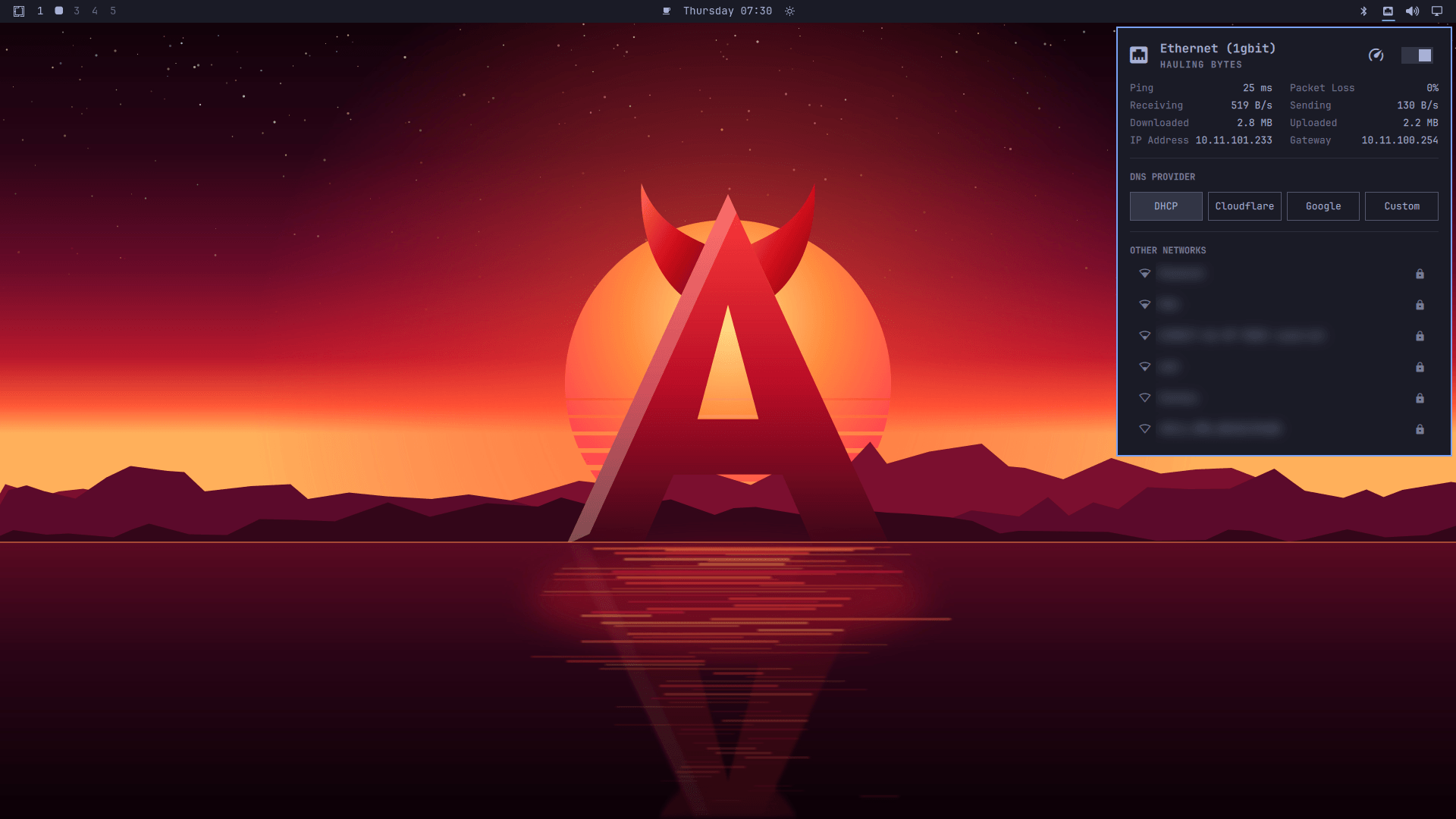
The desktop environment is a port of Omarchy, optimized for the FreeBSD environment. To achieve this, the developers have implemented a compatibility layer that bridges the gap between the two ecosystems. For instance, the system maps pacman (the Arch Linux package manager) to pkg (the FreeBSD package management utility). Furthermore, the distribution opts for wpa_supplicant for Wi-Fi management instead of the standard Linux NetworkManager, and it utilizes PipeWire for professional-grade audio handling. Bluetooth integration is managed via the native FreeBSD stack, allowing for seamless connectivity with modern peripherals.
Storage management follows a user-friendly approach that mimics the Omarchy installer. It requires a minimum of 40 GB of storage and supports ZFS with built-in rollback capabilities, providing users with a robust safety net against system failures or configuration errors. Optional disk encryption is available, catering to users who prioritize data security.
Navigating the Ecosystem: Jails and Virtualization
A core strength of the FreeBSD platform has always been its implementation of Jails—a powerful virtualization technology that allows users to partition a computer system into several independent mini-systems. Daemonarchy embraces this, allowing users to run isolated environments that maintain their own package sets.

In addition to Jails, the inclusion of bhyve, FreeBSD’s native hypervisor, allows the operating system to act as a host for other guest OSs, including various Linux distributions and Windows. This ensures that while users may enjoy the clean, modern interface of Daemonarchy, they are not locked out of the broader software ecosystem. For those who require specific Linux-only applications, the project is actively testing compatibility through "Linuxulator," the FreeBSD kernel-level Linux compatibility layer. As of the current release, Linux-only applications are being introduced cautiously to ensure stability.
Implications for the Future of BSD
The introduction of Daemonarchy serves as a case study for the evolving role of AI in systems engineering. By demonstrating that a functional, modern operating system can be architected in a matter of hours, Hubbard has effectively challenged the assumption that BSD systems must be complex or slow to evolve.
From a broader perspective, Daemonarchy represents a potential pivot point for the BSD community. For years, the gap between the "Linux Desktop" and "BSD Desktop" has widened as Linux distributions benefited from massive corporate investment in desktop environments like GNOME and KDE, alongside user-friendly distributions like Arch and Fedora. By porting a high-end, user-friendly desktop experience to FreeBSD, Daemonarchy invites a new generation of users to experience the unique advantages of the BSD kernel—such as its superior networking performance and advanced storage management—without the traditional barrier to entry.
Furthermore, the project’s commitment to an upstream-first approach ensures that these developments contribute to the longevity of the base FreeBSD project. By refining the ports tree and creating a more accessible installation experience, the work done on Daemonarchy could eventually influence the official FreeBSD installer, creating a ripple effect that benefits the entire ecosystem.
Installation and Community Engagement
The current release, v1.3.1, is available as a sub-2 GiB ISO image. The installation process is designed to be intuitive, requesting standard configuration details such as hostname, timezone, and user credentials. A critical requirement for the installation is a stable internet connection, as the installer fetches the necessary packages directly from the repository during the deployment phase.
The source code is hosted on GitHub, maintaining the project’s commitment to transparency and open collaboration. As a project that relies on a signed repository, users can expect that security patches and system fixes will be disseminated between major ISO releases, ensuring that the system remains secure in the rapidly changing landscape of the 16.0-CURRENT branch.
Conclusion: A New Era for FreeBSD
Daemonarchy is more than just an interface wrapper; it is an assertion that FreeBSD can be just as accessible as its Linux counterparts. By marrying the technical discipline of the BSD kernel with the UI-centric philosophy of modern desktop distributions, Jordan Hubbard has created a platform that addresses the most common critique of FreeBSD.
Whether Daemonarchy becomes the standard for new FreeBSD users remains to be seen. However, its success in attracting interest and its rapid development trajectory indicate a clear market desire for diversity in the desktop operating system landscape. As the project continues to mature, it will likely serve as a blueprint for how legacy operating systems can leverage AI-assisted development to modernize their interface and broaden their user base, all while maintaining the core principles of reliability and performance that have defined the FreeBSD project for over three decades.
Related posts: