Beyond the Keyboard: How AI Agents and Physical Controls Are Redefining Software Engineering

For decades, the foundational setup of software development remained remarkably consistent: a keyboard, a mouse, an integrated development environment (IDE), a terminal, a browser, and an ever-growing accumulation of browser tabs. While programming languages evolved from low-level assembly to modern high-level abstractions, and development tools shifted from punch cards to cloud-based IDEs, the core dynamic between human and machine stayed largely unchanged. Developers were required to adapt their thinking to the machine, memorizing complex command-line syntaxes, keyboard shortcuts, and syntax rules to translate abstract human logic into machine-readable instructions.
This paradigm is currently undergoing a profound structural transformation. The advent of advanced artificial intelligence, autonomous coding agents, and ambient physical controls is systematically shifting the nature of software development. Rather than acting as operators of complex toolchains, developers are increasingly becoming directors of intent. This transition does not diminish the role of the human engineer; instead, it elevates the importance of human judgment, architectural taste, and problem definition while relegating repetitive mechanics to background systems.
The Evolution of Developer Tooling: From Manual Execution to Executable Intent
To understand the magnitude of the current shift, it is helpful to examine the historical trajectory of software development interfaces. Graphical user interfaces (GUIs) made software visual and accessible in the 1980s and 1990s. The subsequent rise of the internet connected disparate codebases and enabled global collaboration. The mobile revolution later made touch-based interactions natural. However, through all these eras, the primary method of writing code remained fundamentally text-bound and manual. Developers had to mentally parse an entire chain of events—writing code, running tests, diagnosing compilation errors, navigating directories, and deploying artifacts.
AI-assisted development drastically compresses this chain of events. Modern AI systems, such as GitHub Copilot and its evolving agentic iterations, are no longer limited to basic autocomplete functions or isolated snippet generation. Contemporary coding agents possess the structural capability to analyze an entire software repository, comprehend complex dependency trees, select appropriate underlying language models, formulate execution plans, invoke external tools, edit multiple files simultaneously, execute tests in isolated environments, and inspect failures iteratively within developer-defined boundaries.
This capability introduces a new workflow paradigm: the transition from issuing manual commands to making intent executable. In an interactive IDE environment, developers can describe a desired architectural outcome or bug fix in natural language. The system then gathers repository context, inspects relevant symbols, implements the changes, runs localized tests, and revises the code autonomously until the criteria are met. Furthermore, asynchronous coding agents can take a GitHub issue, deploy it into an isolated GitHub Actions-powered environment, and return a fully fleshed-out pull request ready for human code review.
The Changing Value Proposition of the Software Engineer
As mechanical tasks are increasingly delegated to autonomous systems, the daily routine of a software engineer undergoes a noticeable shift. Developers spend less time navigating fragmented toolsets, hunting down syntax errors, or writing boilerplate code. Instead, their time and cognitive energy are reallocated toward setting strategic direction, supplying rich repository context, defining strict operational constraints, and reviewing empirical evidence.
Industry analysts and engineering leaders note that this compression of workflow places a higher premium on human judgment and architectural taste. While an autonomous agent can generate multiple valid implementations of a feature in a matter of seconds, human engineers remain strictly accountable for the final outcome. A machine cannot inherently determine whether a specific abstraction belongs in the core domain model, whether a database migration is safe for production data at scale, or whether a newly generated test suite actually proves anything meaningful about system reliability.
Consequently, the core competencies required of a modern software engineer are shifting upward in the abstraction stack. Understanding the holistic structure of complex codebases, deeply empathizing with end-users, and envisioning what an elegant, maintainable software solution should feel like have become far more valuable than memorizing specific framework APIs or command-line flags. The developer remains the ultimate arbiter of quality, security, and architectural integrity.
The Architecture of Ambient Intelligence
Integrating artificial intelligence deeply into the engineering lifecycle requires a fundamental redesign of developer environments. Rather than treating AI as an isolated chatbot operating in a side panel, modern engineering practices aim to embed ambient intelligence directly into the native workflow.
Achieving seamless ambient intelligence requires portable, structured context. Technologies like the Model Context Protocol (MCP) now connect AI agents directly to disparate development tools, databases, and cloud services. Meanwhile, repository-specific instructions and custom skills encode organizational coding conventions, while automated hooks enforce security policies and validate generated outputs.
According to systems architecture frameworks emerging across the industry, this modern developer stack can be conceptualized in three distinct layers:
- Modality: Interfaces that accurately capture human intent across text, voice, and physical controls.
- The Harness: The underlying orchestration engine that plans, reasons, and executes actions across the codebase.
- The Control Plane: The governance layer that allows developers to transparently inspect, redirect, approve, or reject agentic actions.
The most successful developer products of the future will be those that successfully bridge these three layers without stripping the human user of ultimate control.
The Resurgence of Physical Controls in Developer Workflows
As software interactions increasingly move toward abstract intent and conversational prompting, the maker community and enterprise hardware manufacturers are simultaneously rediscovering the value of physical, tactile controls. For years, the standard developer desk setup was strictly confined to a standard QWERTY keyboard and a computer mouse. However, the rise of agentic coding workflows has sparked renewed experimentation with alternative interfaces, ranging from inexpensive hackable microcontroller boards like ESP32 devices to dedicated macro pads equipped with customizable screens.
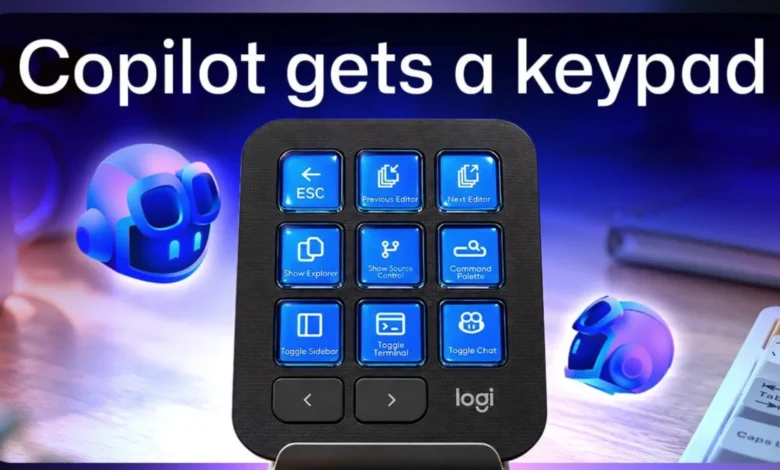
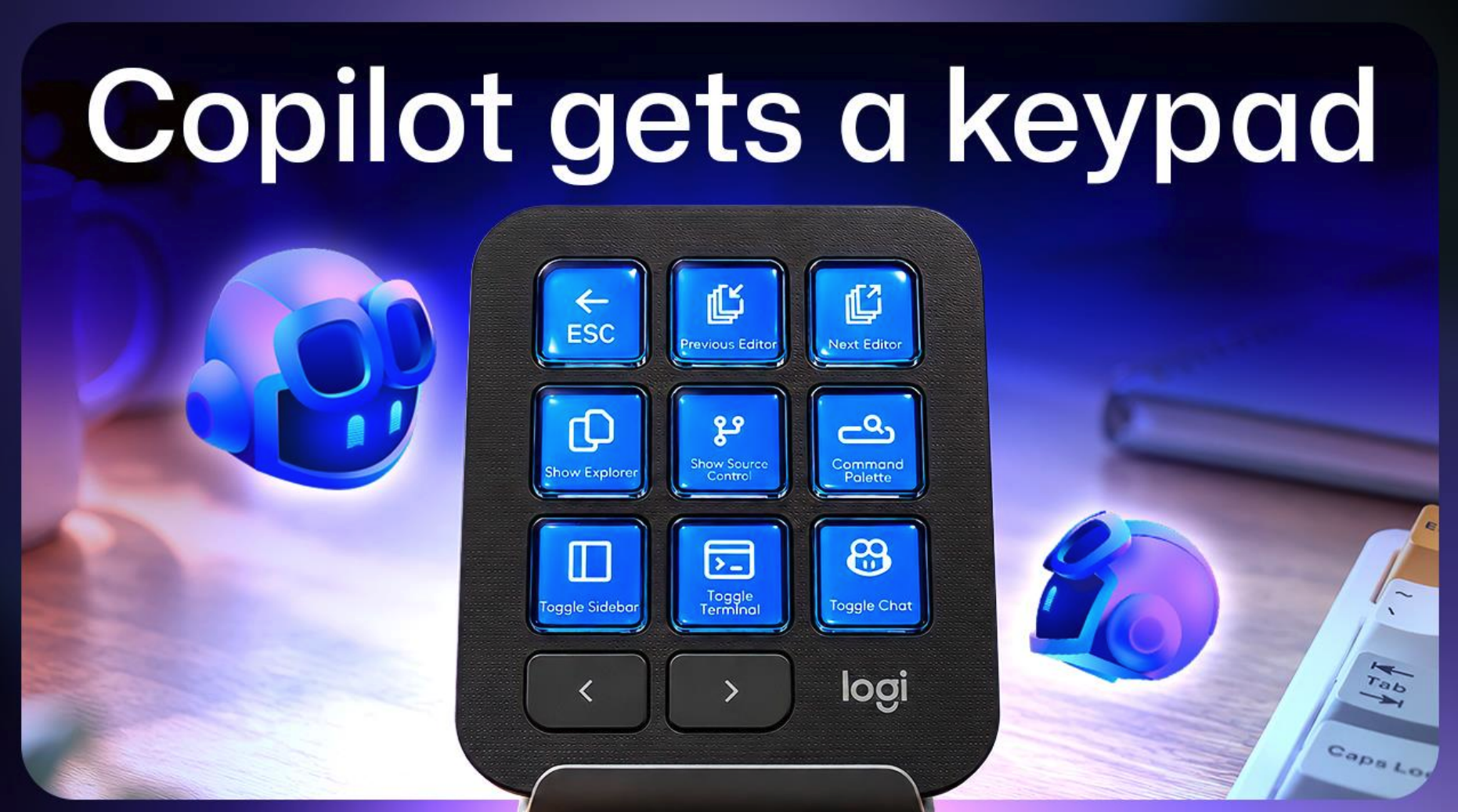
Recognizing this ergonomic shift, hardware manufacturers and developer platforms have begun collaborating to build specialized physical inputs tailored for modern engineering tasks. A notable example of this trend is the joint initiative between Logitech and GitHub, which integrated the GitHub Copilot app directly with physical hardware peripherals like the Logitech MX Keypad.
The integration allows developers to transform repetitive, high-frequency software actions into programmable tactile inputs, thereby accelerating ambient workflows. A single physical key can be mapped to submit a complex parameterized prompt, initiate or resume an active Copilot session, invoke a specific IDE command, or trigger a multi-step sequence of terminal actions.
From an ergonomic and cognitive standpoint, physical controls earn their place on a developer’s desk only when they significantly reduce friction and prevent context switching. Maintaining a deep state of "flow" is notoriously difficult for software engineers, and every interruption—whether reaching for a mouse, navigating a deep menu structure, or typing a repetitive command string—imposes cognitive overhead. By assigning frequent administrative or generative tasks to dedicated physical buttons, developers can stay focused on the core logic of their code.
Engineering Questions and the Road Ahead
Despite the rapid acceleration of AI-assisted software development, industry experts emphasize that the ecosystem is still in its early developmental stages. As organizations rush to adopt agentic workflows, engineering leaders must grapple with complex systemic and security challenges.
Key technical questions currently facing platform architects include:
- Context Retention: How much organizational and repository context should an autonomous agent be permitted to retain across sessions without risking data leakage or hallucination?
- Automated Permissions: Which specific tool calls and system operations should be allowed to run autonomously versus requiring explicit human authorization?
- Security Governance: How should credentials, network access, and sensitive API secrets be securely scoped and managed when interacting with multi-agent systems?
- Verification Standards: What empirical evidence and automated telemetry should accompany every code change generated by an AI agent?
- Agent Coordination: How can multiple concurrent AI agents coordinate their work within a large repository without duplicating efforts or generating conflicting pull requests?
Products and integrations that combine physical control hardware with advanced AI platforms—such as the pairing of the Logitech MX Keypad with GitHub Copilot Pro+—offer a practical, localized sandbox for developers to explore how they can invoke, steer, and resume agentic work without sacrificing their focus.
Conclusion: Getting Out of the Way
For decades, the unspoken contract of computer science required humans to learn the esoteric language of machines—mastering rigid syntax, intricate command-line flags, brittle APIs, and arcane configuration files copied from archived developer forums. Today, artificial intelligence is enabling computers to meet developers halfway.
The ultimate goal of modern software tooling is not to replace the human developer, but to systematically eliminate the friction, toil, and administrative overhead surrounding the creative process. By bridging advanced multimodal intent, robust agentic harnesses, and ergonomic physical controls, the next generation of development environments aims to do one thing above all else: understand enough context, preserve meaningful human control, and get out of the way so engineers can focus on building software that truly matters.