AWS Weekly Roundup: Generative AI In Agribusiness, Continuum Security Launch, And Major Infrastructure Updates

The integration of generative artificial intelligence into traditional industries and the evolution of cloud-native infrastructure security dominated the enterprise technology landscape this week, as Amazon Web Services (AWS) rolled out a series of strategic product announcements, infrastructure upgrades, and architectural tools. Highlighting the intersection of advanced machine learning and operational practicality, recent presentations in South America underscored how voice interfaces are reshaping efficiency in sectors like modern agriculture. Meanwhile, a busy release calendar introduced automated vulnerability management, streamlined container networking, and expanded hardware flexibility for artificial intelligence workloads.
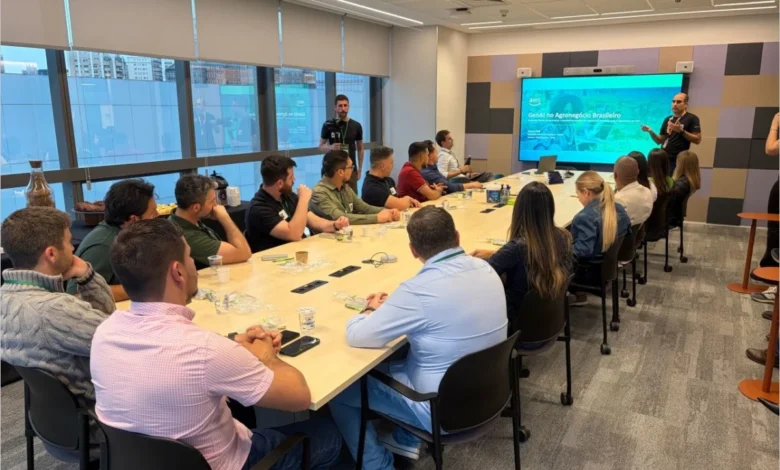
The shift toward applied artificial intelligence was illustrated during a recent executive briefing at the AWS regional headquarters in São Paulo, Brazil. Addressing a delegation of technology and commercial leaders from the Brazilian agribusiness sector, industry experts mapped out how generative artificial intelligence models integrate across disparate stages of modern farming and supply chain operations. Discussions quickly moved past the theoretical utility of artificial intelligence, focusing instead on practical delivery mechanisms—such as linguistic localization, device compatibility, and hands-free usability for operators working in the field.
In response to these operational demands, AWS announced a major expansion of its Amazon Polly generative engine. The speech synthesis platform added 14 new voices across nine language locales, including two native Brazilian Portuguese options. For field workers managing logistics or machinery while driving between agricultural sites, voice-activated interfaces serve as a primary bridge to cloud infrastructure. By lowering the friction of human-computer interaction in mobile environments, these localized voice enhancements reflect a broader industry trend: making enterprise intelligence accessible at the point of action, regardless of physical constraints.
Automating Vulnerability Management With AWS Continuum
While edge interfaces highlight the accessibility of cloud services, backend security architectures faced an urgent recalibration this week. AWS announced the general availability of AWS Continuum, a new security service designed to address a critical operational reality in cybersecurity: the narrowing window between the public disclosure of a software vulnerability and its active exploitation by malicious actors.
Historically, vulnerability management relied heavily on periodic security scans that generated static lists of software flaws, leaving engineering teams to manually triage, investigate, and patch systems based on generalized severity labels. AWS Continuum reframes this process as an automated, end-to-end lifecycle. The service constructs a dynamic context graph by analyzing an organization’s code repositories alongside its live cloud environment. When a vulnerability is identified, Continuum assigns a precise evidence level, reproduces exploitable findings within an isolated sandbox environment, and generates concrete proof-of-concept code to demonstrate the risk clearly.
Crucially, the service ranks discovered issues based on the proximity of potential attack paths to business-critical systems. Once a priority is established, Continuum automatically opens a pull request containing the recommended fix. To maintain strict administrative oversight, every remediation currently requires human authorization, ensuring that engineers review and merge code changes before they reach production environments. Future iterations of the service aim to introduce autonomous remediation classes gated by configurable confidence thresholds.
The urgency behind Continuum’s release was underscored by threat intelligence data published by Amazon during the same week. Telemetry from Amazon MadPot honeypots detected active exploitation attempts of the PHP2Shell vulnerability (tracked under CVE-2026-109618 and CVE-2026-109619) on October 17. This activity occurred four days prior to the public disclosure of the vulnerabilities, while proof-of-concept exploits were actively circulating on public networks roughly twelve hours before the official embargo lifting. Security analysts note that these findings effectively invalidate traditional patch-management timelines measured in weeks, emphasizing that organizations must anchor incident response and mitigation efforts to the earliest known exploitation events rather than official advisory dates. Alongside the launch of Continuum, AWS released targeted AWS WAF (Web Application Firewall) mitigations to protect systems against these remote code execution flaws. AWS Continuum is initially available in the US East (N. Virginia) and US West (Oregon) commercial regions.
Streamlining Container Ingress With Amazon ECS Gateway
In the realm of cloud infrastructure and container orchestration, AWS introduced Amazon ECS Gateway to simplify the complex task of exposing microservices to internal and external networks. Historically, managing application load balancing for containerized workloads required significant coordination between network engineers—responsible for subnets, security groups, Transport Layer Security (TLS) certificates, and web application firewalls—and application developers managing deployment specifications.
Amazon ECS Gateway segregates these responsibilities. Platform engineering teams configure a centralized gateway incorporating organizational subnets, security policies, listener configurations, and WAF web Access Control Lists (ACLs). Application teams then participate by attaching a simple gateway connector to their service definitions. In response, the Amazon Elastic Container Service (ECS) automatically provisions an AWS Certificate Manager (ACM) certificate, a unique Domain Name System (DNS) hostname, listener rules, target groups, and strict security rules that admit traffic exclusively from the designated Application Load Balancer.
The architectural economics of the new service are designed to optimize resource utilization at scale. Up to 25 distinct microservices can share a single Application Load Balancer, while ECS automatically provisions load balancers upon initial connection and decommissions them when traffic ceases. Furthermore, a single gateway can associate with up to 10,000 clusters, with a maximum of five gateways permitted per cluster. Organizations can adopt the gateway incrementally using standard service update commands without disrupting existing load balancer configurations. Amazon ECS Gateway is available at no additional charge in all commercial regions where Amazon ECS is supported.
Expanding Generative Engines And Hardware Independence
In addition to core security and container announcements, AWS rolled out significant updates across its machine learning, database, and developer tooling portfolios.
The Amazon Polly generative speech engine upgrade expands the platform’s catalog to 57 generative voices spanning 11 languages and 25 locales. The inclusion of Hindi and Finnish for the first time, alongside new regional variants, operates as a drop-in upgrade. Developers can leverage the expanded linguistic capabilities via existing speech synthesis application programming interfaces (APIs) and pricing models without altering underlying application codebases.
To combat hardware lock-in for artificial intelligence development, AWS announced the public beta of TorchNeuron, a native PyTorch backend for AWS Trainium chips. TorchNeuron enables developers to execute deep learning models on Trainium hardware by modifying simple device instantiation code rather than rewriting complex model architectures. By preserving eager execution paradigms and native compilation frameworks, the open-source backend integrates seamlessly with the Neuron Kernel Interface for custom operator deployment across Trainium2 and Trainium3 silicon instances.
Complementing this hardware flexibility, Amazon SageMaker AI introduced managed training sessions designed to offload infrastructure overhead from machine learning engineers. While developers retain granular control over the post-training loop—including custom loss functions and reinforcement learning reward signals—SageMaker AI manages underlying GPU allocation, distributed cluster execution, fault recovery, and checkpoint persistence. Billing meters pause during batch-scoring phases of reward evaluation, optimizing operational expenditures. These training session APIs launch alongside native support for advanced foundation models, including Muse Glimmer, Qwen 3.8, and Ministral 3.

Enhancing Application Reliability And Database Migration
Enterprise application development also benefited from new capabilities in Amazon Bedrock, where Anthropic Claude models now support native structured outputs. Developers can obtain schema-compliant JavaScript Object Notation (JSON) directly from model endpoints without implementing custom parsing, validation retries, or post-processing logic. This capability streamlines automated data extraction workflows across complex domains such as financial auditing, clinical documentation analysis, and intelligent customer support routing.
In data management, Amazon ElastiCache Serverless for Valkey introduced zero-downtime online migration capabilities. Organizations can transition self-managed Valkey or open-source Redis databases running on Amazon EC2 directly into ElastiCache Serverless without incurring client-side application errors or utilizing third-party replication utilities.
Large-scale enterprise migrations continue to demonstrate the scalability of AWS relational database services. Public case studies detailed how U.S. Bank successfully migrated four enterprise databases totaling 119 terabytes from Oracle Exadata to Amazon RDS for Oracle. Utilizing a configuration-driven migration pipeline powered by Oracle XTTS, AWS DataSync, and Amazon EFS, the initial baseline data synchronization completed in approximately seven days over a bandwidth-restricted AWS Direct Connect link, with individual database cutovers averaging four hours and resulting in zero data loss.
Additional developer tooling releases included the launch of AWS Agent Registry, a managed catalog designed to help AI orchestrators discover Model Context Protocol (MCP) servers, agents, and specialized tools at runtime rather than compile time. Concurrently, new open-source benchmarking frameworks for "tokenomics" allow engineering teams to mathematically model the cost and quality trade-offs of deploying coding assistants across proprietary codebases.
Looking Ahead To Upcoming Industry Events
As the enterprise technology sector prepares for the final quarter of the year, industry attention turns toward major upcoming gatherings. The annual AWS re:Invent conference is scheduled to run from November 30 to December 4 in Las Vegas, featuring more than 2,200 technical sessions and workshops, with reservation catalogs currently active for attendees. Regionally, the Brazilian community event season will conclude with AWS Community Day Brasil Norte, taking place in Belém on October 31, bringing together regional developers, architects, and technology leaders to discuss cloud infrastructure advancements and localized technological adoption.