Amazon Web Services Expands Developer Velocity and AI Governance with Lambda Web Functions and Bedrock AgentCore

The landscape of cloud computing underwent a significant shift this week as Amazon Web Services (AWS) introduced developer-centric enhancements designed to shorten the deployment lifecycle while simultaneously reinforcing governance frameworks for artificial intelligence agents. Spearheaded by the launch of AWS Lambda Web Functions and a strategic blueprint for autonomous AI control, the updates reflect a dual industry imperative: accelerating feature delivery without compromising enterprise security or operational oversight.
By targeting the traditional friction points of serverless architectures and the emerging complexities of generative AI orchestration, AWS aims to streamline how modern applications are built, deployed, and governed. These developments arrive at a time when enterprise engineering teams increasingly demand both high-velocity deployment mechanisms and ironclad compliance controls.
Main Facts and Architectural Innovations
The cornerstone of the week’s announcements is AWS Lambda Web Functions, a novel form factor engineered to execute standard HTTP web applications directly on Lambda without requiring developers to rewrite their code into event handlers or use translation adapters. Historically, developers deploying traditional web frameworks—such as Express, Hono, Fastify, or Next.js—on serverless infrastructure had to configure API Gateway integrations or adapt their codebases to specific event payloads.
With Lambda Web Functions, developers can execute a simple deployment command (aws lambda-web deploy) on any port-listening server, yielding a live HTTPS URL in under a minute. This capability eliminates framework lock-in and drastically reduces boilerplate configuration. Under the hood, Lambda now accommodates three distinct form factors operating on the same Firecracker micro-virtualization isolation technology:
- Event Functions: The traditional asynchronous invocation model optimized for event-driven processing.
- Web Functions: The newly introduced user-facing layer designed for high-performance HTTP request handling.
- MicroVMs: Isolated sandboxes capable of securely running untrusted code with stateful execution.
Crucially, Lambda Web Functions introduce two major operational enhancements. First, individual execution environments can handle up to 128 concurrent requests, allowing traffic bursts to leverage warm environments dynamically rather than enforcing a strict one-to-one mapping of requests to isolated environments. Second, billing mechanisms measure the precise CPU time consumed by the code rather than total wall-clock time. This billing model fundamentally alters the financial arithmetic for server-side rendering, API backends, and streaming AI inference endpoints, where execution duration is often dominated by network wait times.
Furthermore, the new form factor supports multi-region replication and latency-based routing through a single global URL via simple flag additions. Developers can also execute weighted traffic splits across application revisions to facilitate seamless canary rollouts. Initially launched for Node.js 24 on Arm64 architecture with Virtual Private Cloud (VPC) connectivity across five AWS Regions, the feature integrates natively with Amazon CloudFront, enabling Web Function endpoints to serve as origins protected by origin access control.
Chronology and Strategic Evolution
The evolution toward frictionless serverless deployment has been a multi-year trajectory for AWS. In the early days of serverless computing, architectures were strictly event-driven, requiring developers to adopt specialized programming paradigms. Over time, customer demand for containerization and hybrid architectures led to the introduction of AWS Lambda container image support and enhanced integration with API Gateway and Application Load Balancers.
The introduction of Lambda Web Functions represents the culmination of this iterative progression, effectively bridging the gap between traditional server-based application models and serverless operational efficiency. By leveraging the underlying Firecracker technology—originally developed for AWS Lambda and Fargate to provide secure, lightweight multi-tenancy—AWS has been able to optimize memory overhead and startup latency, making high-throughput web applications viable natively within Lambda.

Concurrently, the discourse surrounding artificial intelligence governance has accelerated. As enterprises transition from static large language models to autonomous AI agents capable of executing multi-step workflows, traditional permission models have proved inadequate. The publication of AWS’s strategic framework on AI agent autonomy marks a formal acknowledgment that human-in-the-loop oversight scales poorly in high-frequency, complex computational environments.
Supporting Data and Technical Context
To understand the scale of the governance challenge addressed by AWS, industry metrics and historical infrastructure data provide essential context. AWS currently manages mission-critical identity and access management (IAM) policies processing in excess of 2.1 billion requests per second. The automated reasoning techniques utilized to secure these high-volume transactions form the technical foundation for the newly proposed agent governance model.
In the context of generative AI, automated reasoning applies formal logic to verify whether an agent’s proposed actions comply with predefined safety and security boundaries before execution. Traditional authorization methods often rely on the agent’s internal reasoning to determine whether an action is permissible—a vulnerability when dealing with complex prompt injections or unpredictable model behaviors.
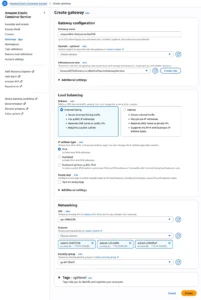
By shifting these boundaries outside the agent’s native reasoning engine and into gateway-enforced policies via Amazon Bedrock AgentCore, AWS addresses a critical vulnerability: an autonomous agent cannot disable a security control that it does not possess administrative access to or visibility over.
Official Responses and Industry Implications
While individual engineering responses vary, industry analysts and cloud architects have noted that these dual announcements reflect a broader market trend: the simultaneous decentralization of developer tooling and the centralization of security policy enforcement.
Enterprise development teams have increasingly gravitated toward tools that minimize operational overhead. By removing the friction of adapter configurations and infrastructure provisioning, AWS Lambda Web Functions lower the barrier to entry for modern web application deployment. Concurrently, security and compliance officers have voiced concerns regarding the unmonitored proliferation of autonomous AI agents within corporate networks. The framework outlined in Amazon’s technical guidance—summarized by the operational pillars of scope, knowledge, boundary, and observation—provides a systematic methodology for mitigating enterprise risk.
Independent cloud architects have highlighted that the integration of Web Functions with Amazon CloudFront and VPC connectivity signals a maturation of serverless networking. By enabling secure, low-latency routing without requiring complex Virtual Private Cloud configurations for basic web endpoints, AWS is positioning serverless computing as a viable default for enterprise production workloads, rather than merely a tool for auxiliary microservices or background processing tasks.
Broader Impact and Future Outlook
The convergence of rapid application deployment and rigorous AI governance underscores the strategic priorities of cloud providers in the current technology cycle. As artificial intelligence becomes deeply embedded in application backends, developers require infrastructure that can support both the real-time performance demands of streaming token inference and the strict guardrails necessary to prevent unauthorized system modifications.
The rollout of Lambda Web Functions across initial regions, paired with the expansion of Amazon Bedrock AgentCore governance capabilities, indicates that AWS will continue to refine the intersection of application compute and automated policy enforcement. For enterprise IT leaders, these developments suggest a future where application delivery cycles are measured in seconds, backed by automated compliance frameworks capable of scaling alongside autonomous software agents. As adoption metrics for these new tools become available in upcoming quarters, the broader software engineering community will closely monitor their impact on operational expenditure, system reliability, and overall developer productivity.