Microsoft Azure Databricks Delivers Unprecedented 331% ROI in Landmark Forrester Study

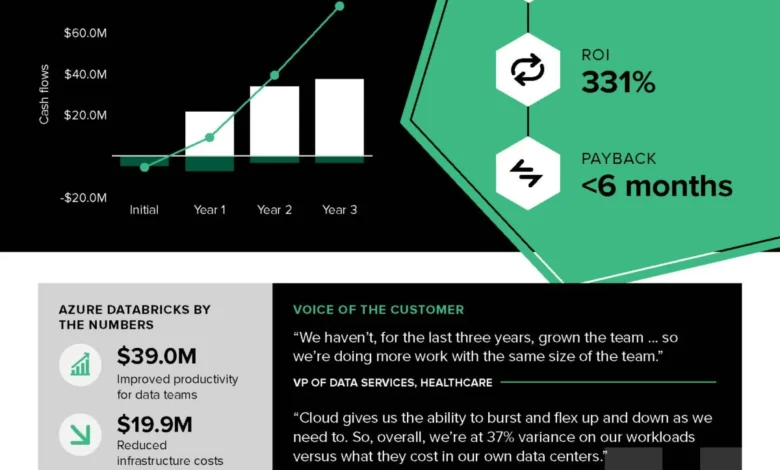
Microsoft Azure Databricks, the deeply integrated data and AI platform co-engineered by Microsoft and Databricks, has demonstrated significant and measurable business value, according to a comprehensive Total Economic Impact™ (TEI) study commissioned by Microsoft and conducted by Forrester Consulting. The report reveals that a composite organization leveraging Azure Databricks achieved a staggering three-year return on investment (ROI) of 331%, with a net present value (NPV) of $58.1 million and a payback period of less than six months. This independent validation underscores the platform’s ability to drive substantial financial and operational efficiencies for businesses grappling with complex data challenges.
The study, which analyzed the experiences of several Azure Databricks customers, focused on a hypothetical composite organization representative of real-world deployments. This organization, a $6 billion entity operating within a regulated industry and managing approximately 10 petabytes of data, previously faced significant hurdles with a fragmented, costly, and unreliable data estate that proved difficult to govern at scale. The implementation of Azure Databricks transformed this landscape, generating an estimated $75.6 million in benefits against $17.5 million in costs over a three-year period, culminating in the impressive $58.1 million NPV.
The Genesis of the Strategic Partnership and its Quantifiable Impact
The foundation of Azure Databricks lies in a strategic partnership between Microsoft and Databricks, aimed at delivering a seamless, first-party experience for customers on the Azure cloud. This co-engineering effort ensures that Databricks’ powerful lakehouse platform is not merely an add-on but a native Azure service, deeply embedded within the Microsoft ecosystem. This integration offers distinct advantages: it aligns with existing Microsoft tools, identity management systems, and governance frameworks that organizations already utilize, thereby minimizing disruption and accelerating adoption.
The "built-in, not bolted on" philosophy translates into tangible benefits. The shared integration roadmap between Microsoft and Databricks means that advancements in Microsoft’s data and AI stack directly benefit Azure Databricks users. This unified approach simplifies procurement with a single bill and streamlines support with a singular point of contact. For technical teams, this translates to enhanced native integration and superior performance. For the business, the implications are profound: reduced costs, mitigated risks, and a significantly faster path to realizing business value from data initiatives.
The decision-makers at enterprises worldwide are increasingly focused on translating technological investments into concrete business outcomes. Recognizing this imperative, Microsoft commissioned the Forrester TEI study to provide an objective, data-driven assessment of the financial impact of Azure Databricks. The findings of this study offer a compelling narrative of efficiency, innovation, and economic advantage.
Dissecting the Forrester Total Economic Impact™ Study
The Forrester TEI study meticulously examined the quantifiable and unquantifiable benefits derived from Azure Databricks. The composite organization in the study, prior to adopting Azure Databricks, struggled with data silos, high operational overheads associated with managing disparate data tools, and a lack of agility in responding to evolving business demands. Its data infrastructure was characterized by inefficiencies that hampered productivity and stifled innovation.
Upon migrating to Azure Databricks, the organization experienced a radical transformation. The $75.6 million in benefits were categorized into four key areas, each contributing significantly to the overall ROI:
- Reduced Infrastructure Costs: The consolidation of data workloads onto a unified platform on Azure eliminated the need for redundant infrastructure and the associated maintenance and operational expenses. This rationalization of the data estate led to substantial savings.
- Increased Productivity of Data Teams: By providing a streamlined, integrated environment, Azure Databricks empowered data engineers, data scientists, and analysts to work more efficiently. Reduced time spent on data preparation, infrastructure management, and tool interoperability allowed these teams to focus on higher-value tasks, such as developing advanced analytics and machine learning models.
- Enhanced Business Agility and Faster Time to Market: The platform’s scalability and ease of use enabled the organization to accelerate the development and deployment of data-driven applications and insights. This improved agility allowed the business to respond more rapidly to market changes and capitalize on new opportunities.
- Improved Operational Efficiency and Risk Mitigation: The robust governance features of Azure Databricks, particularly through Unity Catalog, enhanced data security and compliance. This reduced the risk of data breaches and regulatory penalties, while also improving the overall reliability and trustworthiness of data across the organization.
Beyond these financially quantified benefits, Forrester also identified several critical advantages that, while harder to assign a precise monetary value, significantly contribute to the platform’s overall value proposition. These include deeper native integration with other Azure services, enabling a more cohesive and powerful data ecosystem. The study highlighted the acceleration of insights generation, empowering business leaders with timely and actionable information. Furthermore, the platform’s ability to democratize access to data, coupled with robust governance mechanisms, ensured that insights could be shared broadly and securely.
The Engine of Value: Native Integration and Enhanced Functionality
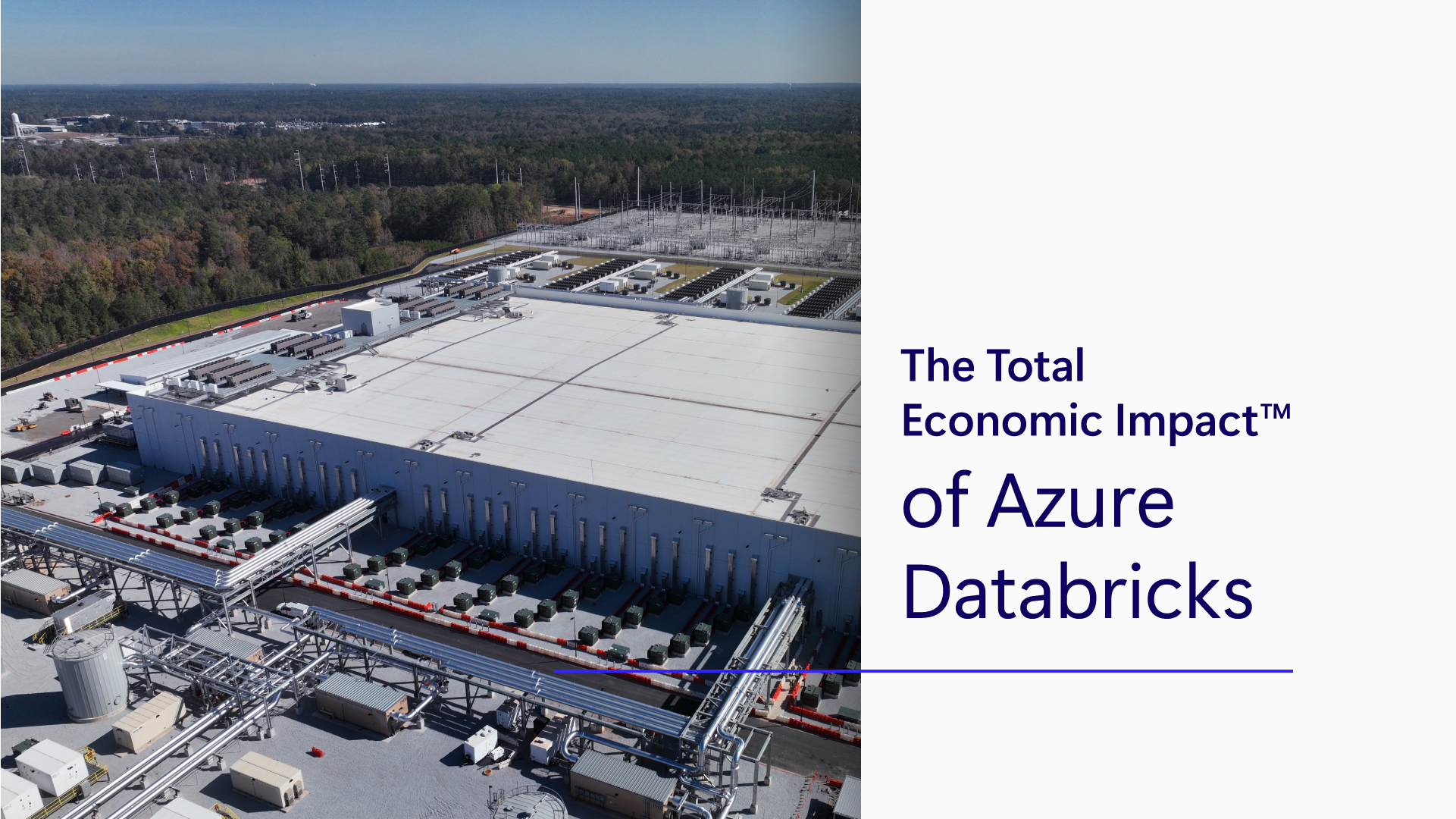
The core of Azure Databricks’ value proposition lies in its nature as a first-party Azure service. This deep integration with the broader Microsoft data and AI stack is not a superficial addition; it is fundamental to its performance and cost-effectiveness. By eliminating the need for extensive data duplication, disparate tooling, and complex integration efforts often required with third-party solutions, Azure Databricks significantly reduces the total cost of ownership.
A prime example of this integrated power is the synergy between Azure Databricks Genie and Microsoft Copilot. This integration allows organizations to imbue their existing Microsoft tools with business-specific context, building upon the intelligence capabilities of Copilot. Azure Databricks Genie enables users to query their lakehouse using natural language, directly within familiar interfaces such as Microsoft Teams and Microsoft 365 Copilot. More recently, with the introduction of Copilot Cowork, Genie grounds tasks in trusted data through Genie Ontology, ensuring that every response is scoped by Unity Catalog to the user’s specific permissions. This seamless flow of secure, governed intelligence into the daily workflow is a game-changer for productivity.
This level of deep integration extends across the entire Azure Databricks platform, impacting various facets of data operations:
- Seamless Integration with Microsoft Ecosystem: Azure Databricks integrates effortlessly with other Azure services like Azure Active Directory for identity management, Azure Synapse Analytics for data warehousing, and Azure Machine Learning for advanced AI model development. This creates a unified and efficient data fabric.
- Enhanced Collaboration and Productivity: Features like Delta Sharing enable secure and efficient data sharing across organizational boundaries, fostering collaboration. Collaborative notebooks and integrated development environments streamline the workflow for data teams.
- Robust Governance and Security: Unity Catalog, a unified governance solution for data and AI assets, provides granular access control and auditing capabilities, ensuring data security and compliance with regulatory requirements.
- Scalability and Performance: The platform leverages Azure’s hyperscale infrastructure to deliver unparalleled scalability and performance, enabling organizations to handle massive datasets and complex workloads with ease.
- Cost Optimization: The co-engineered nature of Azure Databricks and its efficient resource utilization contribute to significant cost savings compared to fragmented or less integrated solutions.
These integrations, while not always explicitly priced in the Forrester study, are the silent drivers of the quantified productivity and cost benefits. They represent the technological underpinnings that enable businesses to achieve faster insights, broader data access, and more effective governance, ultimately leading to a superior return on investment.
Independent Benchmarks Affirm Performance Prowess
Beyond the economic impact, the performance of Azure Databricks has also been independently validated. Principled Technologies, a respected independent research firm, conducted a decision-support benchmark, similar to the industry-standard TPC-DS, on a 10-terabyte dataset. The results were compelling: Azure Databricks demonstrated superior performance, completing single query streams up to 21.1% faster than Databricks on AWS (when autoscale was disabled). Furthermore, in scenarios involving four concurrent query streams, Azure Databricks consistently outperformed, finishing the tasks more than nine minutes ahead of its AWS counterpart. This independent verification of speed and efficiency reinforces the platform’s ability to handle demanding workloads and deliver rapid results, crucial for time-sensitive business decisions.
Implications for Businesses: A Future-Proof Data Foundation
The decision to adopt a data and AI platform is a significant, long-term commitment. Azure Databricks offers a compelling proposition by providing a unified, cohesive, and future-proof foundation. The deep integration fostered by the Microsoft-Databricks partnership ensures that the platform’s components work in synergy, driving the cost savings and performance gains identified by Forrester. As data volumes grow and analytical demands increase, the inherent scalability and efficiency of Azure Databricks ensure that these benefits are sustained.
The measurable value – a 331% three-year ROI with a payback period under six months – is not merely a marketing claim; it is a validated outcome based on real-world customer experiences. This compelling financial justification, coupled with the platform’s technological advantages, explains why an increasing number of organizations are choosing Azure Databricks to power their lakehouse initiatives.
For businesses looking to unlock the full potential of their data, accelerate innovation, and achieve a significant competitive advantage, Azure Databricks presents a powerful and proven solution. The combination of Microsoft’s enterprise-grade cloud infrastructure and Databricks’ cutting-edge data and AI capabilities, delivered through a first-party, co-engineered service, offers a unique and potent recipe for digital transformation and sustained business growth. The implications of this robust platform extend across industries, empowering organizations to derive deeper insights, make more informed decisions, and ultimately, drive greater business value from their most valuable asset: data.
Explore Further
For organizations eager to delve deeper into the capabilities and economic advantages of Microsoft Azure Databricks, several resources are available:
- The Full Forrester Total Economic Impact™ Study: Access the comprehensive report detailing the methodology, findings, and detailed financial projections.
- Azure Databricks Product Page: Discover the core features, functionalities, and technical specifications of the platform.
- Azure Databricks Documentation: Explore in-depth guides, tutorials, and best practices for implementing and utilizing Azure Databricks.
- Microsoft AI and Data Solutions: Learn about the broader ecosystem of Microsoft’s data and AI offerings and how they integrate with Azure Databricks.
- Databricks Platform Information: Gain insights into the broader Databricks ecosystem and its innovative approaches to data and AI.
Related posts: