Mirko Brombin and the Evolution of Linux Desktop Engineering and Artificial Intelligence Integration

The landscape of open-source development is currently undergoing a significant transformation, driven by the efforts of independent innovators like Mirko Brombin. Widely recognized within the Linux community for his instrumental work on Bottles—a utility designed to simplify the execution of Windows applications via the Wine compatibility layer—Brombin has transitioned from a community contributor to a pivotal figure in operating system architecture. His current focus encompasses his professional role at fabricators, the ongoing development of the immutable-focused Singularity OS (Sinty OS), and a critical examination of how artificial intelligence is reshaping software engineering. This report examines Brombin’s current trajectory, his stance on the ethical implications of AI-assisted development, and the technical challenges of modern Linux desktop design.
The Professional Trajectory of a Linux Architect
Mirko Brombin’s career reflects the iterative nature of open-source development. Following his initial emergence as a key contributor to the Linux desktop experience, he founded Vanilla OS, a project aimed at creating a seamless, immutable operating system experience based on GNOME. Since the last major public profile of his work in 2022, Brombin has formalized his involvement in the industry by joining the firm fabricators. This shift has allowed him to scale his contributions, moving from personal side projects to enterprise-grade infrastructure.
Despite this professional evolution, Brombin maintains that his development philosophy remains rooted in problem-solving. Rather than following a rigid roadmap, his projects—ranging from the Bottles application to the experimental Amus research initiative—are born from specific technical hurdles he encounters. This pragmatic approach has enabled him to balance a full-time professional commitment with the maintenance of complex open-source ecosystems.
Technical Infrastructure and the Philosophy of Immutability
A significant portion of Brombin’s recent work focuses on the concept of immutability in operating systems. While Vanilla OS adheres to the standard GNOME and libadwaita ecosystems, his newer project, Sinty OS, represents a departure from these established norms. Sinty OS utilizes a proprietary technology referred to as "Atom Loops," which aims to manage system immutability from the earliest stages of the boot sequence.
The technical architecture of Sinty OS differs from traditional Linux distributions in several key ways. By utilizing EROFS (Enhanced Read-Only File System) for the root file system and UKI (Unified Kernel Image) for kernel management, the system ensures high levels of integrity and stability. Furthermore, by moving away from conventional partition-based root structures, Sinty OS affords users greater flexibility in disk management, using F2FS for the user-space data storage. This design choice is intended to offer a "chain of trust" that validates updates at the hardware-software interface, a requirement for modern, secure computing environments.
The AI Paradox: Utility Versus Transparency
Perhaps the most contentious aspect of Brombin’s current work is his relationship with artificial intelligence. In an era where AI-assisted coding is becoming standard, Brombin has adopted a balanced, albeit skeptical, methodology. He utilizes AI agents for mechanical, repetitive tasks, yet he remains deeply critical of the "black box" nature of current Large Language Models (LLMs).
Brombin’s primary concern lies in the causal verifiability of AI-generated code. He argues that an LLM’s ability to produce functional code does not equate to a logical understanding of the architectural constraints or long-term maintenance requirements of a project. Consequently, he mandates a rigorous manual review process for every line of code generated by AI, ensuring that the software remains consistent with his established documentation and internal libraries.
This skepticism has led him to develop the Amus research project. Amus is intended to move beyond the statistical probability models of current LLMs, aiming instead to construct answers through verifiable knowledge relationships. The goal is to create a system where the reasoning behind a specific code structure can be traced back to its documentation, rather than being a result of statistically plausible patterns.
The Microsoft Office Integration and the "Raven" Project
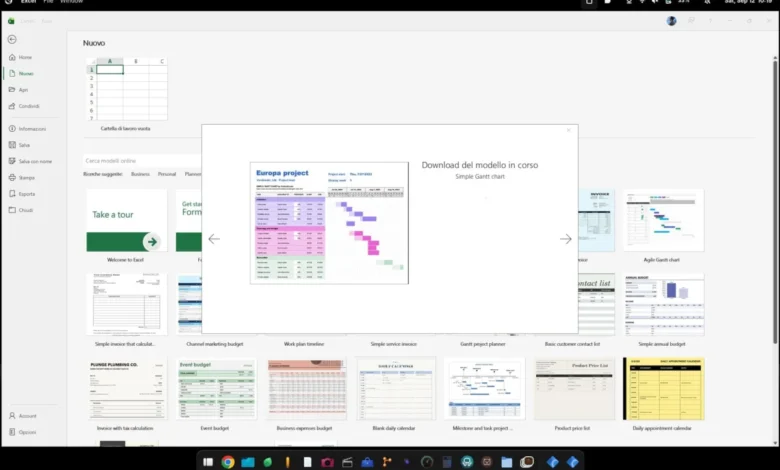
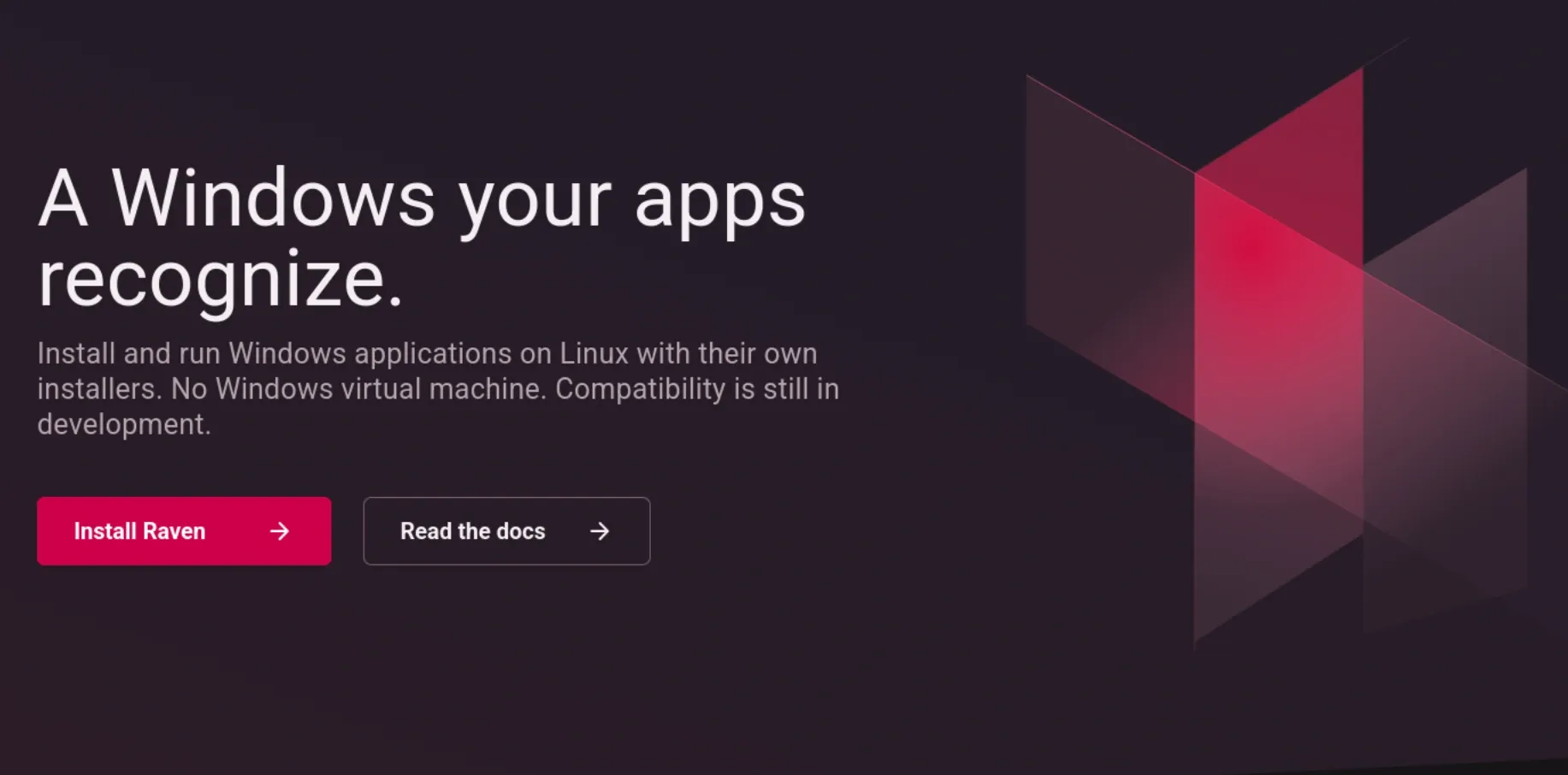
One of the most requested features in the Linux desktop community remains native or near-native support for the Microsoft Office suite. Brombin’s project, Raven, is designed to bridge this gap by allowing Windows applications to run on Linux using their native installers, without the overhead of a full virtual machine.
This effort has faced scrutiny from the Free and Open Source Software (FOSS) community, with critics suggesting that resources would be better spent improving alternatives like LibreOffice or ONLYOFFICE. Brombin, however, characterizes this as a "real-world" necessity. He notes that while open-source alternatives are excellent, the professional ecosystem—specifically for his clients and partners—is often tethered to the Microsoft stack. His goal is to achieve reliable, high-performance compatibility for Microsoft 365, with the intent of contributing successful patches upstream to the Wine project, thereby benefiting the wider Linux community.
Ethical Concerns: The Rise of UI Cloning
Brombin has expressed significant concern regarding a recent trend in the open-source community: the development of software that clones the interfaces of proprietary tools like Adobe Photoshop or Microsoft Office. While these projects often cite "clean room" development practices, Brombin questions the legitimacy of these claims when AI is utilized to replicate the visual identity of existing software down to the pixel.

He argues that this practice borders on copyright infringement and unfair competition. From his perspective, the strength of the open-source community lies in innovation and the creation of unique, superior user experiences, not in the mimicry of corporate interfaces. This stance highlights a growing tension within the developer community regarding where the line should be drawn between interoperability and intellectual property theft.
Broader Impact and Industry Implications
The work being conducted by Brombin and his peers highlights a critical juncture for Linux desktop development. The convergence of immutable system architectures, AI-augmented development, and the ongoing demand for enterprise compatibility suggests that the next generation of Linux distributions will likely be more robust and versatile than their predecessors.
The implications of the Amus project, should it prove successful, could have far-reaching effects on the software engineering industry. By creating a verifiable, knowledge-based AI model, developers could potentially reduce the technical debt associated with current LLMs, leading to more secure and maintainable software.
Furthermore, the transition of projects like Vanilla OS to community-run entities underscores the importance of sustainable governance models in open-source. As these projects grow, the role of the original founder often shifts from primary coder to strategic advisor and architectural guardian—a transition that Brombin has navigated by fostering a team-oriented approach at fabricators.
Conclusion: Looking Forward
As Mirko Brombin continues to develop the Sinty OS ecosystem and advance his research into verifiable AI, the Linux community remains a focal point for his efforts. Whether through the pragmatic implementation of Windows compatibility via Raven or the rigorous structural design of Atom Loops, his work continues to challenge the status quo.
The central theme of his current efforts remains the belief that technical complexity should not be a burden for the end-user. By refining the underlying infrastructure of the desktop, he aims to provide a platform that is both powerful enough for professional requirements and accessible enough for the general user. As he prepares to share more details on the Sinty OS roadmap and his AI research, the industry will be watching to see if these experimental technologies can move from the laboratory to the mass market.
The challenge, as Brombin notes, is not merely to overcome current limitations, but to fundamentally rethink how we approach the construction of operating systems in an age where the boundaries between user, machine, and intelligence are becoming increasingly porous. Through his commitment to transparency, architectural integrity, and community-driven development, Brombin continues to contribute to a future where Linux serves not just as an alternative, but as a superior choice for the modern digital landscape.