Local AI Weekly Issue 4 Assessing the Reality of Offline Intelligence and the Future of Decentralized Agents


The term "Local AI" has become increasingly nebulous in the contemporary software landscape, often serving as a marketing moniker for applications that merely leverage cloud-based large language models (LLMs) via a local interface. As the boundary between edge computing and centralized cloud services blurs, developers and end-users alike are faced with a critical need for transparency. True local AI requires that model inference—the computational process of running the neural network—occurs entirely on the user’s hardware without reliance on external network authentication or proprietary remote services. When evaluating any "local" tool, three fundamental criteria must be prioritized: the physical location of the inference engine, the necessity of network-based account services, and the restrictiveness of the underlying software license.
The Shift Toward Decentralized Communication
The editorial team at It’s FOSS has recently transitioned its internal communication infrastructure from Discord to Buzz, a decentralized platform championed by Twitter co-founder Jack Dorsey. This move reflects a growing industry trend toward federated, human-and-agent-centric communication protocols. Unlike centralized platforms, Buzz allows for the deployment of intelligent agents on remote servers or local harnesses utilizing the Agent Communication Protocol (ACP). While the platform remains in its relative infancy—evidenced by current limitations regarding clipboard image pasting and selective desktop notification behavior—it represents a significant departure from the walled-garden approach of traditional instant messaging.

Desktop Integration and KDE Plasma Advancements
The integration of AI directly into the desktop environment is gaining momentum, particularly within the Linux ecosystem. Rick Timmis, a prominent contributor to the Kubuntu project, is currently spearheading the development of Klara. This local desktop AI assistant is specifically architected for the KDE Plasma environment, aiming to provide users with a native voice-control interface for system management.
Klara is marketed as a persistent local solution, available via a lifetime license model. By operating locally, Klara mitigates the latency and privacy concerns inherent in cloud-based voice assistants. However, the project remains in an active development phase, highlighting the technical challenges of balancing resource consumption with high-fidelity voice recognition and command execution on consumer-grade hardware.
Navigating Self-Hosted AI and Middleware
The landscape of personal-agent applications is further complicated by solutions such as OpenMuse. While licensed under the permissive MIT license, OpenMuse functions as a hybrid system. It incorporates browser-based workers and optional Docker-based containers for Linux, yet its architecture often defaults to cloud-based providers for complex, open-ended tasks.

Crucially, while users can point the application toward OpenAI-compatible endpoints, it lacks a natively documented integration path for Ollama, the industry-standard tool for running open-weights models locally. Consequently, OpenMuse is best categorized as self-hosted software rather than a truly offline-capable agent. This distinction is vital for enterprise users who require data sovereignty and the ability to operate in air-gapped environments.
Institutional Recognition and Standardized Protocols
The Linux Foundation has formalized its commitment to the AI sector by introducing professional certification programs, most notably the Model Context Protocol (MCP) Associate certification. The MCP is an open standard designed to enable AI models to interact with local data and tools in a standardized, secure manner. As developers increasingly adopt MCP, the certification serves as a benchmark for technical competency, validating an individual’s ability to build and maintain interoperable AI integrations. For professionals looking to differentiate themselves in a saturated job market, this credential provides a verifiable measure of expertise in the burgeoning field of AI-agent orchestration.
The Evolution of Open Model Distillation
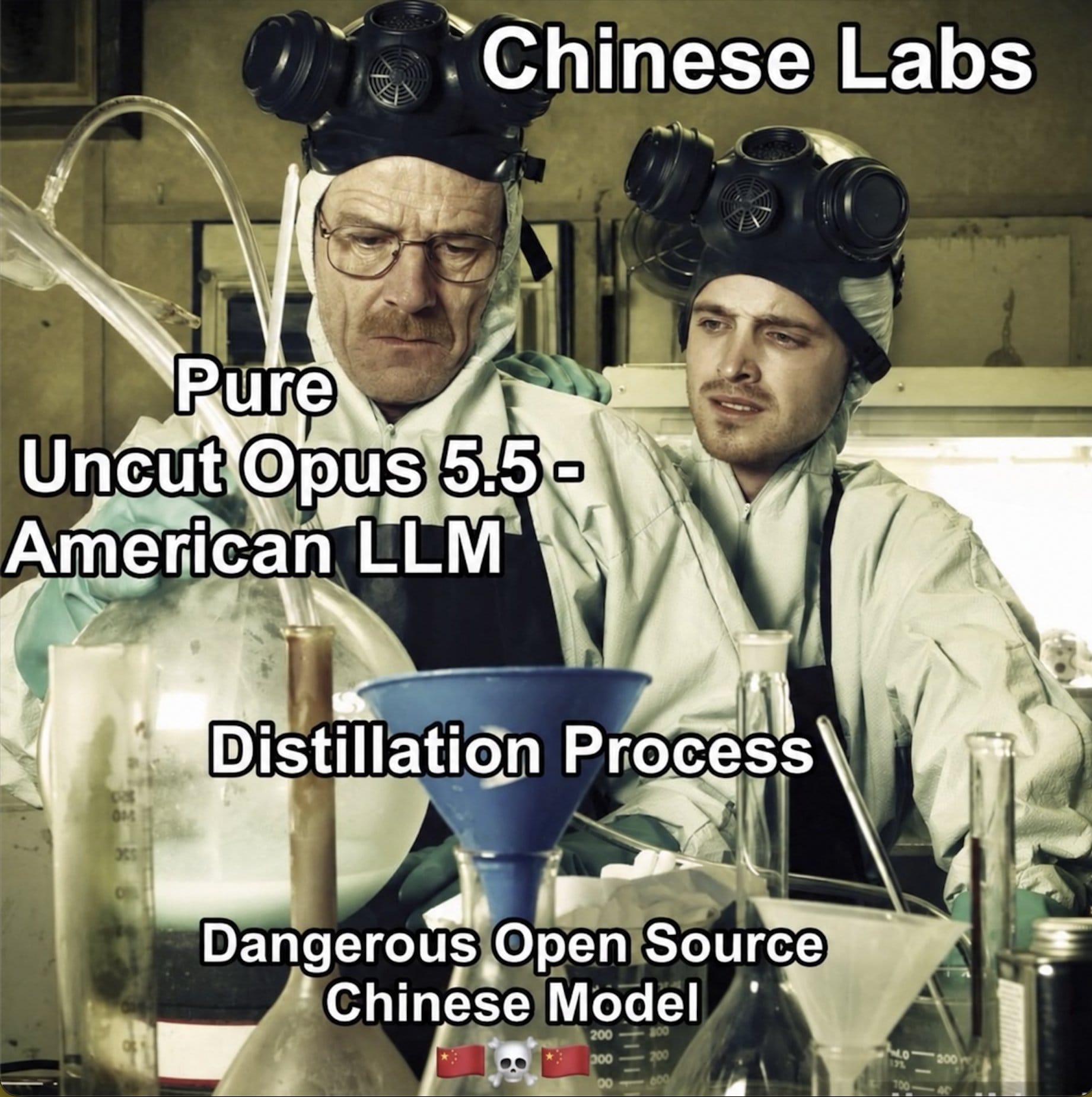
Recent developments in model optimization, specifically the OpenDecider project, underscore the shift toward specialized, small-scale models. Rather than relying on massive, general-purpose LLMs that require significant GPU memory and power, researchers are utilizing knowledge distillation to create efficient "student" models.

Knowledge distillation is a process wherein a smaller model is trained to replicate the output distribution of a larger, "teacher" model. In the case of OpenDecider, the nano (400M parameters) and small (4B parameters, Qwen-based) models are designed for bounded tasks, such as ticket classification and routine routing. The nano model, occupying approximately 2.0 GiB of disk space, demonstrates that high-utility AI does not necessitate immense computational overhead. By deploying these distilled models as a triage layer, organizations can significantly reduce latency and operational costs before escalating more complex queries to larger, slower agents.
Industry Watch: NVIDIA and the PAIR Initiative
NVIDIA’s recent announcement regarding the Platform for AI-Ready (PAIR) infrastructure signals a strategic move to standardize the local AI deployment pipeline. By facilitating easier setup for platforms like Hermes and OpenClaw, NVIDIA aims to lower the barrier to entry for local inference. The company reported significant performance gains, including a claimed 1.9x throughput increase for llama.cpp optimizations on the RTX 5090. While these figures represent vendor-tested benchmarks on high-end hardware, they highlight the ongoing optimization efforts within the hardware sector to ensure that local LLMs can keep pace with their cloud-hosted counterparts.
Technical Best Practices: Backup and Recovery
As AI agents become increasingly integrated into daily workflows, the importance of robust data management cannot be overstated. For users of the Hermes agent, maintaining consistent backups of the "harness"—the configuration, state, and memory environment—is a critical operational requirement.

The hermes backup utility provides a structured method for archiving the local agent state, which can be restored via hermes import. To ensure system reliability, users are encouraged to implement automated, script-based cron jobs that trigger backups without initiating the agent itself. A critical security advisory for all AI practitioners: these archives, which may contain sensitive credentials, historical sessions, and personalized memory, must be handled with the same security protocols as cryptographic keys. Storing raw backups in version control systems, even private ones, is a significant security risk; instead, users should utilize encrypted, off-machine storage solutions.
Implications for Future AI Adoption
The trajectory of local AI is shifting from the experimental phase toward practical, production-ready utility. The key challenges remaining involve the standardization of communication protocols, the optimization of model footprints via distillation, and the education of users regarding the distinction between "local-interface" and "local-inference" applications.
As the Linux Foundation and other standards bodies continue to codify these interactions through protocols like the Model Context Protocol, the ecosystem is likely to move toward a more modular architecture. In this future, users will not be forced to choose between the convenience of cloud-based AI and the security of local computation; rather, they will employ a tiered approach, utilizing small, distilled local models for triage and routine tasks, while reserving cloud-based resources for complex, high-compute operations.
For organizations and power users, the path forward requires a rigorous audit of their AI tech stack. Assessing where data is processed, verifying the licensing constraints of open-weights models, and ensuring that backup and disaster recovery protocols are in place are not merely "best practices"—they are the essential components of sustainable, long-term AI integration. As the technology continues to mature, the focus will likely remain on reducing the reliance on big-tech dependencies, ensuring that the next generation of intelligent agents remains both transparent and user-controlled.