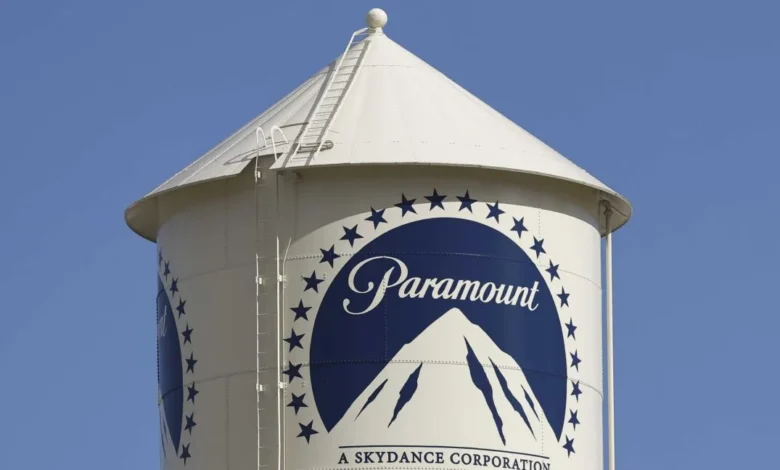
The high-stakes legal battle surrounding the proposed $111 billion merger between Paramount Global, Skydance Media, and Warner Bros. Discovery (WBD) has entered a period of prolonged stasis following a significant court agreement. Paramount and Skydance have officially consented to a long-term delay of the acquisition, effectively halting the consolidation of two of Hollywood’s most storied empires until a federal judge can rule on the merits of a lawsuit brought by a coalition of twelve states. This development represents a pivotal moment in modern antitrust enforcement, as state-level regulators take the lead in challenging a transaction previously greenlit by federal authorities.
Under the terms of a legal stipulation filed in the United States District Court for the Northern District of California, the merging entities and the plaintiff states have agreed that the transaction will not be finalized, and operations will not be integrated, until at least five days after a final determination on the merits of the case. The agreement specifies an outside date of June 1, 2027, whichever comes first. This timeline ensures that the status quo in the media landscape will remain preserved for several months, if not years, as the judicial process unfolds. The Writers Guild of America (WGA), which filed its own independent litigation to block the deal on behalf of creative professionals, also joined the agreement, further solidifying the unified front against the immediate execution of the merger.
The Legal Framework of the Delay
The stipulation serves as a formal extension of the scrutiny the deal has faced since its announcement. If a merits determination—essentially a final ruling on whether the merger violates the law—is not reached by the June 1, 2027, deadline, the plaintiffs reserve the right to seek a preliminary injunction to continue blocking the deal. This structure prevents the companies from attempting a "midnight closing" of the deal while legal proceedings are active.
New York Attorney General Letitia James, a prominent figure in the coalition against the merger, characterized the agreement as a significant victory for regulatory oversight. Her office emphasized that the "months-long halt" is essential to protecting the integrity of the film and television industries. "Halting this merger while our case proceeds is a critical victory in our efforts to uphold the law and protect the film and television industries," James stated, echoing concerns that the consolidation would lead to fewer jobs, lower wages for creators, and higher prices for consumers.
Conversely, Paramount has framed the delay not as a setback, but as a strategic path toward total vindication. In statements provided to major media outlets, the company asserted that the agreement provides a direct route to a trial based on evidence. Paramount’s legal team argues that a full trial is the most efficient way to demonstrate that the transaction is pro-competitive. According to the company, the merger would create a more robust competitor to tech giants like Netflix and Apple, a sentiment they claim has been validated by dozens of competition authorities in international jurisdictions.
Origins of the Conflict: State Intervention vs. Federal Approval
The current legal quagmire stems from a rare divergence between federal and state-level antitrust enforcement. The merger was initially cleared by the Trump administration’s Department of Justice (DOJ). However, reports surfaced shortly after the approval suggesting a deep internal rift within the agency. Career staff lawyers at the DOJ, who had spent months investigating the potential market impact of the $111 billion deal, were reportedly "surprised" by the political leadership’s decision to greenlight the merger. These staff lawyers had been leaning toward a recommendation to sue to block the deal, citing concerns over market concentration.
In the vacuum left by federal inaction, California Attorney General Rob Bonta led a coalition of twelve states—including New York, Illinois, and several others—to file a lawsuit in July 2026. The states argued that the merger would violate the Clayton Act by substantially lessening competition. Judge Araceli Martínez-Olguín, presiding over the case, initially granted a temporary restraining order (TRO), finding that the states had a high likelihood of proving the deal would reduce competition. The judge’s early assessment noted that the combination of Paramount and WBD would concentrate too much power in the hands of a single entity, particularly in the production of premium content and the distribution of cable television.
The "Big Five" and the Threat of Market Concentration
At the heart of the states’ argument is the "Big Five" studio system. For decades, Hollywood has been dominated by five major studios: Disney, Warner Bros., Paramount, Universal, and Sony. By merging Warner Bros. and Paramount, the "Big Five" would effectively become the "Big Four." This consolidation, the states argue, would eliminate a major buyer for scripts and a major employer for talent, leading to a monopsony where a few powerful entities dictate terms to the entire creative workforce.
Furthermore, the merger would combine two of the five largest owners of basic cable channels. Warner Bros. Discovery currently owns assets such as CNN, HBO, TNT, and TBS, while Paramount controls CBS, MTV, Nickelodeon, and Comedy Central. Critics argue that a combined entity would have unprecedented leverage over cable and satellite providers. During carriage negotiations, the merged firm could threaten to pull an enormous swath of popular programming, forcing distributors to accept higher fees, which are then passed on to consumers in the form of higher monthly bills.
The Writers Guild and Labor Concerns
The involvement of the Writers Guild of America (WGA) adds a labor-centric dimension to the legal battle. The WGA’s lawsuit focuses on the impact of "vertical and horizontal integration" on the creative economy. The union argues that the merger would result in fewer "greenlit" projects and a reduction in the diversity of content.
Data from recent industry reports suggest that previous mega-mergers, such as the acquisition of 21st Century Fox by Disney, led to significant layoffs and the shuttering of various production labels. The WGA contends that the Paramount-WBD deal would follow a similar pattern, prioritizing "synergies" (often a corporate euphemism for job cuts) over creative output. By joining the stipulation to delay the merger, the WGA has ensured that its members’ interests remain a central component of the judicial review process.
Chronology of the Paramount-Skydance-WBD Merger
To understand the magnitude of the current delay, it is necessary to look at the timeline of events that led to this $111 billion confrontation:
- Late 2025: Initial rumors surface regarding Skydance Media’s interest in acquiring a controlling stake in National Amusements, the holding company for Paramount Global.
- Early 2026: The deal evolves into a complex three-way merger involving Warner Bros. Discovery, aiming to create a media behemoth capable of rivaling Disney.
- May 2026: The Trump administration’s Department of Justice officially clears the merger without requiring significant divestitures, a move that shocks industry analysts and career DOJ staff.
- June 2026: Internal DOJ memos are leaked, showing that staff lawyers had recommended blocking the deal. Public outcry from consumer advocacy groups and labor unions intensifies.
- July 2026: Led by California, 12 states file a lawsuit in the Northern District of California to block the merger.
- July 20, 2026: Judge Araceli Martínez-Olguín issues a temporary restraining order, halting the merger just days before it was set to close.
- Current Filing: Paramount, WBD, the states, and the WGA agree to a formal stay of the merger until mid-2027 or a final court ruling.
Financial and Industry Implications
The $111 billion price tag makes this one of the largest attempted acquisitions in media history. The financial stakes for the involved companies are immense. Warner Bros. Discovery has been grappling with a significant debt load following its previous merger with Discovery Inc., and the Paramount deal was seen by some investors as a way to achieve the scale necessary to service that debt through increased cash flow. However, the prolonged delay introduces a period of uncertainty that could affect the stock prices of both companies and their ability to make long-term strategic investments.
Industry analysts suggest that the delay might force both Paramount and WBD to pursue alternative strategies in the interim. This could include licensing more of their content to rivals like Netflix or pursuing smaller, less controversial partnerships. There is also the possibility that the market conditions will change so drastically by 2027—due to the continued decline of linear television and the evolution of AI in content creation—that the original terms of the merger may no longer be viable.
Analysis: A New Era of State-Led Antitrust Enforcement
The Paramount-WBD case represents a landmark in the "New Brandeis" movement of antitrust, which seeks to look beyond just consumer prices and consider the broader impact of corporate power on labor, innovation, and democratic discourse. By successfully halting a $111 billion deal that had federal approval, the twelve states have demonstrated that they are a formidable force in corporate regulation.
California Attorney General Rob Bonta’s comments following the stipulation highlight this shift in power. "We are eager to continue to make our case in court and celebrate another tremendous win in our effort to ensure this unlawful merger never sees the light of day," Bonta said. His statement reflects a confidence that the evidence will ultimately show the merger is inherently harmful to the competitive landscape of California’s most vital industry.
As the legal teams prepare for the merits determination phase, the media world remains in a state of suspended animation. The outcome of this case will likely set the precedent for how future mergers in the tech and media sectors are handled, particularly when federal and state regulators do not see eye to eye. For now, the "Big Five" remain five, and the $111 billion check remains uncashed, pending a judicial decision that will reshape the future of entertainment.
Related posts: