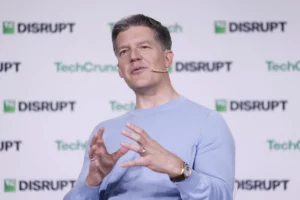
TechCrunch Disrupt 2026 Introduces Smart Money Stage to Explore the Intersection of Fintech AI and Global Financial Infrastructure

The landscape of global finance is undergoing a fundamental transformation, moving beyond traditional currency and banking models toward an integrated ecosystem where artificial intelligence, blockchain, and instant payment rails converge. To address this shift, TechCrunch has announced the debut of the Smart Money Stage at its upcoming Disrupt 2026 conference. Scheduled to take place from October 13 to October 15 at the Moscone Center in San Francisco, the new stage serves as a dedicated forum for industry leaders to dissect the technological and regulatory forces reshaping how value is moved, managed, and verified across the globe.
The introduction of the Smart Money Stage comes at a critical juncture for the financial technology sector. As the industry moves past the "fintech winter" of previous years, the focus has pivoted toward sustainable infrastructure and the practical application of agentic AI. The 2026 program is designed to provide a high-signal environment for founders, investors, and operators, featuring a lineup of executives from multi-billion-dollar entities including Circle, Robinhood, American Express, Plaid, and Airwallex.
Historical Context and the Evolution of Disrupt
TechCrunch Disrupt has long been recognized as a premier launchpad for the startup ecosystem, famously providing early exposure to companies that would go on to become household names, such as Dropbox, Mint, and Fitbit. Over the last decade, the conference has adapted its format to mirror the specialization of the tech industry. In 2026, the focus on "Smart Money" reflects a broader trend: the "unbundling" and subsequent "rebundling" of financial services.
In the early 2010s, fintech was defined by single-use apps—trading, lending, or budgeting. By the mid-2020s, the industry began a phase of consolidation and platform-building. The 2026 event highlights this evolution by showcasing how companies like Robinhood and Airwallex have transitioned from niche tools into comprehensive financial operating systems. The Moscone Center, a hub for San Francisco’s tech-driven economic identity, provides the backdrop for this three-day exploration of the next era of fiscal technology.
Chronology of the Smart Money Program
The three-day event is structured to move from the foundational layers of financial infrastructure to the consumer-facing applications and the future of automated decision-making.
On the opening day, the focus remains on the "plumbing" of the global economy. This includes a deep dive into money movement, comparing the efficacy of private stablecoin networks against public-sector initiatives like FedNow. As instant payment systems become the global standard, the session "The Future of Money Movement" will feature Nikhil Chandhok of Circle and Rodney Robinson of TabaPay. They are expected to analyze how the speed of liquidity is changing the risk profiles of modern banks.
The second day shifts toward the consumer and the "front end" of finance. This track explores how technology has altered user expectations regarding accessibility and transparency. Abhishek Fatehpuria of Robinhood will lead a discussion on how the platform, now valued at over $90 billion, manages the complexities of a multi-asset platform that includes everything from traditional equities to prediction markets.
The final day of the Smart Money Stage is dedicated to the frontier of AI and global scalability. Experts from American Express, Plaid, and QED Investors will tackle the "agentic" shift—where AI no longer just suggests actions but executes them on behalf of users. The event concludes with a look at global commerce infrastructure, led by Airwallex CEO Jack Zhang, focusing on the creation of an AI-native financial operating system for international trade.
Data-Driven Shifts in the Fintech Landscape
The themes of the Smart Money Stage are supported by significant market data. According to industry reports, the global stablecoin market, which stood at approximately $160 billion in early 2024, is projected to reach several trillion dollars by the end of the decade as institutional adoption accelerates. The inclusion of Circle—the issuer of USDC—on the Disrupt stage highlights the growing legitimacy of digital dollars in regulated finance.
Furthermore, the integration of AI in financial services is no longer speculative. Analysts estimate that AI could add up to $1 trillion in value to the global banking sector annually. This is driven by improvements in fraud detection, personalized banking, and operational efficiency. The session featuring Plaid and American Express is particularly relevant given that identity theft and synthetic fraud have become increasingly sophisticated, necessitating the very AI-driven verification tools being discussed at the conference.
In the realm of global commerce, the friction of cross-border payments remains a trillion-dollar problem. Traditional SWIFT transfers can take days and incur high fees. Airwallex’s current $11 billion valuation reflects the market’s demand for "borderless" financial infrastructure. Their move toward an AI-native system suggests a future where automated currency hedging and real-time reconciliation are standard for businesses of all sizes.
High-Stakes Discussions: AI, Trust, and Regulation
One of the most anticipated segments of the Smart Money Stage is the panel on "AI, Trust & Verification." As financial institutions move toward "Agentic AI"—systems capable of making autonomous financial decisions—the questions of liability and oversight become paramount.
Hannah Bozian of American Express and Pedro Sanzovo of Plaid are expected to discuss the balance between friction and security. In an era where deepfakes can bypass traditional biometric security, the "Verification" aspect of the panel is crucial. The discussion will likely touch upon the "zero-trust" architecture required for 2026-era financial applications, where every transaction and identity claim is continuously verified by machine-learning models.
Victoria Zuo of QED Investors will provide the venture perspective, likely addressing the shift in funding toward companies that prioritize "explainable AI" (XAI). In regulated industries like finance, a "black box" algorithm is often a liability. The ability to audit why an AI agent made a specific financial decision is a prerequisite for widespread adoption.
The Modern Financial Consumer and Platform Diversification
The evolution of Robinhood serves as a primary case study for the Smart Money Stage. From its origins as a disruptive brokerage, the company has expanded into a comprehensive financial ecosystem. This diversification is a response to the "Modern Financial Consumer," who seeks a unified interface for credit, crypto, and traditional investments.
Abhishek Fatehpuria’s session will likely explore the technical challenges of maintaining a $90 billion platform that must operate with 100% uptime despite the volatility of prediction markets and 24/7 crypto trading. This reflects a broader industry trend where fintechs are no longer just "apps" but are competing directly with "too big to fail" legacy banks by offering superior technology stacks and user experiences.
Analysis: Implications for the Global Economy
The discussions at TechCrunch Disrupt 2026 suggest three major implications for the global economy:
- The End of Batch Processing: The focus on FedNow and stablecoins signals the definitive end of the "business day" in finance. Real-time, 24/7 liquidity will become the expectation, forcing legacy institutions to overhaul their core banking systems or risk obsolescence.
- Autonomous Finance: As AI agents move from "content generation" to "action," the average consumer may soon have an AI "CFO" in their pocket. This agent will automatically move funds to high-yield accounts, hedge against inflation, and optimize tax strategies, fundamentally changing the relationship between individuals and their money.
- The Rise of Regulated Global Rails: Companies like Airwallex and Circle are not just building tech; they are building regulated infrastructure. The future of global commerce will likely run on these "new rails," which are designed to be AI-native and borderless from the ground up, bypassing the inefficiencies of the 20th-century correspondent banking system.
Event Logistics and Access
As the October dates approach, the window for early-access pricing is nearing its conclusion. TechCrunch has indicated that the Smart Money Stage is just one component of a broader ecosystem at Disrupt 2026, which includes extensive networking opportunities, side events, and the legendary Startup Battlefield competition.
The conference aims to provide a "three-day sprint" for the startup community, located in the heart of San Francisco. While the Smart Money Stage focuses on fintech, the cross-pollination with other Disrupt tracks—such as SaaS, Hardware, and Sustainability—is intended to provide a holistic view of the 2027 innovation cycle.
For founders and operators, the signal from the Smart Money Stage is clear: the next generation of financial giants will not be defined by their balance sheets alone, but by the intelligence and speed of the infrastructure they build. As the industry gathers in San Francisco this October, the blueprints for that infrastructure will be the primary topic of debate.
Related posts: