Automating Continuous Improvement Through Intelligent Agents and Feature Flag Governance

Continuous improvement remains the bedrock of successful software engineering, yet the path from hypothesis to validated outcome is frequently obstructed by manual overhead, fragmented tooling, and a lack of systematic iteration. For most development teams, the process of testing a feature involves a labor-intensive sequence: brainstorming, coding, manual configuration of feature flags, deployment, metric setup, and—finally—a long period of monitoring for performance regressions. A new reference architecture, leveraging the AWS DevOps Agent, Kiro, and LaunchDarkly, seeks to dissolve these barriers by creating a closed-loop, automated experimentation lifecycle that allows teams to scale innovation without compromising operational stability.
The core challenge in modern software development is not a lack of data, but the friction inherent in acting upon it. Industry research indicates that high-performing engineering teams deploy code significantly faster than their peers, but the "experimentation tax"—the cumulative cost of manual planning, disjointed measurement, and stalled iteration—often results in teams abandoning hypothesis-driven development altogether. By integrating autonomous agents with real-time flag management, this solution aims to bridge the gap between setting a business goal and achieving it through iterative, machine-managed cycles.
The Mechanics of the Plan-Prove-Iterate Loop
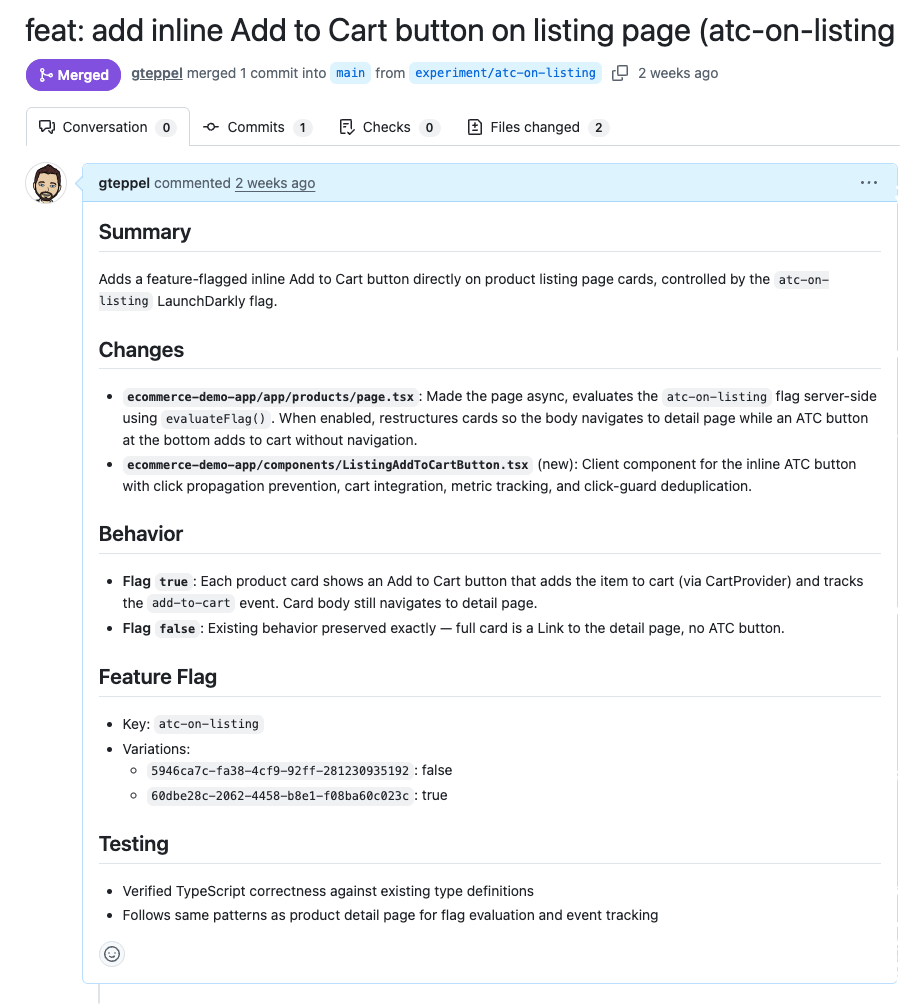
The system operates on a "Plan-Prove-Iterate" workflow, governed by an autonomous custom agent. The "Plan" phase begins when a team defines a specific objective, such as increasing add-to-cart conversion rates by 10%. The agent, utilizing its connection to the Kiro CLI and the LaunchDarkly Model Context Protocol (MCP) server, analyzes the codebase to generate a hypothesis. This step is critical because it moves beyond guesswork; the agent reviews previous experiment outcomes, ensuring the new proposal does not repeat past failures. Once a hypothesis is finalized, the agent initiates the implementation, wrapping all new code behind a LaunchDarkly feature flag before it ever reaches production.
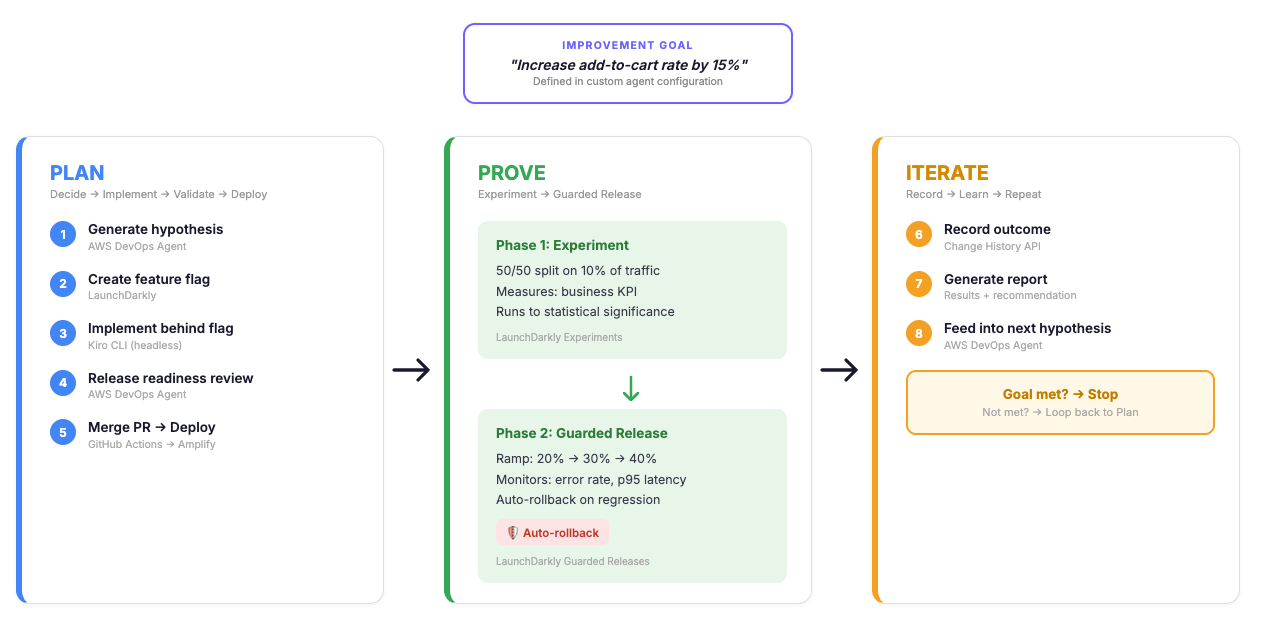
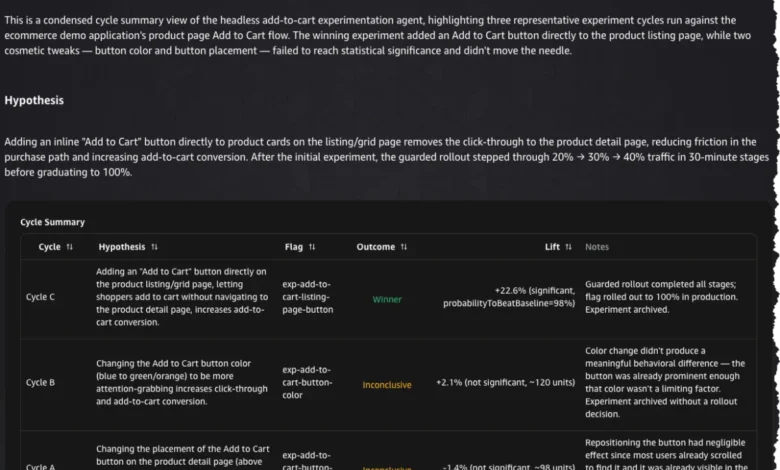
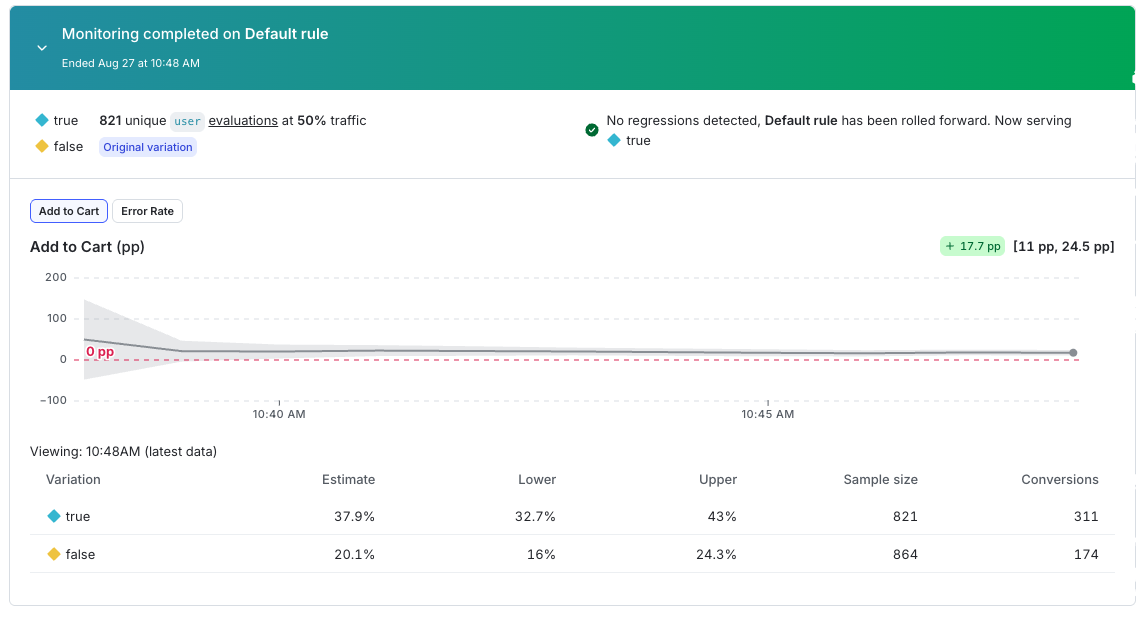
The "Prove" phase represents the most significant shift from traditional deployment models. Once code is deployed, the system does not simply launch it to the entire user base. Instead, it initiates a 50/50 A/B test on a small subset of traffic (typically 10%). This ensures that any deviation from the baseline is statistically significant and attributable to the new code. If the treatment succeeds, the system triggers a "Guarded Release." During this stage, the agent ramps up the traffic percentage—from 20% to 40%—while simultaneously monitoring for operational regressions.
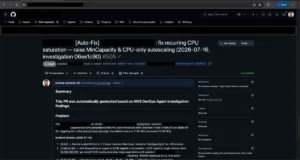
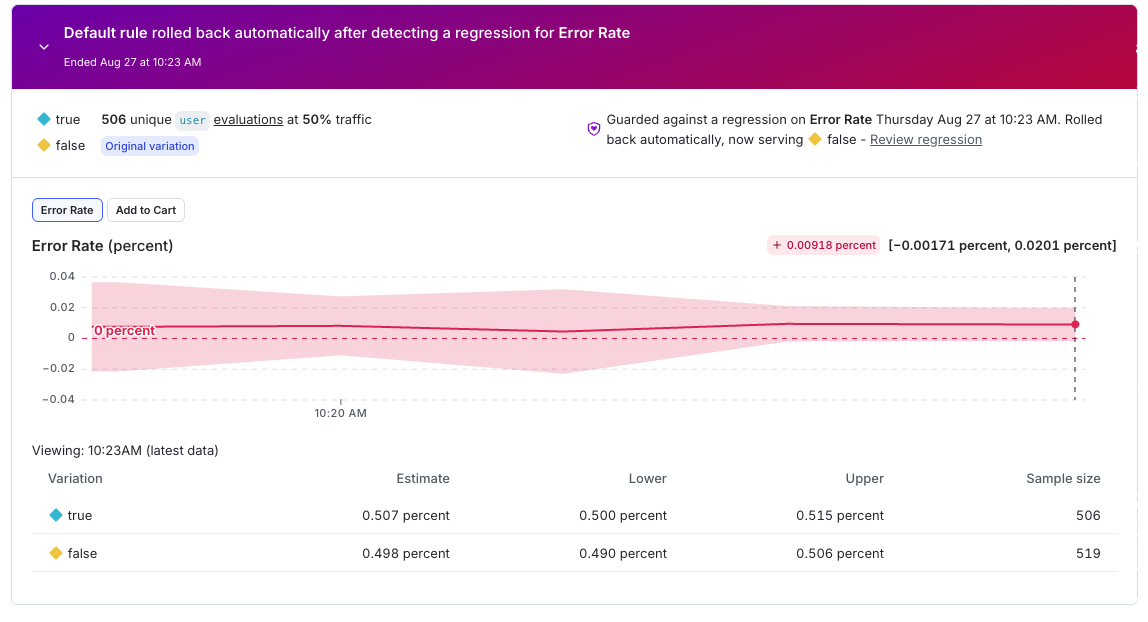
Crucially, the "Iterate" phase ensures that the system learns. If a performance guardrail, such as a spike in p95 latency or an increase in 5xx error rates, is triggered, LaunchDarkly automatically reverts the flag state to the control version. No human intervention is required for this rollback, effectively creating a "self-healing" deployment pipeline.

Architectural Foundations and Integration
The backbone of this solution is the integration of three distinct technology stacks: AWS DevOps Agent for orchestration, Kiro for headless code generation, and LaunchDarkly for feature flag governance and Guarded Releases. The AWS DevOps Agent acts as the "brain," managing the logic and decision-making process. It does not perform the heavy lifting of coding; instead, it coordinates the tools that do.
The Experiment MCP Server, a custom-built Python application running on Amazon Bedrock AgentCore, serves as the conduit for mutation operations. It allows the agent to execute tasks that are otherwise difficult to automate, such as merging pull requests, triggering deployment workflows in GitHub Actions, and managing the state of local filesystems. By deploying this server as a stateless container, the architecture ensures high availability; if the container restarts due to a platform update, the state of the experiment is preserved in an S3-backed state store, preventing the loss of in-flight progress.
From a data perspective, the reliance on OpenTelemetry for metrics collection allows for a seamless flow of information between the production environment and LaunchDarkly’s dashboards. This creates a high-fidelity feedback loop where the agent can instantly correlate a change in feature flag status with a change in business metrics.
Chronology of an Experimentation Cycle
A typical experiment cycle under this framework unfolds over a period of hours, compared to the days or weeks required for manual A/B testing.
- Goal Setting: The team defines the target metric.
- Hypothesis Generation: The agent scans the repository and proposes a change.
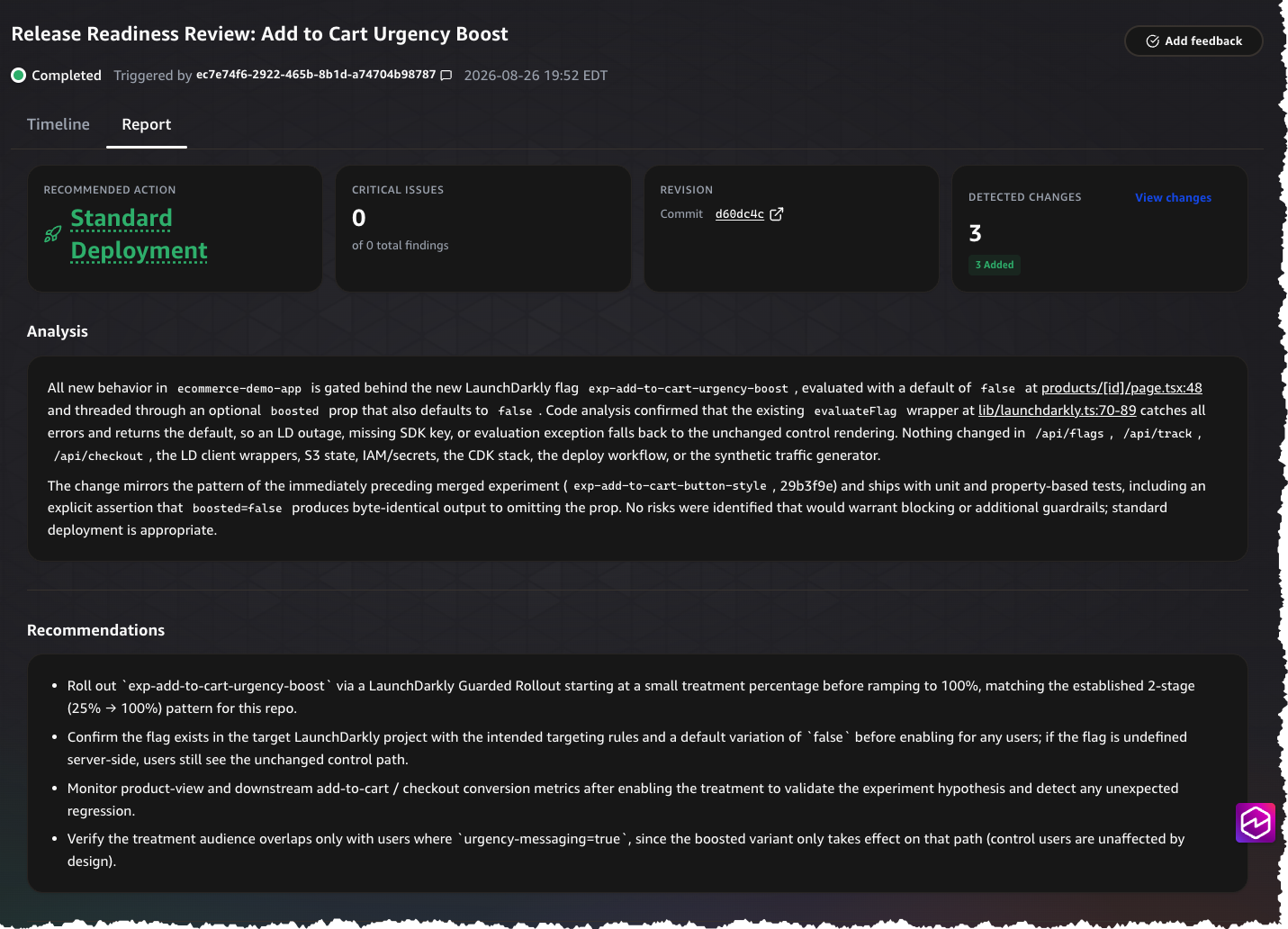
- Implementation & Review: Kiro generates the code, and the DevOps Agent performs an automated release readiness review.
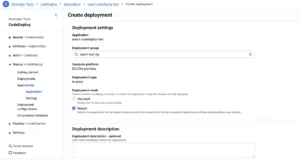
- Deployment: The code is merged and deployed via AWS Amplify.
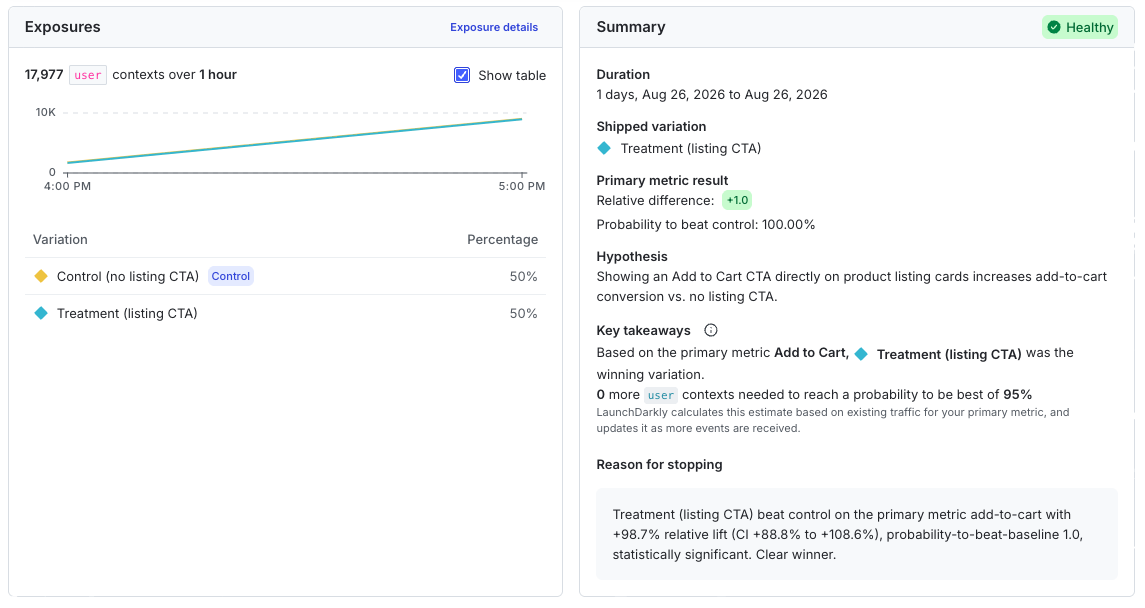
- Experimentation: A 10% traffic split identifies the winning variation.
- Guarded Rollout: The system ramps traffic, monitoring for operational guardrails.
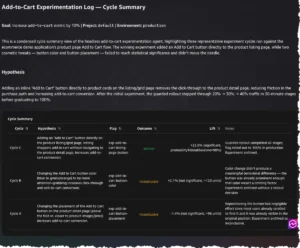
- Reporting & Iteration: The system generates a comprehensive log of the outcome, which informs the next hypothesis.
This timeline demonstrates how the system mitigates the "stalled iteration" problem. Because the report is mandatory and generated automatically upon the conclusion of each cycle, the team always has a clear view of why an experiment succeeded or failed, providing the context necessary for the next round of testing.
Implications for Engineering Productivity
The implications of this reference architecture are profound for enterprise software teams. By automating the "plumbing" of experimentation, developers are freed from the manual toil of managing flag configurations and rollback procedures. Furthermore, the use of Guarded Releases addresses a major fear in the industry: the risk of shipping a feature that degrades system stability.
Industry analysts observe that as organizations move toward more complex, microservices-based architectures, the ability to safely test in production becomes a competitive advantage. The ability to revert to a "known good" state at the flag level—rather than the deployment level—significantly reduces the Mean Time to Recovery (MTTR) during incidents.
Official Perspectives and Future Directions
While this architecture is currently a reference implementation, industry proponents suggest it represents the next evolution of "DevOps 2.0." By shifting from manual, ticket-driven development to agentic, goal-driven orchestration, companies can move closer to true continuous delivery.
The reliance on the MCP standard is particularly notable. By using an open standard for tool interaction, the architecture remains modular. If a team chooses to swap out Kiro for a different AI coding assistant or move from GitHub to another CI/CD provider, the core orchestration logic remains intact. This flexibility is essential for large-scale enterprises that operate heterogeneous technology stacks.
However, the transition to such an automated system is not without challenges. It requires a high level of trust in automated guardrails. Organizations must invest in robust observability to ensure that the metrics driving the auto-rollback decisions are accurate and meaningful. Without high-quality signal, the system could inadvertently revert successful experiments or, worse, fail to detect genuine regressions.
Conclusion: The Future of Autonomous Development
The integration of AWS DevOps Agent, Kiro, and LaunchDarkly provides a template for the future of software development. By treating experimentation as a closed-loop system, teams can significantly reduce the planning and execution costs that typically stifle innovation. The shift from "shipping features" to "achieving outcomes" marks a fundamental change in the developer experience. As these tools continue to evolve, the prospect of an entirely autonomous, safe, and iterative software lifecycle is no longer a theoretical ambition—it is a technical reality that is ready for adoption. For organizations aiming to thrive in a rapid-release environment, this automated, guardrail-focused approach may well become the standard for modern software engineering.
Related posts: