Who Controls Your Intelligence Analysis Platform? The Strategic Divide Between Vendor-Led and Customer-Led Ecosystems

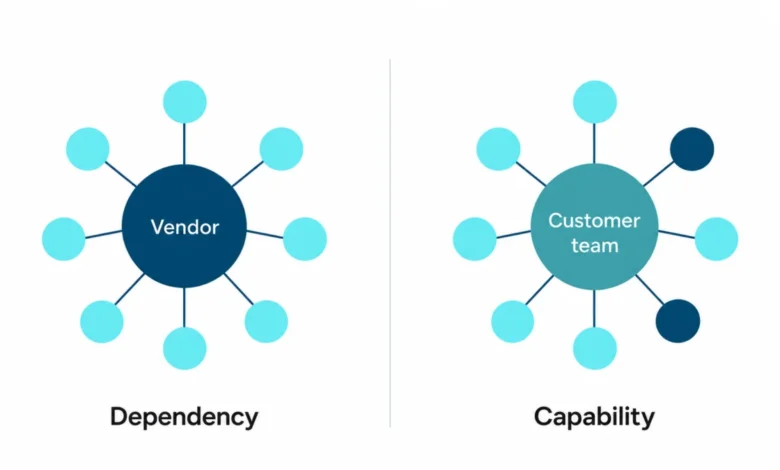
As global enterprise environments, defense agencies, and intelligence organizations grapple with unprecedented data volumes, a foundational architectural debate has emerged regarding the governance and ownership of intelligence analysis platforms. Industry observers note that organizations deploying modern knowledge graphs, machine learning models, and complex data integration tools generally align with one of two distinct operational philosophies: vendor-led consolidation or customer-led empowerment. This strategic decision dictates not merely how initial software deployments are managed, but how organizations adapt to dynamic geopolitical threats, regulatory shifts, and technological disruptions over multi-year lifecycles.
Background and Context of the Enterprise Analytics Evolution
Over the past decade, the proliferation of unstructured data, cyber threats, and financial crime networks has forced intelligence and investigative operations to abandon legacy, siloed databases in favor of connected data environments. Graph technologies, in particular, have become the bedrock of modern intelligence analysis, enabling agencies to map complex networks of relationships, entities, and behaviors.
However, as these platforms scale to ingest billions of data points across global operations, organizations face a critical crossroads. They must determine whether to outsource the heavy lifting of platform maintenance, data pipeline engineering, and model evolution to third-party technology providers, or to invest internal capital into building resilient, in-house technical capabilities. This dichotomy has profound implications for organizational sovereignty, operational agility, and long-term financial expenditure.
The Two Competing Philosophies: An Architectural Breakdown
To understand the current debate in enterprise software procurement, industry analysts categorize platform deployments into two primary models.
The Vendor-Led Model: Centralizing Capability Within the Supplier
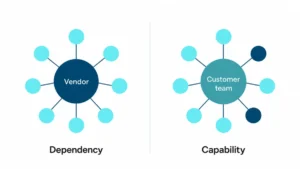
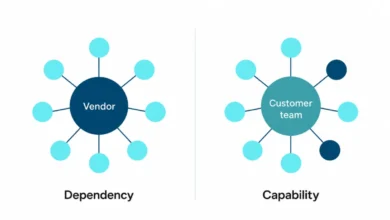
In a vendor-led paradigm, the technology provider acts as the primary architect, operator, and evolutionary engine of the intelligence platform. The vendor supplies the core software, specialized personnel, data integration pipelines, and analytical workflows. When an agency needs to incorporate a new data source—such as a proprietary communications feed or an emerging financial registry—the customer defines its business requirement, and the vendor’s engineering teams execute the backend updates, model adjustments, and pipeline configurations.
Proponents of this model argue it addresses an immediate and acute pain point: the chronic shortage of specialized data engineers and graph database architects within the public and private sectors. For organizations lacking idle technical talent, outsourcing the complexities of platform deployment to a dedicated team with pre-packaged solutions offers a streamlined path to operational readiness.
The Customer-Led Model: Embedding Knowledge In-House
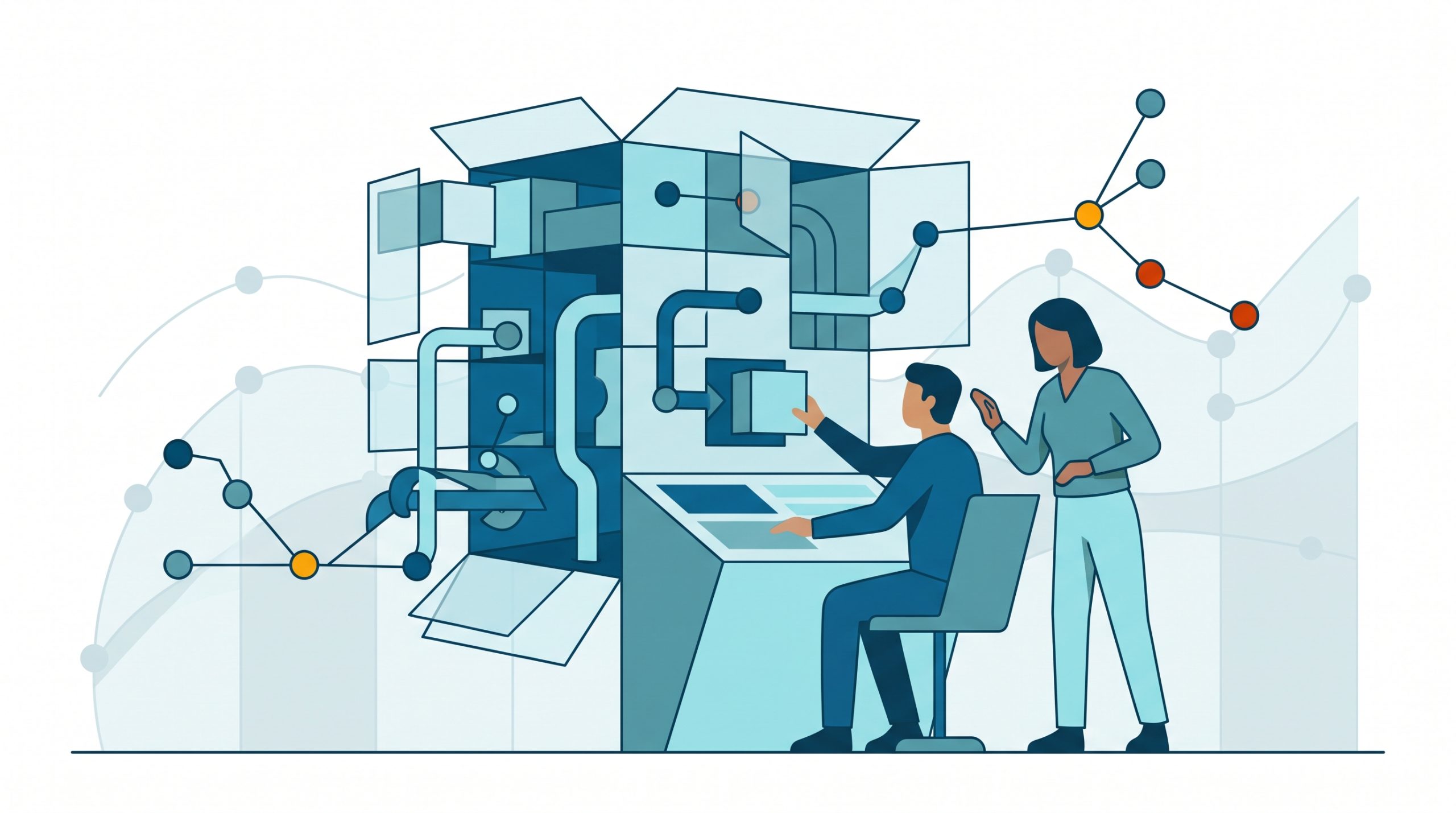
Conversely, the customer-led model prioritizes the transfer and retention of technical knowledge within the client organization. While the vendor provides the foundational software, ongoing technical support, and expert guidance, the customer’s internal data engineering, IT, and analytical personnel are embedded in the deployment process from day one.
Under this framework, internal teams actively construct data models, build ingestion pipelines, and configure analytical workflows alongside the vendor. Consequently, when operational requirements shift, internal analysts and engineers possess the systemic comprehension required to execute modifications independently, calling upon vendor support strictly as an auxiliary resource rather than a primary dependency.
Chronology of Platform Maturity: The Compounding Effects of Growth
The structural divergence between these two philosophies becomes starkly apparent as platforms mature. Industry case studies tracking enterprise analytics programs over a three- to five-year timeline reveal contrasting trajectories.
Initial Implementation Phase (Years 0–1)
During the procurement and initial deployment phase, the vendor-led model frequently appears superior. Organizations overwhelmed by complex deployment schedules, strict compliance frameworks, and internal resource constraints welcome a turnkey solution. The promise of offloading architectural burdens allows leadership to focus on immediate investigative outcomes rather than infrastructure deployment.
Expansion and Scaling Phase (Years 1–3)
As successful intelligence platforms attract broader user bases, ingest exponentially larger datasets, and support novel investigative use cases, the initial architectural choice compounds.
In a vendor-led ecosystem, organizational growth often correlates with heightened operational friction. Because the institutional knowledge required to alter data schemas and pipelines remains externalized, even minor configuration adjustments necessitate formal support tickets, scoping phases, and contractual negotiations. In high-stakes investigative environments—such as counterintelligence, fraud detection, or law enforcement operations—these administrative delays can prove operationally disastrous, resulting in cold leads or missed interdiction windows.
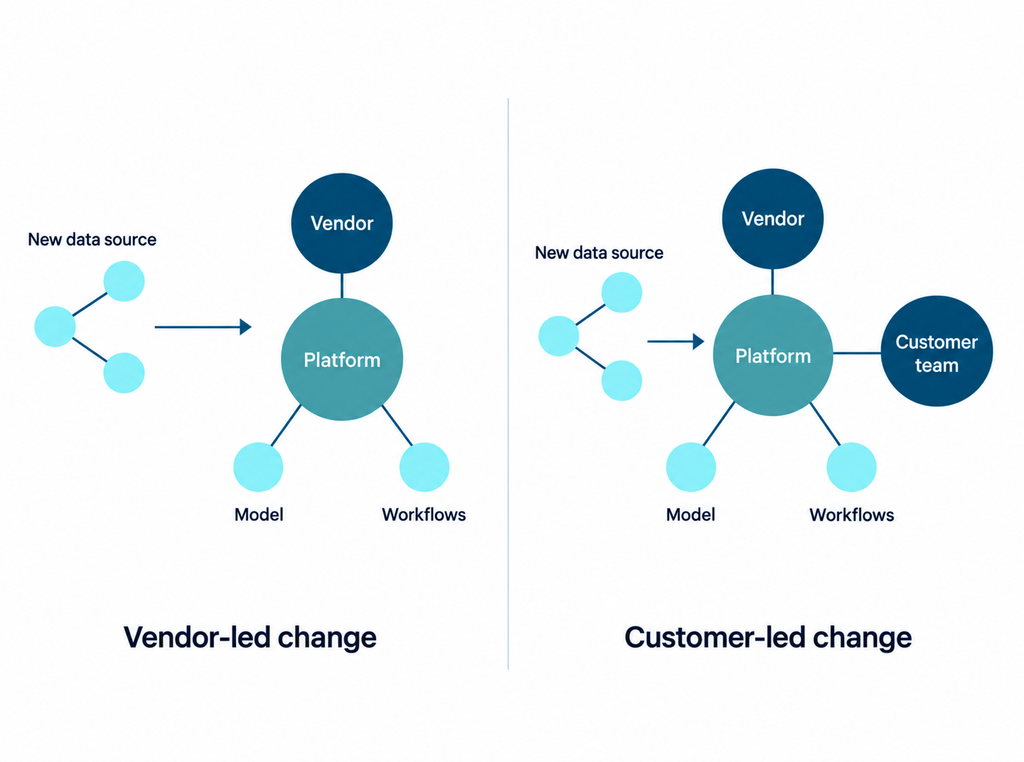
Conversely, organizations utilizing a customer-led model experience a compounding of internal competency. Each newly integrated data source or custom analytical model serves as a practical training exercise for the internal engineering cadre. Over time, the velocity of system adaptation increases. The platform evolves in tandem with the organization’s mission, driven by personnel who intimately understand the underlying data architecture.
Data-Driven Insights and Economic Implications
Recent enterprise IT expenditure reports indicate that software lock-in remains one of the most significant budget drains for large organizations. When evaluating total cost of ownership (TCO), financial analysts emphasize that the true value of an intelligence platform extends far beyond raw data storage.
An mature intelligence ecosystem accumulates thousands of proprietary artifacts over its operational lifespan: custom data models, specialized integration logic, automated analytical workflows, and institutional heuristics regarding how data is synthesized and interpreted.
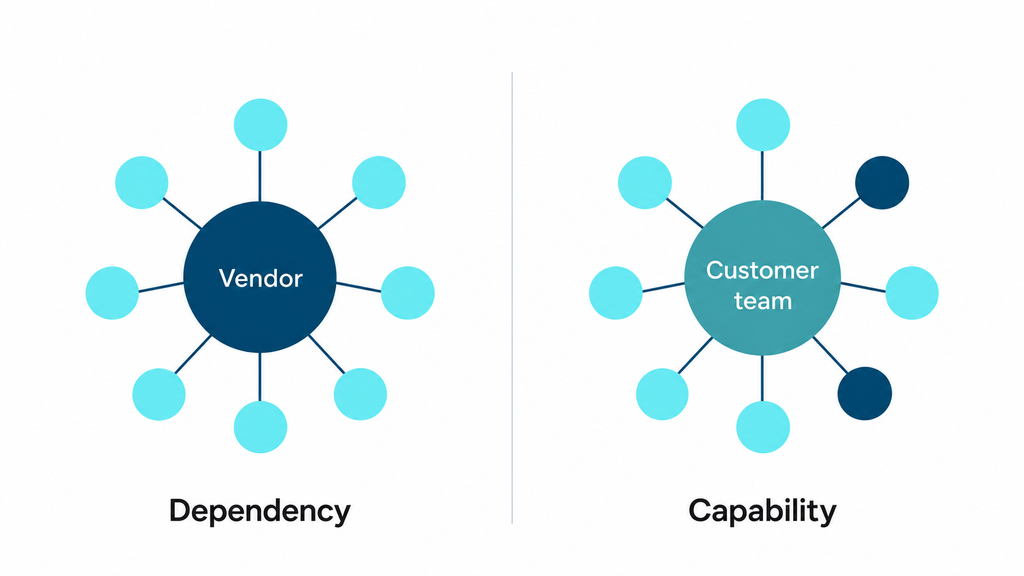
In heavily vendor-dependent architectures, the customer retains ownership of the raw data assets, but relinquishes operational sovereignty over the intelligence capability itself. If strategic objectives shift or budgetary pressures force a vendor migration, the organization cannot simply export its database; it must reconstruct years of accumulated procedural logic and workflow engineering from scratch. This phenomenon transforms routine software procurement into structural vendor lock-in.
Stakeholder Perspectives and Industry Reactions
Cybersecurity directors, chief data officers (CDOs), and procurement specialists have increasingly voiced concerns regarding long-term operational autonomy. Industry forums highlight a growing consensus that critical national security and corporate intelligence functions must retain absolute clarity and control over their underlying technical infrastructure.
Security and Compliance Experts: Representatives from heavily regulated sectors, including financial services and defense, stress that regulatory compliance and auditability require complete internal transparency. If an automated analytical model flags an entity, compliance officers must be able to explain the exact provenance of the data and the algorithmic logic applied—a task complicated by black-box, vendor-managed architectures.
Internal Engineering Teams: Enterprise data teams frequently report frustration with rigid, proprietary platforms that restrict direct access to core pipelines. Empowerment models that encourage extensible architectures are widely praised by technical staff for fostering innovation and reducing time-to-insight.
Technological Responses: The Modular and Open Approach
In response to growing demand for operational sovereignty, select enterprise software developers have modified their product strategies. For example, platforms such as GraphAware Hume—the graph data integration and investigation environment designed for Neo4j solutions—have been engineered explicitly around the principle of user ownership.
By utilizing modular, open architectures, such platforms allow customer organizations to maintain direct control over their data models, analytical pipelines, and workflow repositories. While initial deployments are accelerated by expert vendor support, the underlying knowledge transfer ensures that internal teams retain the capacity to audit, modify, and extend the environment independently. Industry analysts note that this hybrid approach—combining rapid onboarding with long-term architectural autonomy—represents a shifting standard in enterprise software design.
Strategic Implications and Assessment Framework
To evaluate whether an organization’s current intelligence platform aligns with its long-term strategic interests, technology governance experts recommend subjecting the architecture to three fundamental diagnostic questions:
- The Extensibility Audit (Could You Change It?): If an internal department identifies a novel operational requirement necessitating a radically different data model or workflow, can the organization’s internal team initiate the build, or must the project commence with a commercial quote from the vendor?
- The Comprehension Audit (Could You Understand It?): If the original third-party implementation engineers departed abruptly, would internal personnel possess the documentation, tools, and systemic understanding required to safely operate and modify the environment?
- The Portability Audit (Could You Leave It?): In the event of a strategic pivot or procurement dispute, what assets would successfully migrate to a new environment? Is the organization migrating merely raw database entries, or the entire accumulated intelligence capability, workflows, and institutional models?
Conclusion
The choice between a vendor-led and a customer-led intelligence analysis platform transcends routine IT procurement; it is a foundational governance decision. While turnkey vendor-led models offer immediate administrative relief during initial deployment phases, they frequently incur hidden costs in operational agility, administrative delay, and structural lock-in over time.
As intelligence requirements continuously evolve in response to increasingly sophisticated threats, organizations must carefully weigh whether their chosen platform engenders lasting dependency or empowers internal resilience. Ultimately, the software an enterprise selects today will determine not merely analytical efficiency next year, but systemic control over its intelligence capabilities for decades to come.
Related posts: